
What Is a Griddle? How It Works, Types, and What It Cooks Best
A griddle is a flat cooking surface (steel, cast iron, or another conductive material) that cooks food through direct contact with the surface rather than over open flame or through grates. The defining characteristic is the solid, flat cooking area: no holes, no grates, no gaps. Food sits directly on the steel and receives heat across its entire face.
The most common outdoor version is a flat-top propane griddle, like a Blackstone. The most common indoor version is a griddle pan, a flat-bottomed pan used on a stovetop burner. Both work on the same principle: a conductive surface transfers heat directly to food, producing an even sear rather than grill marks.
What Is a Griddle Made Of?
Most outdoor flat-top griddles, including all Blackstone models, use cold-rolled steel, a dense, conductive metal that holds heat well and develops a natural non-stick surface over time through seasoning. Cold-rolled steel is slightly thinner and smoother than cast iron, which makes it faster to heat and easier to manage across multiple cooking zones.
Other materials used in griddles:
Cast iron: the traditional griddle material for stovetop and some outdoor models. Heavier and slower to heat, but retains heat longer once hot. Cast iron stovetop griddle pans have been used for centuries.
Chrome steel (chrome-plated): used in commercial restaurant flat-tops. Chrome is non-porous, doesn’t require seasoning, and is easy to clean. Most commercial griddles you’ve cooked on at a diner are chrome-plated steel.
Aluminum with non-stick coating: common in electric griddles and some stovetop griddle pans. Lighter and faster to heat, but less durable and not suitable for high-heat searing.
Ceramic-coated: a non-stick alternative found in electric and tabletop griddles, often marketed as a safer coating alternative.
For an outdoor flat-top like a Blackstone, cold-rolled steel is the right material: durable, responsive to heat adjustments across zones, and capable of building a better non-stick surface over time than any factory coating. See how to season a Blackstone griddle for how that surface builds up.
What Are the Two Types of Griddle?
Griddles are split two ways, depending on what someone means:
By heat source: gas vs. electric. This is the split that matters most when you’re buying one:
- Gas (propane) flat-tops: freestanding outdoor griddles like a Blackstone, powered by propane burners. They run hotter, cover far more surface, and are built for high-volume outdoor cooking. This is the workhorse type most people mean by “griddle” today.
- Electric griddles: plug-in countertop units for indoor use. Smaller and lower-heat, but they’re the only real option in an apartment or anywhere an open flame isn’t allowed.
By surface: smooth vs. ridged. Less common, but you’ll see it on combo units:
- Smooth (flat): the standard, fully flat surface that gives you even, full-contact searing. This is what “griddle” almost always refers to.
- Ridged (grooved): a surface with raised bars that leaves grill-style marks. Some plates are reversible, with a flat griddle side and a ridged grill side.
For outdoor flat-top cooking, a gas griddle like a Blackstone is the standard; an electric griddle is the indoor, small-space alternative. See the Blackstone buyers guide for choosing a specific model.
What Is a Griddle Used For?
A flat-top griddle handles a wider range of foods than a grill because the solid surface has no gaps, no drip zones, and no flare-ups. The griddle’s advantages are most obvious for:
Breakfast foods
Pancakes, eggs, bacon, French toast, hashbrowns, breakfast sandwiches: everything breakfast requires a flat surface. A grill can’t cook any of these. A Blackstone handles all of them simultaneously, which is the reason most people who buy one end up using it more than their grill. The Blackstone breakfast hash and Blackstone hashbrowns are good examples of what zone cooking can do.
Smash burgers
The Maillard crust on a smash burger (the crispy, lacy-edged patty pressed hard against screaming-hot steel) requires full surface contact. Grill grates make it impossible. A flat-top is the only surface that produces a real smash burger at home. See the Blackstone burgers recipe for the technique.
Full-surface sear on proteins
Grill grates contact about 20% of a protein’s surface area. A flat-top makes contact with 100% of it. For chicken thighs, salmon, pork chops, or any cut where you want an even crust across the whole surface instead of just grill marks, the griddle wins. The Blackstone steak recipe covers this in detail.
Stir-fry, rice, and small-ingredient dishes
Diced vegetables, shrimp, rice, mushrooms, garlic: anything small falls through grill grates or gets lost in a regular pan. On a flat-top you can cook Blackstone fried rice or any stir-fry dish at full volume. The wide surface lets you spread ingredients out so they sear instead of steam.
Fajitas and sauced dishes
Teriyaki glaze, fajita marinade, garlic butter: liquids and sauces run off a grill into the fire. On a griddle you cook in them, reduce them, and coat the food. Blackstone chicken fajitas and steak fajitas are textbook flat-top dishes for exactly this reason.
High-volume cooking
A 36” Blackstone has 720 square inches of cooking surface, all usable at once. You can cook a full breakfast for 10 people simultaneously. Grills have dead zones and require food rotation; a flat-top handles large quantities much more efficiently.
Sandwiches, quesadillas, and pressed items
Any sandwich that benefits from full contact with a hot surface (grilled cheese, Philly cheesesteak, quesadillas) is better on a griddle. The whole surface of the bread or tortilla makes contact with the steel, giving you even browning that a grill can’t produce.
What Is a Griddle Pan?
A griddle pan is a flat-bottomed pan used on a stovetop burner, a compact version of the standalone flat-top griddle. Griddle pans typically come in rectangular shapes designed to span two burners, though single-burner round versions also exist.
Griddle pan vs. grill pan: a grill pan has raised ridges on the cooking surface that create grill marks. A griddle pan is completely flat. Both sit on your stovetop; the difference is whether you want marks (grill pan) or an even sear (griddle pan). For smash burgers, eggs, or pancakes on the stovetop, you want a griddle pan.
Griddle pan vs. outdoor flat-top: the cooking principle is identical: direct contact between food and a hot solid surface. The scale is not. A 36” Blackstone has roughly 10 times the cooking area of a standard two-burner stovetop griddle pan and runs hotter and more evenly across the full surface. For everyday cooking for one or two people, a stovetop griddle pan works. For family meals or anything that requires zone cooking, an outdoor flat-top is a different tool entirely.
How a Griddle Differs From a Grill
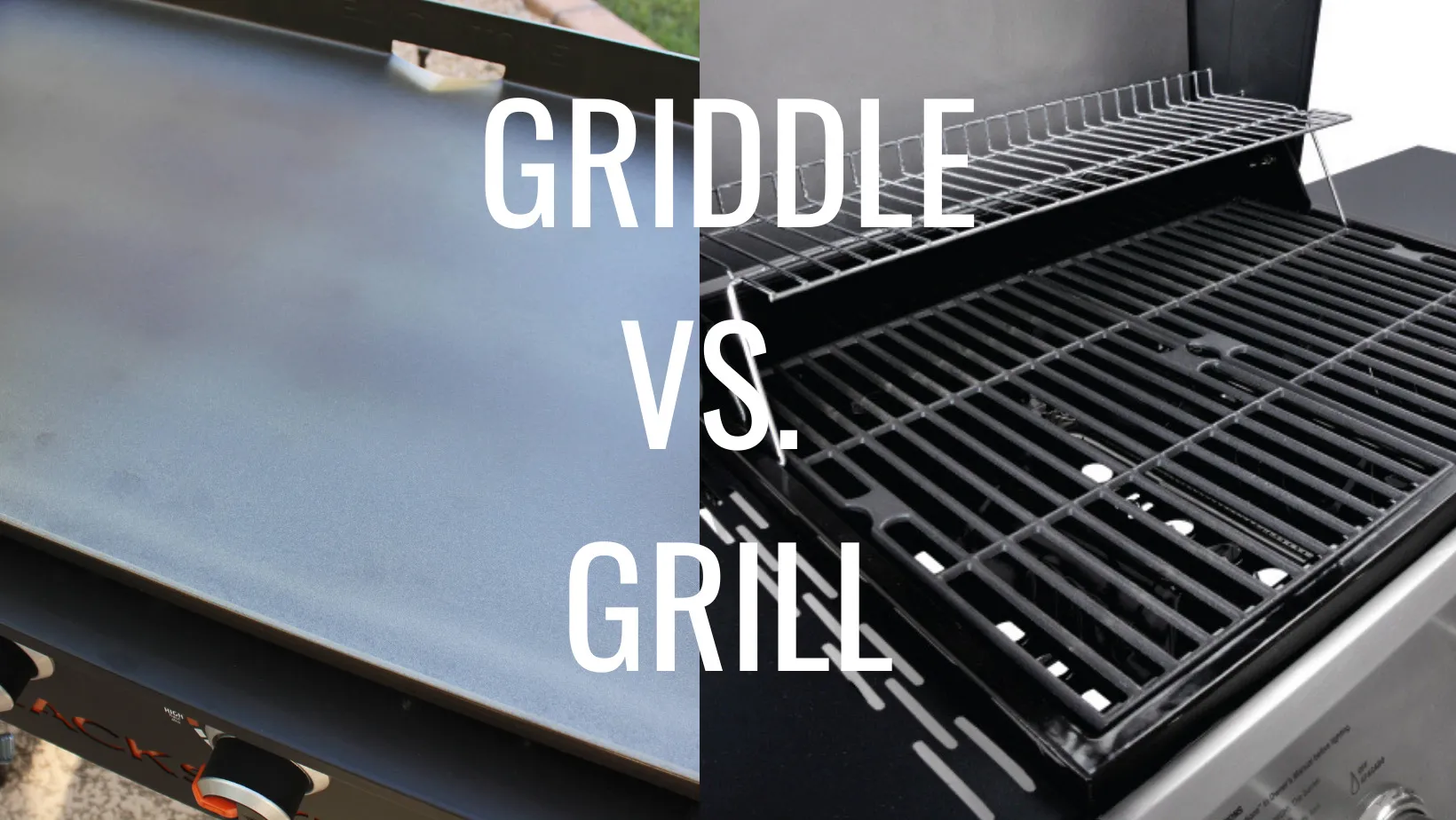
A grill cooks food over an open flame through metal grates; a griddle cooks on a solid, flat steel surface. That one structural difference is why they’re good at opposite things. A grill adds smoke flavor, true grill marks, and handles low-and-slow cooks like ribs and brisket. A griddle owns breakfast, smash burgers, small ingredients, full-surface sears, and anything saucy, none of which work over grates.
Neither replaces the other, and most serious outdoor cooks end up with both. For the full head-to-head (including which is healthier, whether a griddle is worth it if you already own a grill, and which wins for steaks and burgers) see Griddle vs Grill.
Related guides: Griddle vs Grill · Griddle vs Skillet · Griddle Temperature Guide
Frequently Asked Questions
What is a griddle?
A griddle is a flat, solid cooking surface (typically steel or cast iron) that cooks food through direct contact rather than over open flame or through grates. Outdoor flat-top griddles like a Blackstone are propane-powered freestanding units with a large steel cooking surface. Indoor griddle pans are stovetop versions of the same concept.
What is a griddle made of?
Outdoor flat-top griddles like Blackstone are made from cold-rolled steel, a dense, heat-retentive metal that builds a natural non-stick surface through seasoning. Commercial restaurant griddles use chrome-plated steel. Stovetop griddle pans are typically cast iron, carbon steel, or aluminum with a non-stick coating.
What are the two types of griddle?
Griddles are divided two ways. By heat source: gas (propane) flat-tops like a Blackstone for outdoor cooking, and electric griddles for indoor countertop use. By surface: smooth (fully flat, for even searing) and ridged (raised bars that leave grill-style marks, often on reversible combo plates). For outdoor flat-top cooking, “the two types” almost always means gas vs. electric.
What is a griddle used for?
A flat-top griddle handles breakfast foods (eggs, pancakes, bacon, hashbrowns), smash burgers, full-surface protein sears, stir-fry and rice dishes, fajitas and sauced dishes, sandwiches and quesadillas, and high-volume cooking. The solid surface with no gaps means any food that would fall through grill grates or flare up is better suited to a griddle.
What is a griddle pan?
A griddle pan is a flat-bottomed stovetop pan, the indoor equivalent of an outdoor flat-top griddle. It’s distinguished from a grill pan by its smooth, flat surface (no ridges). Griddle pans are used for pancakes, eggs, smash burgers, and any food that benefits from full contact with a flat heated surface.
What’s the difference between a griddle and a grill?
A grill cooks food over an open flame through metal grates; a griddle cooks on a solid flat surface. The key practical differences: grills add smoke flavor and grill marks; griddles produce full-surface sears, can cook breakfast foods and small ingredients, and handle sauces and liquids. Neither replaces the other. They’re built for different tasks.
Do you need to season a griddle?
Yes, if it’s a cold-rolled steel or cast iron flat-top. Seasoning means applying thin layers of high-smoke-point oil and heating the surface until the oil polymerizes into a hard, non-stick coating. A new Blackstone requires an initial seasoning (about 90 minutes) before first use, and a quick re-oiling after every cook to maintain the surface. See the full Blackstone seasoning guide.
What size griddle should I get?
For a family of 4, a 36” Blackstone (720 square inches) is the most popular choice, large enough to cook an entire meal at once across multiple heat zones, practical for weeknight dinners without being oversized. A 28” model works for 1-3 people. The 17” tabletop is good for camping or small spaces. If you’re regularly cooking for groups larger than 6, the 36” is the minimum. Nothing smaller keeps up.
What’s the best oil to use on a griddle?
High-smoke-point oils for cooking and seasoning: avocado oil (smoke point ~520°F) is the most versatile, flaxseed oil is popular for initial seasoning coats, and vegetable or canola oil works well for everyday cooking. See the griddle temperature guide for matching heat levels to different foods.
Is a ceramic or cast iron griddle better?
It depends on what you want. Cast iron (and cold-rolled steel like a Blackstone) is more durable, holds heat longer, builds a natural non-stick seasoning that improves for years, and takes high-heat searing, but it’s heavier, slower to heat, and needs seasoning and rust prevention. Ceramic-coated griddles are lighter, heat faster, and are non-stick with no seasoning required, but the coating wears out over time and can’t handle the same high-heat searing. For serious flat-top cooking, cast iron or steel wins; for low-maintenance, lower-heat cooking, ceramic is easier to live with.
What food cannot be cooked in cast iron?
Very acidic foods are the main thing to limit on bare cast iron: tomatoes, citrus, vinegar, and wine can react with the iron, pick up a metallic taste, and strip seasoning during long cooks. Quick contact is fine; long simmers are what to avoid. Delicate flaky fish and sticky, sugary sauces can also stick and tear on a poorly seasoned surface. A well-seasoned pan handles most of this without issue. The long-simmered-acid rule is the one worth remembering.
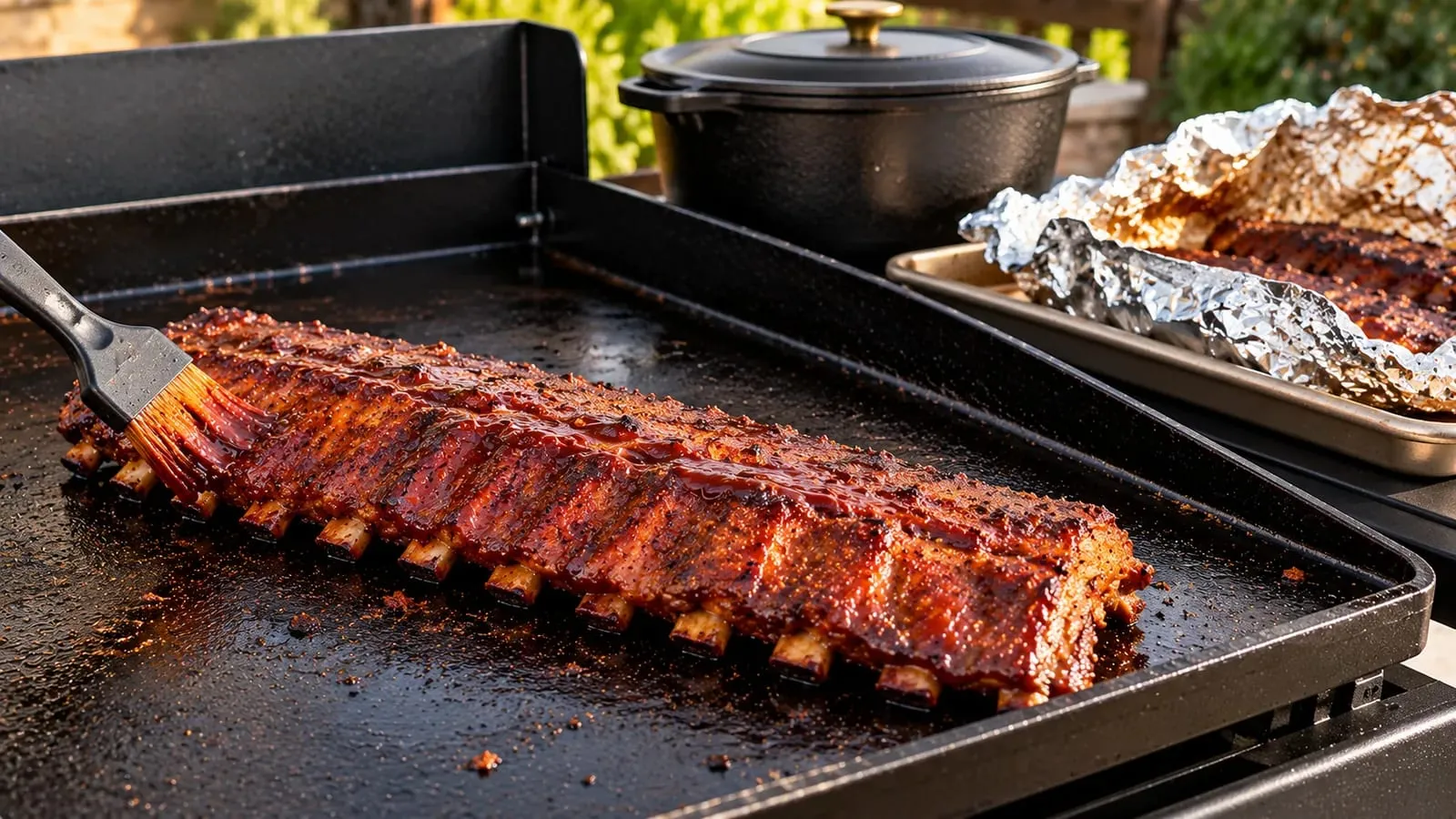
What Not to Cook on a Blackstone (and What to Do Instead)
What doesn't work on a Blackstone griddle: low-and-slow cuts, big roasts, anything that sits in liquid, and deep-fried food, plus how to split the cook so the griddle still does the part it's good at.
Griddle vs Grill: Which Should You Get?
Griddle vs grill: the real differences, which is healthier, whether a griddle is worth it if you already own a grill, and which wins for steaks and burgers.
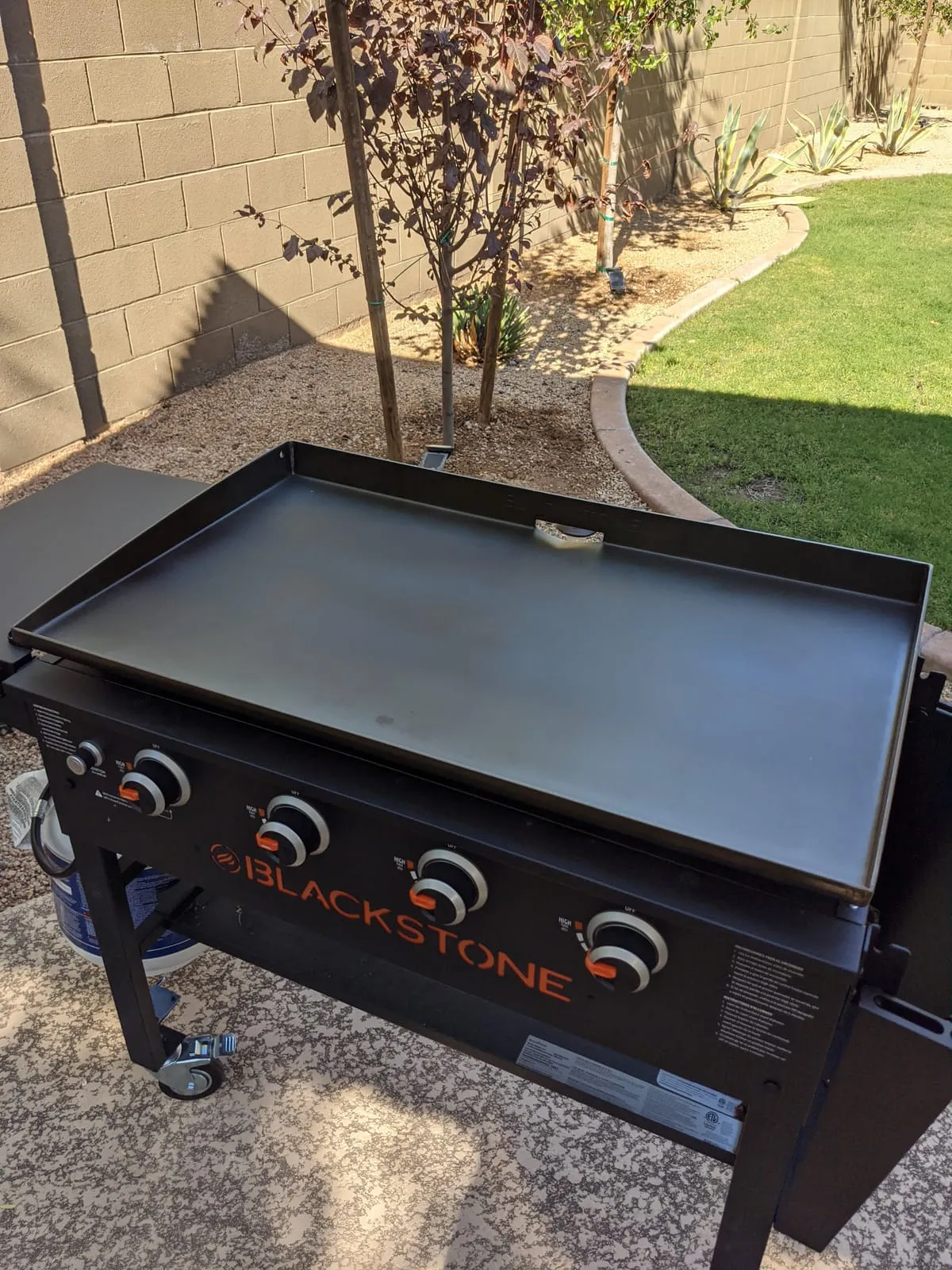
Why Is Everyone Selling Their Blackstone? An Honest Answer
Why is everyone selling their Blackstone? Mostly, they aren't. Here's the honest story, plus the real cons, lifespan, the Walmart price, and if it's worth it.