
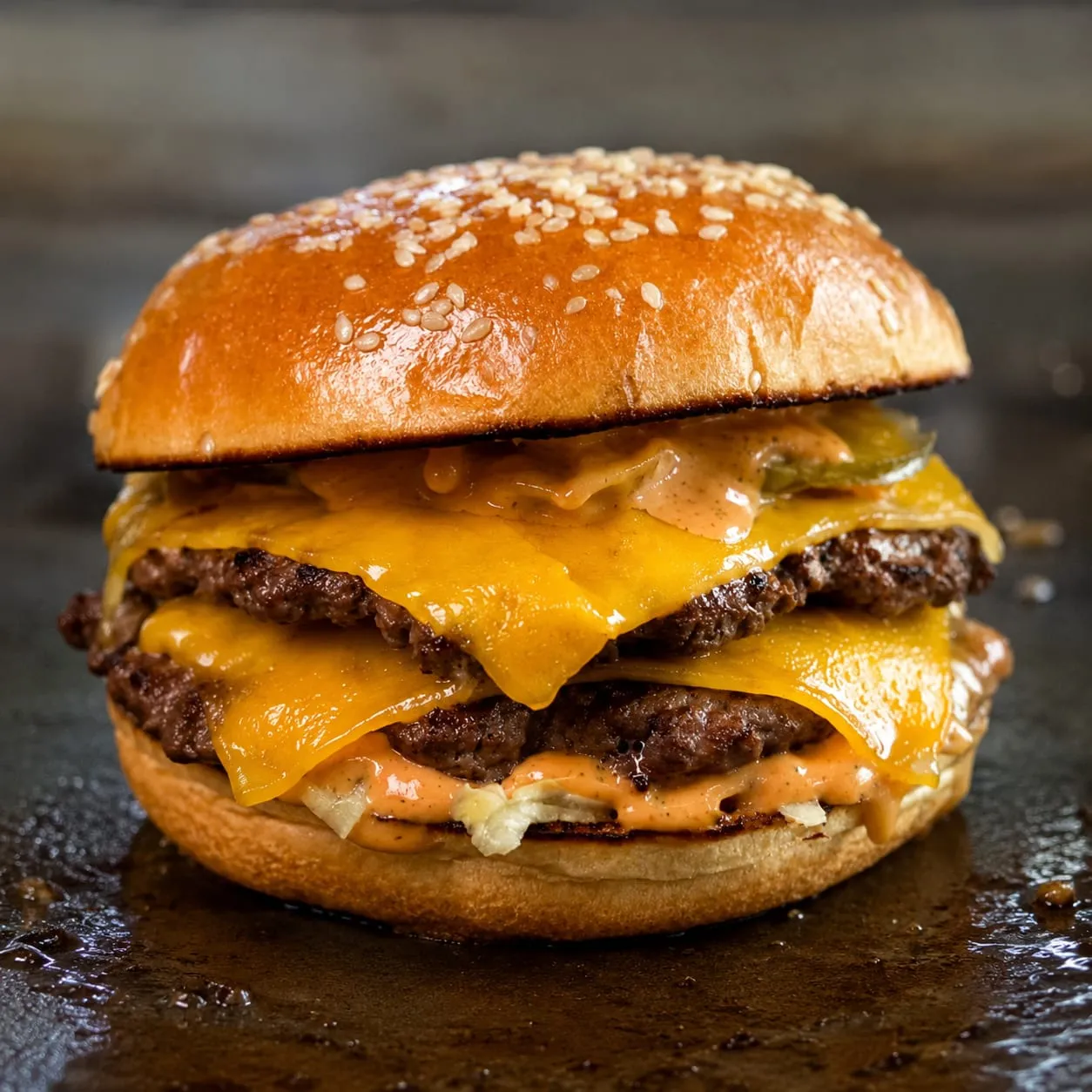
Blackstone Burgers: Classic Griddle Burgers and Smash Burgers
The flat-top griddle is the best surface for cooking burgers at home, not a close second to a grill, actually better. Every square inch of the patty is in contact with hot steel. No flare-ups. No hot spots from grate spacing. And you can toast the buns, cook the bacon, and sauté the onions all at the same time on the same surface. Burgers are the thing I’ve cooked most in my years on the 36”, and this page is everything that experience changed about how I make them.
This covers both styles: the classic griddle burger (thicker patty, cooked through, great crust) and the smash burger (thin, crispy-edged, built for the Maillard reaction). Different techniques, different textures, both excellent. Pick one or cook both at the same time: the only difference is heat level and timing.
The One Thing That Matters for Both Styles
80/20 ground beef. 80% lean, 20% fat. This is non-negotiable for both methods. The fat is what gives you flavor, juiciness, and (in the case of smash burgers) the crispy, caramelized crust. Lean beef (90/10 or leaner) produces dry, forgettable burgers regardless of technique.
Fresh, never frozen is preferable. Frozen patties hold more water, which releases on the griddle and steams instead of sears.
Part 1: Classic Griddle Burgers
The classic griddle burger is a thicker patty (¼ to ½ pound) cooked at medium-high heat until it reaches your target internal temperature. You get a good crust on both sides, a juicy center, and full control over doneness.
Making the Patties
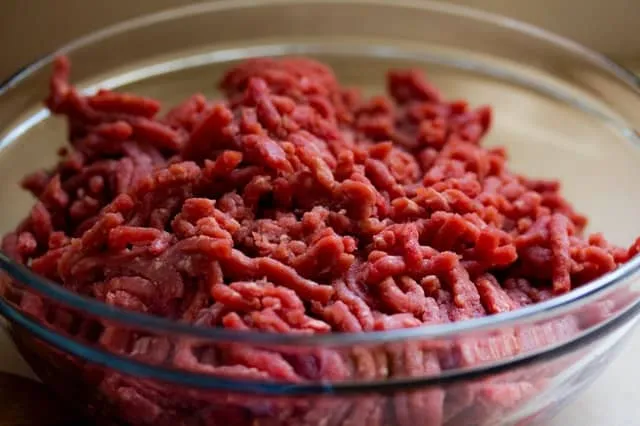
Portion the beef into ¼ lb (4 oz), ⅓ lb (5.3 oz), or ½ lb (8 oz) balls. Shape gently. Don’t overwork the meat or it gets dense. Press into a patty slightly wider than your bun, since it shrinks as it cooks.
The thumb indent: Press your thumb or a spoon into the center of each patty to create a shallow dimple. The center of a burger expands faster than the edges during cooking. The indent compensates for that and keeps the patty flat and in full contact with the surface.
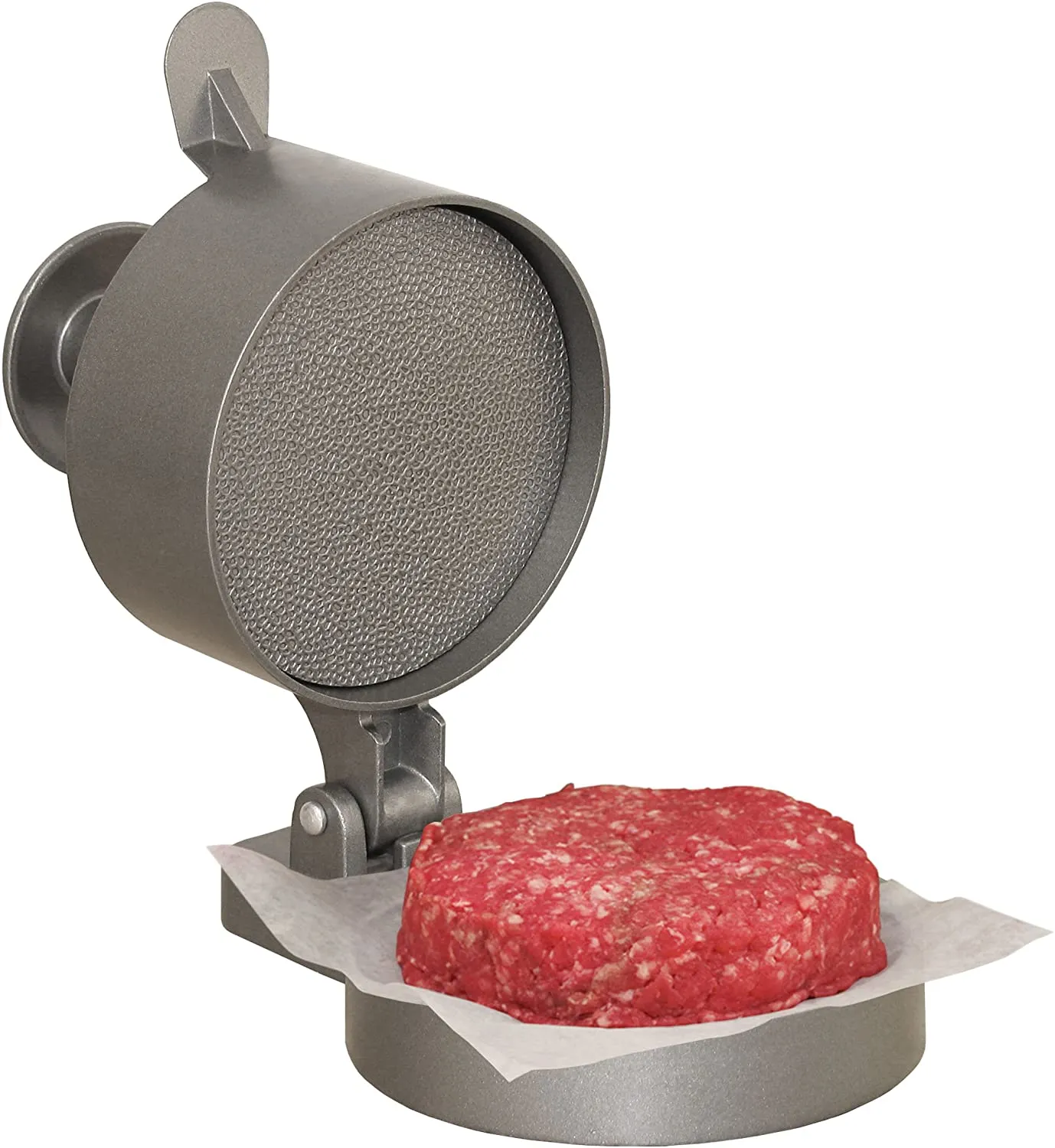
A burger press gives you consistent thickness across all patties. Not required, but useful if you’re cooking for a crowd and want even cook times.
Take the patties out of the fridge 20-30 minutes before cooking. Cold beef hitting a hot surface cooks unevenly.
Ingredients (Classic Burgers)
- 1.5 lbs 80/20 ground beef (makes four ⅓ lb patties)
- Kosher salt and black pepper
- Avocado oil for the griddle
- 4 brioche buns
- Cheese of choice (American, cheddar, pepper jack)
- Toppings and sauce (see below)
Instructions
Step 1: Preheat to 400°F. Set the Blackstone to medium-high heat. Preheat 8-10 minutes until the surface reaches 400°F. Add a thin layer of avocado oil to the cooking zone.
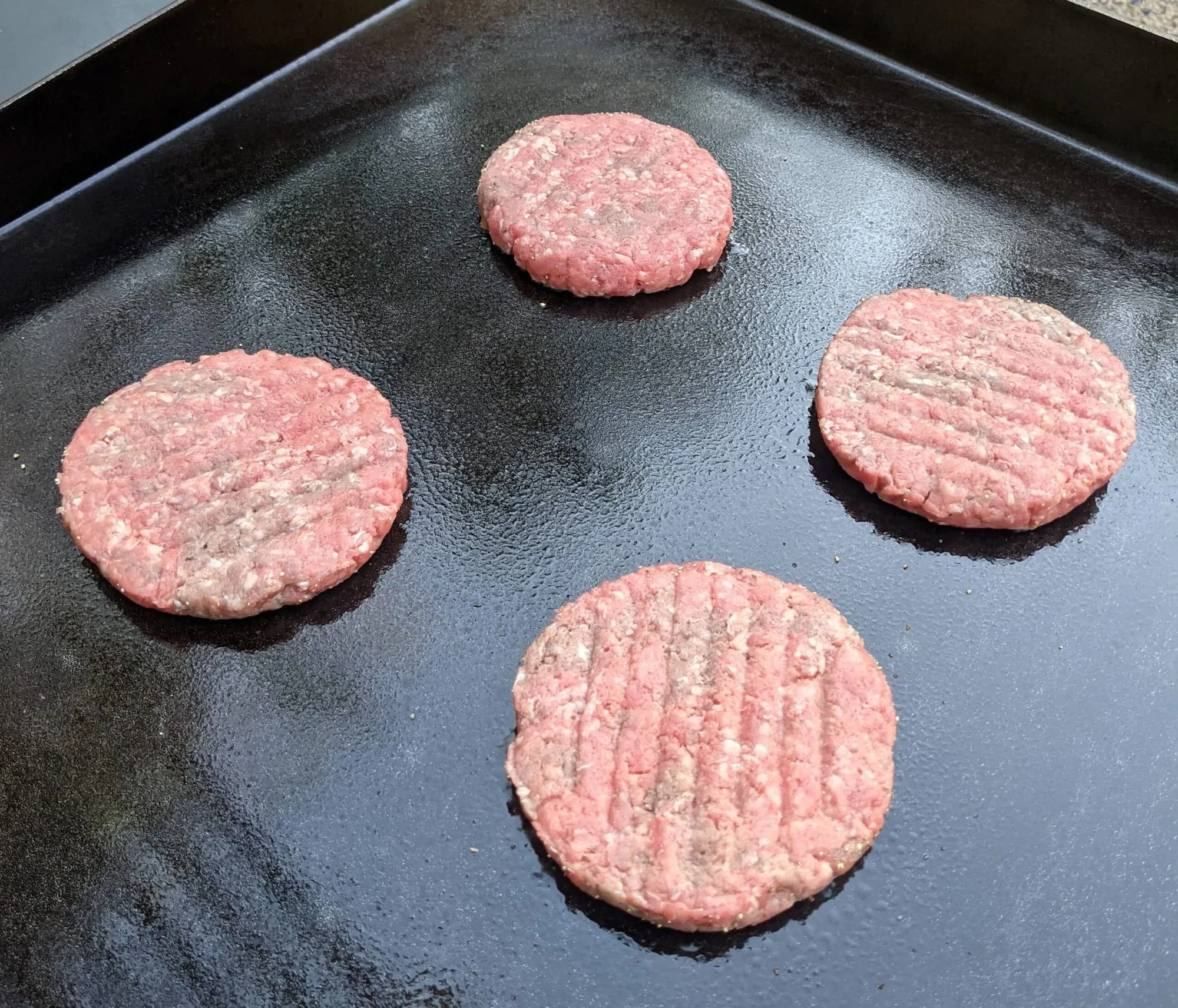
Step 2: Season and place. Season the top of each patty with salt and pepper (or a dedicated griddle seasoning) right before they go on the griddle. Place patties seasoned-side down, then immediately season the top. Space them at least 2 inches apart.
Step 3: Cook undisturbed. Don’t touch them for 4-5 minutes. Let the crust build and release naturally. Push any pooling grease toward the trap with your spatula. If excess grease is building up around the patties, that’s normal. Manage it but don’t panic.
Step 4: Flip once. Flip each patty. If making cheeseburgers, add cheese immediately after the flip so it has time to melt. Cook 3-4 minutes on the second side.
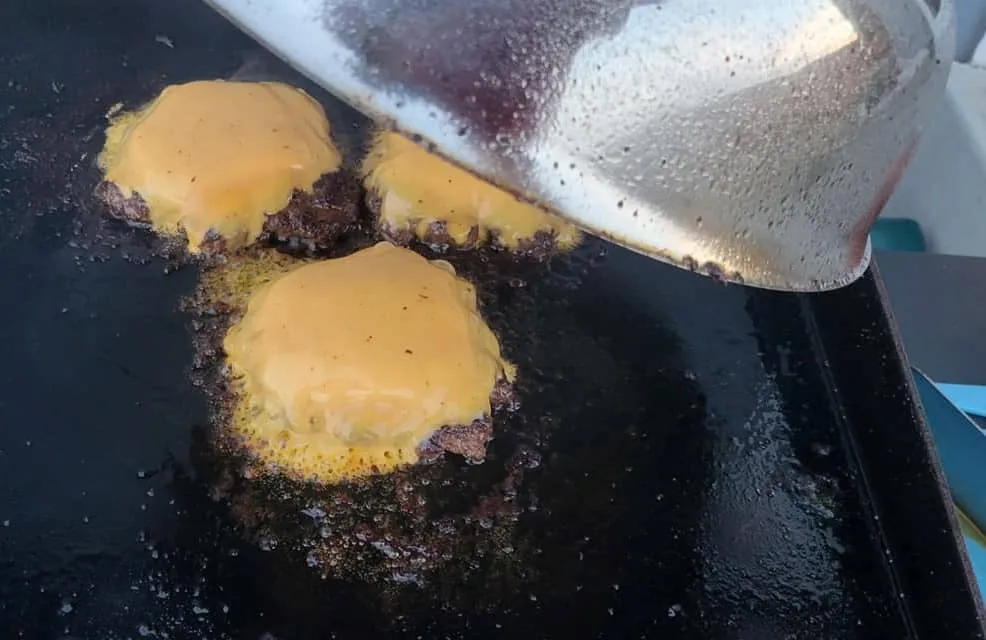
For thicker cheese slices that aren’t melting fast enough, cover with a basting dome for 60 seconds. Add a splash of water nearby for steam: the cheese will melt completely.
Step 5: Check doneness, rest, and serve. Use an instant-read thermometer. Pull at 5°F below target: the burger rises during the 3-minute rest on the plate.
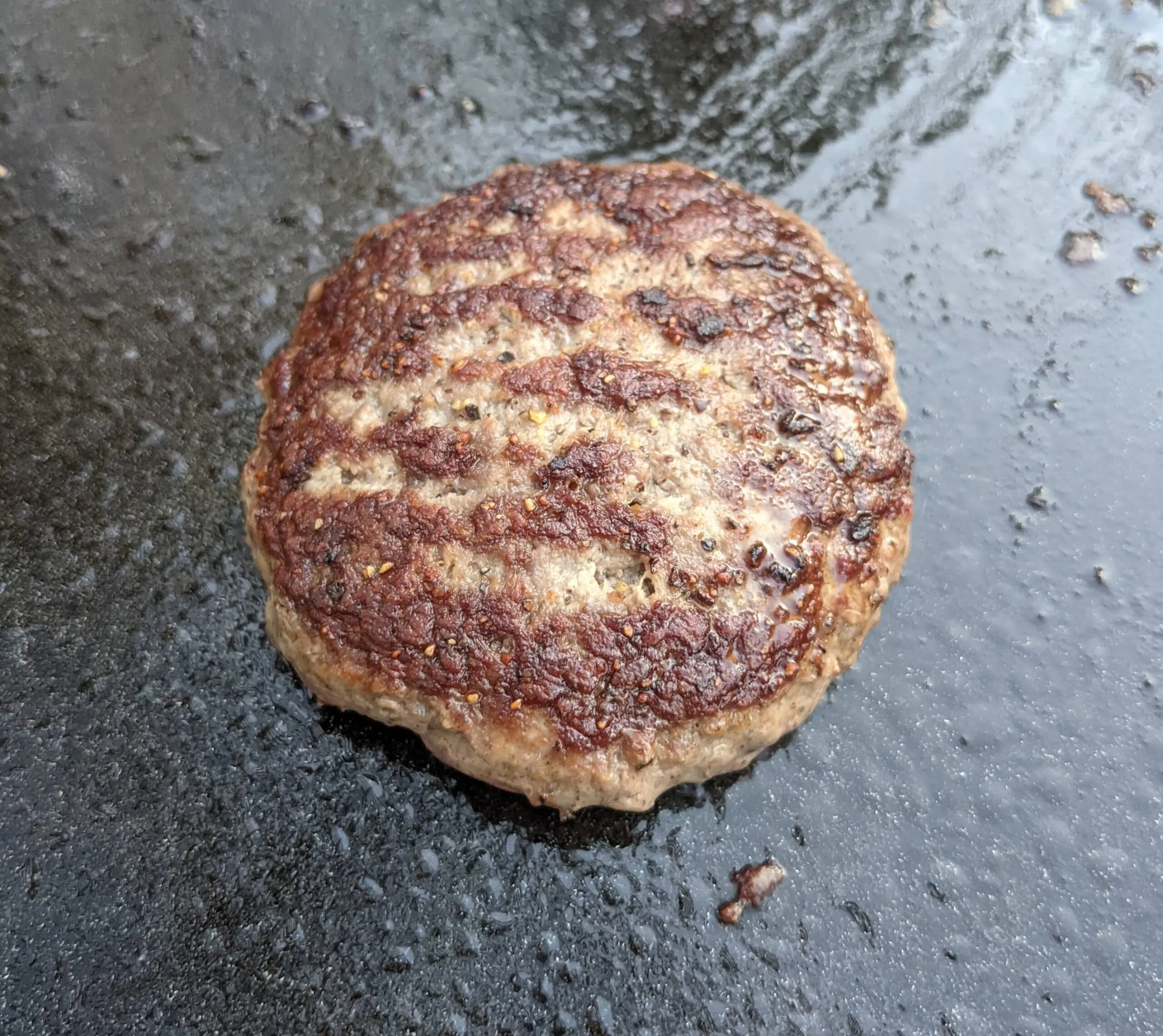
Toast the buns cut-side down on a buttered zone of the griddle for 30-60 seconds while the burgers rest. Assemble and serve immediately.
Doneness Guide (Classic Burgers)
| Doneness | Pull at | Final Temp |
|---|---|---|
| Medium-rare | 125°F | 130°F |
| Medium | 135°F | 140°F |
| Medium-well | 145°F | 150°F |
| Well done (USDA) | 155°F | 160°F |
The USDA recommends 160°F for ground beef. Medium-rare is popular but carries more risk since grinding exposes more surface area to potential pathogens. Your call: a thermometer is the right tool either way.
Part 2: Smash Burgers
The smash burger is a different animal. You start with a loose ball of cold beef, place it on a screaming-hot griddle, and immediately smash it flat with maximum force. The thin patty creates enormous surface area against the hot steel, triggering the Maillard reaction across the whole face of the burger. The result is thin, crispy-edged, deeply browned patties with a juicy center, and it only takes 3-4 minutes total.
This is the technique behind Shake Shack, Smashburger, and every smash burger restaurant. Now you can do it at home.
Key Differences from Classic Burgers
- Higher heat: 450-500°F vs. 400°F for classic
- Smaller portions: 3 oz balls, not ¼-½ lb patties
- Cold beef: keep the balls refrigerated until the griddle is ready; cold beef smashes better
- Smash immediately: you have about 10 seconds after the ball hits the surface before the exterior starts to set. Get the parchment on and press hard, right away.
- Double stack: smash burger patties are thin by design; two patties per burger is standard
Ingredients (Smash Burgers)
- 1.5 lbs 80/20 ground beef (makes 8 patties, 2 per burger, serves 4)
- Kosher salt and black pepper
- Avocado oil for the griddle
- 8 slices American cheese (melts best)
- 4 brioche buns
- Parchment paper, cut into roughly 6×6 inch squares
Instructions
Step 1: Portion the beef. Divide the beef into 8 equal balls, roughly 3 oz each. Roll gently. Don’t compress or pack the meat. Keep them cold in the fridge until the griddle is fully preheated.
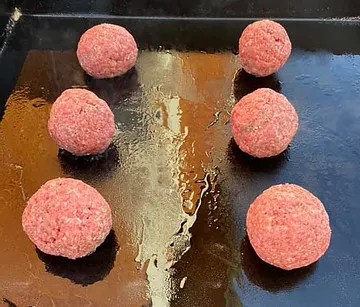
Step 2: Preheat to 450-500°F. Set the Blackstone to high heat. Preheat 10-15 minutes. This is hotter than classic burgers. High heat is what creates the Maillard crust. Add avocado oil right before cooking.
Step 3: Place and smash immediately. Set a beef ball on the griddle. Place a square of parchment paper over it and press down hard with a heavy spatula or smash burger press for 10-15 seconds. The patty should flatten to about ¼ inch thick. Season the top with salt and pepper.
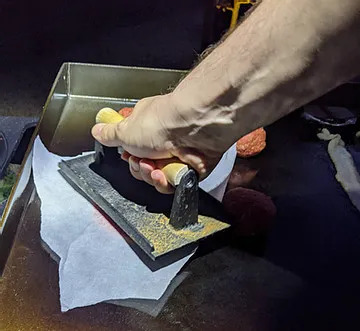
Do not move it. Work through the remaining balls one at a time, smashing each before moving to the next.
Step 4: Cook until the edges are crispy. Let the patties cook undisturbed for 2-3 minutes. You’ll know they’re ready to flip when: the edges are visibly browned and crispy, the top shows juices bubbling through, and the patty releases cleanly from the surface. If it resists, wait another 30 seconds.
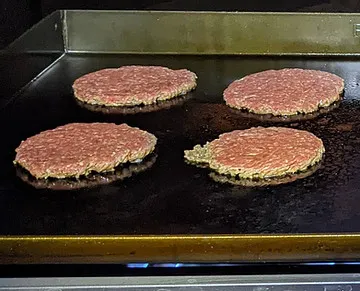
Step 5: Flip carefully. Hold your spatula at a 45-degree angle and slide it underneath the patty, working it back and forth to loosen the crust cleanly: you want every bit of that crust on the burger, not stuck to the griddle.
Flip. Do not press a second time. You already got the smash at the beginning; pressing again squeezes out the juices you just sealed in.
Immediately place a slice of American cheese on each patty.
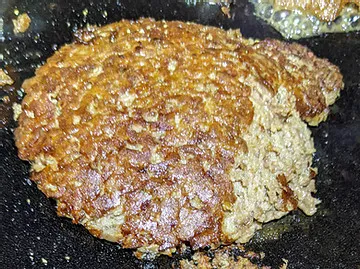
Step 6: Finish and stack. Cook 60-90 seconds on the second side until cheese is fully melted. Toast brioche buns cut-side down on a buttered zone while the burgers finish. Stack two patties per bun, add sauce and toppings, and serve immediately.
Special Sauce
This is the sauce for smash burgers. Better than ketchup alone, fast to make, keeps in the fridge for a week.
- ½ cup mayonnaise
- 2 tbsp ketchup
- 1 tbsp yellow mustard
- 1 tbsp sweet pickle relish
- 1 tsp white vinegar
- ½ tsp garlic powder
- ½ tsp onion powder
- Pinch of smoked paprika
Whisk everything together and refrigerate. It gets better as it sits. Make it at least 30 minutes ahead if you can.
Classic Burger Sauce
Simpler version, closer to In-N-Out’s spread:
- ¼ cup mayonnaise
- 1 tbsp ketchup
- ½ tbsp white vinegar
- 1 tsp sweet pickle relish
- 1 tsp white sugar
Mix and use immediately or refrigerate.
Toppings
Cheese: American (melts best for smash burgers), cheddar, pepper jack, swiss, blue cheese
Standard: Lettuce, tomato, white onion, dill pickles, avocado
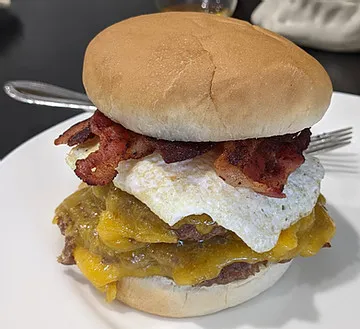
Griddle-cooked: Bacon, fried egg, sautéed mushrooms and onions, sautéed jalapeños, all of these cook on the same griddle, before the burgers, and hold warm while you cook the patties
If you want to take the onion concept further, the Oklahoma onion burger smashes shaved yellow onions directly into the beef during the cook, a Depression-era diner technique that produces a fundamentally different (and excellent) result.
Tips
Don’t crowd the surface. Each smash burger needs room or the griddle surface temperature drops and you lose the crust. Cook in batches if needed: the second batch takes 30 seconds longer since the griddle needs a moment to recover heat.
Cook toppings first. Bacon, sautéed onions, and mushrooms all take longer than the burgers. Cook them first and push to a warm zone while the patties cook.
Toast the buns on butter, not oil. Butter gives the bun a richer, more golden toast. 30-60 seconds cut-side down on medium heat.
Smash burgers don’t hold. Eat them immediately: the thin patties cool fast and the crispy edges soften within a few minutes. Have everything ready before the patties hit the griddle.
The parchment is important. Without it, the beef sticks to your press and tears when you lift. The parchment also lets you lean into the press with your body weight instead of just pressing down with your wrists.
More flat-top recipes: Blackstone Ground Beef Recipes · Smash Sliders · Blackstone Lunch Ideas · Blackstone Recipes for Beginners
Frequently Asked Questions
What’s the difference between a griddle burger and a smash burger?
A classic griddle burger is a pre-formed patty (¼-½ lb) cooked at 400°F for 4-5 minutes per side, thicker, juicier, cooked through to temperature. A smash burger starts as a loose ball of cold beef smashed thin (¼ inch) on a screaming-hot griddle (450-500°F), and cooks in 3-4 minutes total. The smash burger maximizes surface area for the Maillard reaction, giving you crispy, caramelized edges throughout.
What temperature should a Blackstone be for burgers?
It depends on the style. Classic patties: 400°F (medium-high). Smash burgers: 450-500°F (high). The higher temp for smash burgers is critical: the thin patty needs maximum heat to sear before it overcooks.
What’s the best beef for burgers on a Blackstone?
80/20 ground beef, 80% lean, 20% fat. The fat is what creates flavor, juiciness, and (for smash burgers) the crispy crust. Leaner beef like 90/10 produces dry burgers regardless of technique.
How long do burgers take on a Blackstone?
Classic: 4-5 minutes on the first side, 3-4 minutes on the second. Smash burgers: 2-3 minutes on the first side, 60-90 seconds on the second. Both styles cook faster than most people expect.
Do you need to add oil for burgers on a Blackstone?
A thin layer before cooking, yes. The beef has its own fat but you still need something between a cold patty and a hot surface at the start. Avocado oil is ideal, high smoke point, neutral flavor.
How do you get cheese to melt on a griddle burger?
Add cheese immediately after the flip and cover with a basting dome. A splash of water near the dome creates steam that melts the cheese in 60 seconds. American cheese melts the most evenly and is the right call for smash burgers specifically.
Can you cook frozen burger patties on a Blackstone?
Yes, but fresh is better. Frozen patties release water as they thaw on the griddle, which steams the exterior instead of searing it. If using frozen, run slightly lower heat (375°F) to give the patty more time to cook through before the outside burns.
Why is my smash burger sticking to the press?
You need parchment paper between the press and the beef. Without it, the meat adheres to the press and tears when you lift it: you lose the crust you just built. Always put parchment between the beef and whatever you’re pressing with.
What temperature do you cook burgers on a Blackstone griddle?
Cook burgers at 400°F (medium-high heat) on a Blackstone griddle, about 4-5 minutes on the first side and 3-4 on the second for a standard patty. For smash burgers, go higher at 450-500°F so the thin patty gets maximum crust before drying out.
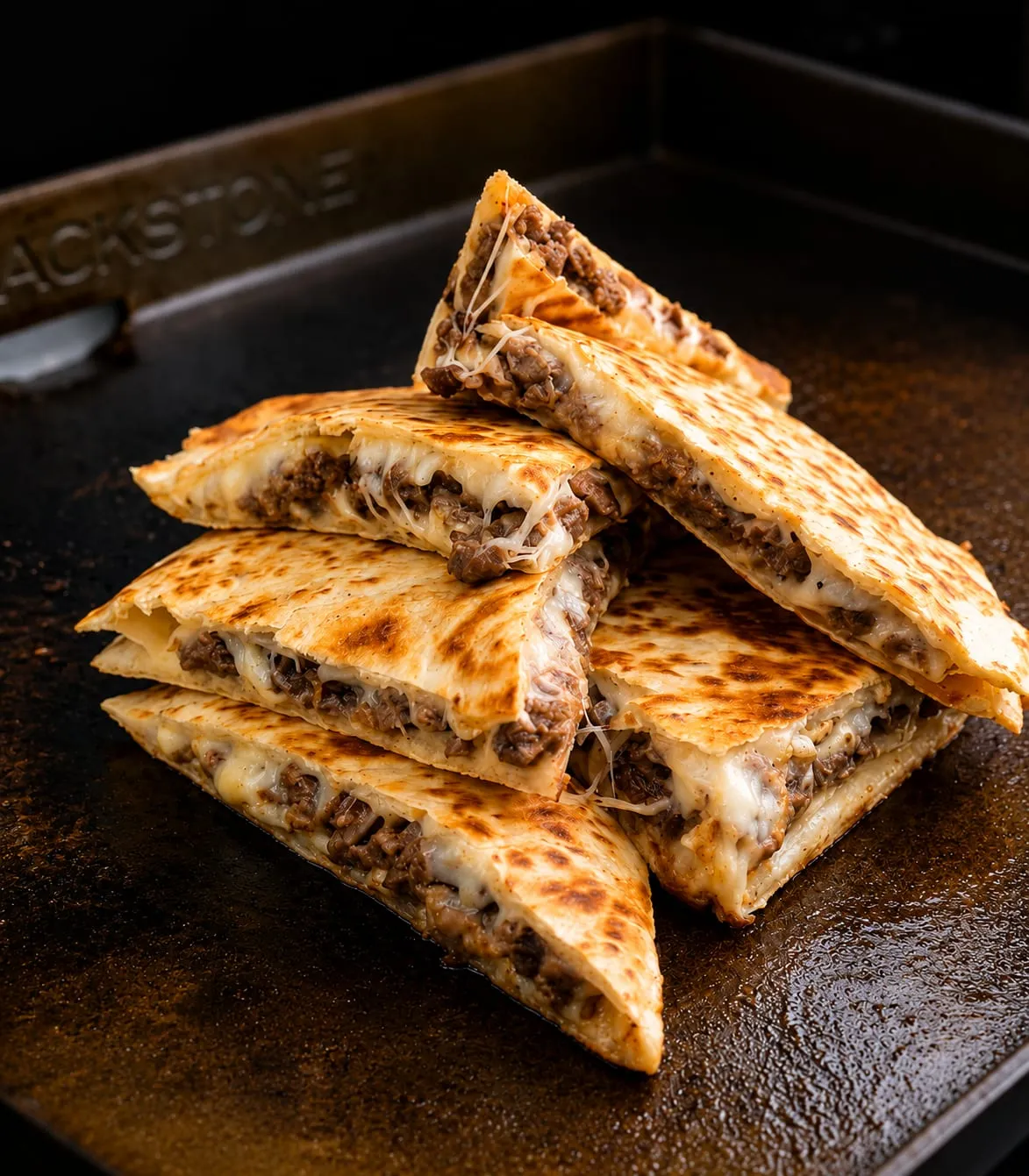
Blackstone Quesadillas Recipe: Crispy Every Time
Blackstone quesadillas with perfectly crispy tortillas and melted cheese, a simple flat-top method that beats the stovetop every time. Ready in 15 minutes.
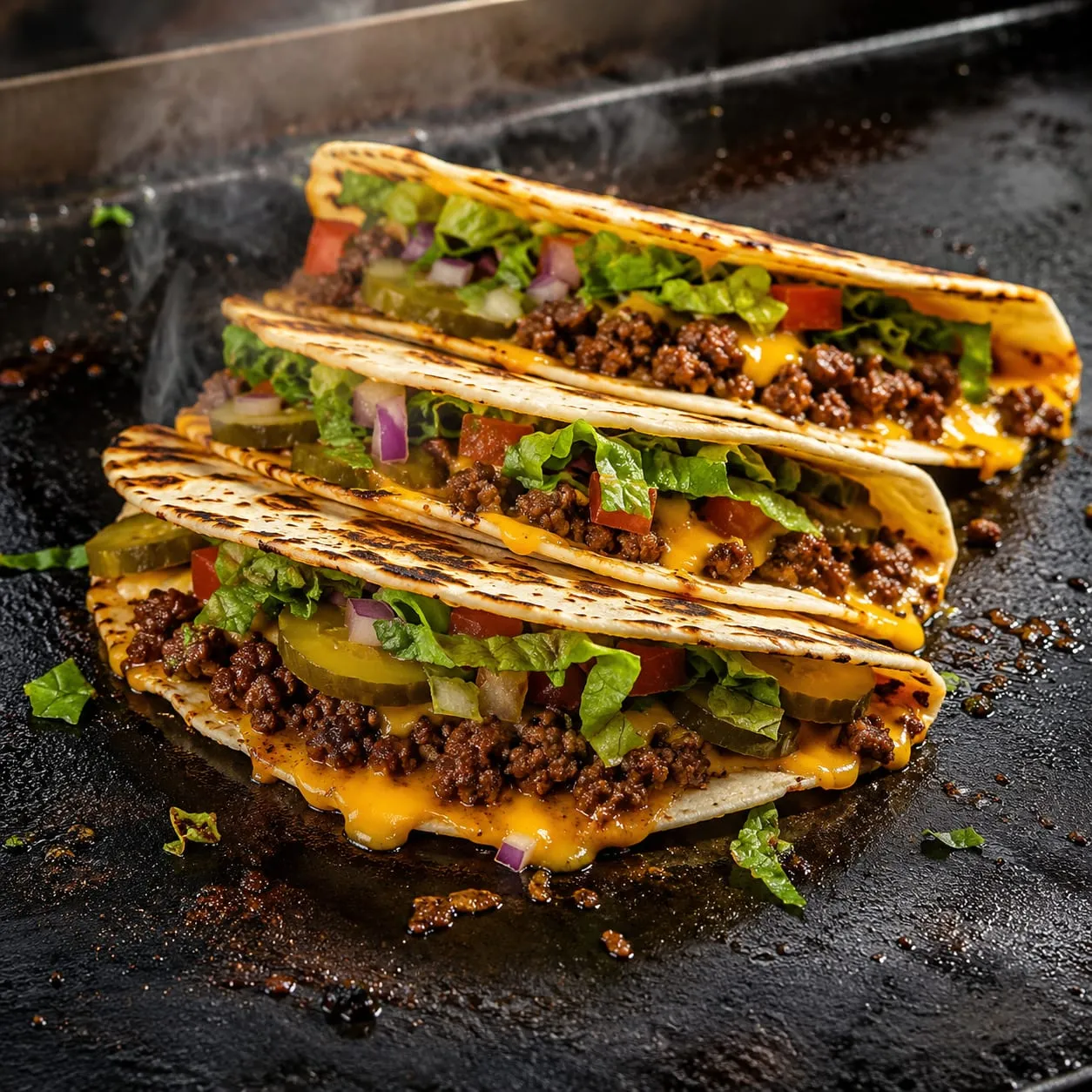
Blackstone Smash Burger Tacos
Smash burger tacos on a Blackstone griddle: a thin smash patty pressed directly onto a flour tortilla, cooked until the tortilla crisps, then loaded with toppings.
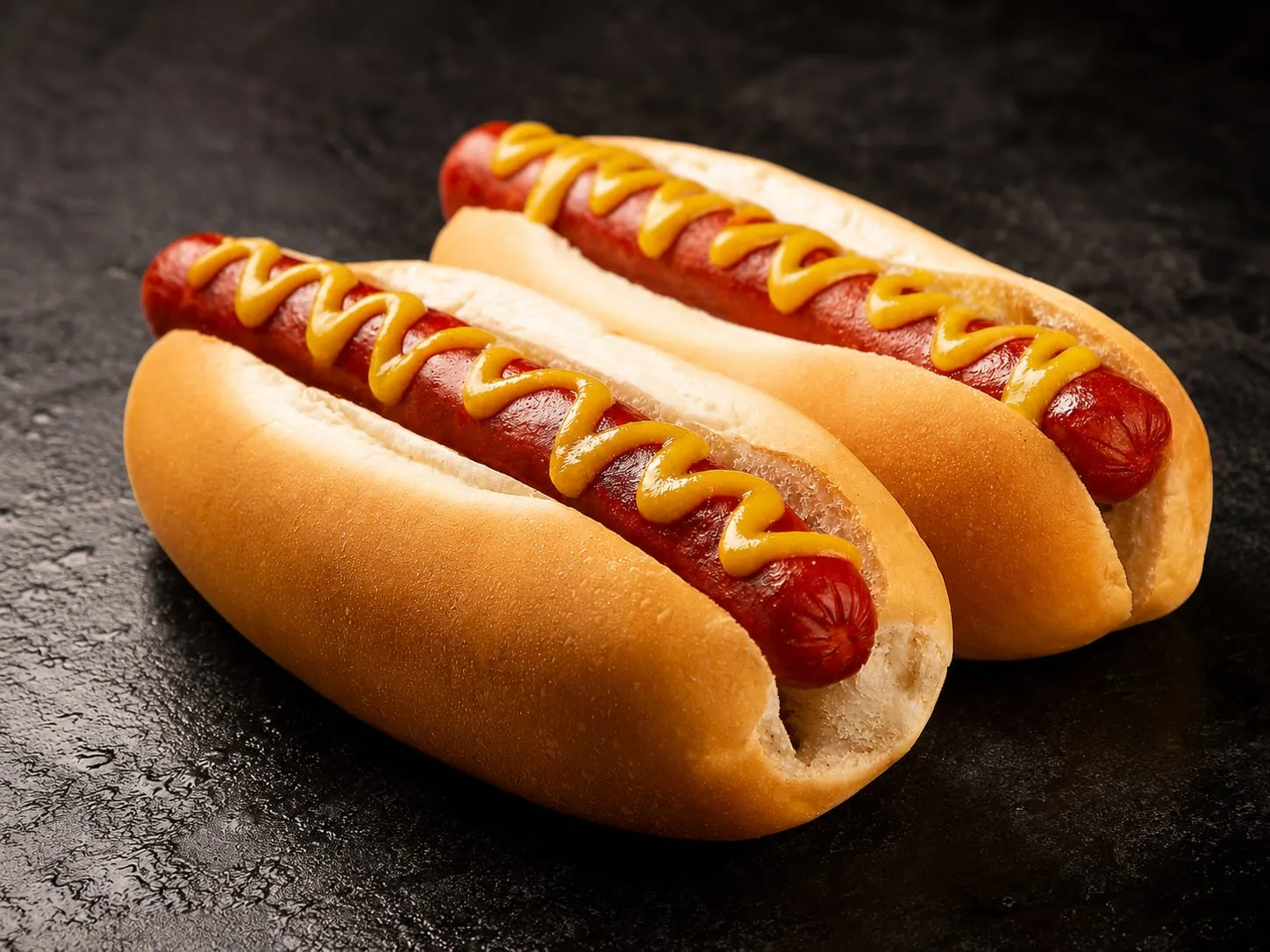
Hot Dogs on Blackstone: Charred Franks and All the Toppings
How to cook hot dogs on a Blackstone griddle: charred franks with a snap, toasted buns, and four topping combos: Chicago-style, chili dog, bacon-wrapped, and more.