
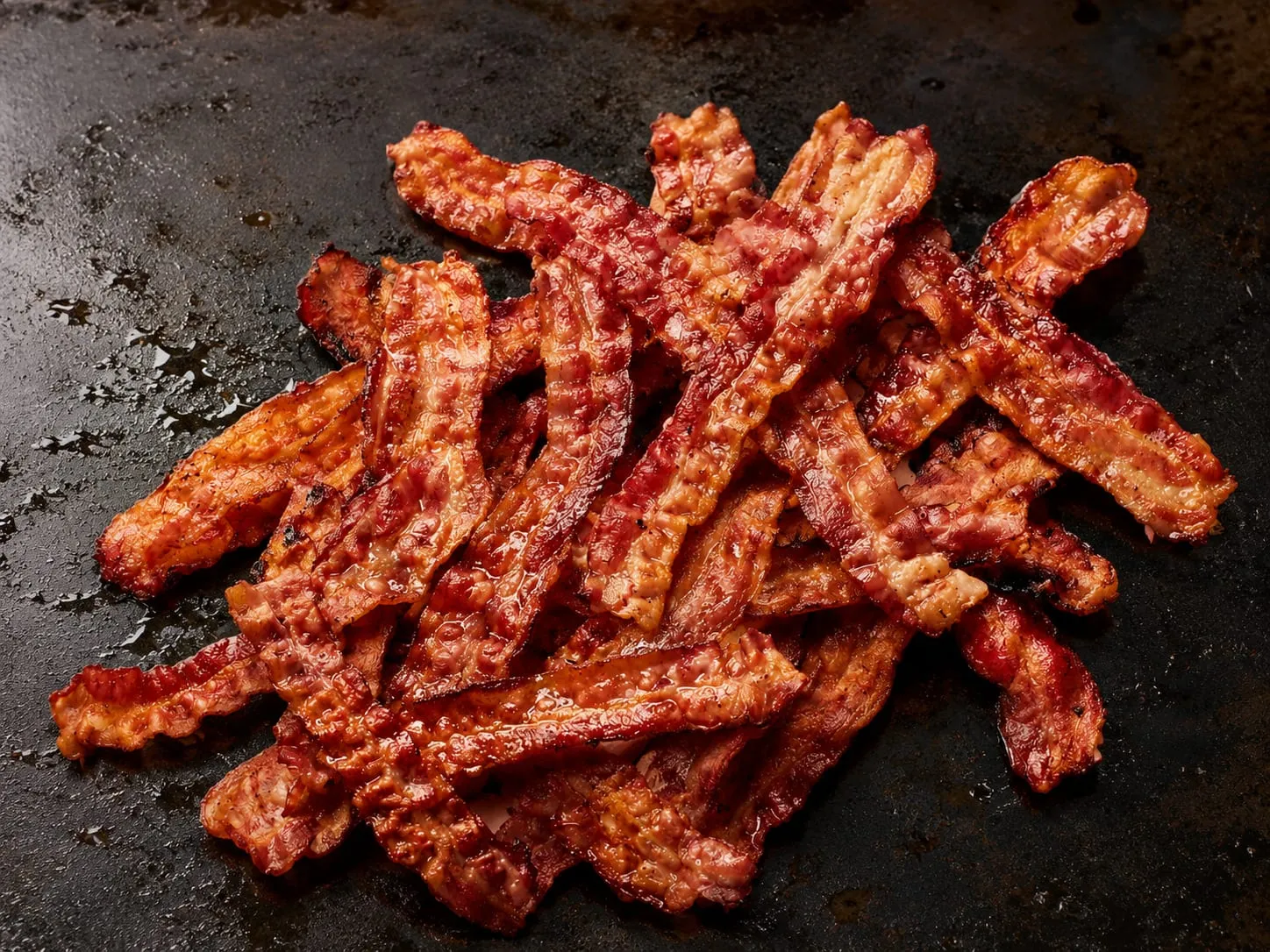
Blackstone Bacon: How to Cook It Crispy Every Time
Bacon is one of the best things you can cook on a Blackstone. The wide surface lets you lay out a full pound at once, the flat steel renders the fat evenly across every strip, and cleaning up the grease is just a matter of pushing it into the trap. No splattering grease on the stovetop, no crowded pan, no flipping strips one at a time. Bacon is still the best first demonstration of why the flat surface wins. It’s what I hand people the spatula for.
Whether you like it barely cooked and chewy, crispy and snapping, or right in the middle, the technique is the same. The only variable is time.
The Right Temperature for Bacon on a Blackstone
325-350°F, medium heat. This is the single most important thing to get right.
Too high (400°F+) and the bacon fat renders faster than the meat can keep up. You get burned edges and undercooked centers. At 325-350°F the fat renders slowly and evenly, the meat goes from pink to red to the color you want, and you have full control over doneness.
Set your burners to medium, preheat for 8-10 minutes, and check the surface with an infrared thermometer if you have one. If you don’t, medium on most Blackstones lands in the right range.
Do You Need Oil?
No. Bacon provides its own fat as it renders: more than enough to prevent sticking and cook the strips. Adding oil to the griddle first just means excess grease you’ll need to manage. Start with a dry, clean surface.
Instructions
Step 1: Bring Bacon to Room Temperature
Take the bacon out of the fridge 15-20 minutes before cooking. Cold bacon hitting a hot surface contracts and curls faster than room-temperature strips. Not critical, but it helps with even cooking.
Step 2: Preheat the Blackstone
Set all relevant burners to medium heat. Preheat 8-10 minutes until the surface reaches 325-350°F. Do not add oil.
Step 3: Lay Out the Bacon
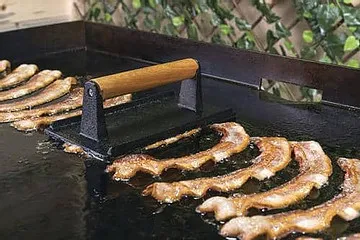
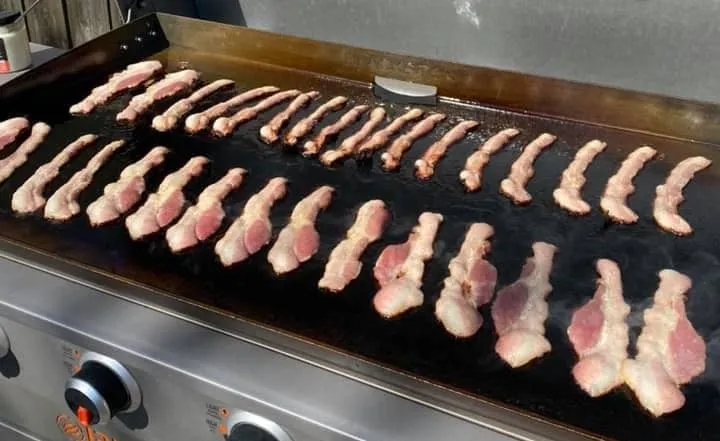
Place strips flat on the griddle without overlapping. Leave a little space between each strip, they’ll shrink as they cook. If using a bacon press, lay it on the griddle now to preheat alongside the surface.
Step 4: Cook Without Rushing
Without a press: Cook 5-8 minutes on the first side until the bottom is the color you want. Flip once and cook another 4-6 minutes on the second side. Total time varies by thickness and how crispy you want it.
With a press: Place the preheated press on top of the bacon right after laying it down. The press cooks from both sides simultaneously. Bacon will be done in 4-6 minutes and doesn’t need flipping.
Manage the grease as you cook: use your spatula to push rendered fat toward the grease trap. Excess pooling grease around the strips can cause uneven cooking.
Step 5: Pull and Rest
When the bacon reaches your desired doneness, remove with tongs to a plate lined with paper towels. Lay paper towels on top too. The bacon will crisp slightly more as it cools.
How to Know When It’s Done
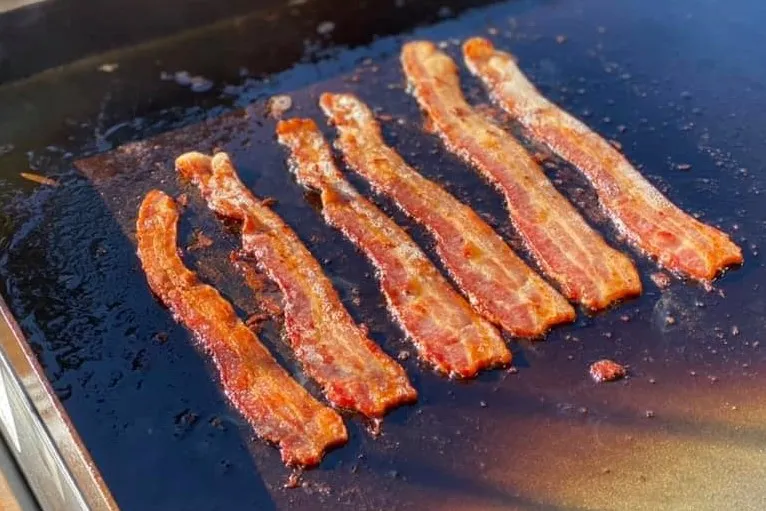
- Chewy: Meat is still slightly pink, fat is translucent white. Pull early.
- Medium: Meat is fully red-brown, fat is starting to turn golden. Around 8-10 minutes total.
- Crispy: Meat is deep reddish-brown, fat is golden-brown and starting to bubble. 12-14 minutes depending on thickness.
Bacon should always be cooked until the meat is no longer pink, regardless of how chewy or crispy you prefer it. The fat going from white to translucent is the visual signal the strip is done enough to eat.
Tips
Save the bacon grease. Pour it into a jar and store in the fridge for up to a month. It’s excellent for cooking eggs, sautéing vegetables, or making cornbread.
Thick-cut bacon takes longer. Add 2-3 minutes per side compared to standard-cut. Keep the heat the same, don’t crank it up to compensate.
Reheat bacon on the griddle, not the microwave. 2-3 minutes on medium heat revives the texture. A microwave turns it rubbery.
Hot grease is dangerous. Bacon releases a lot of hot fat. Use long tongs, not a short fork. Wear an apron and keep the kids back.
More flat-top recipes: Blackstone Breakfast Recipes · Blackstone Recipes for Beginners
Frequently Asked Questions
What temperature should the Blackstone be for bacon?
325-350°F, medium heat. This lets the fat render slowly and the meat cook evenly without burning. Cooking bacon above 375°F causes the fat to render too fast, leading to burnt edges and undercooked strips.
Do you need to add oil before cooking bacon on a Blackstone?
No. Bacon renders enough fat as it cooks to prevent sticking. Starting with oil just adds excess grease you’ll have to manage. A dry, well-seasoned griddle is all you need.
How long does bacon take on a Blackstone griddle?
Standard-cut bacon: 5-8 minutes on the first side, 4-6 on the second. Thick-cut: add 2-3 minutes per side. Total time ranges from 8-14 minutes depending on thickness and how crispy you want it.
Should you use a bacon press on a Blackstone?
It’s optional but useful. A press keeps strips flat so every part maintains contact with the steel, prevents curling, and speeds up cooking since it applies heat from both sides. If you cook bacon regularly, it’s worth having.
Why does bacon curl on the griddle?
The fat along the strip edges renders and contracts faster than the meat, pulling the strip into a curl. A bacon press eliminates this. Letting the bacon come to room temperature before cooking reduces it somewhat.
Can you cook bacon and eggs at the same time on a Blackstone?
Yes. Set the bacon on one zone at medium heat and eggs on a second zone at low heat (275-300°F). The eggs need lower heat than the bacon, so keep them toward a cooler burner. The Blackstone’s zone cooking capability is ideal for this.
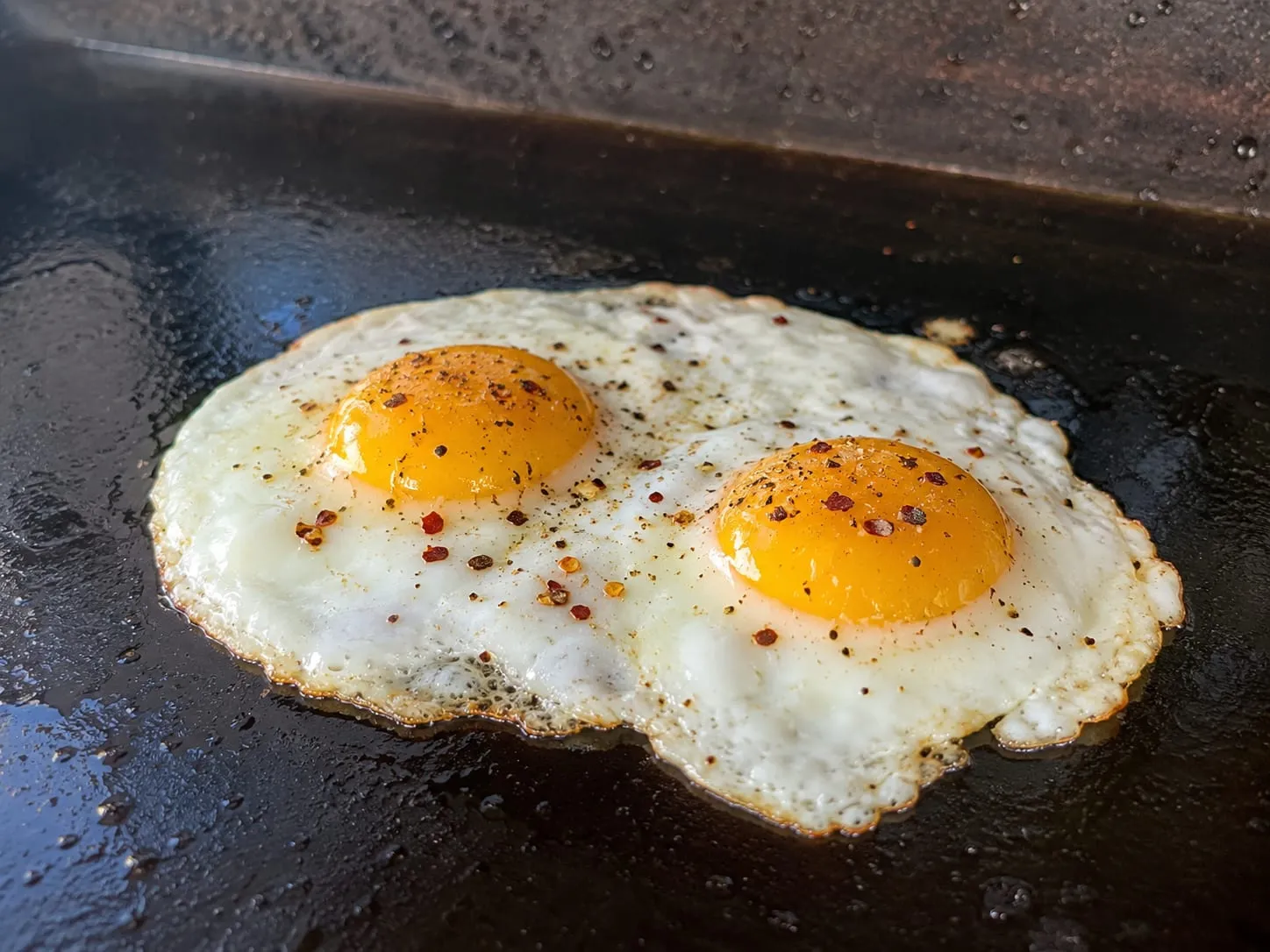
Blackstone Eggs: 6 Ways to Cook Them on the Flat-Top
How to cook eggs on a Blackstone griddle: fried, scrambled, over easy, omelets, and egg-in-a-hole, with the right temperature and tips for each.
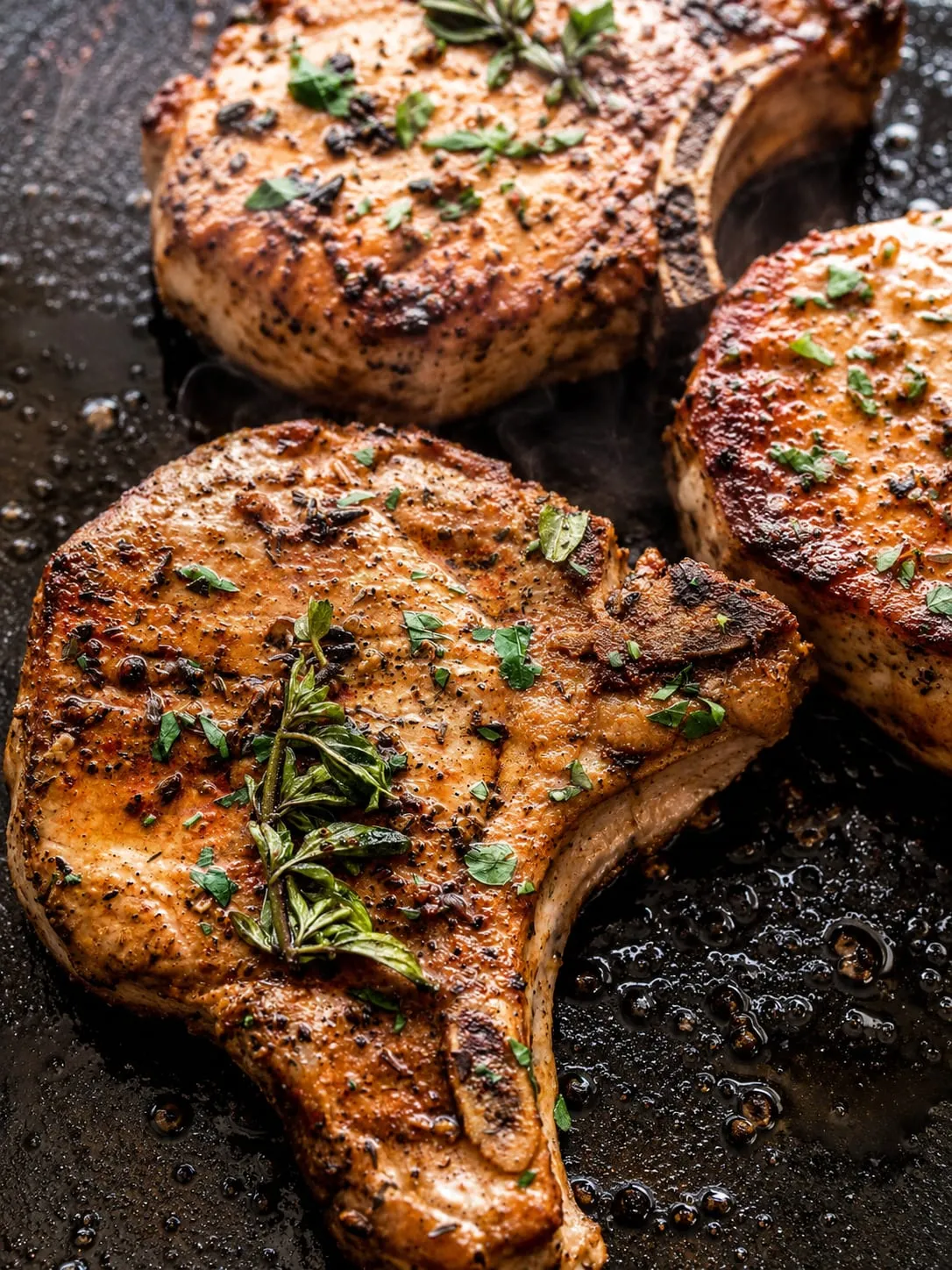
Blackstone Pork Chops: 3 Recipes for the Flat-Top
Pork chops on a Blackstone griddle: the right temperature and thickness, plus three recipes: garlic butter, peppercorn, and honey mustard.
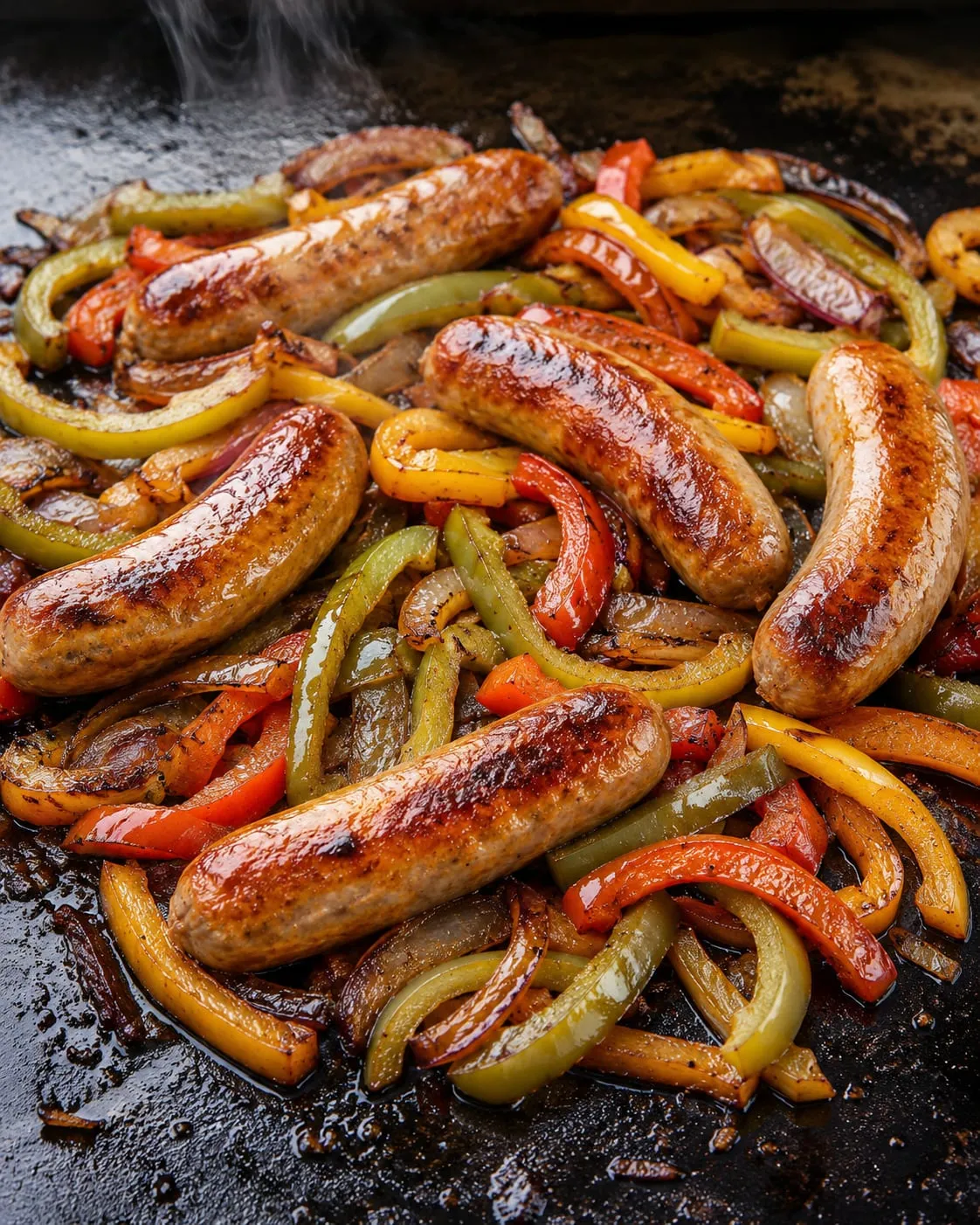
Blackstone Sausage and Peppers: Italian Sausage on the Flat-Top
Sausage and peppers on a Blackstone: Italian sausage seared until the casing snaps, peppers and onions caramelized in the fat. Ready in 25 minutes.