
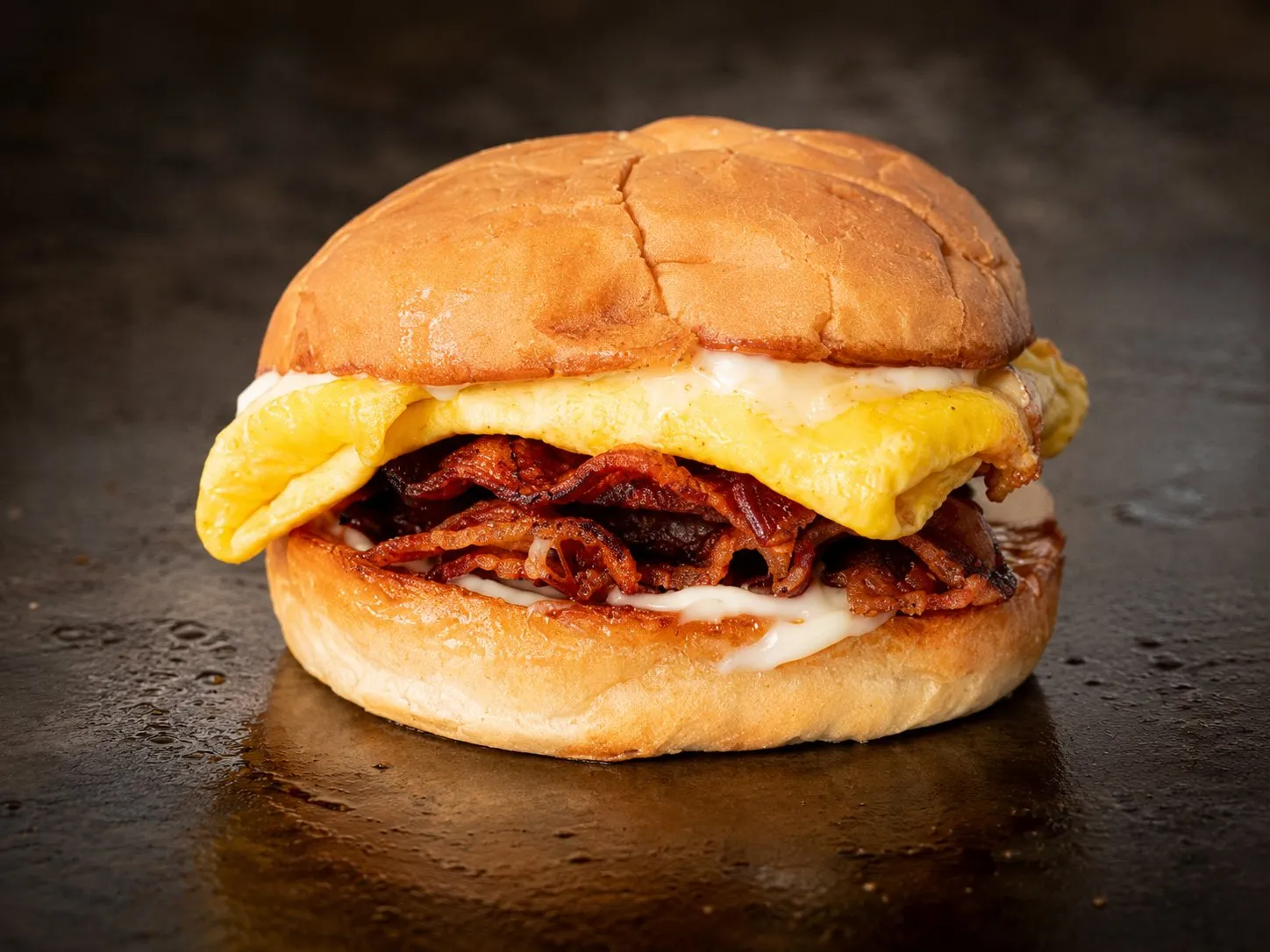
Blackstone Breakfast Sandwich (All Three Parts at Once)
Equipment
The breakfast sandwich is the dish that makes the case for a griddle better than almost anything else. In a kitchen you’re running three pans (one for bacon, one for eggs, a toaster for the rolls) and something is always cold by the time the rest is ready. On a flat top all three cook side by side on their own heat zones and land on the plate together, hot.
That’s the whole recipe, really: not a technique so much as an arrangement. Meat on the hot side, eggs on the cool side, rolls toasting in the middle. Once you’ve built four of these at once for a table of people, the pans start to feel silly.
Ingredients
Per sandwich:
- 2 strips bacon or 1 breakfast sausage patty
- 2 eggs
- 1 slice American or sharp cheddar
- 1 Kaiser roll, English muffin, bagel, or biscuit
- Butter for toasting
- Salt and pepper
- An egg ring, optional: it holds the egg in a neat round that covers the bun corner to corner
Optional add-ons: sliced avocado, hot sauce, or a spoonful of smash burger sauce if you want it closer to a fast-food breakfast sandwich.
Instructions
Step 1: Set up two zones
Run one side of the griddle at medium-high (about 375°F) for the meat, and the other at medium-low (about 325°F) for the eggs. Eggs bond to hot steel instantly. They need the cooler side. My heat zones guide covers dialing this in on a two-burner griddle.
Step 2: Start the meat
Lay bacon or sausage patties on the hot zone. Bacon takes 8-10 minutes and needs a flip or two; sausage patties take 4-5 minutes per side. Start here because it’s the longest cook, and because the rendered fat is about to become useful.
Step 3: Toast the rolls in the fat
Split the rolls and lay them cut-side down in the rendered bacon or sausage fat. Ninety seconds is enough. You want golden, not crunchy. Toasting in the meat fat rather than plain butter is the single upgrade that makes a homemade breakfast sandwich taste like a diner’s. Pull them and set aside.
Step 4: Cook the eggs on the cool side
Butter the cooler zone, then pick a shape:
- Broken and flat: crack the eggs straight onto the steel and break the yolks. Simplest, and nothing runs down your wrist later.
- Folded: cook flat, then fold the edges in to roughly bun size. What’s in the photo above, and the quickest tidy result without extra gear.
- Ring-molded: butter the inside wall of an egg ring, set it on the griddle, and crack the egg in. Lift the ring once the white sets, around 90 seconds.
However you shape them, season with salt and pepper, cook about 2 minutes, flip, lay a slice of cheese on each, and dome for 30 seconds to melt. And break the yolk unless you’re eating it over a plate: a runny yolk is a great breakfast and a terrible sandwich.
Step 5: Build and serve
Egg and cheese on the bottom half, meat on top, cap it, and serve immediately. Everything should still be steaming.
Tips
Butter the egg ring, not just the griddle. If you’re using a ring, a quick swipe of butter around the inside wall is what lets the cooked egg drop out cleanly. Skip it and you’ll be prying the white off the metal with a spatula edge. My egg ring guide covers which styles release best.
Cheese goes on the egg, not the meat. The egg is hotter and holds heat longer, so it melts the cheese properly. Cheese laid on cooled bacon just sits there.
Build a pile for a crowd. Cook all the meat, all the eggs, and all the rolls in batches, then assemble at the end. Wrapped in foil, these hold for 20 minutes without going soggy, genuinely useful for camping or a house full of people.
More flat-top recipes: Blackstone Breakfast Recipes · Blackstone Griddle Sandwiches · Breakfast Burrito · Breakfast Burger
Frequently Asked Questions
What temperature do you cook a breakfast sandwich on a Blackstone?
Two zones: about 375°F for the bacon or sausage and about 325°F for the eggs. Eggs bond to steel and overcook fast at searing temperatures, so they need the cooler side. The rolls toast in the middle in whatever fat the meat left behind.
How do you cook eggs for a breakfast sandwich?
Cook them on a buttered medium-low zone, about 2 minutes, then flip, add cheese, and dome for 30 seconds to melt. Shape them three ways: broken and flat, folded to bun size, or cooked in an egg ring for a perfectly round egg. Whichever you choose, break the yolk. A fully-set egg is what makes it a sandwich instead of a mess.
Do you need an egg ring for breakfast sandwiches?
No, but it’s the most common breakfast sandwich accessory for a reason: a ring holds the egg in a round shape that covers the bun edge to edge instead of spreading thin across the griddle. Folding a flat egg gets you most of the way there for free. If you use a ring, butter the inside wall so the egg releases cleanly.
Can you make breakfast sandwiches ahead of time?
Yes. Assemble them, wrap in foil, and they hold hot for about 20 minutes, which makes them ideal for a crowd or a campsite. For longer storage, cool completely, wrap individually, refrigerate up to 3 days, and reheat wrapped in foil on a 300°F griddle for 5-6 minutes.
What’s the best bread for a breakfast sandwich?
Anything sturdy enough to hold up and worth toasting: Kaiser rolls, English muffins, bagels, or biscuits all work (for biscuits cooked on the griddle, see the biscuits and gravy method). Toast the cut side in the rendered bacon or sausage fat rather than plain butter. It’s the single biggest flavor upgrade in the whole recipe.
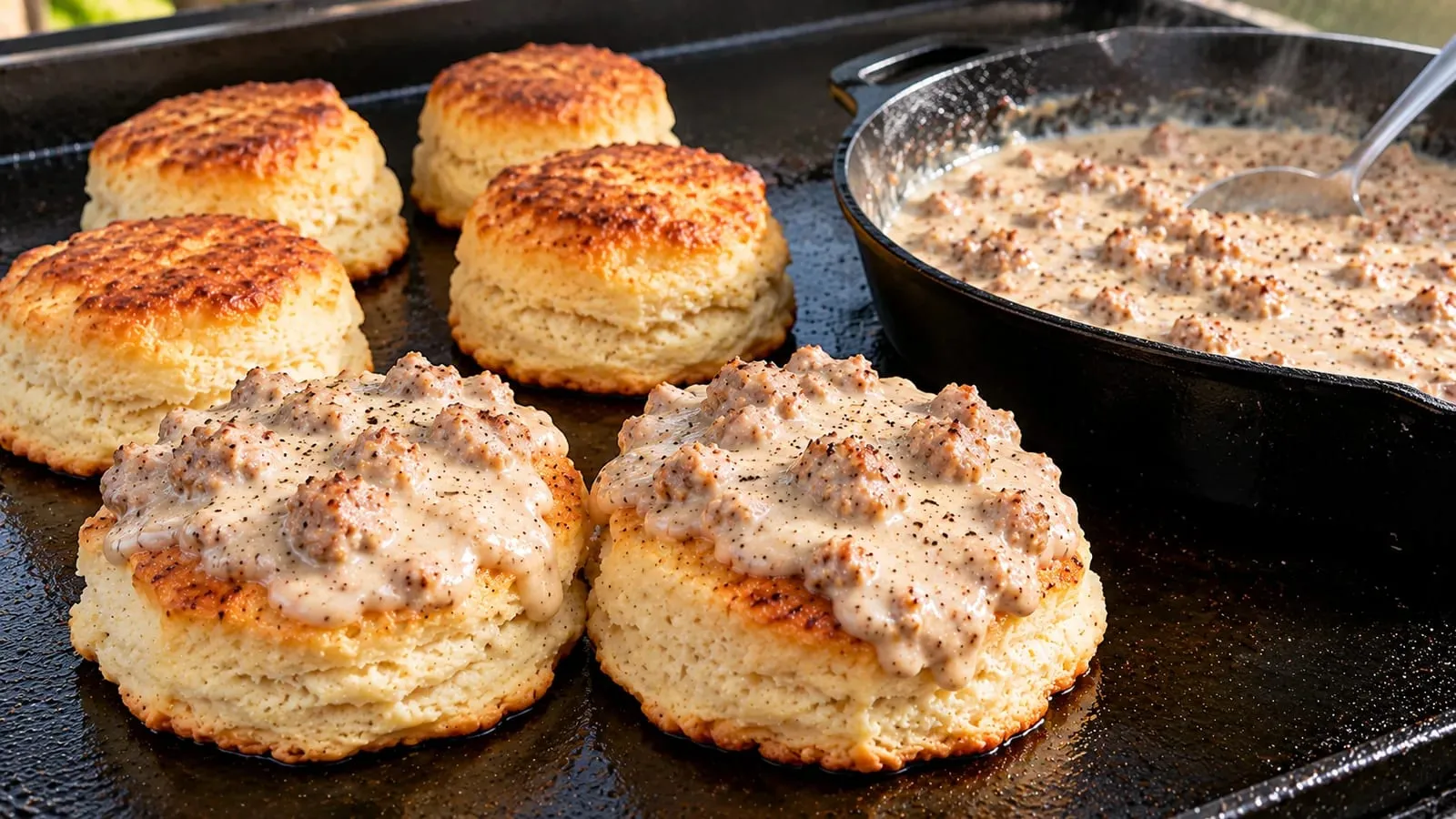
Blackstone Biscuits and Gravy
Biscuits and gravy on a Blackstone griddle: canned biscuits cooked under a dome on the flat top, with sausage gravy made in a cast-iron skillet on the same griddle.
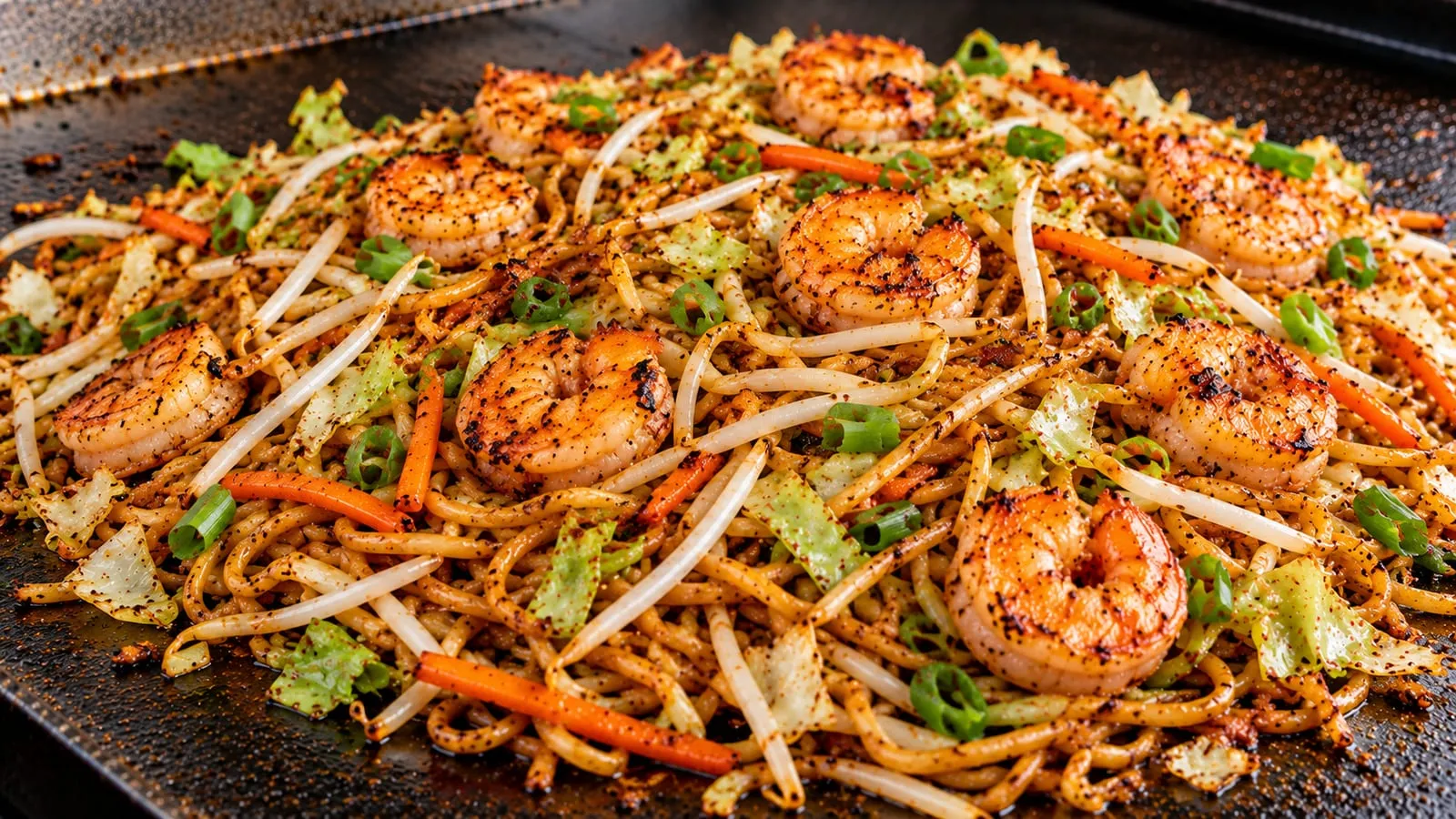
Blackstone Shrimp Chow Mein
Shrimp chow mein on a Blackstone griddle: noodles crisped flat on hot steel, seared shrimp, cabbage, carrots, and bean sprouts in a light soy and oyster sauce.
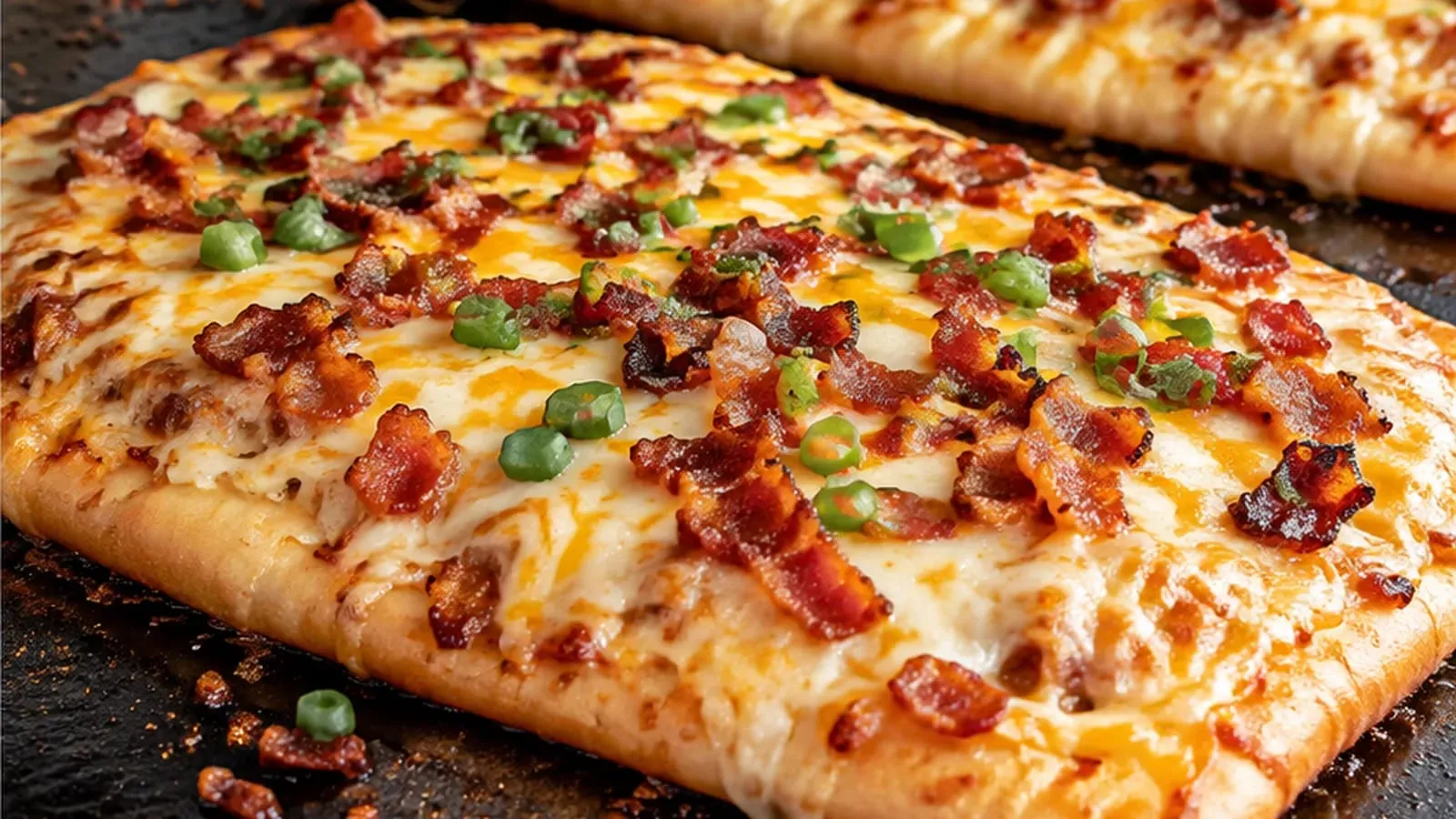
Blackstone Cheesy Bacon Flatbread
Cheesy bacon flatbread on a Blackstone griddle: store-bought naan crisped in rendered bacon fat, brushed with garlic butter, and topped with mozzarella, parmesan, and crumbled bacon.