
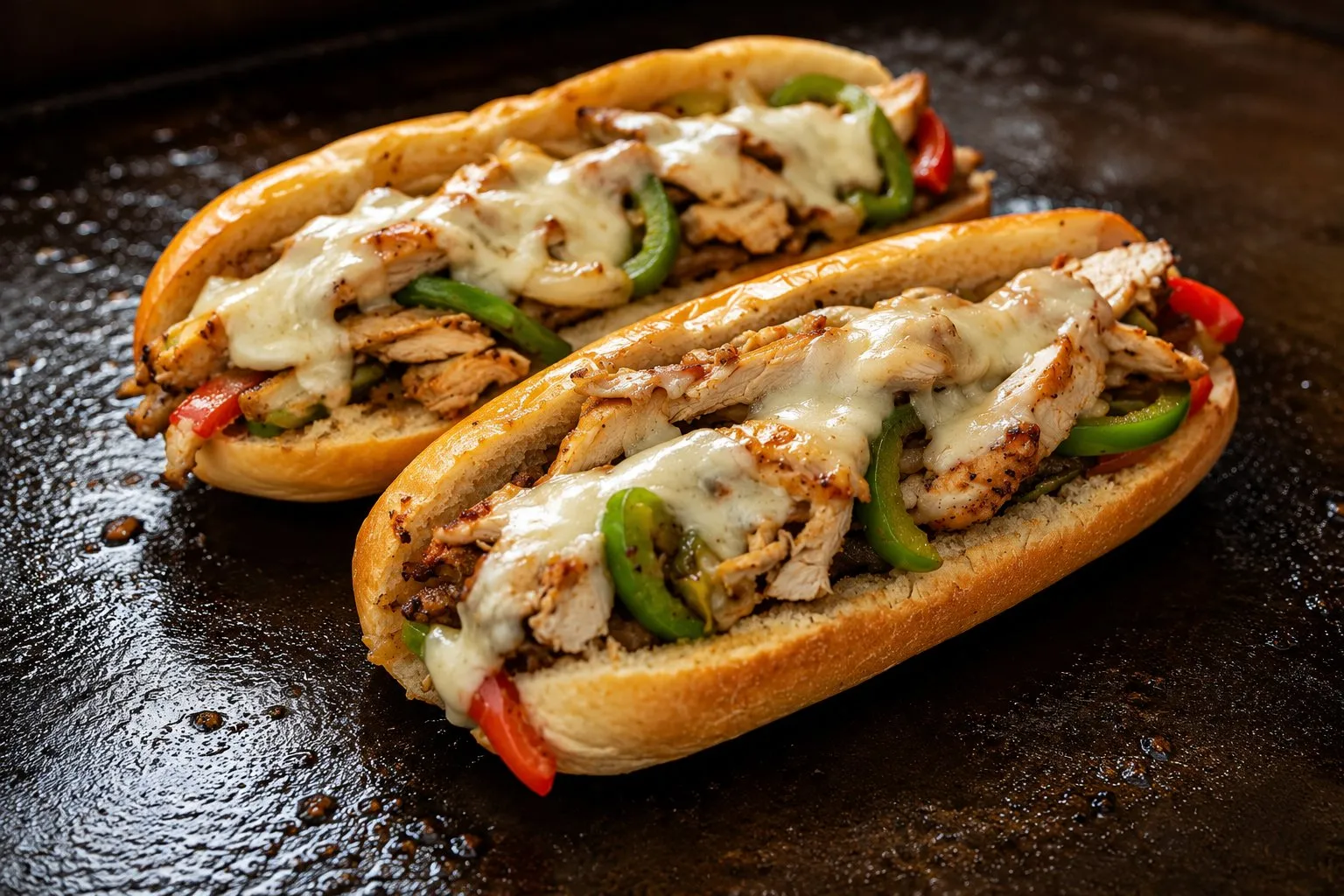
Blackstone Chicken Philly Cheesesteak (Juicy, Not Dry)
The chicken Philly is the lighter cousin of the classic cheesesteak, and it’s the one people order when they want the sandwich without the richness of ribeye. Same method (chopped on the steel, folded with peppers and onions, blanketed in melted provolone) with one real difference that most recipes gloss over.
Chicken has almost no fat. A ribeye cheesesteak bastes itself as it cooks; the beef fat renders out, coats the onions, and keeps everything glossy. Chicken breast renders nothing. Cook it exactly the way you’d cook the beef version and you get dry, chalky meat in a bun. The fix is simple, and it’s the whole recipe: add the fat back. That means thighs instead of breast where you can, oil or butter on the griddle, and pulling the chicken the moment it’s done rather than letting it sit on hot steel.
Ingredients
- 1½ lbs boneless chicken, thighs preferred, breast works
- 1 large onion, sliced thin
- 1 green bell pepper, sliced thin (a red pepper alongside it adds color and a little sweetness)
- 8 slices provolone
- 2 tbsp avocado oil or other high smoke point oil, divided
- 2 tbsp butter
- 1 tsp garlic powder
- 1 tsp onion powder
- Salt and pepper
- 4 hoagie rolls
Instructions
Step 1: Slice the chicken thin, and cold
Put the chicken in the freezer for 15-20 minutes first. Firm, partially frozen chicken slices cleanly into thin strips; room-temperature chicken tears and slides. Slice against the grain as thin as you can manage.
Step 2: Preheat to 400°F
Medium-high, preheated a full 10 minutes, the same searing zone as the beef version. A cool surface steams chicken instead of browning it, which is the other half of the dryness problem.
Step 3: Cook the vegetables first
Add 1 tablespoon of oil and the onions and peppers to a medium zone. Cook 6-8 minutes until soft and browning at the edges. Push them to a cool zone to hold. They need longer than the chicken and you don’t want them waiting on it.
Step 4: Sear the chicken hard and fast
Add the remaining oil to the hottest zone and spread the chicken in a thin, even layer. Leave it alone for 60-90 seconds to take color, then chop and stir with two metal spatulas, breaking up clumps. Season with garlic powder, onion powder, salt, and pepper. Total time is 3-4 minutes: pull it as soon as it hits 165°F and the pink is gone. This is where chicken Phillies die; another two minutes “to be safe” is what makes them chalky.
Step 5: Combine and add the butter
Fold the vegetables back in with the chicken, add the butter, and toss until it melts through everything. This is the fat you’re replacing. It does the job the ribeye’s rendered fat does in the original.
Step 6: Melt the cheese and load
Shape the mixture into four roll-length piles. Lay two slices of provolone over each, then dome for about 60 seconds to steam-melt the cheese. Toast the split rolls face-down on a clean zone while you wait, then scoop each pile straight into a roll with your spatula.
Tips
Thighs beat breast here. Dark meat has enough fat to survive a hard sear and a lot more flavor, and it’s nearly impossible to dry out. If you use breast, be even more aggressive about pulling it early.
Freeze before slicing, every time. Fifteen minutes in the freezer is the difference between thin, even strips and shredded chicken.
Don’t crowd the surface. Piled chicken steams in its own moisture and turns gray. Spread it in a single thin layer and cook in two batches if your griddle zone is small. The second batch takes three minutes.
The dome is doing real work. Trapped steam melts provolone evenly across the pile in a way that just laying cheese on top never does. Any metal bowl works if you don’t own one.
More flat-top recipes: Blackstone Philly Cheesesteak · Blackstone Chicken Recipes · Blackstone Griddle Sandwiches · Chicken Thighs
Frequently Asked Questions
What temperature do you cook a chicken Philly on a Blackstone?
400°F, medium-high, the same as a beef cheesesteak. Preheat a full 10 minutes. Thin-sliced chicken cooks in 3-4 minutes at that temperature, and pulling it the moment the pink disappears is what keeps it juicy.
How do you keep chicken Philly cheesesteaks from drying out?
Add back the fat that chicken doesn’t have. Use thighs instead of breast, cook in oil rather than dry, finish with butter folded through the mixture, and pull the chicken off the heat as soon as it’s cooked. Overcooking by even two minutes is the main cause of dry chicken Phillies.
Should you use chicken breast or thighs for a chicken Philly?
Thighs. They carry enough fat to stay juicy through a hard sear, have more flavor, and are far more forgiving of timing. Breast works if you slice it thin and pull it early, but it gives you no margin for error.
How do you slice chicken thin for a Philly cheesesteak?
Freeze it for 15-20 minutes first. Partially frozen chicken is firm enough to slice cleanly into thin strips against the grain, while room-temperature chicken slides and tears under the knife. Thin slices are what let it cook in 3-4 minutes.
Blackstone Birria Torta
Birria torta on a Blackstone griddle: bolillo rolls crisped in consomé fat, shredded birria and Oaxaca melted together under a dome, then loaded with onion, cilantro, and avocado and dipped in consomé.
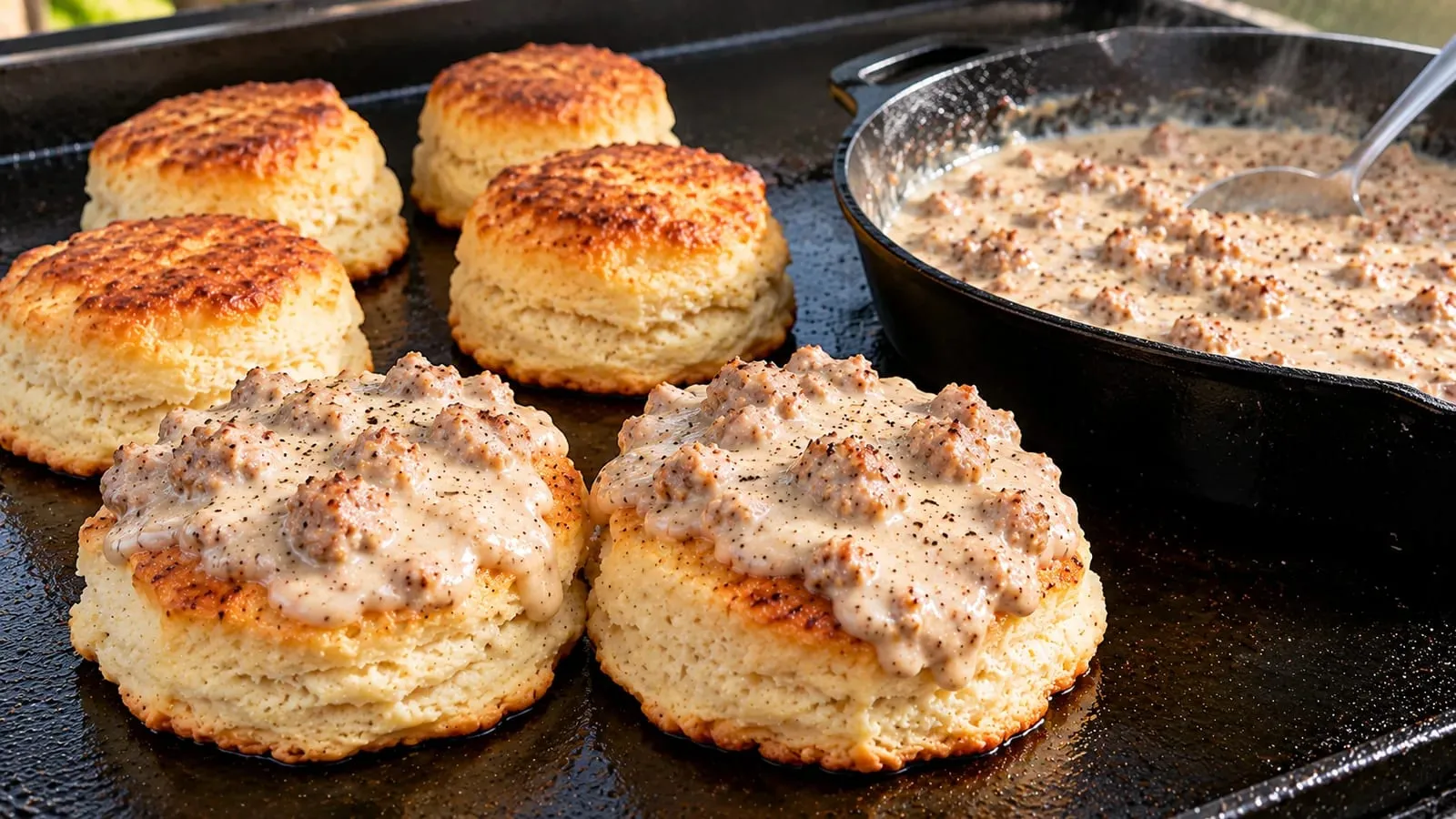
Blackstone Biscuits and Gravy
Biscuits and gravy on a Blackstone griddle: canned biscuits cooked under a dome on the flat top, with sausage gravy made in a cast-iron skillet on the same griddle.
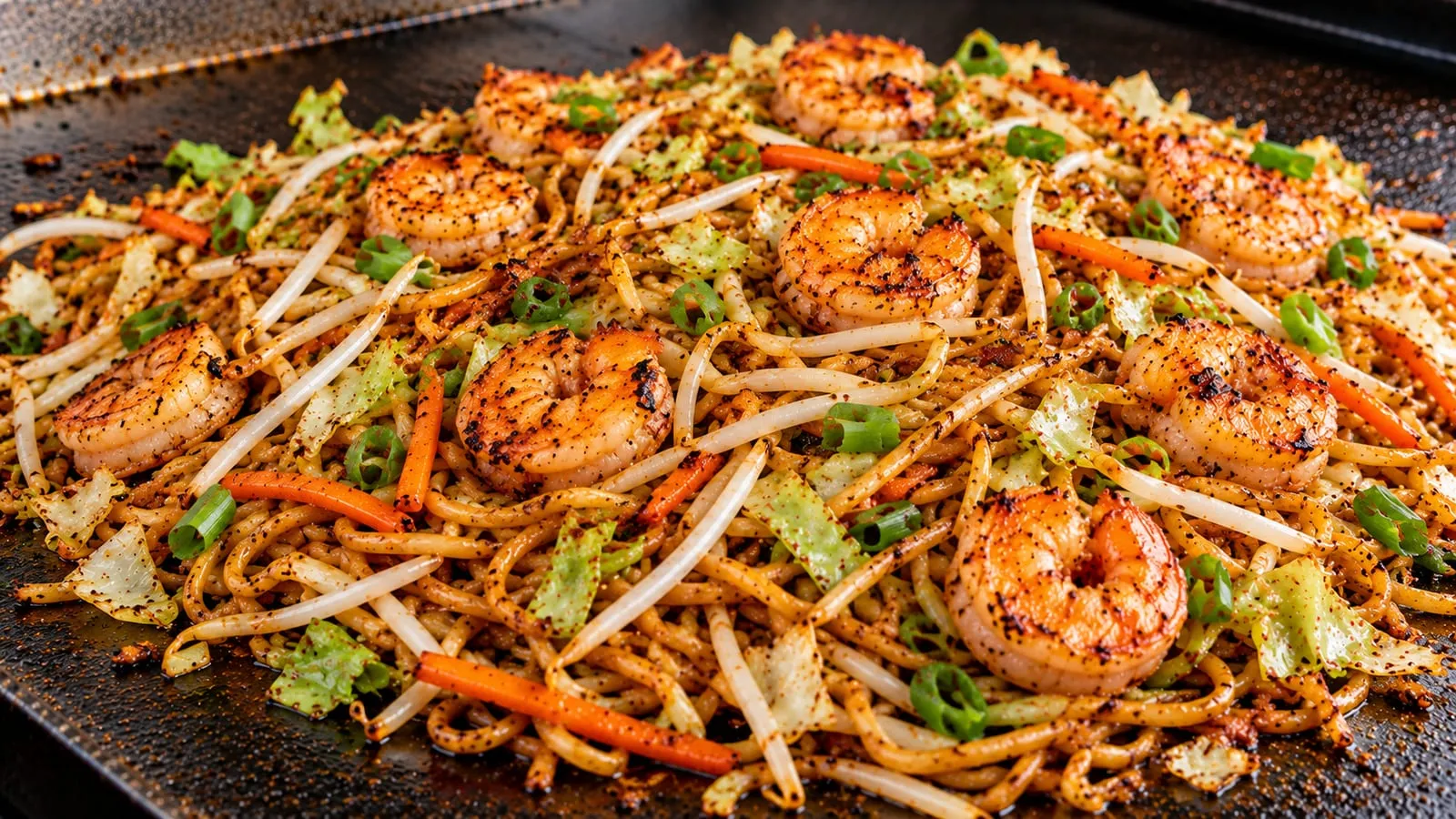
Blackstone Shrimp Chow Mein
Shrimp chow mein on a Blackstone griddle: noodles crisped flat on hot steel, seared shrimp, cabbage, carrots, and bean sprouts in a light soy and oyster sauce.