
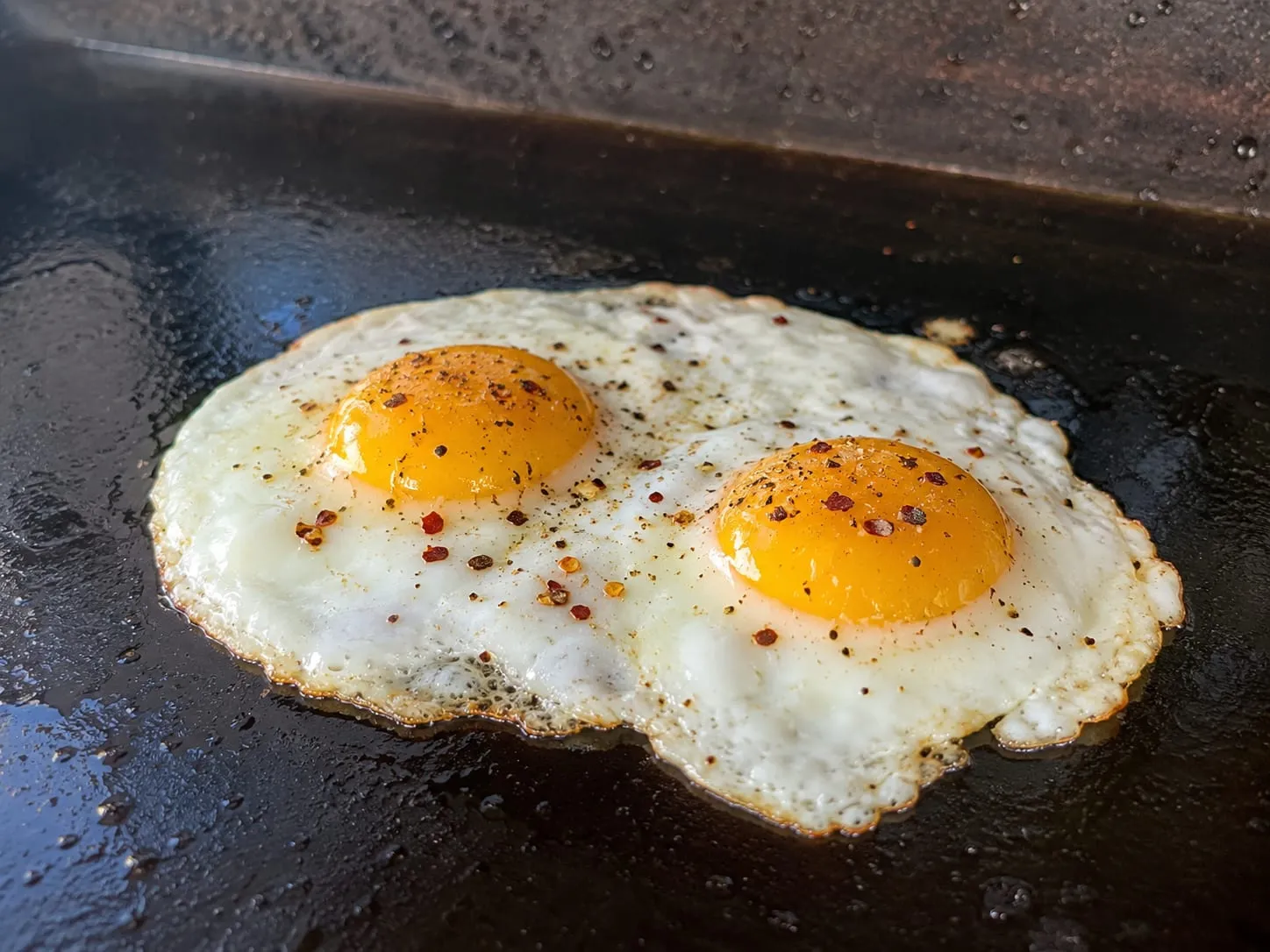
Blackstone Eggs: 6 Ways to Cook Them on the Flat-Top
Eggs are where the Blackstone earns its place as a breakfast station. A 36-inch flat-top can handle a dozen eggs at once, fried on one zone, scrambled on another, while bacon runs on the third. No home stovetop comes close to that output, and the flat steel surface cooks eggs more evenly than any skillet.
The key is temperature: eggs are delicate and need low to medium-low heat. This is counterintuitive on a griddle that you usually run hot, but rushing eggs means rubbery whites, broken yolks, and stuck surfaces. Low and slow, with butter, is the move.
Essential Setup
Temperature: 275-325°F for all egg methods. Lower than most griddle cooking.
Fat: Butter over oil for eggs. It adds flavor and the foam gives you a visual cue. When butter foams, the surface is ready for eggs.
Surface: Eggs stick to a poorly seasoned or too-hot surface. If your griddle is well-seasoned and at the right temp, eggs release cleanly.
Method 1: Fried Eggs (Any Style)
Temp: 275-300°F
Add a pat of butter to the griddle and let it melt and foam. Crack eggs onto the surface, gently, close to the surface to avoid breaking the yolk. Season immediately with salt and pepper.
- Sunny side up: Cook 3-4 minutes untouched until whites are fully set and opaque. Don’t flip. Cover with a basting dome for 1-2 minutes to set the top without flipping.
- Over easy: Cook sunny side up 2 minutes, flip carefully with a wide spatula, cook 30 more seconds. Yolk stays runny.
- Over medium: Same flip, cook 1-1.5 minutes after flipping. Yolk is slightly runny in the center.
- Over hard: Flip and cook 2-3 minutes until yolk is fully set.
Method 2: Scrambled Eggs
Temp: 300-325°F
Whisk eggs in a bowl, 2-3 per person. Add a splash of heavy cream or a pat of softened butter to the bowl for richness. Season with salt and pepper.
Add butter to the griddle. Pour eggs onto the surface and immediately begin moving them with a spatula in slow, broad strokes. Don’t rush. Keep folding the eggs over themselves as they set. Pull them off the heat when they look slightly underdone; carryover heat finishes them. Total time: 2-4 minutes.
Tip: For diner-style scrambled eggs, cook faster with more heat and less folding. For soft, custardy scrambled eggs, go low and slow and pull them before they look fully done.
Method 3: Omelets
Temp: 300°F
Add butter and pour 2-3 beaten eggs onto the griddle. Let them sit 60-90 seconds until the edges set and the top is still slightly glossy. Add fillings (shredded cheese, diced ham, sautéed peppers) to one half. Use two spatulas to fold the other half over the fillings. Cook 30-60 more seconds until the filling is warm and the eggs are fully set. Slide off the griddle and serve immediately.
Tip: Have fillings ready before you start. Omelet eggs move fast and you can’t stop to chop anything once they’re on the surface.
Method 4: Egg Rings (Sandwich Eggs)
Temp: 300°F
Lightly oil the inside of egg rings and place them on the buttered griddle. Crack one egg into each ring. Cook 2-3 minutes until the white is set around the edges. Add a splash of water nearby and cover with a basting dome for 60 seconds to steam the top. Slide a spatula under the ring, lift off the ring, and flip if you want over-hard. Great for breakfast sandwiches, the round shape fits buns perfectly.
Method 5: Mini Frittatas
Temp: 300-325°F
Whisk eggs with your choice of fillings: diced vegetables, cooked bacon, shredded cheese. Place oiled egg rings on the griddle and pour the egg mixture in to fill each ring about ¾ full. Cover with a basting dome and cook 4-6 minutes until fully set through. No flip needed. Slide a thin spatula under each one and lift to serve.
Method 6: Egg-in-a-Hole
Cut a 2.5-inch hole in the center of a thick slice of bread. Place on a buttered griddle over medium heat. Crack one egg into the hole. Cook 60-90 seconds until the bread is golden and the white begins to set. Flip in one confident motion and cook another 45-60 seconds for a runny yolk. See the full Egg in a Hole recipe for the complete version.
Tips That Apply to All Methods
Butter, not oil. Eggs cooked in butter taste better and the foam tells you when the surface is ready.
Low heat is non-negotiable. High heat sets the white before the yolk cooks, makes edges rubbery, and causes sticking. 275-325°F is the entire range for eggs.
Cook eggs last in a multi-item breakfast. Bacon and potatoes stay warm; eggs don’t. Finish everything else, then cook eggs so they come off the griddle straight to the plate.
A basting dome is worth owning. It steams the top of fried eggs without flipping (no broken yolks), melts cheese fast, and speeds up frittatas. A large metal bowl works as a substitute.
More flat-top recipes: Blackstone Breakfast Recipes · Blackstone Recipes for Beginners
Frequently Asked Questions
What temperature should a Blackstone be for eggs?
275-325°F: low to medium-low heat. Eggs need gentle, even heat across the whole surface. Too hot and the whites set rubbery, the bottom burns before the yolk cooks, and eggs stick to the surface. Butter should foam gently, not smoke.
Why do eggs stick to my Blackstone?
Either the griddle isn’t well seasoned, the temperature is too high, or you didn’t use enough butter. All three cause sticking. Add more butter, lower the heat, and let the butter fully foam before adding the eggs.
How do I cook eggs on a Blackstone without breaking the yolk?
Crack the egg close to the griddle surface (1-2 inches) and let it fall gently. High drops break yolks on contact. Use a wide, flat spatula when flipping and get fully under the egg before lifting.
Can you use a basting dome for eggs on a Blackstone?
Yes, and it’s one of the best uses for one. Covering a fried egg with a dome for 60-90 seconds sets the top of the white without needing to flip, so you never break a yolk. Add a splash of water nearby before covering to create steam.
How many eggs can you cook at once on a Blackstone?
A 36-inch Blackstone can cook 12-16 eggs at once depending on method. A 28-inch fits 8-10. This is one of the biggest advantages over a stovetop. You can feed a crowd without cooking in batches.
What temperature do you cook eggs on a Blackstone griddle?
Keep eggs between 275 and 325°F, lower than almost anything else you cook on a Blackstone. Fried eggs, sunny side up or over easy, go at 275-300°F, and scrambled eggs at 300-325°F. Higher heat sets the white before the yolk cooks, makes the edges rubbery, and causes sticking.
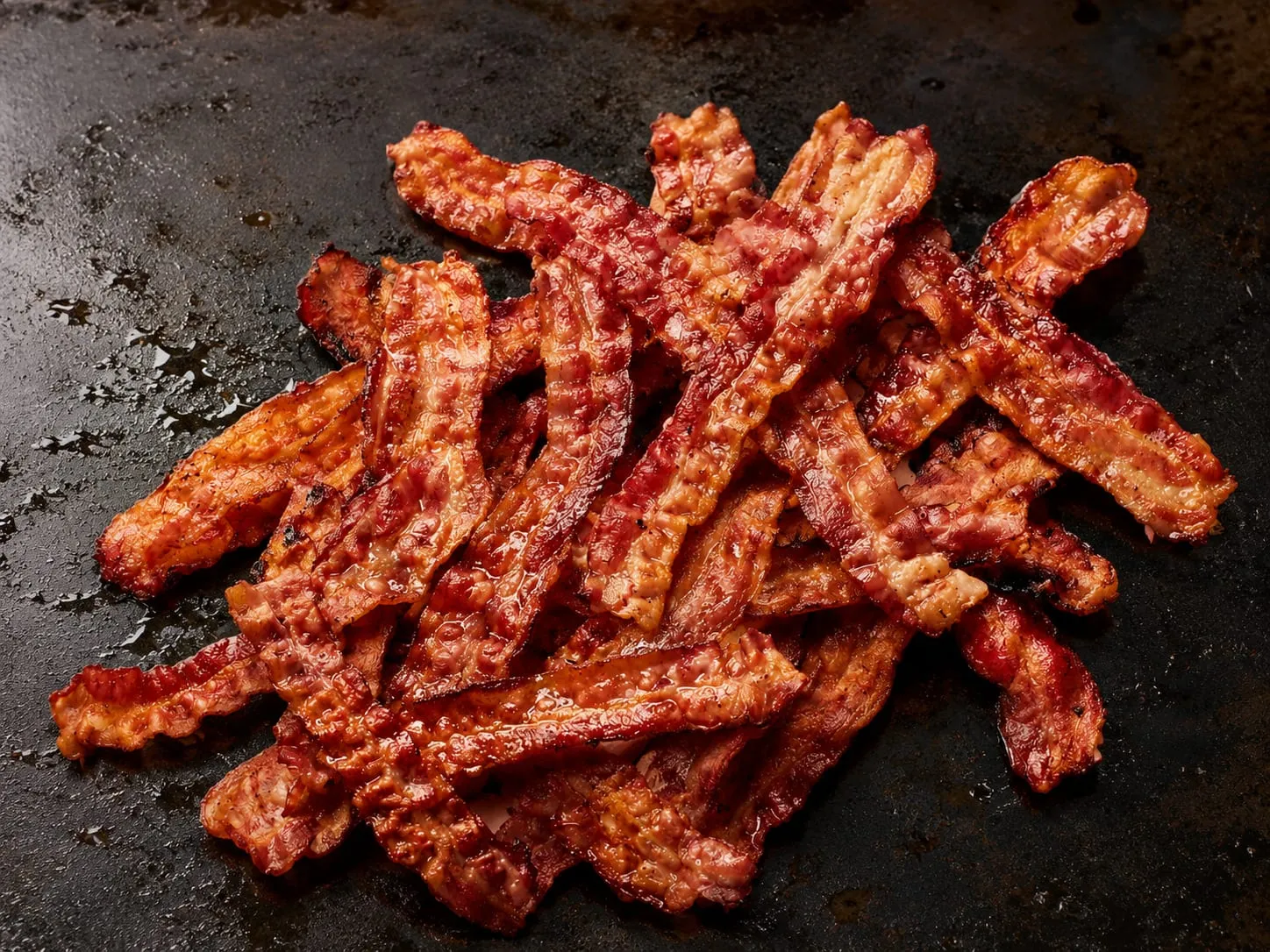
Blackstone Bacon: How to Cook It Crispy Every Time
The complete guide to bacon on a Blackstone griddle: the right temperature, grease management, when to use a press, and nailing every doneness level.
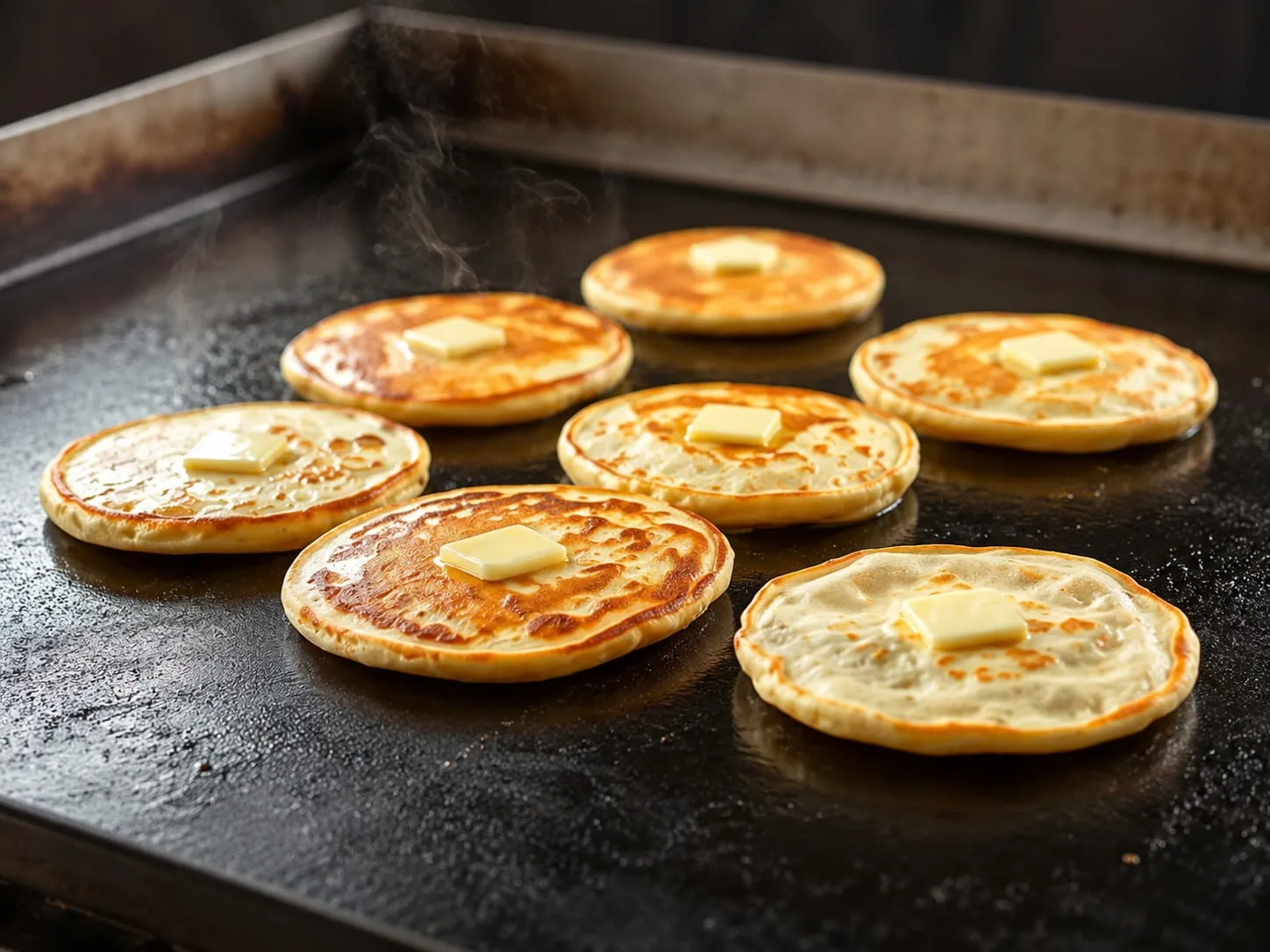
Blackstone Pancakes: Simple Batter and Buttermilk Recipes
Perfect pancakes on a Blackstone griddle: the right temperature, two from-scratch recipes (classic and buttermilk), and tips for light, fluffy results every time.
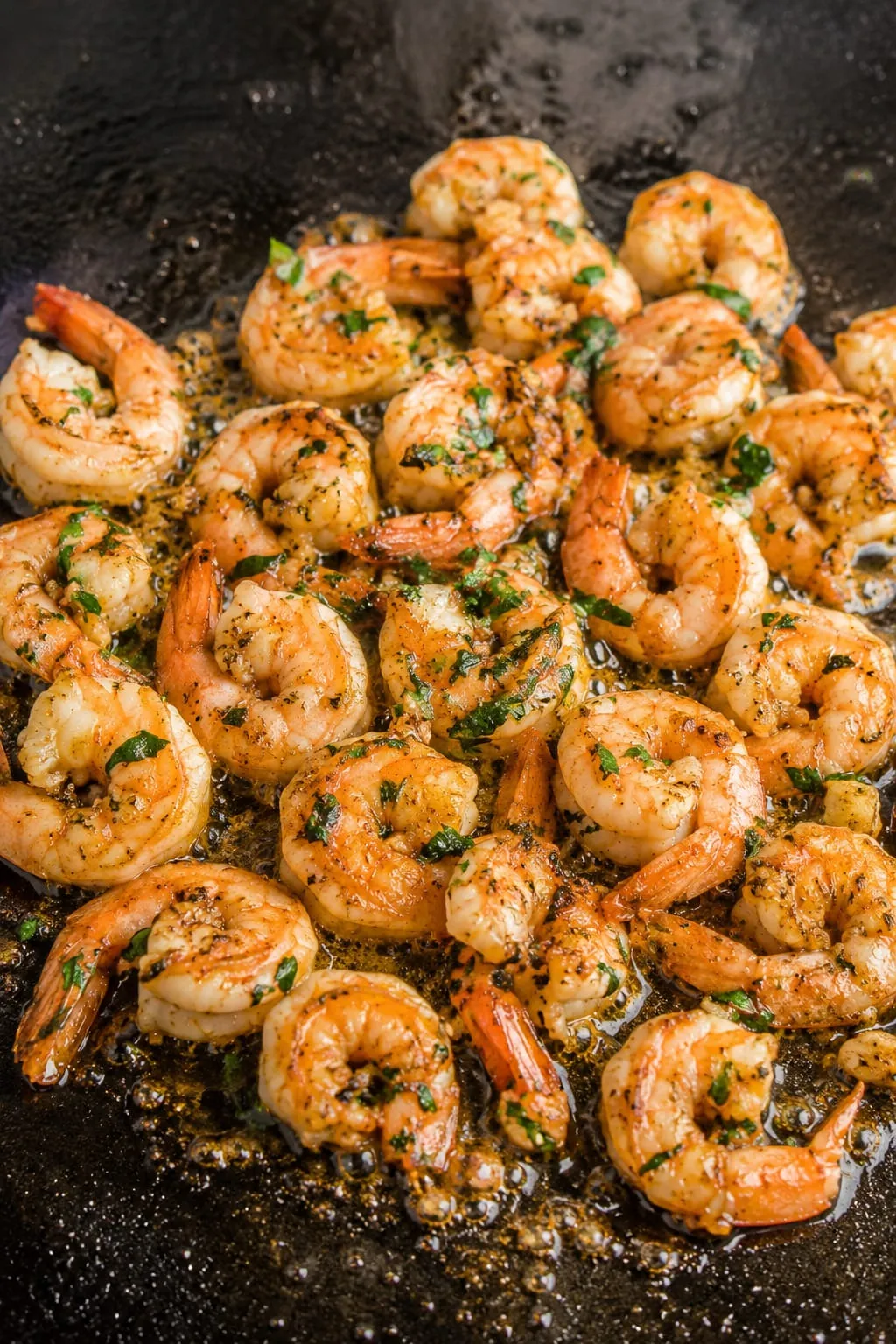
Blackstone Shrimp: 3 Recipes for the Flat-Top
How to cook shrimp on a Blackstone griddle: the right technique, temperature, and three recipes: garlic butter, pineapple lime, and cajun blackened.