
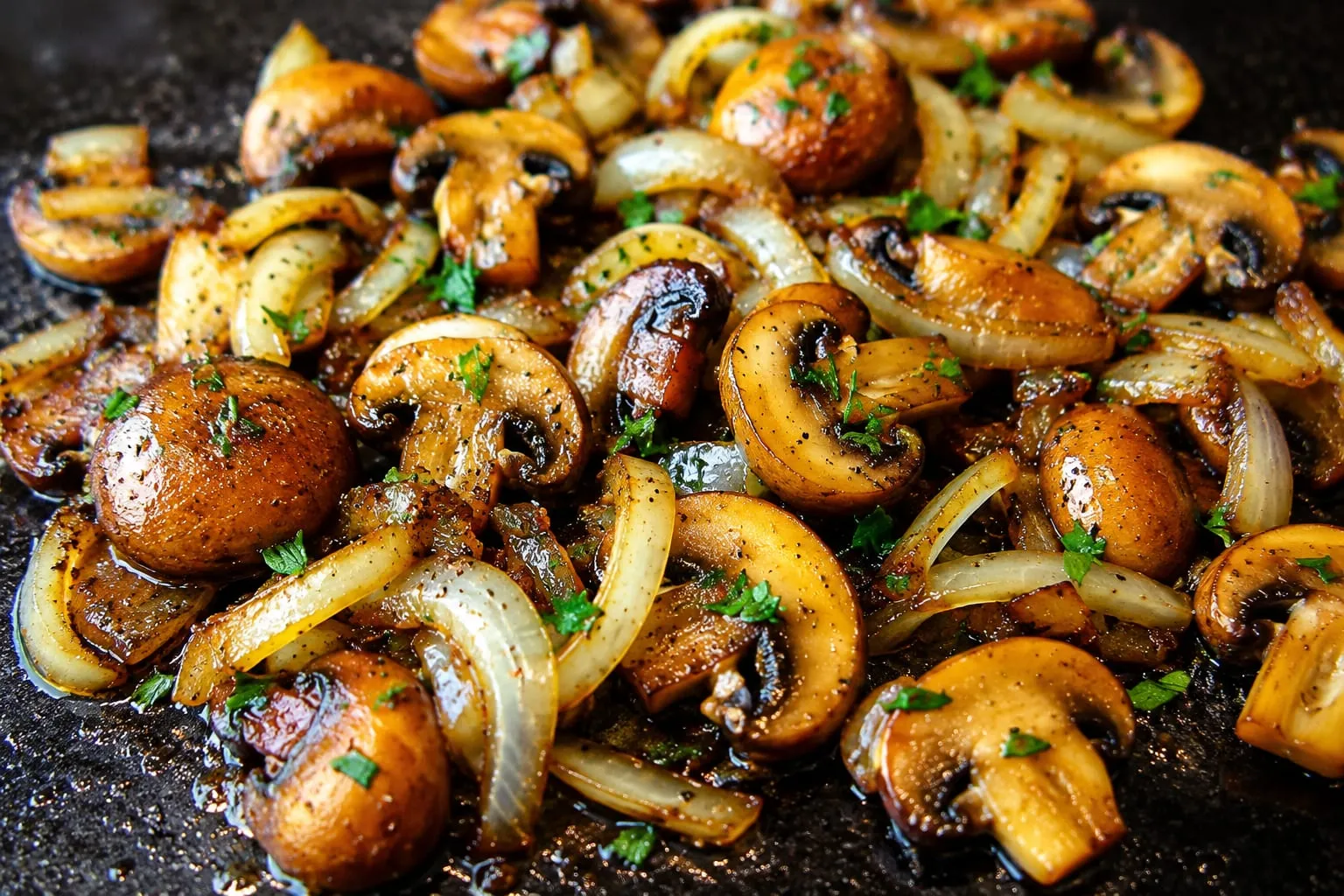
Blackstone Mushrooms and Onions
Equipment
Mushrooms and onions are the single most useful thing to have going on the side of the griddle. They top smash burgers, pile onto a Philly cheesesteak, finish a steak, or fold into eggs, and the Blackstone makes them better than a skillet ever could. The reason is simple: onions and mushrooms want completely different heat, and the flat top lets you give them both at the same time. I almost always have a low pile of onions caramelizing on one side while I cook the main event on the other.
This is the method that gets you jammy, deep-brown caramelized onions and seared, meaty mushrooms, not the pale, watery, steamed version most people end up with.
Ingredients
- 2 large yellow onions, sliced into half-moons
- 16 oz cremini or button mushrooms, sliced
- 3 tbsp butter, divided
- 1 tbsp neutral oil
- ½ tsp salt, plus more to taste
- ¼ tsp black pepper
- 2 cloves garlic, minced (optional)
- 1 tsp fresh thyme (optional)
- 1 tsp Worcestershire sauce (optional)
Instructions
Step 1: Set up two zones. This is the whole trick. Run one side of the Blackstone on low (250-300°F) for the onions and another zone on medium-high (~400°F) for the mushrooms. If you only have a small griddle, do the onions first, then the mushrooms.
Step 2: Start the onions, low and slow. Add 1 tbsp butter and the sliced onions to the low zone with a pinch of salt. Spread them out and mostly leave them alone, stirring every few minutes. They’ll take 25-35 minutes to go from raw to soft to deep golden-brown and jammy. Low heat and patience are the only secret. Rushing them on high just burns the edges and leaves them raw inside.
Step 3: Sear the mushrooms, hot and dry. When the onions are about halfway, add the oil to the hot zone and spread the mushrooms in a single layer. Don’t crowd them and don’t salt them yet. Let them sit undisturbed 2-3 minutes so they release their water and it evaporates, then start flipping. Once they’re browned (5-7 minutes total), add 1 tbsp butter, the garlic, thyme, and a pinch of salt.
Step 4: Combine and finish. Scrape the mushrooms into the onions, add the last tbsp of butter and the Worcestershire, and toss together for a minute. Taste and adjust salt and pepper.
Step 5: Serve. Pile onto burgers, steak, Philly cheesesteaks, hot dogs, or eggs, or serve as a side.
Why the Flat Top Beats a Skillet
A skillet forces mushrooms and onions to share one temperature, and they don’t want to. Onions need low and slow to caramelize their sugars without scorching; mushrooms need high and dry to sear before they steam. On the Blackstone you set up two zones and cook them the right way simultaneously (jammy onions on the cool side, browned mushrooms on the hot side) and the big surface means nothing is crowded. Crowding is what makes mushrooms watery, and the flat top solves it by giving everything room to breathe.
The Secret to Caramelized Onions
Real caramelized onions are not the goal of a five-minute sauté. They take at least 25 minutes of low, patient heat. The sugars in the onion have to slowly break down and brown; there’s no shortcut. Keep the heat low, stir occasionally so they cook evenly, and if they start sticking, add a splash of water to deglaze and keep going. The payoff is a sweet, jammy, deep-brown pile that transforms anything you put it on.
The Mushroom Rule: Don’t Crowd, Don’t Salt Early
Two mistakes ruin griddle mushrooms. Crowding traps their moisture so they steam gray instead of searing brown. Give them a single, spread-out layer. Salting too early pulls the water out before they can brown. Wait until they’re already seared, then season. Get those two right and you get meaty, golden mushrooms with real flavor.
Uses
- Smash burgers and patty melts, the classic topping
- Philly cheesesteaks: mushrooms and onions are half the sandwich
- Steak: a steakhouse finish
- Eggs and breakfast hash: folded in or piled on
- Hot dogs, brats, and sausages: a sausage and peppers cousin
Tips
Two zones is the whole game. Onions low, mushrooms hot, at the same time. It’s the one thing a flat top does that a skillet can’t.
Slice onions with the grain (pole to pole, into half-moons) so they hold their shape through the long cook instead of turning to mush.
Be patient with the onions. Twenty-five minutes minimum. If they look brown in ten, your heat is too high and you’re browning, not caramelizing.
Deglaze if they stick. A splash of water, broth, or a knob of butter loosens the fond and keeps the onions moving without burning.
More flat-top recipes: Blackstone Side Dishes · Smash Burgers · Philly Cheesesteak
Frequently Asked Questions
How long does it take to caramelize onions on a Blackstone?
Real caramelized onions take 25-35 minutes over low heat (250-300°F). There’s no genuine shortcut. The sugars have to slowly break down and brown. Anything faster is just browned or sautéed onions, which are fine but not the same jammy, sweet result.
Why are my griddle mushrooms watery instead of browned?
Two reasons: crowding and early salting. Mushrooms release a lot of water, and if they’re piled up or salted too soon, that water can’t evaporate and they steam gray. Spread them in a single layer on a hot zone, leave them undisturbed to sear, and salt only after they’ve browned.
Should you cook onions or mushrooms first?
On a big griddle, cook them at the same time in separate zones: onions low, mushrooms hot. On a small griddle, start the onions first since they take much longer, then sear the mushrooms once the onions are nearly done and combine.
What temperature do you cook mushrooms and onions on a Blackstone griddle?
Use two zones: 250-300°F (low) for the onions so they caramelize slowly without scorching, and about 400°F (medium-high) for the mushrooms so they sear instead of steam. Combining them at the end over medium heat brings it all together.
What kind of mushrooms are best for the griddle?
Cremini (baby bella) mushrooms have the best flavor and hold up well to searing. White button mushrooms work fine and are cheaper. Slice them evenly, about ¼ inch, so they cook at the same rate.
Can you make caramelized onions and mushrooms ahead of time?
Yes. Both keep in the fridge for 4-5 days and reheat well on the griddle over medium heat. They’re a great thing to batch: make a big pile on a Sunday and top burgers, steaks, and eggs all week.
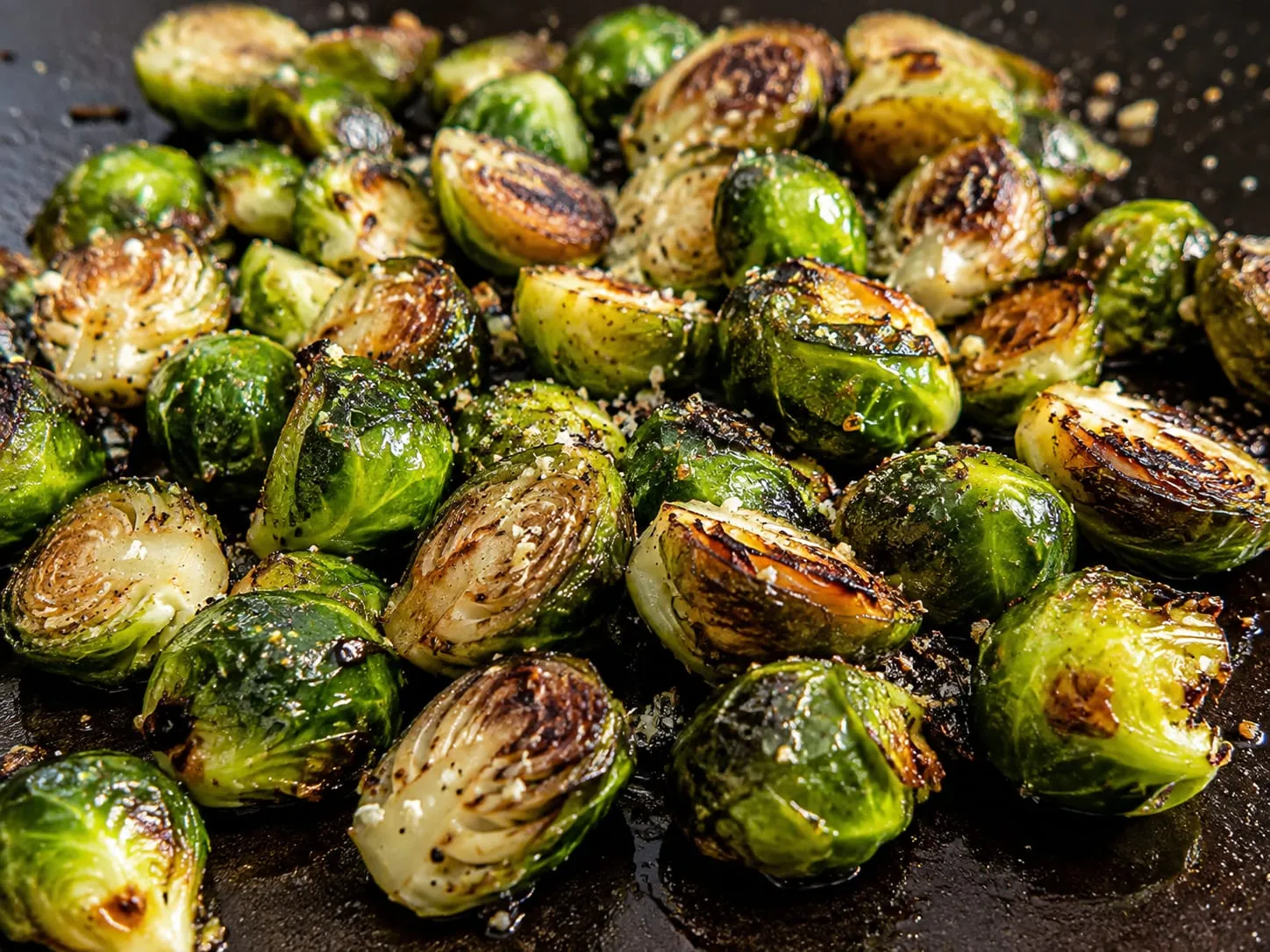
Brussels Sprouts on Blackstone: Smashed and Caramelized
How to cook Brussels sprouts on a Blackstone griddle: halved and cut-side seared until deeply caramelized, with balsamic, bacon, and garlic parmesan variations.
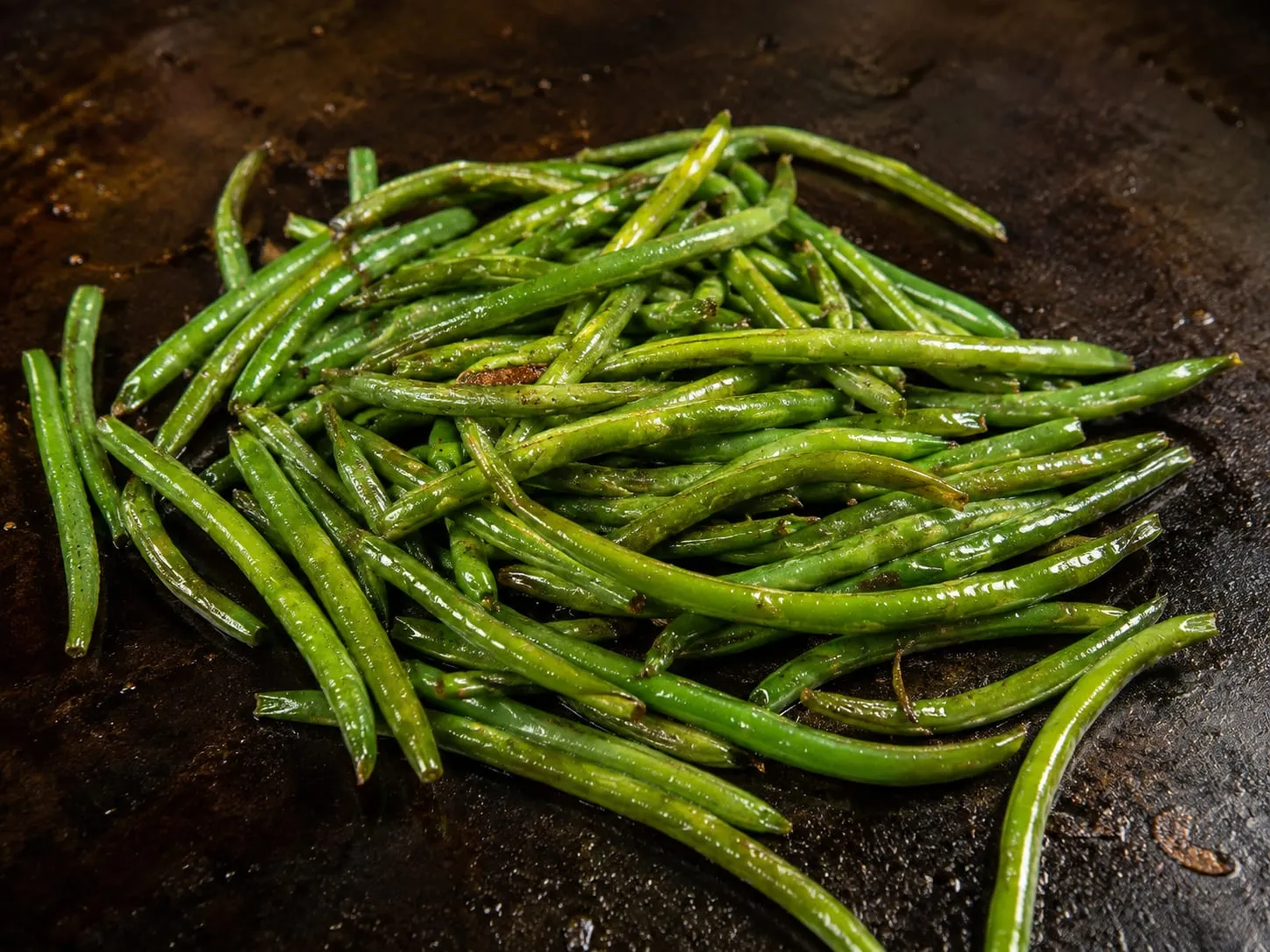
Green Beans on Blackstone: Blistered and Crisp-Tender
How to cook green beans on a Blackstone griddle: blistered and crisp-tender in about 10 minutes, with garlic butter, soy-garlic, and bacon variations.
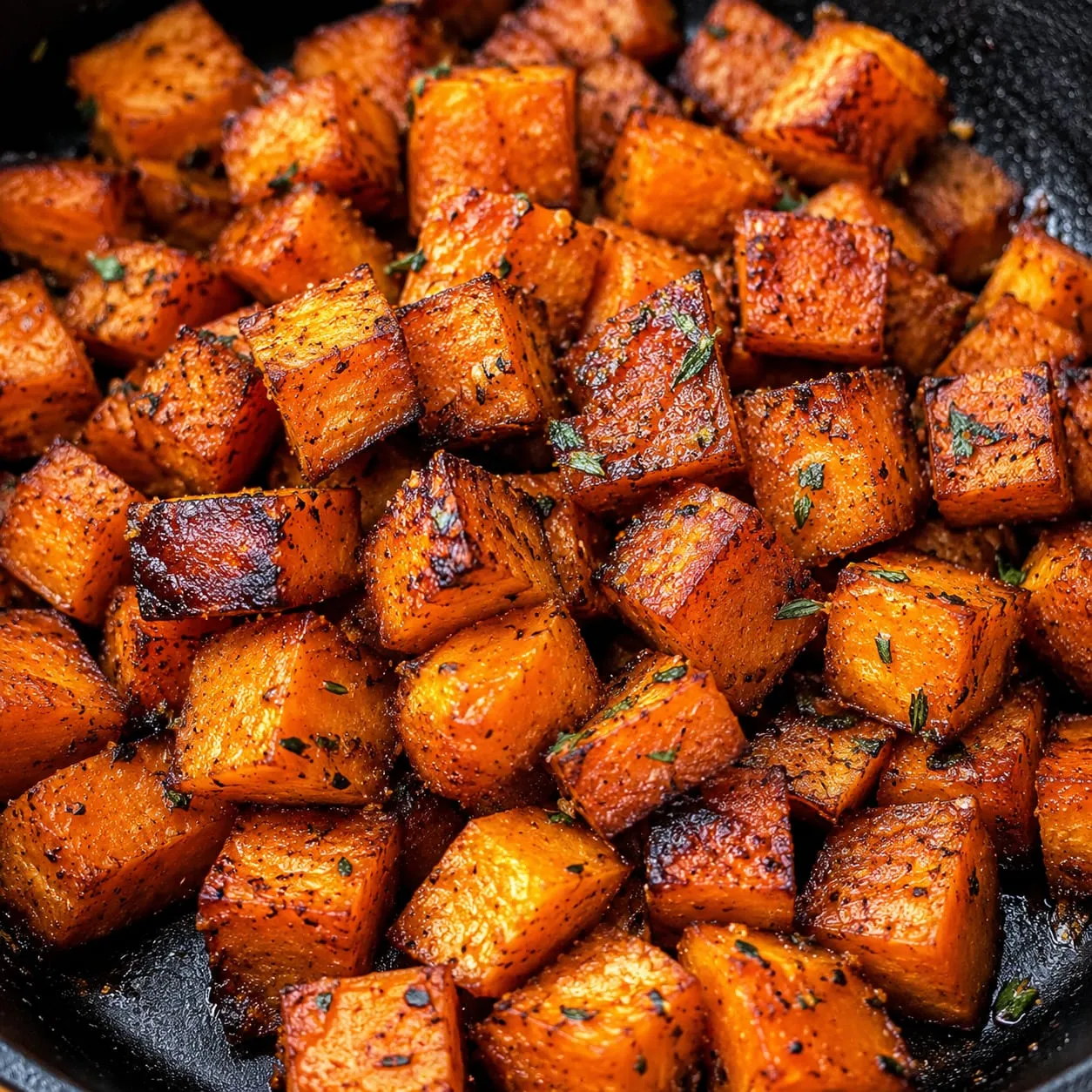
Sweet Potatoes on a Blackstone Griddle
How to cook sweet potatoes on a Blackstone griddle, sliced and seared with brown sugar and butter for caramelized edges, or diced for crispy griddle-roasted cubes.