
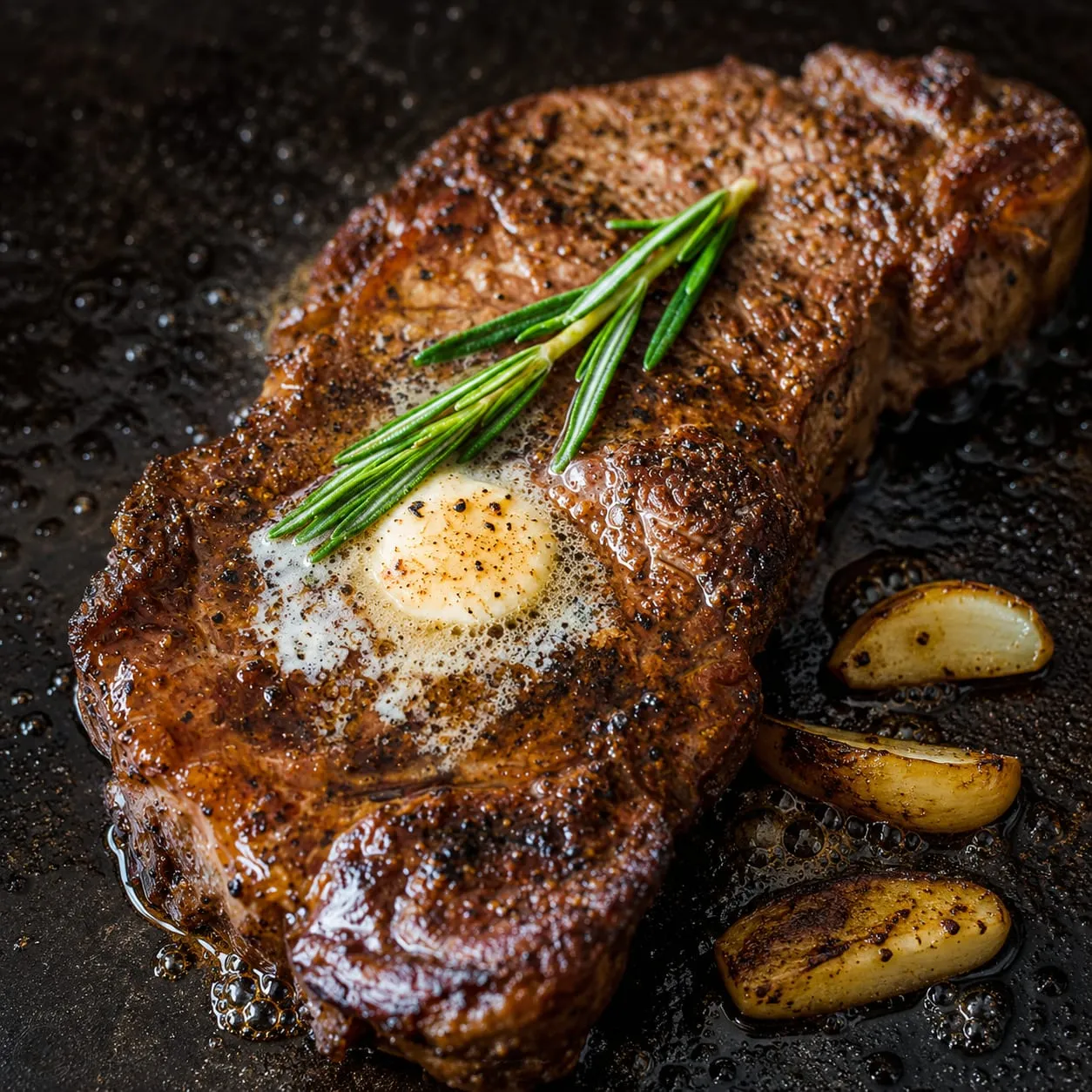
How to Cook Steak on a Blackstone Griddle (Better Than a Grill)
A flat-top griddle produces better steak than most backyard grills, not in spite of the lack of grates, but because of it. Every square millimeter of the steak’s surface is in direct contact with 500°F steel. That full-contact sear builds a deeper, more uniform crust than grate lines ever can, and you get the fond (the browned bits) for basting right there on the surface instead of falling through into the fire. Years of steaks on my own 36” settled the debate for me: the grill gets nostalgia, the flat-top gets the ribeyes.
The technique here is the same used in steakhouses, just on a different surface: very high heat, no moving until the crust releases, butter baste after the flip.
Best Cuts for Griddle Steak
Ribeye: The best steak for the Blackstone. The intramuscular fat bastes the meat from the inside as it renders. The more marbled, the better. Buy 1-1.5 inch thick.
New York Strip: Less fat than ribeye, still flavorful. Firm texture, great crust. 1-1.5 inch thick.
Filet Mignon: Extremely tender, mild flavor. Goes well with a compound butter or sauce. Keep it 1.5 inches so you can get a crust without overcooking the center. Thick or extra-lean filets need a gentler build than ribeye and strip get here, see the full filet mignon recipe → for the reduced-heat baste and reverse-sear technique.
What to avoid: Thin steaks (under ¾ inch) or pre-marinated grocery store steaks that release moisture onto the surface.
Skirt steak is a different animal: thin, intensely flavored, and cooked at maximum heat for just 3 minutes per side. It’s covered in its own section at the bottom of this page, paired with chimichurri.
Ingredients
- 2 ribeye, NY strip, or filet mignon steaks (1-1.5 inch thick, 10-12 oz each)
- 1 tbsp avocado oil or canola oil
- 2 tbsp unsalted butter
- 3 garlic cloves, smashed
- 3-4 sprigs fresh thyme or rosemary
- Kosher salt and coarse black pepper
Instructions
Step 1: Salt Early and Rest to Room Temperature
Season generously on both sides with kosher salt and coarse black pepper 45 minutes before cooking, not right before, and not overnight. Salting 45 minutes ahead gives the salt time to draw moisture to the surface and reabsorb it, seasoning the meat throughout rather than just the exterior.
Pull the steaks from the fridge at the same time. Cooking a cold steak leads to an overcooked band of gray meat just inside the crust while you wait for the center to come up. Room temperature means the exterior and interior cook in sync.
Step 2: Preheat the Blackstone on High
Set all burners to high and preheat 10-15 minutes. You want the surface at 450-500°F. This is hotter than anything most home stovetops can produce, and it’s exactly the temperature range that creates the Maillard reaction responsible for a proper steak crust.
Drop a few drops of water on the surface. They should evaporate instantly. If they skitter and roll, it’s ready.
Step 3: Add Oil, Then the Steak
Add a thin film of high-smoke-point oil (avocado or canola) to the cooking zone. Pat the steaks completely dry with paper towels. Any surface moisture will steam instead of sear. Lay them on the hottest part of the griddle.
Do not move them for 3-4 minutes. A steak releases from the surface when the crust is properly developed; if you’re fighting it, the crust isn’t ready. The bottom should be deeply browned, not gray.
Step 4: Flip Once, Then Butter Baste
Flip the steak once. Immediately add butter, smashed garlic, and thyme or rosemary to the surface near the steaks. As the butter melts and foams, tilt the griddle slightly (or use a spoon) to pool the butter and spoon it continuously over the top of the steak for 2-3 minutes. This is butter basting. It accelerates cooking on the top and adds richness and flavor that you can’t get from heat alone.
Cook on the second side 2-4 minutes to target temperature (see below).
Step 5: Rest (Non-Negotiable)
Remove the steak when it’s 5°F below your target temperature (it rises during rest). Place on a cutting board and rest 5-10 minutes for 1-inch steaks, up to 15 minutes for thicker cuts. Cutting immediately causes all the juices to run out; resting lets them redistribute. A rested steak is juicier throughout.
Doneness Guide
| Doneness | Pull at | Final temp | Description |
|---|---|---|---|
| Rare | 120°F | 125°F | Deep red, cool center |
| Medium-rare | 125°F | 130°F | Red center, warm throughout |
| Medium | 135°F | 140°F | Pink throughout |
| Medium-well | 145°F | 150°F | Slightly pink |
| Well | 155°F | 160°F | No pink |
Medium-rare is the standard target for ribeye and strip. It’s the temperature range where the fat renders properly and the meat is tender and juicy. Below that and the fat stays waxy. Above medium and you’re burning the juice out of a ribeye you paid good money for.
Use an instant-read thermometer. Guessing by feel takes years of repetition; a thermometer is accurate the first time.
Tips
Smoke will happen. High-heat steak on a griddle produces significant smoke. Cook outdoors, open all windows, and run the hood fan on high. This isn’t optional. Indoors at 500°F will set off every smoke detector in the building.
One flip. Constant flipping prevents the crust from forming. Flip once when the first side is done.
Resting on a rack beats resting on a plate. A plate traps steam under the steak and softens the bottom crust. A wire rack lets air circulate and keeps the crust intact.
Let the griddle cool before cleaning after steak. The fat and residue burn away much easier once the surface is warm, not screaming hot.
Skirt Steak with Chimichurri
Skirt steak is one of the best cuts for the Blackstone. It’s thin, intensely flavored, and cooks in 6 minutes at maximum heat, one of the fastest dinners you can put on the flat-top. The technique is completely different from a ribeye: no butter basting, no thermometer watching. Just maximum heat, 3 minutes per side, slice against the grain.
Chimichurri, the Argentine herb sauce, is the natural partner. Make it 2 hours before you cook. The flavor deepens significantly as the herbs, garlic, and acid meld together.
Prep time: 15 minutes · Marinate: 30 minutes · Chimichurri rest: 2 hours · Cook time: 6 minutes · Serves: 3-4
The Chimichurri
- 1 cup flat-leaf parsley, firmly packed, finely chopped
- ¼ cup fresh cilantro, chopped
- 2 tbsp fresh oregano (or 1 tsp dried)
- ¾ cup extra-virgin olive oil
- 4 garlic cloves, minced
- 1 shallot, finely chopped
- 2 tbsp red wine vinegar
- ¼ tsp lemon zest
- ½ tsp sea salt
- ¼ tsp black pepper
- Pinch of red chili flakes
Combine all ingredients in a bowl, stir well, and refrigerate covered for at least 2 hours. Taste and adjust salt, vinegar, and chili flakes before serving. Keeps up to 5 days refrigerated. Overnight is even better.
The Skirt Steak
- 1 lb skirt steak
- 2 garlic cloves, grated
- 2 tbsp extra-virgin olive oil
- 2 tbsp reduced-sodium soy sauce
- Juice of half a lemon
- 1 tsp sea salt
- ½ tsp black pepper
- Vegetable oil for the griddle
Step 1: Marinate. Combine garlic, olive oil, soy sauce, and lemon juice in a resealable bag. Add steak, coat evenly, and marinate in the fridge for 30 minutes.
Step 2: Preheat to maximum heat. Set all burners to high and preheat 15 minutes. You want 500°F or as close as you can get, skirt steak is thin and needs instant, intense heat to sear the outside before the interior overcooks.
Step 3: Dry and season. Remove steak from marinade and pat completely dry. Season both sides with salt and pepper. Rest 10 minutes at room temperature.
Step 4: Sear. Brush the griddle with vegetable oil. Place skirt steak on the hottest zone and do not touch it for 3 minutes. Flip and cook 3 more minutes for medium-rare (130°F internal). The exterior should be deeply browned with slight char.
Step 5: Rest and slice. Rest 5 minutes on a cutting board. Slice thinly against the grain, skirt steak has very pronounced muscle fibers and must be cut perpendicular to them or it will be chewy regardless of doneness.
Step 6: Serve fanned over a pool of chimichurri, or with the sauce alongside.
Skirt Steak Tips
- Don’t cook past medium. Above 145°F skirt steak becomes increasingly chewy and dry. Pull at 125-130°F and let the rest carry it.
- Slice against the grain, always. This is more important with skirt steak than almost any other cut. Look at the lines in the meat and cut at 90 degrees to them.
- Make extra chimichurri. It keeps a week and works on chicken, shrimp, eggs, roasted vegetables, and crusty bread. Full chimichurri recipe →
- Flank steak substitution: slightly thicker and leaner, same technique, add 1-2 minutes per side. Both cuts are excellent in Blackstone carne asada with a citrus marinade.
More flat-top recipes: Garlic Butter Steak Bites · Best Blackstone Steak Recipes · Best Blackstone Seasonings · Mushrooms and Onions
Frequently Asked Questions
What temperature should a Blackstone be for steak?
450-500°F, as hot as it gets. Steak needs high heat to develop a proper crust through the Maillard reaction. A surface below 400°F will cook the interior before the exterior can brown, producing a gray, steamed steak instead of a seared one.
How long do you cook steak on a Blackstone griddle?
For a 1-inch steak: 3-4 minutes on the first side, 2-4 minutes on the second while butter basting. Total 6-8 minutes for medium-rare (130°F internal). Thicker steaks take longer. Use a thermometer, not a timer.
Do you need oil for steak on a Blackstone?
A thin layer, just enough to coat the cooking zone. Avocado or canola oil, not butter (butter burns at steak temperatures before the crust can develop). Add butter after the flip for basting, not at the start.
Should I season steak before cooking on the Blackstone?
Salt 45 minutes before cooking with kosher salt and black pepper. Don’t salt right before putting it on the griddle. Surface moisture from immediate salting causes steaming instead of searing. The 45-minute window lets the moisture reabsorb and season the meat through.
Why does steak stick to the Blackstone?
Two reasons: the surface isn’t hot enough, or you moved the steak before the crust released. A properly heated griddle (450°F+) combined with waiting for the natural release will fix both. Don’t pry a steak that’s sticking. Wait another 30-60 seconds and check again.
Can I cook steak indoors on a Blackstone?
Not recommended. Cooking steak at 500°F produces enough smoke to set off smoke detectors and fill the house. Blackstones are outdoor griddles designed for outdoor use. Even outdoors, position the griddle so the smoke isn’t blowing toward you or the house.
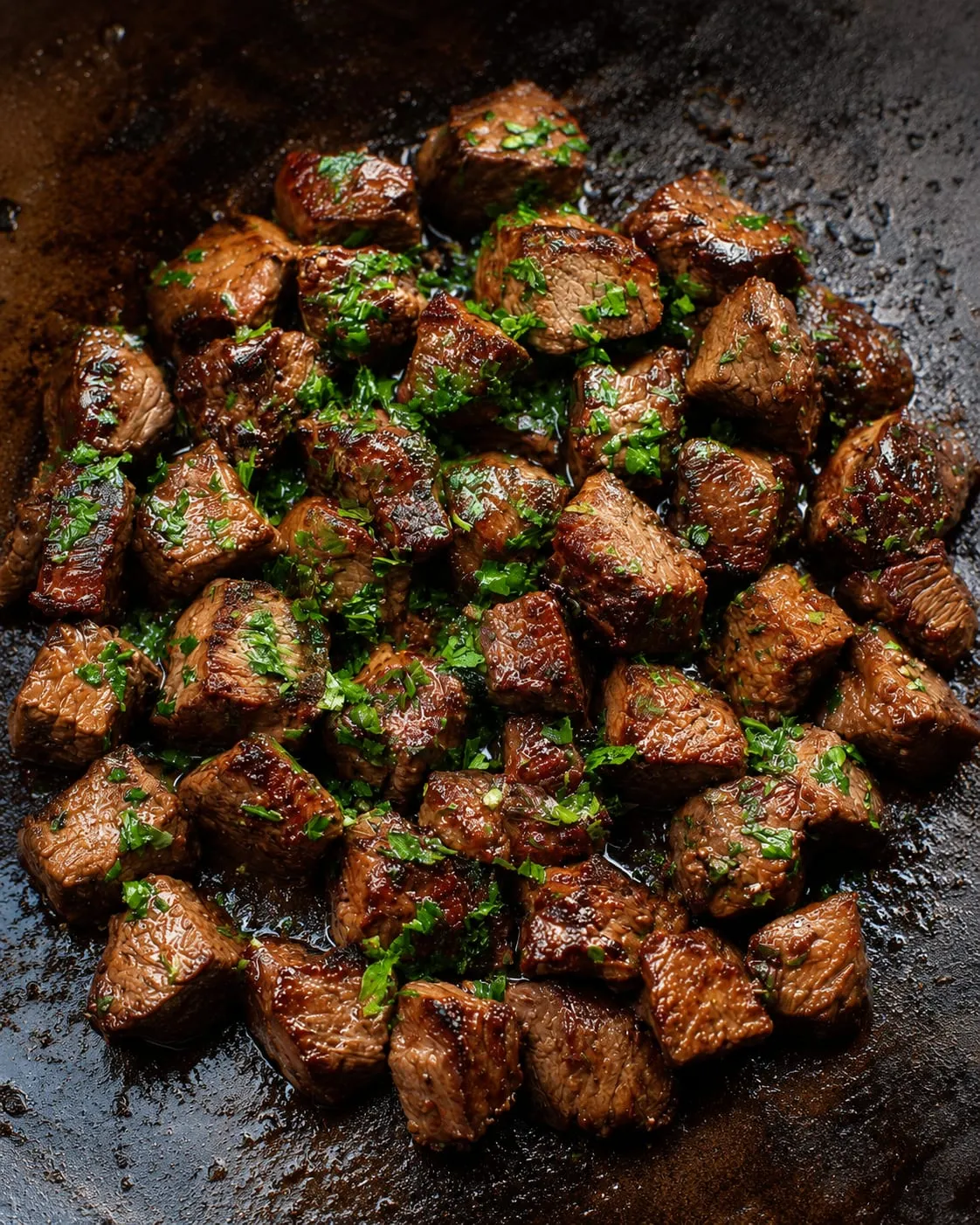
Blackstone Steak Bites (Garlic Butter, 10 Minutes)
Garlic butter steak bites on a Blackstone griddle: seared sirloin cubes tossed in melted garlic butter. Crusty outside, medium-rare inside, done in 10 minutes.
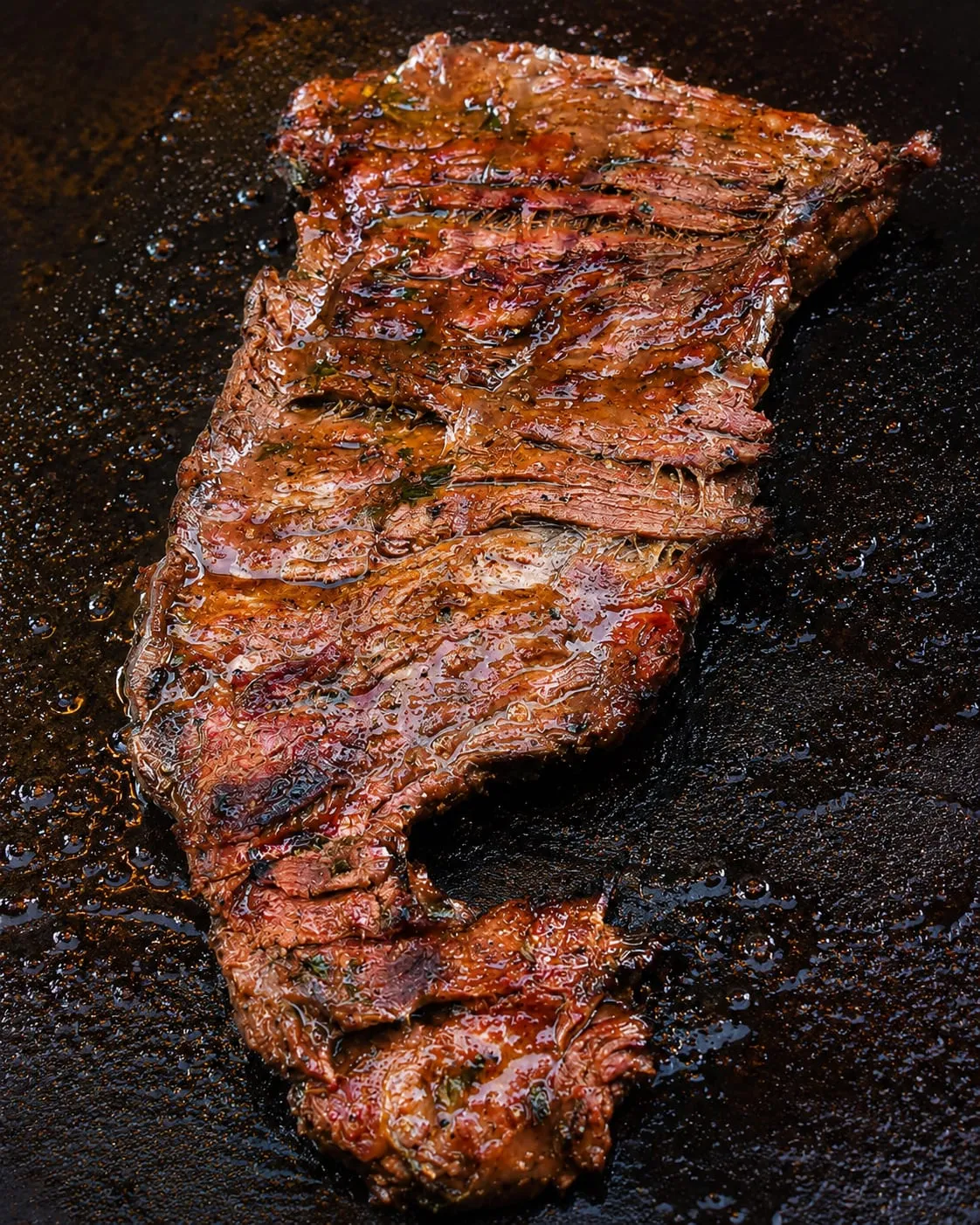
Carne Asada on the Blackstone Griddle
Carne asada on a Blackstone griddle: skirt or flank steak in a citrus-garlic marinade, seared hard on the flat top and sliced thin for tacos.
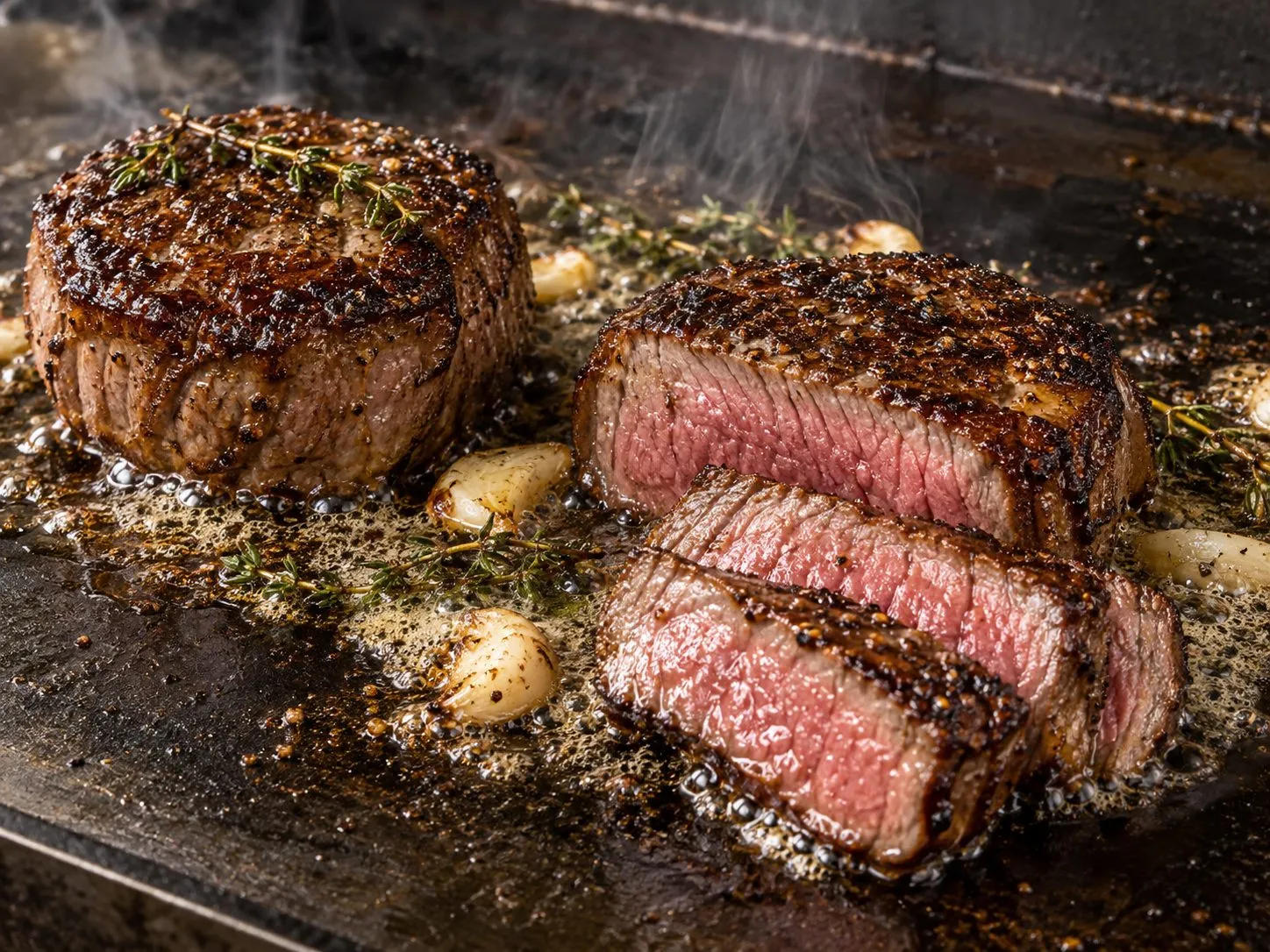
Blackstone Filet Mignon
Filet mignon on a Blackstone griddle: reverse-seared and butter basted with garlic and thyme for a steakhouse crust on the most tender cut.