
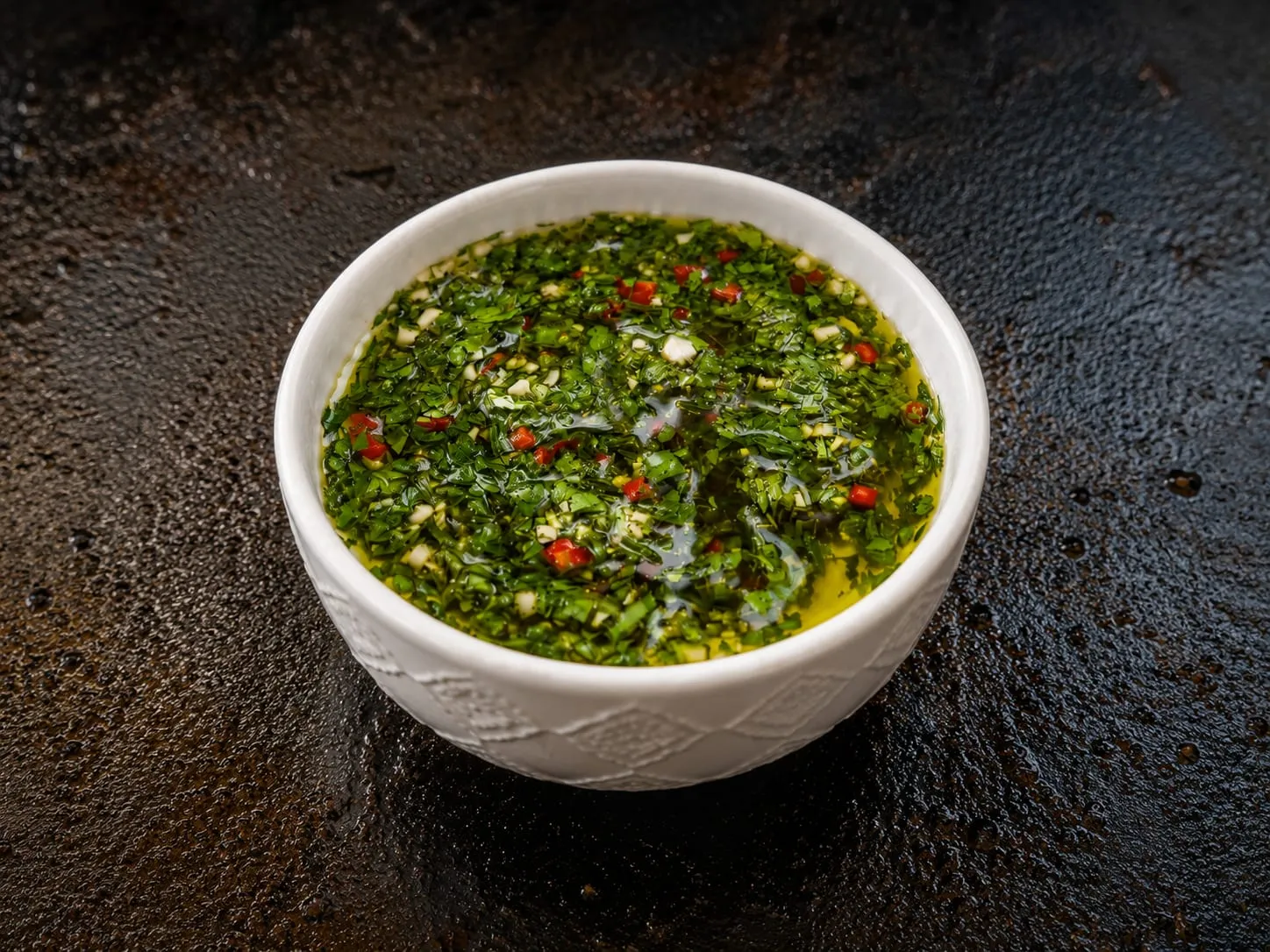
Chimichurri Sauce for Your Blackstone (Works on Everything)
Equipment
Chimichurri is the sauce that makes already-good griddle food great. The bright acidity from the vinegar, the fresh bite of raw garlic, and the herbal punch of parsley cut through the richness of a seared steak, the fat of a pork chop, and the char of carne asada in a way that no butter or pan sauce does.
It also takes about 10 minutes to make, requires no cooking, and keeps in the fridge for a week. There’s no reason not to have it on the table every time you’re cooking protein on the Blackstone.
Prep time: 10 minutes · No cooking required · Makes: about 1 cup (serves 6-8)
Ingredients
- 1 cup fresh flat-leaf parsley, packed (about 1 large bunch)
- 4 cloves garlic, peeled
- 2 tbsp fresh oregano leaves (or 1 tsp dried oregano)
- ¼ cup red wine vinegar
- ½ cup extra-virgin olive oil
- ½ tsp red pepper flakes (adjust to taste)
- ¾ tsp kosher salt
- ¼ tsp freshly ground black pepper
Instructions
Step 1: Mince the herbs and garlic
Finely mince the parsley, oregano, and garlic by hand. Do not use a blender or food processor. It purees the herbs instead of mincing them, which changes both the texture and the color (it turns dull green instead of bright). A sharp knife and a few minutes of work produce a noticeably better chimichurri.
How fine to mince: garlic should be very fine, almost paste-like. Parsley should be chopped, not minced: you want visible pieces, not powder.
Step 2: Combine
Transfer the minced herbs and garlic to a bowl. Add the red wine vinegar and stir to combine. Then add the olive oil, red pepper flakes, salt, and pepper. Stir everything together.
Step 3: Taste and rest
Taste and adjust: more vinegar for brightness, more red pepper for heat, more salt if it seems flat. Then let it rest at room temperature for at least 30 minutes before serving. The garlic mellows slightly as it sits and the flavors come together.
For best results, make it 2-4 hours ahead. Same-day is good; a few hours of rest is better.
What to Serve It With
Chimichurri is correct on anything that comes off the high-heat side of the Blackstone:
- Blackstone steak: especially skirt and flank steak, where chimichurri is the traditional pairing
- Carne asada: the vinegar and herb notes are built for this
- Chicken fajitas: drizzle on the protein before wrapping, or use as a table sauce
- Steak fajitas: same application as chicken
- Blackstone chicken: plain chicken thighs finished with chimichurri become something worth making again
- Griddled pork chops, shrimp, salmon, and halloumi
- As a marinade, coat protein in chimichurri 30 minutes before cooking, wipe most of it off before the griddle so the garlic doesn’t burn
Variations
Spicy chimichurri (chimichurri rojo): Add ½ tsp smoked paprika and a second ½ tsp red pepper flakes. Some versions include a small seeded jalapeño, minced fine.
Cilantro chimichurri: Replace half the parsley with fresh cilantro. Controversial, but if you like cilantro, it’s genuinely good on shrimp and fish tacos.
Lemon chimichurri: Swap the red wine vinegar for fresh lemon juice and add a small amount of lemon zest. Brighter, better on seafood and chicken than beef.
Tips
Fresh parsley only. Dried parsley is not a substitute. It produces something flat and grassy, not chimichurri. This is one of the few recipes where the fresh herb is mandatory.
Don’t overdo the garlic. Four cloves is correct for a cup of sauce. Raw garlic is potent and can overpower the rest of the sauce if you go heavy. Mince it very fine so it distributes evenly rather than coming in big bites.
Red wine vinegar, not white. White wine vinegar or apple cider vinegar will work in a pinch, but red wine vinegar has the right depth and color for classic chimichurri.
Make more than you think you need. Chimichurri keeps in the fridge for up to a week, and you will find yourself putting it on things that weren’t in the original plan: roasted vegetables, scrambled eggs, bread. Make a full batch.
More flat-top recipes: Blackstone Steak · Carne Asada on the Blackstone · Blackstone Chicken Fajitas · All Blackstone Sauces
Frequently Asked Questions
What is chimichurri made of?
Classic Argentine chimichurri is parsley, garlic, red wine vinegar, olive oil, and red pepper flakes. Some versions add oregano. It’s an herb sauce: not cooked, not blended, just minced and combined. Everything in it is pantry or fridge-stable, which is why it’s so easy to keep on hand.
Is chimichurri spicy?
The base recipe here has mild heat from ½ tsp red pepper flakes, enough to notice but not enough to be hot. Adjust the flakes up or down to taste. For a truly spicy chimichurri, add a minced jalapeño.
How long does chimichurri last in the fridge?
Up to 7 days in a sealed jar. The garlic’s raw bite mellows as it sits in the acid, and the flavors continue to develop over the first day. Press plastic wrap directly against the surface of the sauce before sealing to slow oxidation and keep the bright green color.
Can I use a blender or food processor for chimichurri?
Technically yes, but the texture suffers. A blender creates a smooth, uniform paste where you lose the distinct texture of minced parsley and garlic. A food processor is better than a blender but still over-processes the herbs. Knife-chopped chimichurri has better texture and brighter color. It’s worth the extra few minutes.
Is chimichurri the same as pesto?
No. Pesto is an Italian sauce based on basil, pine nuts, Parmesan, and olive oil: rich, creamy, and nutty. Chimichurri is an Argentine herb sauce based on parsley, garlic, and vinegar: bright, sharp, and acidic. Different flavor profiles, different applications.
Can chimichurri be used as a marinade?
Yes. It’s excellent as a marinade. Coat chicken, steak, or pork in chimichurri and refrigerate for 30 minutes to 4 hours before cooking. Wipe most of the sauce off before the food hits the griddle so the garlic doesn’t burn on the hot surface. Reserve un-marinated chimichurri to serve at the table.
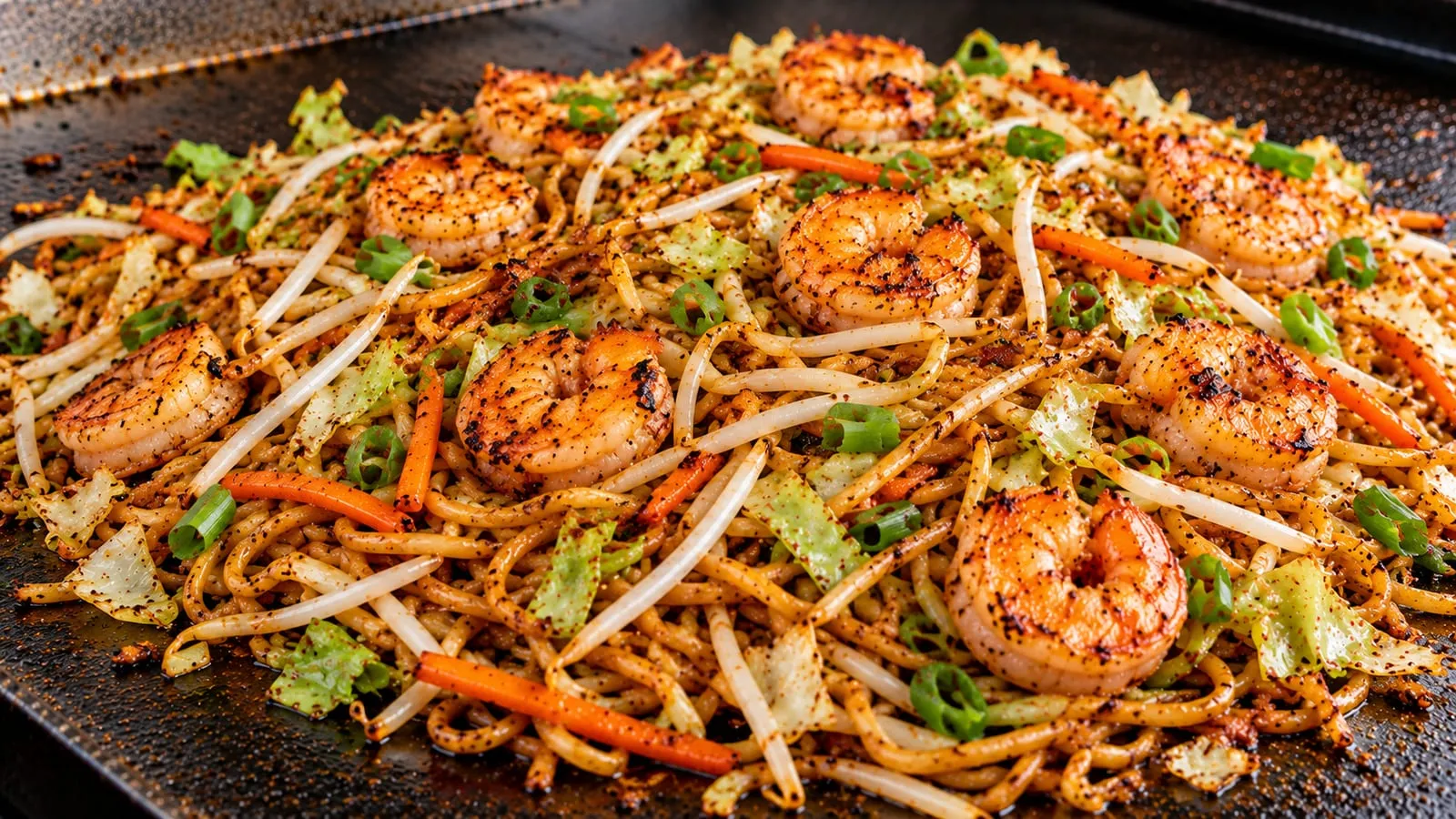
Blackstone Shrimp Chow Mein
Shrimp chow mein on a Blackstone griddle: noodles crisped flat on hot steel, seared shrimp, cabbage, carrots, and bean sprouts in a light soy and oyster sauce.
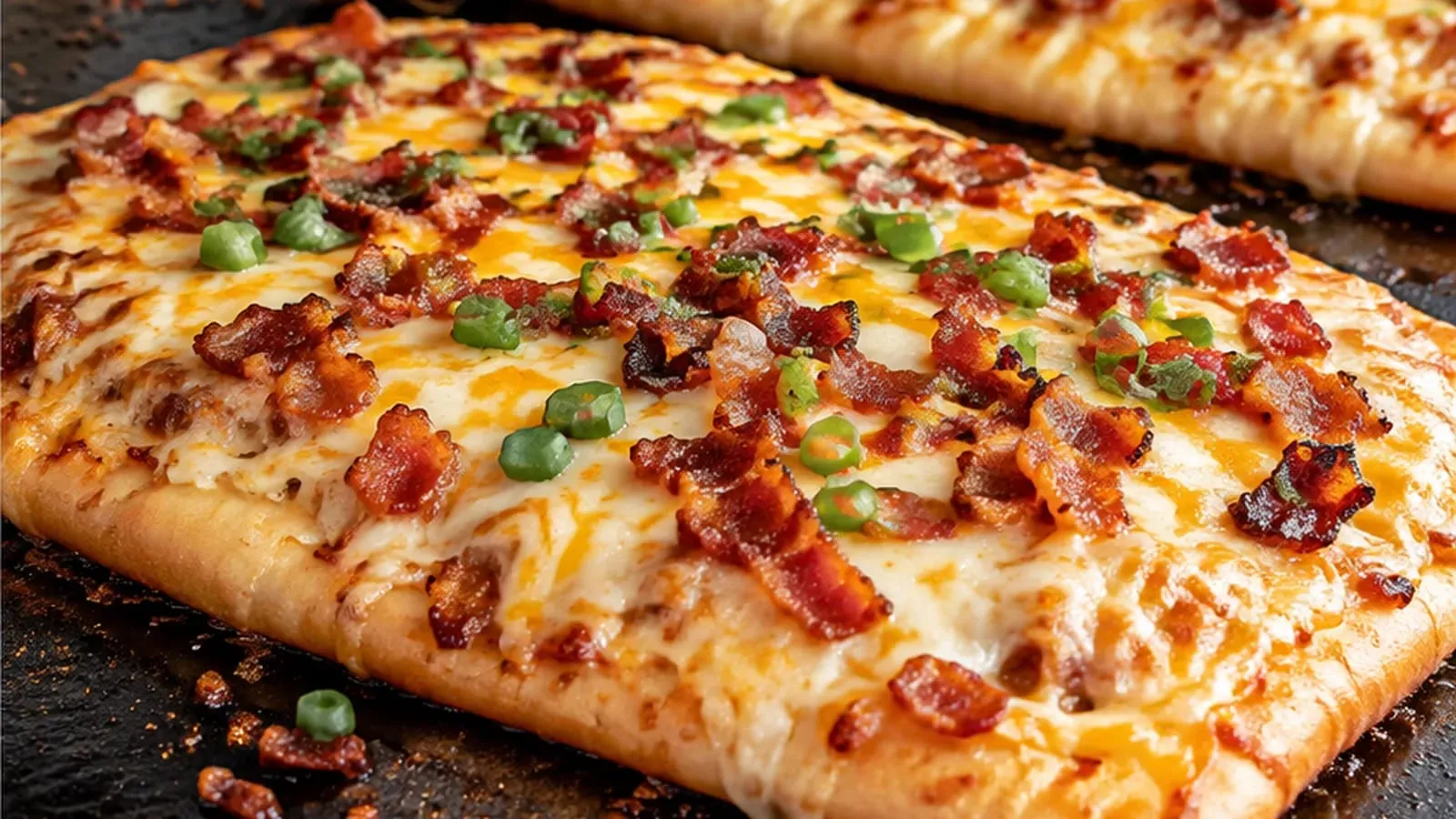
Blackstone Cheesy Bacon Flatbread
Cheesy bacon flatbread on a Blackstone griddle: store-bought naan crisped in rendered bacon fat, brushed with garlic butter, and topped with mozzarella, parmesan, and crumbled bacon.
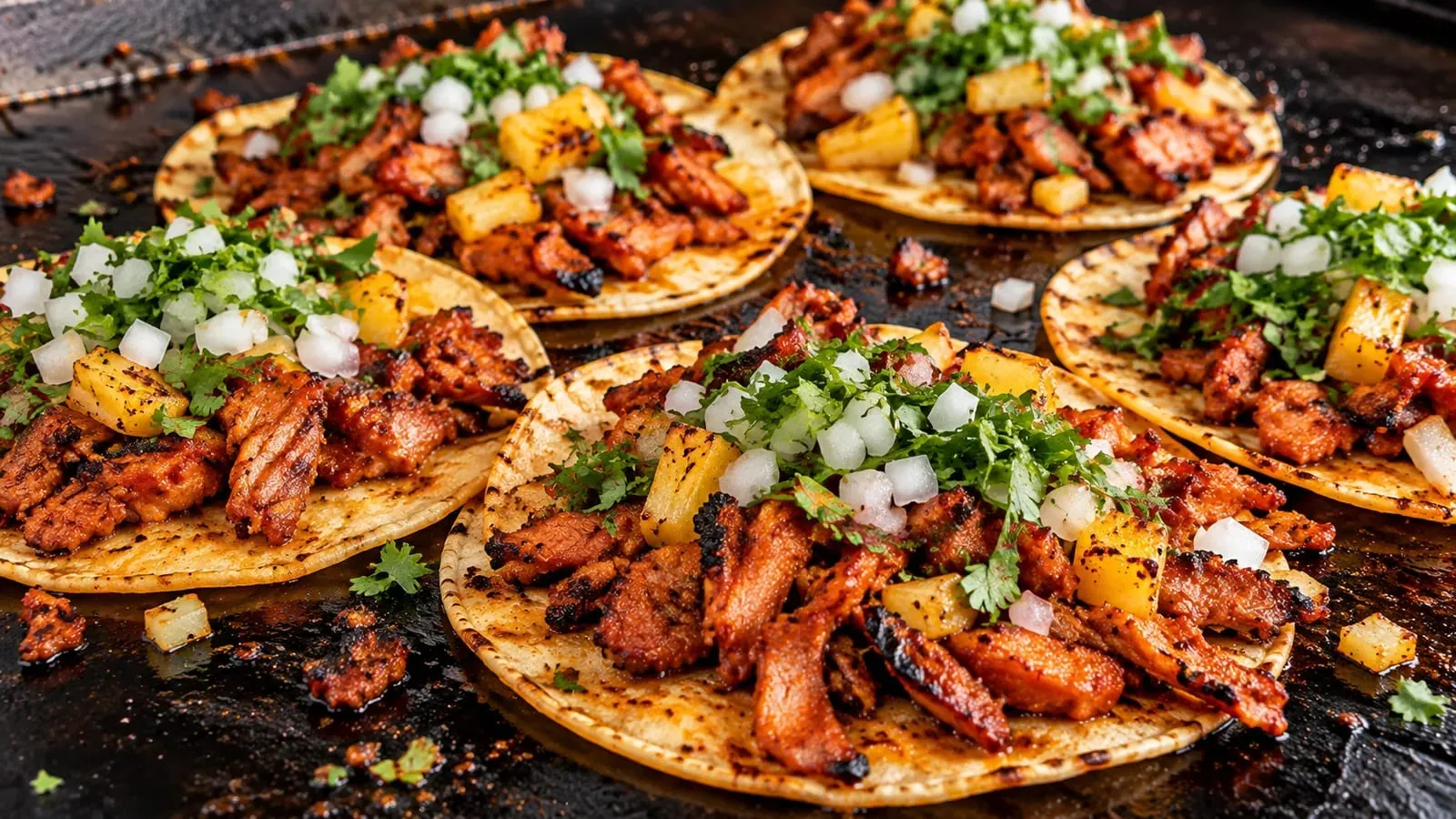
Blackstone Tacos al Pastor
Tacos al pastor on a Blackstone griddle: thin-sliced pork shoulder in a guajillo, ancho, and achiote marinade, seared hard on the flat top and served with charred pineapple.