
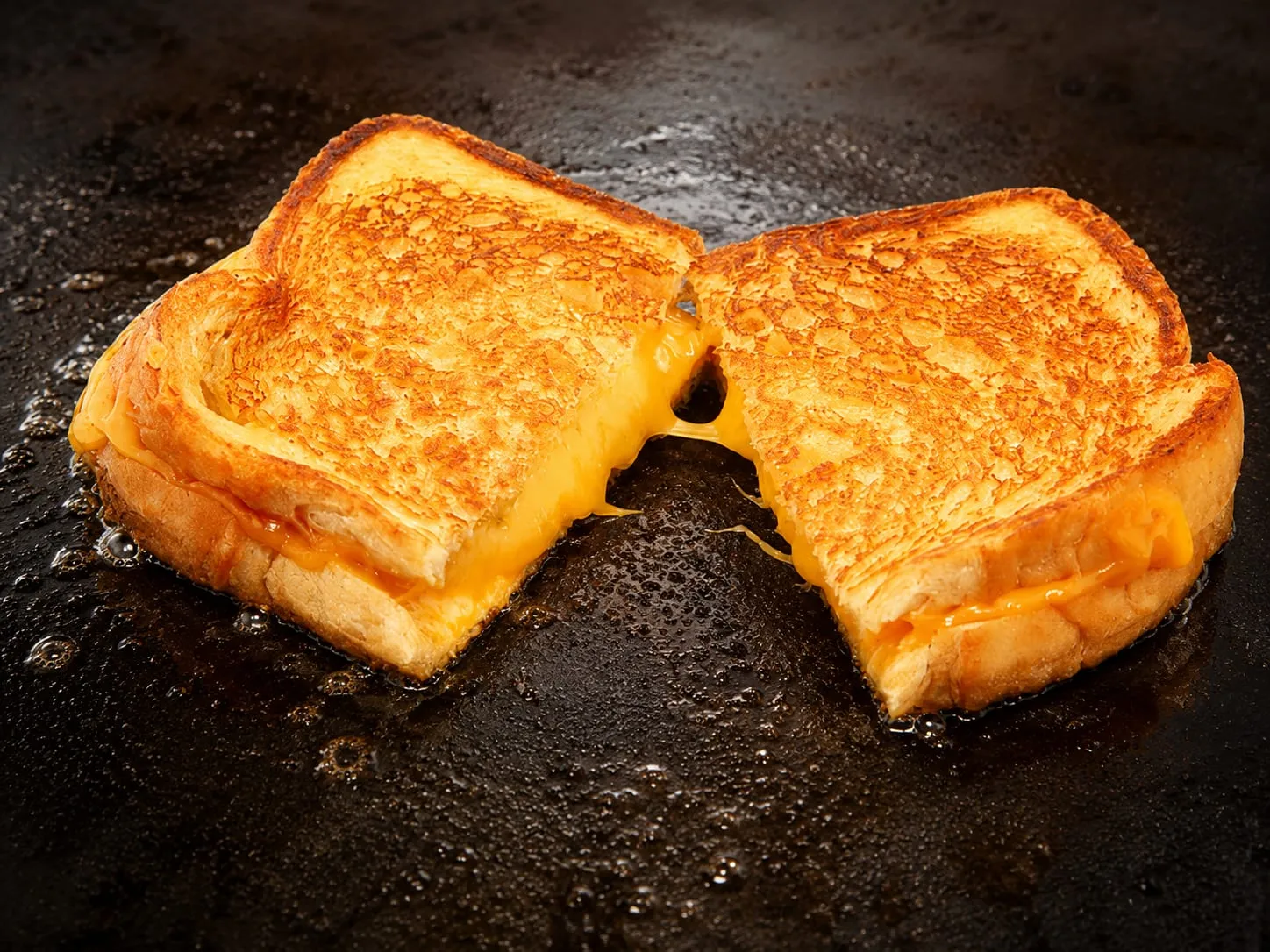
Blackstone Grilled Cheese: Golden Crust, Fully Melted Center
Grilled cheese on a Blackstone is better than stovetop, not dramatically, but meaningfully. The flat surface heats the entire slice of bread evenly from edge to edge, you get consistent browning without any hot-spot burning, and the wide cooking zone means you can make six sandwiches at once. On a stovetop, you’re making them two at a time and keeping the first batch warm in an oven.
The technique is simple. The variable that ruins most grilled cheese (on any surface) is heat that’s too high. Medium-low is the target. Get that right and everything else is just toppings.
The Right Temperature
Medium-low: 325-350°F. This is the single most important thing. Grilled cheese cooked at medium-high heat browns the bread in 2 minutes while leaving the cheese barely softened. At 325-350°F, the bread toasts slowly over 3-4 minutes, giving the cheese time to fully melt before the outside burns.
If you’re using an infrared thermometer, check before you start. If not, medium-low on most Blackstones lands in the right range: you want the butter to foam gently and slowly, not spit and smoke. See the griddle temperature guide for a full heat zone reference.
Ingredients
The Base Sandwich
- 8 slices bread (see bread section below)
- 6-8 oz cheese (see cheese section below)
- 3-4 tbsp unsalted butter (softened) or mayonnaise
The Dome Trick (optional but good)
- 2-3 tbsp water
Bread and Cheese
The Best Bread
Sourdough is the best all-around choice. The thick, sturdy slices hold up to the griddle, and the slight tang balances rich, fatty cheese. Look for a medium-dense loaf: too open a crumb and the melted cheese falls through.
Texas toast or thick-cut white bread is the classic for a reason. It compresses slightly as it toasts, creating a crispy exterior with a soft, buttery interior. The neutral flavor lets the cheese lead.
Sandwich bread works but goes thin and fragile. Use it if it’s what you have: results are still good, just less structural.
Avoid fresh-baked artisan bread with a very open crumb or very thick crust. The cheese pools through the holes and the crust resists browning evenly.
The Best Cheese
American cheese is the technical answer for meltability. It’s formulated to melt smoothly and completely without separating or going oily. One or two slices per sandwich, full melt guaranteed.
Sharp cheddar has better flavor but melts unevenly on its own: use it in combination with American for the best of both.
Gruyère melts beautifully and has a nutty, slightly funky depth that elevates the sandwich. Best on sourdough with caramelized onions.
Mozzarella gives you the pull and stretch but is mild. Pair with something more flavorful: cheddar, provolone, or a flavored cream cheese.
The best combo: one slice American (for guaranteed melt) + one slice sharp cheddar (for flavor). This is the sweet spot.
Instructions
Step 1: Preheat the Blackstone
Set to medium-low heat and preheat 8 minutes. Add butter or spread mayo on one side of each bread slice (see note below on which to choose).
Step 2: Place Bread Butter-Side Down
Lay the bread slices on the griddle butter-side down. You should hear a gentle sizzle, not aggressive spitting. If it’s spitting, the heat is too high.
Step 3: Add the Cheese
Immediately add your cheese to one slice of each pair. If using multiple cheeses, layer them. Place the second slice of bread butter-side up on top.
Step 4: Cook the First Side
Let the sandwiches cook undisturbed for 3-4 minutes. Don’t press down constantly. One firm press right after placing is fine. Check the bottom by lifting one corner with a spatula: you’re looking for deep golden brown, almost amber. Pale golden isn’t done; it’ll go soft as it cools.
Step 5: Flip, Then Use the Dome Trick
Flip each sandwich carefully. Immediately add 2-3 tablespoons of water to the griddle surface near (not under) the sandwiches. Cover with a basting dome. The trapped steam accelerates the final melt: 60 seconds under the dome does what 2-3 minutes uncovered can’t.
Step 6: Finish and Serve
Remove the dome after 60 seconds. Cook uncovered another 1-2 minutes until the second side is deeply golden and the cheese is visibly melted and gooey at the edges. Serve immediately. Grilled cheese doesn’t hold.
Butter vs. Mayo
Butter gives you a richer flavor and a slightly uneven golden crust that looks rustic and delicious. The milk solids in butter brown and add flavor. Softened butter spreads easily; cold butter tears the bread. The downside: butter has a lower smoke point than mayo and can burn if your griddle runs hot.
Mayonnaise spreads more evenly (it won’t tear the bread even straight from the fridge), has a higher smoke point, and produces a more uniform golden-brown crust. The flavor difference is small. Most people can’t distinguish a mayo-grilled cheese from a butter one in a blind test.
Bottom line: Both work. Use butter if you value the flavor; use mayo if you want foolproof, even browning.
Variations
Classic American on White
The original: two slices American cheese on white sandwich bread, buttered and griddled. No shame in this: it’s perfect.
Gruyère and Caramelized Onions
The grown-up version. Caramelize a large yellow onion on the Blackstone first, 20 minutes on medium-low with butter, stirring every few minutes until deep amber and sweet. Layer with Gruyère on sourdough. Worth every minute.
Bacon Grilled Cheese
Cook Blackstone bacon first, set aside, then make the sandwich with bacon strips inside alongside sharp cheddar and American on sourdough. The bacon fat stays hot and you can use it in place of butter on the bread.
Jalapeño Popper
Spread one slice with softened cream cheese, add shredded cheddar, and lay thinly sliced pickled jalapeños across the center. Close with the second slice. The cream cheese melts into the bread and the jalapeños go slightly sticky and sweet. Serve with ranch.
Breakfast Grilled Cheese
Layer with a fried egg, two strips of bacon, and American cheese on thick-cut white bread. A full breakfast in sandwich form, pairs perfectly with Blackstone breakfast hash or crispy Blackstone hashbrowns.
Tips
- Don’t rush the preheat. A griddle that isn’t fully up to temperature will give you uneven browning. 8 minutes on medium-low before you start.
- One firm press, then leave it. Press the sandwich down when it first hits the griddle to create even contact. After that, don’t press again: you’re squeezing the cheese out.
- Check the color before flipping. Grilled cheese should be deep golden before you flip, not pale. A pale flip means the second side goes in while the cheese is still cold.
- Cheese to bread ratio. Be generous. A thin layer of cheese that barely covers the bread will melt and disappear. Use enough that you can see it peeking out the sides.
- Make them all the same size. On a Blackstone you can cook 6 at once, but they all need to be the same thickness so they cook at the same rate.
More flat-top recipes: Blackstone Griddle Sandwiches · Blackstone Lunch Ideas
Frequently Asked Questions
What temperature should the Blackstone be for grilled cheese?
Medium-low, 325-350°F. High heat browns the bread before the cheese has time to melt. At 325-350°F, the bread toasts over 3-4 minutes while the cheese melts through slowly. If your bread is browning in under 2 minutes, your griddle is too hot.
What’s the best cheese for grilled cheese on a Blackstone?
American cheese for pure meltability: it’s formulated to melt smoothly without separating. For better flavor, use one slice American and one slice sharp cheddar. Gruyère and provolone are excellent upgrades. Avoid block mozzarella alone (too mild) or aged parmesan (won’t melt properly).
Butter or mayo for Blackstone grilled cheese?
Both work. Mayo spreads more evenly straight from the fridge and has a higher smoke point, better for beginners or if your griddle runs hot. Butter adds a richer flavor. The difference in taste is minimal; the difference in ease of use is real.
How do I melt the cheese without burning the bread?
Two things: lower heat and the dome trick. Cook at 325-350°F (medium-low). After flipping, add a splash of water to the griddle and cover with a basting dome for 60 seconds: the steam accelerates the final melt without any additional browning on the outside.
How many grilled cheeses can I make at once on a Blackstone?
A 36-inch Blackstone fits 6-8 sandwiches comfortably. A 28-inch fits 4. This is the biggest practical advantage of the flat-top over a stovetop skillet: you can feed a group without keeping anyone’s sandwich warm in an oven.
Can you make a grilled cheese with fresh bread?
Very fresh bread (same day from a bakery) can be slightly too soft and compresses a lot under the spatula. Day-old bread or store-bought sliced bread works better: it has a bit more structure. If you’re using very fresh sourdough, let it sit uncovered for an hour before making grilled cheese.
What temperature do you cook grilled cheese on a Blackstone griddle?
Cook grilled cheese at 325-350 degrees F (medium-low heat) on a Blackstone griddle. Medium-low heat gives the buttered bread time to toast to a deep golden brown while the cheese fully melts inside. High heat chars the bread before the cheese is done.
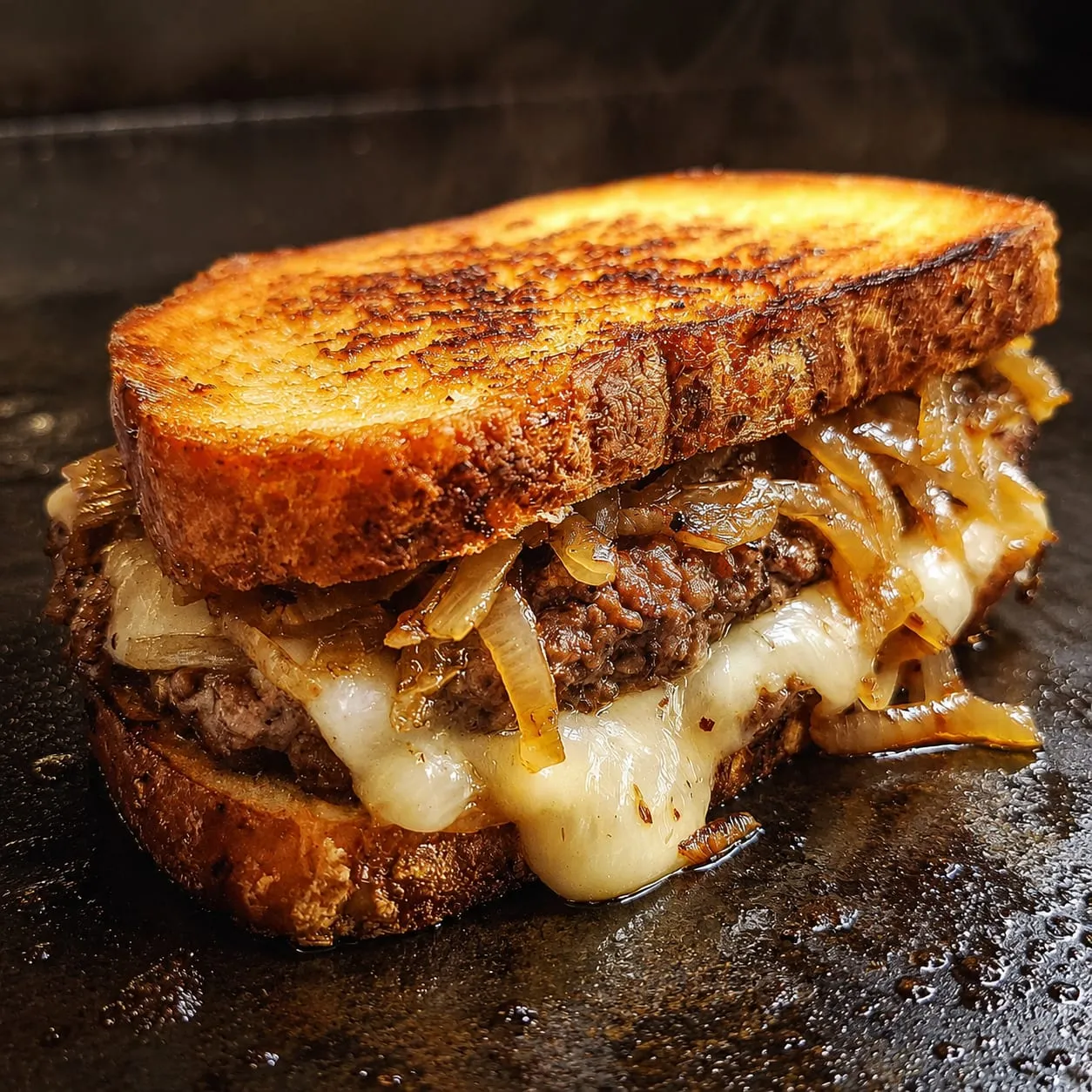
Blackstone Patty Melt: Caramelized Onions, Swiss, Crispy Rye
How to make a patty melt on a Blackstone, ground beef patty, deeply caramelized onions, Swiss cheese, and buttered rye bread pressed to a golden crisp.
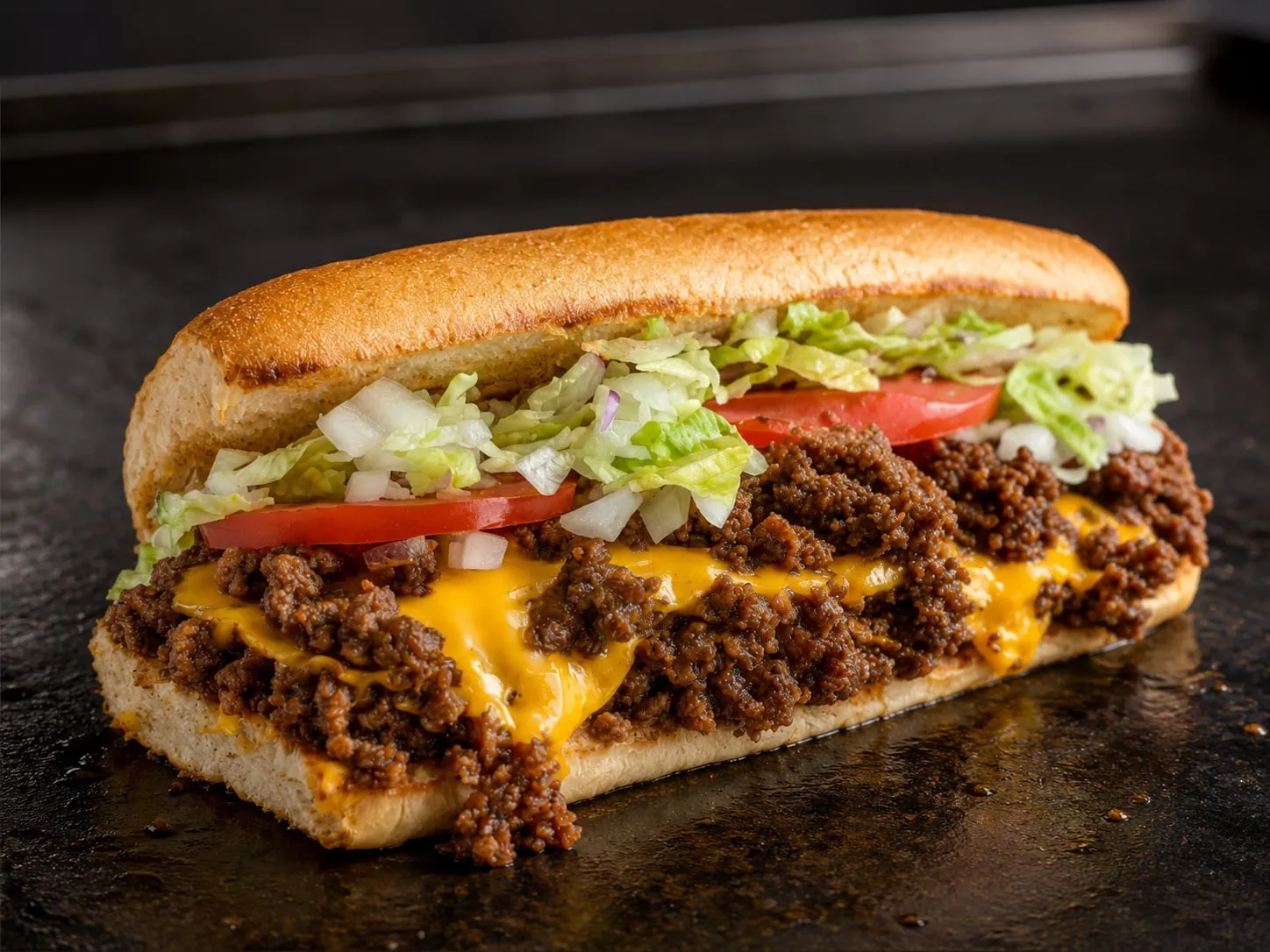
Chopped Cheese on Blackstone: The NYC Bodega Sandwich at Home
Chopped cheese on a Blackstone griddle: ground beef chopped with onions and American cheese on a toasted hoagie. The NYC bodega method, flat-top style.
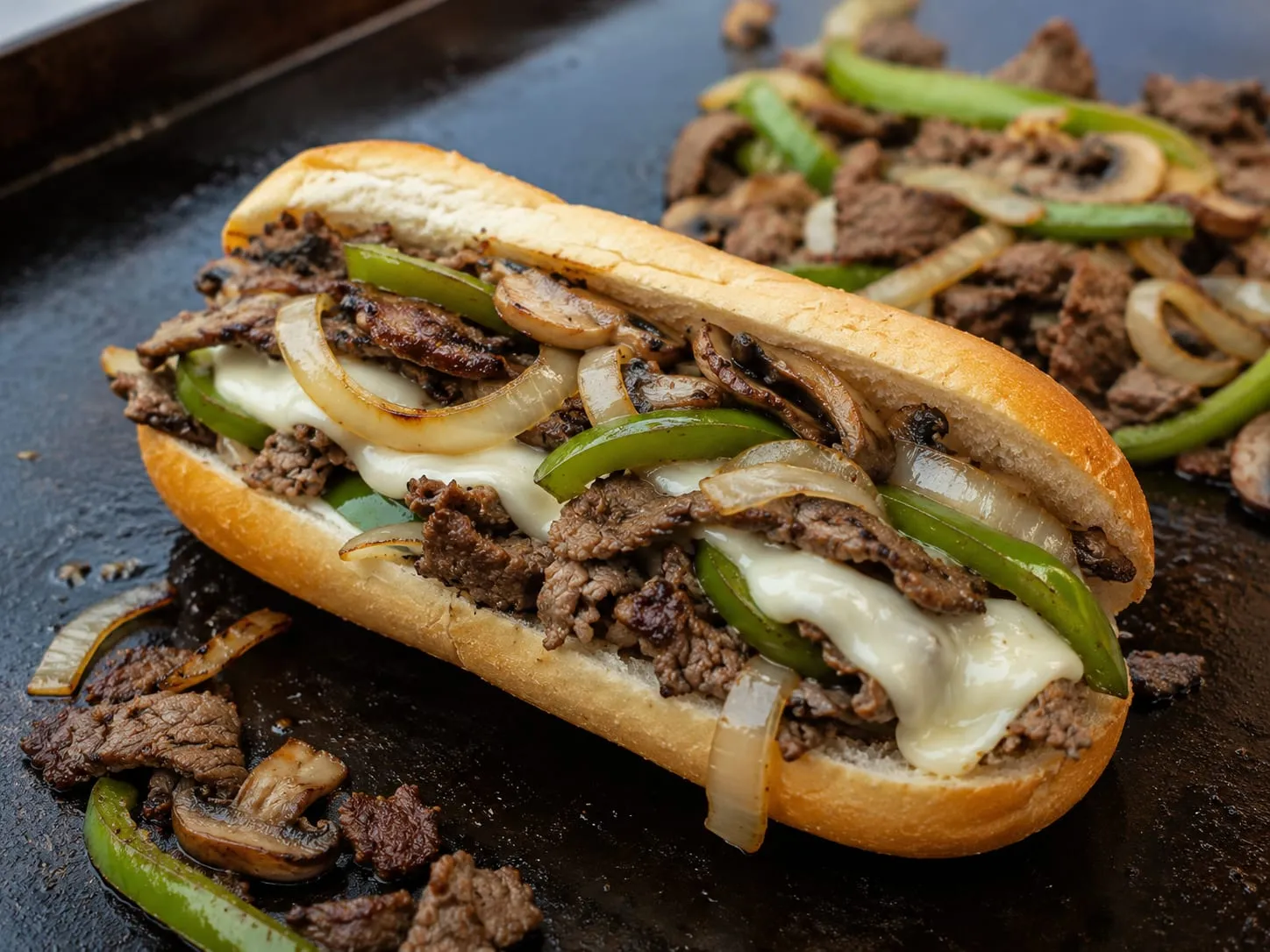
Blackstone Philly Cheesesteak Recipe: Authentic Griddle Method
A Blackstone Philly cheesesteak recipe with thinly sliced ribeye, caramelized onions and peppers, and melted provolone on a toasted hoagie roll. Ready in 20 minutes.