
Griddle vs Grill: Which Should You Get?
What changed: Added a fuel comparison and a section on griddle inserts and combo units.
A griddle and a grill look similar in the backyard, but they cook in completely different ways, and that one difference decides everything each is good at. The short version: a grill cooks over open flame through grates and gives you smoke and char; a griddle cooks on a solid, flat steel surface and gives you an even, full-contact sear. Neither replaces the other, and if you cook outdoors often, there’s a strong case for owning both.
Here’s the honest breakdown of how they differ and which one fits the way you actually cook.
The Core Difference
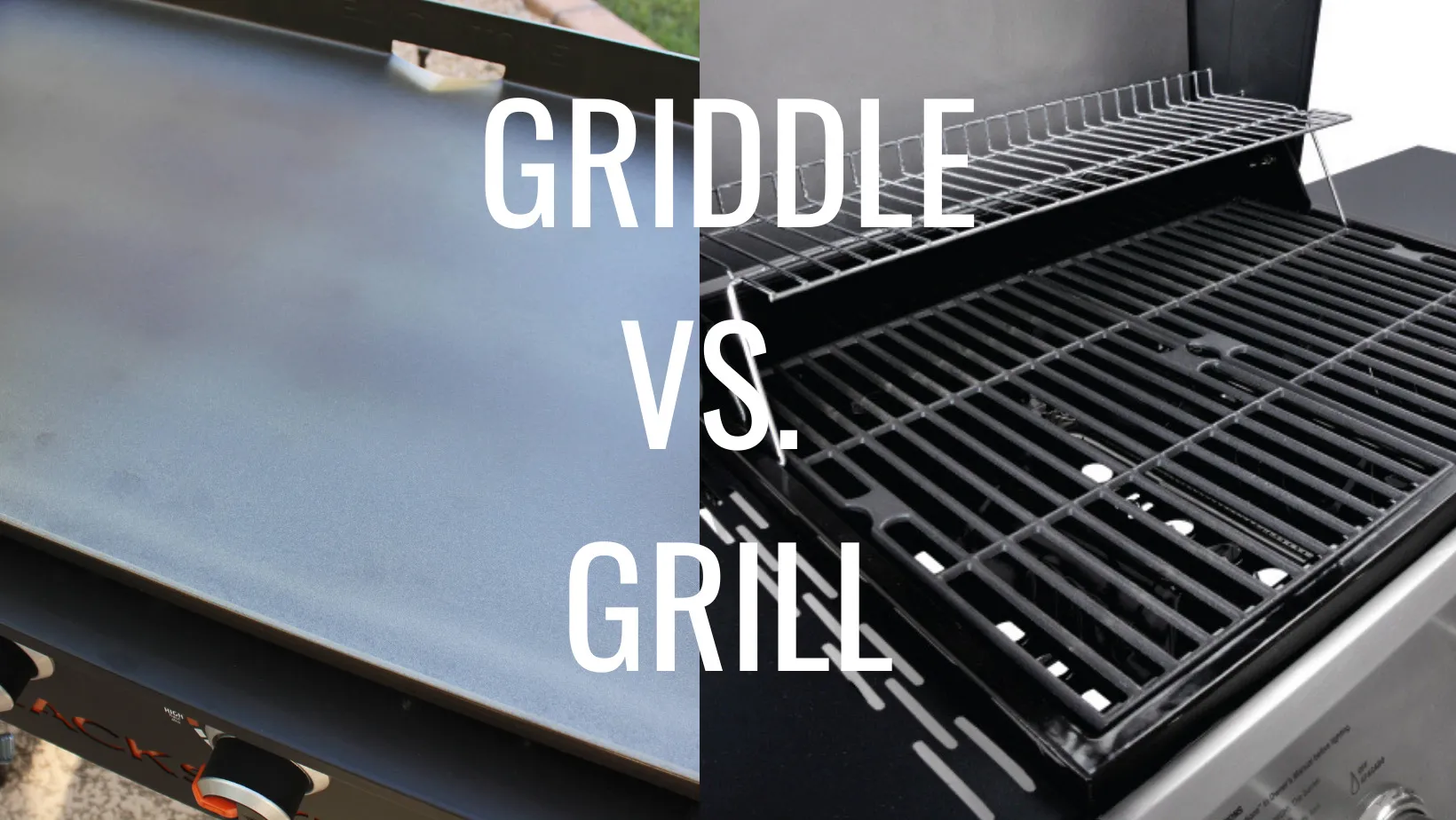
A grill suspends food over a heat source (gas burners or charcoal) on metal grates, so flames and smoke reach the food directly and rendered fat drips down into the fire. A griddle is a solid, flat plate (usually cold-rolled steel, like a Blackstone) heated from below, so food cooks by direct contact with the surface and nothing drips away.
That structural difference is the whole story. Grates let fat drip and flames rise, which is why grills add smoke and char. A flat plate contacts 100% of the food’s surface with no gaps, which is why griddles sear evenly, hold small ingredients, and let you cook in sauces. Everything below flows from that one fact.
Griddle vs Grill: Side-by-Side
| Flat-Top Griddle | Gas/Charcoal Grill | |
|---|---|---|
| Cooking surface | Solid flat steel | Open grates over flame |
| Smoke flavor | None | Strong |
| Grill marks / char | No | Yes |
| Breakfast (eggs, pancakes) | Yes | No |
| Smash burgers | Yes | No |
| Small ingredients (rice, veg, shrimp) | Yes | Fall through |
| Full-surface sear | Yes | Contact-only marks |
| Sauces & liquids | Yes | Run into the fire |
| High-volume cooking | Excellent | Limited by dead zones |
| Low-and-slow (ribs, brisket) | No | Yes |
| Flare-up risk | None | Yes |
| Cleanup | Fast scrape | Longer |
| Seasoning required | Yes | No |
| Fuel options | Propane, natural gas, electric | Propane, natural gas, charcoal, pellet |
What a Grill Does Better
A grill wins anywhere smoke and flame are the point:
- Smoke flavor. Fat drips through the grates, hits the heat, and rises back as smoke. That’s the flavor no flat-top can copy.
- Char and grill marks. Direct flame and bar contact give you the crosshatch and lightly charred edges people associate with barbecue.
- Low-and-slow cooks. Ribs, brisket, whole chickens: anything that needs indirect heat over hours. A grill or smoker is built for it; a griddle isn’t. What not to cook on a Blackstone covers the full list and how to split those cooks.
- Shedding fat. For fatty cuts, the grill lets grease drip into the fire instead of pooling it around the food.
What a Griddle Does Better
A griddle wins anywhere a flat, gap-free surface matters:
- Breakfast. Eggs, pancakes, bacon, hash browns, French toast: none of it works on grates.
- Smash burgers. The lacy, crispy crust comes from smashing a patty onto screaming-hot steel. Grates make it impossible. See the Blackstone burgers recipe for the technique.
- Small ingredients. Diced veg, shrimp, rice, mushrooms, garlic: anything that would fall through grates cooks fine on a flat top.
- Full-surface sear. Grates only touch the food where the bars are. Steel touches all of it, so proteins get an even crust instead of stripes.
- Sauces and stir-fries. Teriyaki, fajita marinade, garlic butter: you cook in them and reduce them instead of losing them to the flames.
- Volume. A 36-inch flat top is all usable surface with no dead zones, so you can feed a crowd in one pass.
Is a Griddle Healthier Than a Grill?
Neither is clearly healthier: it comes down to technique more than the tool.
Grilling over open flame lets fat drip away from the food, which can mean less grease on the plate. The trade-off is that dripping fat causes flare-ups and smoke, and charring or blackening meat at high heat is usually what people are thinking of when they raise health concerns about grilling.
A griddle produces no flare-ups and no flame contact, so it’s easy to cook without charring. The trade-off is that food sits in its own rendered fat unless you scrape it toward the grease trap, so you’re not shedding grease the way a grill does, and it’s easy to add more oil than you need.
If health is your main concern, the tool matters less than how you cook on it: avoid heavy char, trim excess fat, go easy on added oil, and cook plenty of vegetables. You can eat well or poorly on either one.
Is a Griddle Worth It If You Already Have a Grill?
For most people, yes, because they don’t overlap. A griddle isn’t a second grill; it unlocks a whole category your grill can’t touch: breakfast, smash burgers, hibachi-style stir-fries, fajitas, quesadillas, and anything saucy. If your grill already handles your steaks and brats, a griddle adds everything else.
The honest exception: if you only ever cook a few steaks or bone-in chicken and you specifically love smoke and grill marks, a griddle may sit unused. For a family cooking most nights, though, a flat top covers more of what actually gets made during the week. If you’re weighing a specific model, the Blackstone buyers guide breaks down sizes and series.
What About a Griddle Insert or a Combo Unit?
If you only want flat-top cooking now and then, a steel or cast iron griddle plate that sits on your grill grates gets you eggs and smash burgers without a second appliance. It’s smaller than a dedicated flat top, and you’re working with the grill’s burners and lid rather than a griddle built around its own burners and grease drain, so it suits the occasional breakfast more than feeding a crowd every week.
The other route is a combo. Blackstone’s Tailgater, for example, puts a grill box and a griddle top side by side on one frame. That makes sense if you’re short on patio space and want both.
Steaks and Burgers: Griddle or Grill?
Steaks: both are excellent, they just finish differently. A griddle gives a full, edge-to-edge steakhouse crust because the entire steak contacts hot steel. A grill gives you smoke, char, and grill marks. Want maximum crust? Go griddle. Want smoky char? Go grill. Plenty of cooks do both: grill for smoke, then finish on the griddle for crust.
Burgers: it depends on the style. For smash burgers, the griddle wins decisively; you can’t smash a patty against grates, and only flat steel produces that signature crispy, lacy crust. For thick, pub-style burgers where you want smoke and marks, a grill is a fine choice.
Do Restaurants Use Griddles or Grills?
Both, for different jobs, and most commercial kitchens have a flat-top. Diners, breakfast spots, and burger joints run on chrome-plated flat-top griddles because they’re fast, even, and handle eggs, pancakes, and smash burgers all day. Steakhouses and barbecue restaurants lean on grills, broilers, and smokers for char and smoke. The flat-top in your backyard is the home version of the same workhorse surface a short-order cook uses.
Which Should You Get?
- Get a grill if smoke flavor, char, and low-and-slow barbecue are what you care about most.
- Get a griddle if you cook breakfast, want smash burgers, feed a family most nights, or like variety: stir-fries, fajitas, sandwiches, and sauces.
- Get both if you can. They don’t compete; they cover each other’s blind spots. A grill for the weekend brisket, a griddle for weeknight dinners and Sunday breakfast.
New to flat-tops? Start with what a griddle is and how it works, then the Blackstone buyers guide to pick a size.
Related guides: What Is a Griddle? · Griddle vs Skillet · Blackstone Buyers Guide
Frequently Asked Questions
Is a griddle healthier than a grill?
Neither is clearly healthier: it depends on technique more than the tool. A grill lets fat drip away but can char and blacken food over open flame; a griddle avoids flare-ups and char but cooks food in its own rendered fat unless you scrape it off. To eat healthier on either, avoid heavy char, trim excess fat, go easy on added oil, and cook plenty of vegetables.
Is a griddle worth it if I already have a gas grill?
For most people, yes, because they don’t overlap. A griddle adds breakfast, smash burgers, stir-fries, fajitas, quesadillas, and sauced dishes, none of which work on grill grates. The exception is someone who only cooks a few steaks and specifically wants smoke and grill marks.
Are steaks better on a griddle or a grill?
Both are excellent, with different results. A griddle gives a full edge-to-edge crust because the entire steak contacts hot steel; a grill gives smoke, char, and grill marks. For maximum crust, choose the griddle; for smoky flavor, choose the grill. Some cooks do both: grill to add smoke, then finish on the griddle for crust.
Are burgers better on a griddle or a grill?
Smash burgers are decisively better on a griddle: you can’t smash a patty against grates, and the flat steel produces the signature crispy, lacy crust. Thick pub-style burgers where you want smoke and grill marks are fine on a grill. For most home cooks chasing the fast-food-style burger, the griddle wins.
Why use a griddle instead of a grill?
Use a griddle when you want an even, full-surface sear, when you’re cooking breakfast or small ingredients that fall through grates, when you’re cooking with sauces, or when you’re feeding a crowd. The solid flat surface does things grates physically can’t. Use a grill instead when you specifically want smoke flavor, char, or low-and-slow barbecue.
What can a grill do that a griddle can’t?
A grill imparts smoke flavor from fat dripping onto the heat, produces true grill marks and char, handles low-and-slow indirect cooks like ribs and brisket, and lets fat drip away from fatty cuts. A griddle can’t replicate smoke or true char because food never sits over open flame.
Do restaurants use griddles or grills?
Both, for different foods, and most commercial kitchens have a flat-top griddle. Diners, breakfast spots, and burger restaurants rely on chrome flat-top griddles for eggs, pancakes, and smash burgers; steakhouses and barbecue restaurants use grills, broilers, and smokers for smoke and char.
What Not to Cook on a Blackstone (and What to Do Instead)
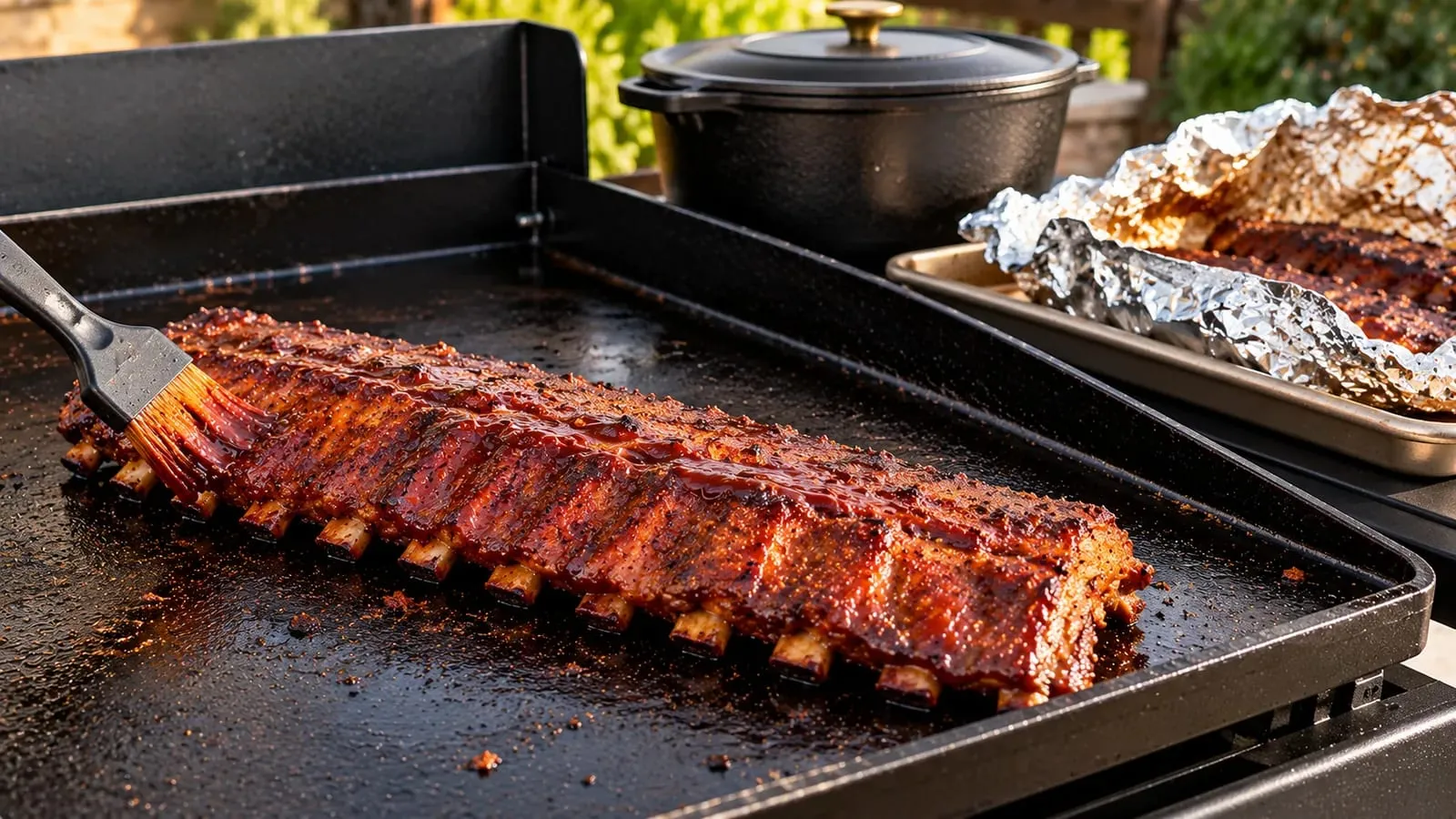
What doesn't work on a Blackstone griddle: low-and-slow cuts, big roasts, anything that sits in liquid, and deep-fried food, plus how to split the cook so the griddle still does the part it's good at.
Why Is Everyone Selling Their Blackstone? An Honest Answer
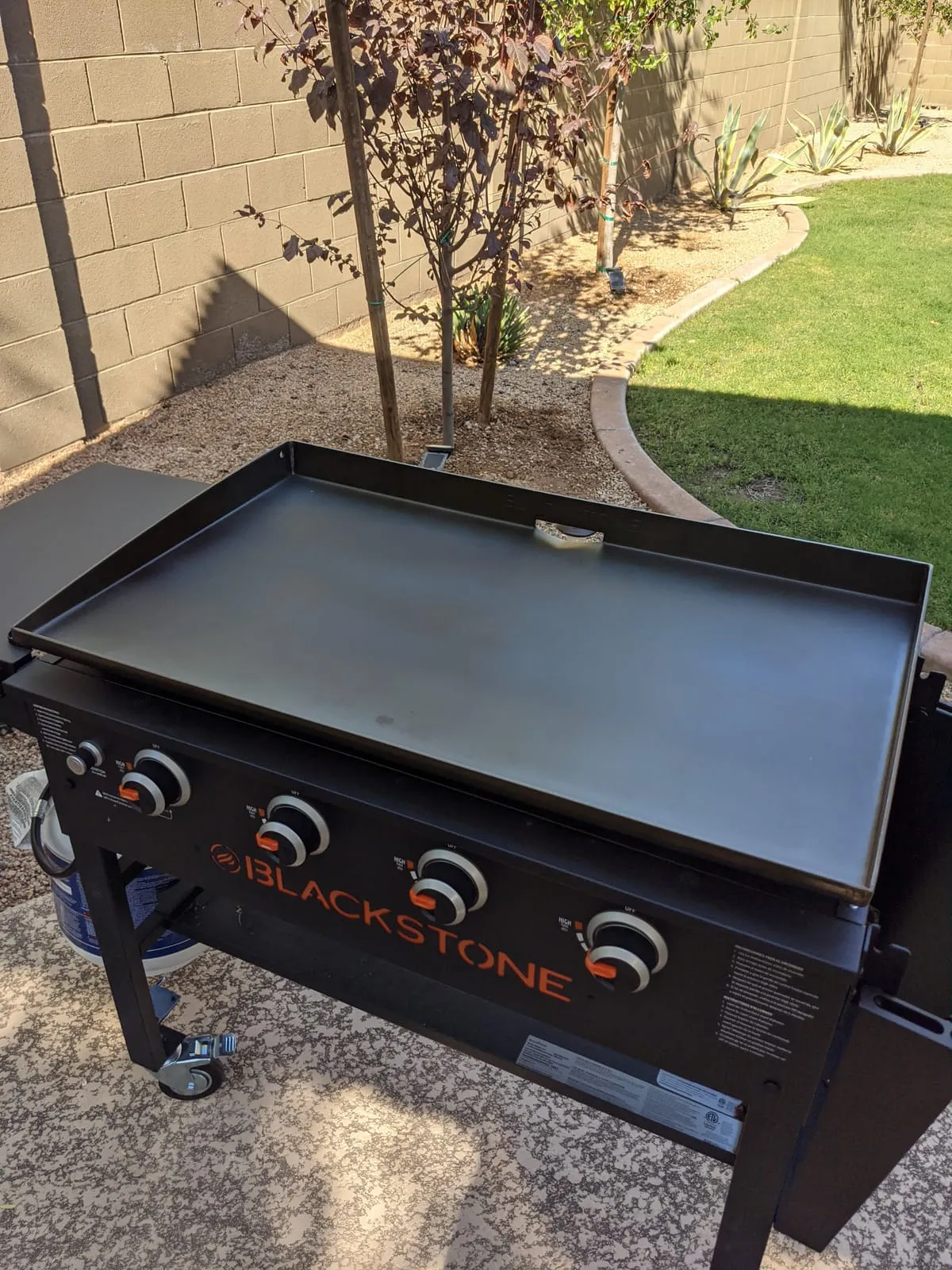
Why is everyone selling their Blackstone? Mostly, they aren't. Here's the honest story, plus the real cons, lifespan, the Walmart price, and if it's worth it.
Blackstone Flame Problems: Yellow, Uneven, and Blowing Out
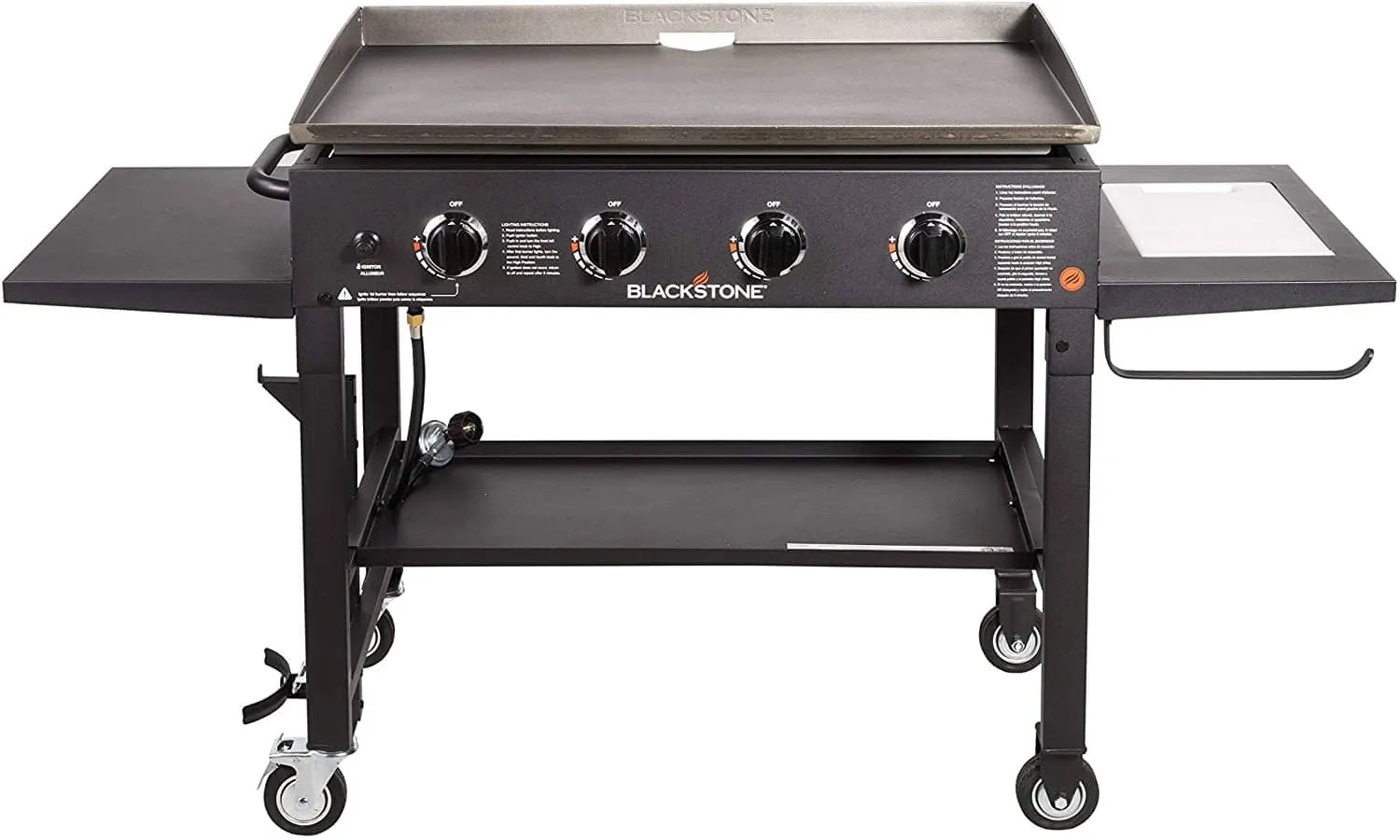
Yellow or orange flames, uneven burners, flames that blow out or pop: what each flame problem means on a Blackstone griddle and how to fix it safely.