
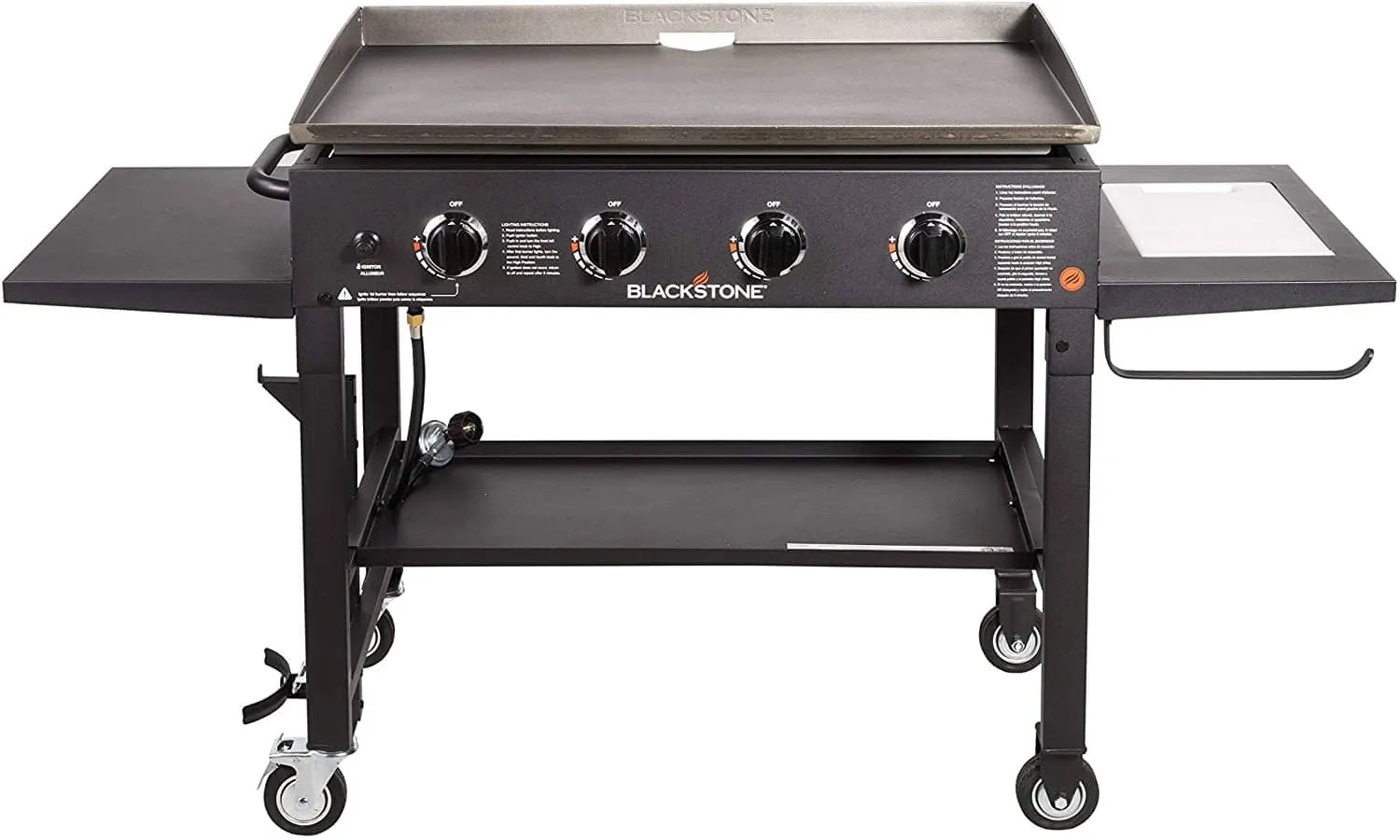
Blackstone Flame Problems: Yellow, Uneven, and Blowing Out
Your burners are the clearest diagnostic instrument on the griddle. You just have to know how to read them. A healthy Blackstone burner produces a mostly blue flame with crisp cones and maybe a faint yellow tip, burning steadily along the whole tube. Anything else is the griddle telling you something specific.
This guide decodes what each flame problem means. If the issue is simply that everything is weak (low flames across every burner, a surface that won’t heat) that’s a propane delivery problem and the low heat guide starts with the regulator reset that fixes it.
Read Your Flame
| What you see | What it means |
|---|---|
| Mostly blue, crisp cones | Healthy: nothing to fix |
| Yellow or orange, lazy and soft | Incomplete combustion: not enough air |
| Strong on one burner, weak on another | Blockage in the weak burner’s tube |
| Flame lifts off and floats above ports | Too much gas pressure or too much air |
| Flames blow out constantly | Wind |
| Flame visible at the air gate / back of tube | Stop. Shut it down (below) |
| Popping or whooshing on ignition | Delayed ignition from gas buildup |
Yellow or Orange Flames
A yellow, lazy flame means incomplete combustion: the burner isn’t getting enough air mixed with the propane. Beyond running cooler and less evenly, incomplete combustion produces carbon monoxide and deposits soot on the underside of your griddle top, which is exactly why this is worth fixing rather than living with.
Work through the causes in this order:
1. Spiders and debris in the burner tube. This is the most common cause, and it sounds like a joke until you look. Spiders are genuinely attracted to the odorant added to propane and build webs inside burner venturi tubes, especially over winter storage. With the griddle off and cool, pull the griddle top and inspect each tube. Clear webbing and debris with a narrow bottle brush or compressed air, and clean any bug shields while you’re in there.
2. Blocked or dirty air gates. The air gate is the opening where each burner draws combustion air. Grease, soot, and debris accumulate around it and choke the mixture. Wipe the area clean.
3. Air shutter adjustment (if your model has one). Some Blackstone burners have an adjustable air shutter near the gas inlet, secured with a small screw; many models, including a number of 28” units, have no adjustable shutter at all. Check yours before hunting for a screw that doesn’t exist. If you do have shutters: with the burner off and cool, loosen the screw, open the shutter to admit more air, tighten, then light and observe. Adjust in small increments until the flame runs blue. If your shutters are already fully open and the flame is still yellow, the problem is a blockage, not the setting.
4. A new griddle burning off manufacturing residue. A brand-new griddle can throw yellow flame and odd smells during its first burn-in as protective coatings cook off. Run it empty on high for 15-20 minutes; if it’s still yellow after that, it’s one of the causes above.
One Burner Weak, the Others Fine
The regulator feeds every burner equally, so a single weak or yellow burner is never a regulator problem. It’s a blockage in that specific tube or orifice. Same fix as above: griddle top off, inspect, clear the tube and orifice, reassemble. Worth doing once a season as maintenance regardless.
Flames That Blow Out
Wind is the culprit, and it’s usually the intake side rather than the cooking surface that matters. Reposition the griddle so the burner intakes face away from the prevailing wind, or fit wind guards. They stop the flame-out problem and cut propane waste at the same time. Low burner settings blow out far more easily than high ones, so on a gusty day, run hotter and use a cooler zone for delicate food rather than turning every burner down.
Flame Lifting Off the Burner
If the flame floats visibly above the ports instead of sitting on them, the air-fuel balance has gone the other direction, too much air or too much gas pressure. Close the air shutter slightly if your model has one, and confirm you’re using the regulator that shipped with the griddle. An aftermarket or high-pressure regulator meant for a different appliance will do this.
Popping or Whooshing When Lighting
A pop on ignition means gas accumulated before it caught. It’s startling, and the fix is procedural: turn the burner on and light it immediately rather than letting gas run while you find the lighter. If you’re lighting manually, flame goes into position first, then the knob turns. If a burner doesn’t catch within a couple of seconds, turn it off, let the gas clear for a minute, and try again.
When to Stop and Shut It Down
Most flame problems are maintenance items. These are not. Shut the griddle down, close the tank valve, and don’t relight until it’s resolved:
- Flame burning at the air gate or back of the burner tube rather than at the ports. This means the burner is lighting where the gas enters, and continuing to run it can damage the griddle and the hose.
- Any flame outside the burner area: around fittings, the hose, or the regulator.
- A propane smell that doesn’t clear within a few seconds. Close the tank valve, move away, and check fittings before relighting. Never hunt for a leak with a flame. The outdoor griddle safety guide covers the soapy-water method.
If the burner itself is damaged (cracked, badly corroded, or holes burned through the tube) replacement burners are inexpensive and available from Blackstone directly. Griddles under a year old are covered by warranty; contact Blackstone customer service with your receipt before buying parts.
Related: Blackstone Troubleshooting Guide · Blackstone Not Getting Hot? · Igniter Not Working? · Outdoor Griddle Safety
Frequently Asked Questions
Why is my Blackstone flame yellow instead of blue?
Yellow flame means incomplete combustion: the burner isn’t getting enough air. The usual cause is a blockage in the burner tube, most often spider webs (spiders are drawn to the odorant in propane), followed by debris around the air gate. Clear the tube with a bottle brush or compressed air. If your model has adjustable air shutters, opening them slightly can help; many models don’t have them.
Is a yellow flame on a griddle dangerous?
It’s worth fixing promptly. Incomplete combustion produces carbon monoxide and soot, cooks unevenly, and deposits residue under the griddle top. On an outdoor griddle in open air the CO risk is low, but never operate any propane griddle indoors or in an enclosed space, yellow flame or not.
Why does only one burner have a yellow or weak flame?
Because the regulator supplies all burners equally, a single bad burner points to a blockage in that specific tube or orifice rather than a gas supply problem. Remove the griddle top and clear that burner’s tube and orifice.
Why do my Blackstone burners keep blowing out?
Wind reaching the burner intakes. Turn the griddle so the intake side faces away from the wind, or install wind guards. Burners on low blow out much more easily than burners on high, so on windy days run hotter and use a cooler zone for delicate foods instead of lowering every burner.
What does it mean if the flame is coming from the back of the burner tube?
The burner is igniting at the air gate instead of at the ports, usually caused by a blockage or a damaged burner. Shut the griddle off and close the tank valve. Don’t keep cooking: inspect and clear the burner tube once everything is cool, and replace the burner if it’s cracked or corroded.
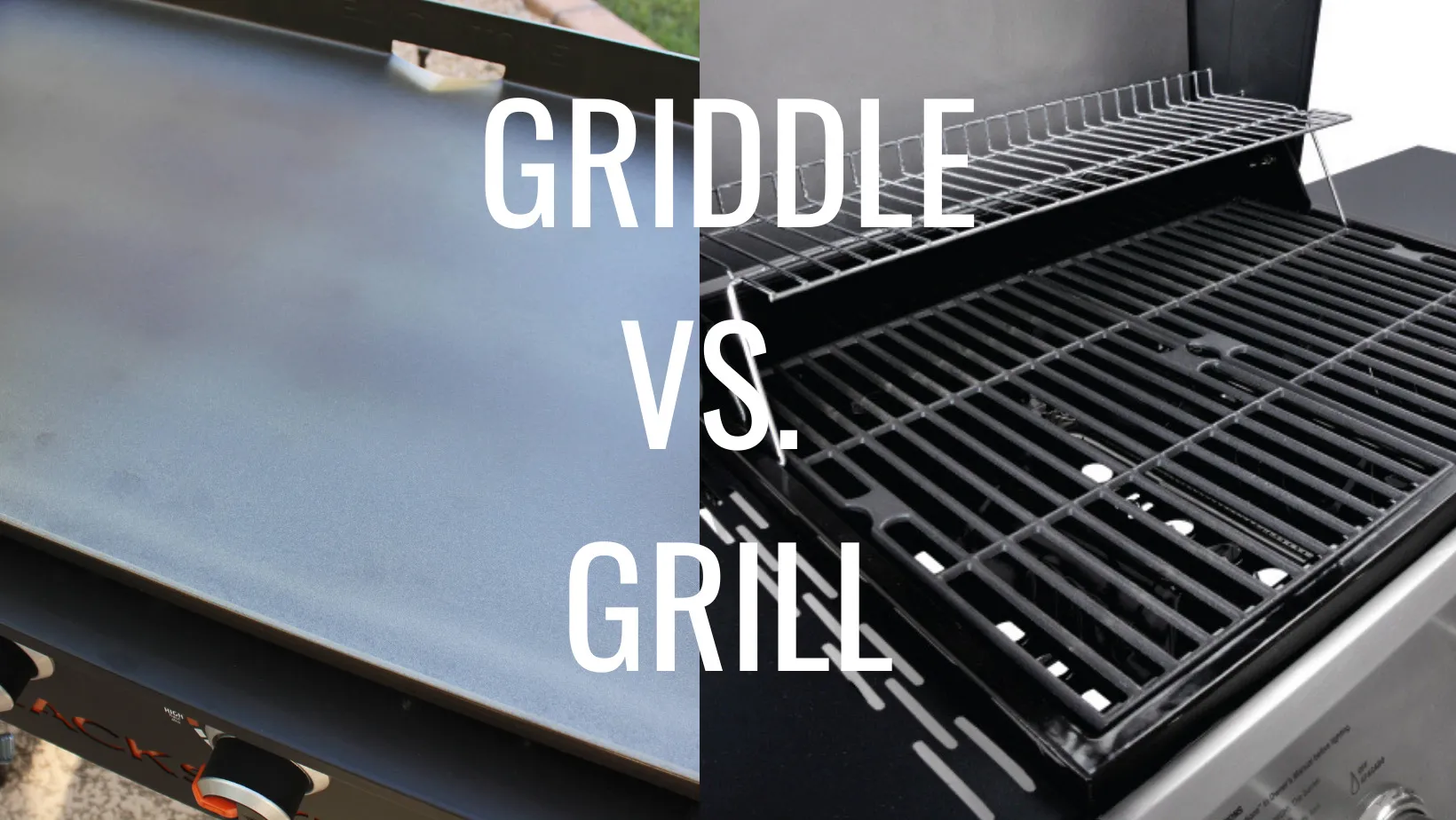
Griddle vs Grill: Which Should You Get?
Griddle vs grill: the real differences, which is healthier, whether a griddle is worth it if you already own a grill, and which wins for steaks and burgers.
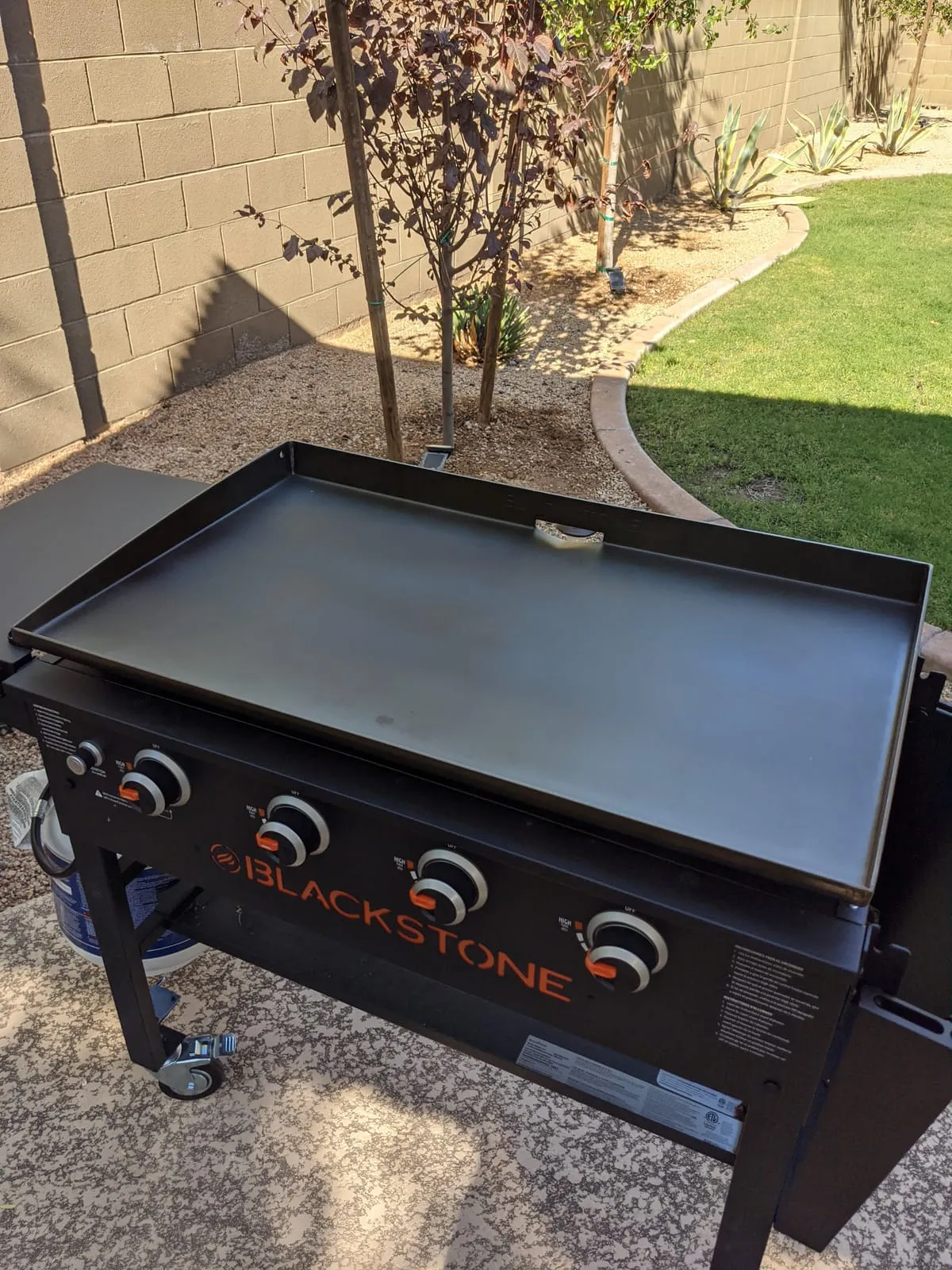
Why Is Everyone Selling Their Blackstone? An Honest Answer
Why is everyone selling their Blackstone? Mostly, they aren't. Here's the honest story, plus the real cons, lifespan, the Walmart price, and if it's worth it.
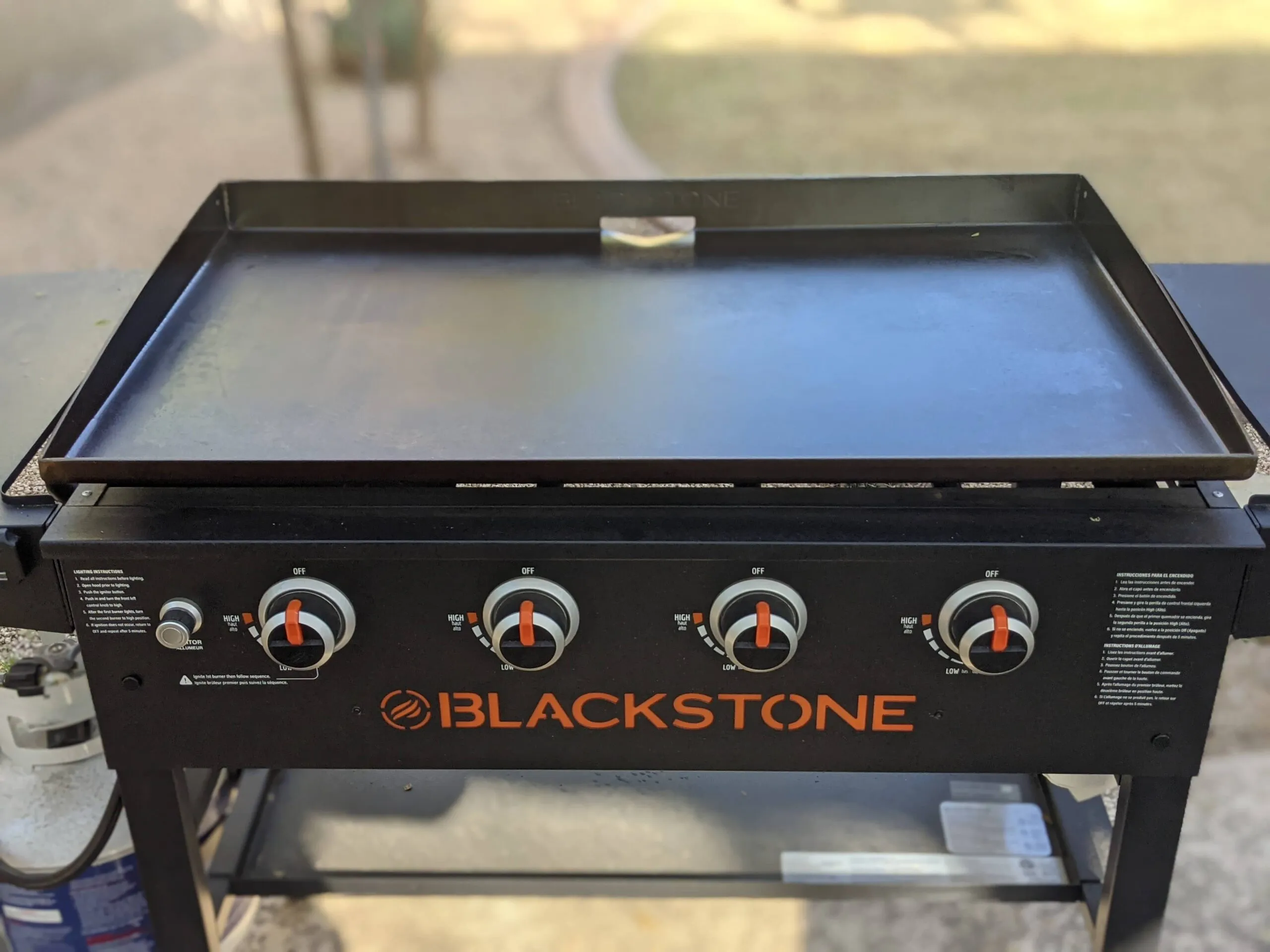
Your First Blackstone Cook: Complete New Owner Guide
New Blackstone griddle? The full day-one sequence: assembly, the soapy wash Blackstone actually requires, first seasoning, what to cook first, and what's normal in week one.