
Why Food Sticks to Your Blackstone (and How to Stop It)
Sticking is the most common cooking complaint on a Blackstone, and it’s the one most often blamed on the wrong thing. Almost everyone assumes their seasoning failed, so they strip the surface, re-season it over a weekend, and the eggs still weld themselves to the steel on Monday.
Here’s the truth after years on three of these griddles: sticking is usually a technique problem wearing a seasoning problem’s clothes. Four of the five causes below have nothing to do with your seasoning at all, and the most common one is fixed by waiting sixty seconds. Diagnose first, strip last.
Diagnose It First
| What you’re seeing | The likely cause |
|---|---|
| Food grabs the instant it hits the steel | Surface wasn’t hot enough |
| It sticks when you try to flip, but releases later | You moved it too early |
| Everything sticks, surface looks dull or patchy brown | Seasoning is thin, new, or stripped |
| Sticks only in certain spots | Uneven heat or bare patches |
| Only eggs, fish, or chicken breast stick | Lean, delicate foods need more help |
| Surface is tacky before food touches it | That’s gummy seasoning, not sticking: different fix |
Cause 1: The Surface Wasn’t Hot Enough
This causes more sticking than everything else combined. Cold steel doesn’t sear. It lets moisture and proteins seep into the surface’s microscopic texture and bond there. Hot steel instantly forms a crust that lifts away cleanly.
The fix: preheat a full 8-10 minutes, and verify with an infrared thermometer rather than the knob position. Knob position tells you almost nothing about actual surface temperature. It’s why every temp on this site is measured, not guessed. Most sticking-prone foods want 350-400°F; the temperature guide has the target for each one.
If the surface genuinely won’t come up to temperature no matter how long you wait, that’s a propane problem rather than a cooking problem. Start with the regulator reset.
Cause 2: You Moved It Too Early
Protein sticks to hot steel on contact, then releases itself once a crust forms. That’s not a malfunction. It’s the sear happening. The mistake is interpreting the initial grab as “it’s stuck!” and prying at it with a spatula, which tears the food and leaves half of it welded to the griddle.
The release test: slide your spatula edge gently under one corner. If it resists, it isn’t ready. Leave it another 30-60 seconds and try again. A properly seared burger, chicken thigh, or salmon fillet will let go on its own with almost no pressure. This is the same principle behind every “don’t touch it” instruction in our steak and smash burger recipes.
Cause 3: The Seasoning Is Thin, New, or Stripped
Now the seasoning suspect gets its turn, because sometimes it really is the problem:
- A brand-new griddle has minimal seasoning no matter how many factory coats it claims. It takes several real cooks to become genuinely slick.
- Soap or heavy scrubbing strips the polymerized layer. Clean with heat, a scraper, and water, not dish soap.
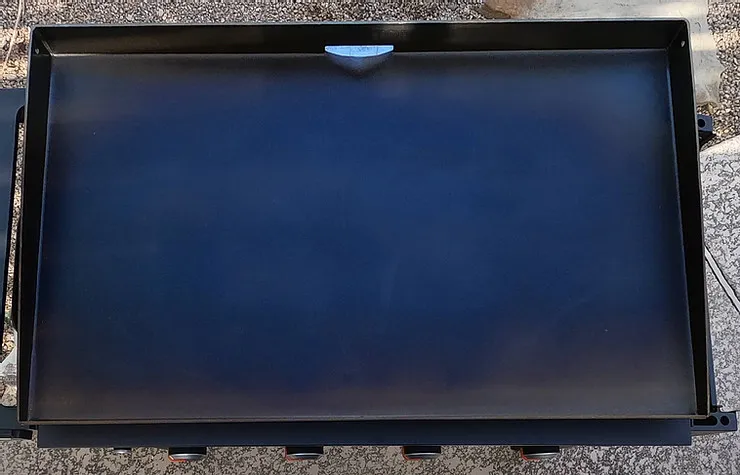
- A stripped or patchy surface shows as dull gray or uneven brown instead of even, dark, satiny black.
The fix: 2-3 paper-thin coats, each heated until the smoking stops, per the seasoning guide. Then cook fatty things on purpose: bacon, sausage, chicken thighs, smash burgers. Every fatty cook deposits another micro-layer, which is why a well-used griddle gets slicker every month while a babied one stays sticky.
Cause 4: Not Enough Oil, or the Wrong Oil at the Wrong Time
A seasoned griddle is not a nonstick pan, and it was never supposed to be. You still cook with oil.
- Use enough. A thin film across the cooking zone right before the food lands, not a dry surface, not a puddle.
- Use a high smoke point oil. Avocado, canola, or grapeseed. Olive oil and butter burn well below searing temperature and leave sticky residue that makes the next cook worse.
- Never use cooking spray. Aerosol sprays contain lecithin and propellants that build a gummy film over time. This is a slow-motion cause of sticking that people spend months chasing.
Cause 5: The Food Itself Needs Help
Some foods stick to any surface because they’re lean, delicate, or sugary. That’s not your griddle failing:
- Eggs: lower heat (300-325°F) plus butter or oil. High heat bonds egg protein to steel instantly.
- Fish: the most stick-prone food there is. Dry the fillet thoroughly, oil the fish rather than only the griddle, lay it skin-side down, and do not touch it until it releases. Our salmon and fish tacos recipes lean on exactly this.
- Chicken breast: very lean. Oil it directly and let the crust form. Thighs are dramatically more forgiving if you’re still dialing in your surface.
- Sugary marinades: teriyaki, BBQ, honey glazes. Sugar caramelizes and glues. Cook the protein first, then glaze it in the last minute on lower heat.
The 30-Second Habit That Prevents It
Sticking is almost always cumulative: residue from the last cook becomes the anchor point for the next one. The routine that ends the cycle takes half a minute while the griddle is still warm: scrape, steam with a squirt of water, wipe, and re-oil thin. That’s the whole program, covered fully in the cleaning guide.
Two spatulas make the scrape faster; both stay in the caddy. And if the surface has crossed from “sticky food” into “tacky to the touch before food ever lands,” that’s gummy seasoning rather than a sticking problem. The sticky seasoning guide has that fix.
Related: Blackstone Troubleshooting Guide · How to Season a Blackstone · Griddle Temperature Guide · How to Clean a Blackstone
Frequently Asked Questions
Why does food stick to my Blackstone even though it’s seasoned?
Usually because the surface wasn’t hot enough or the food was moved too early. Protein grabs hot steel on contact and releases itself once a crust forms. That initial grab isn’t a seasoning failure. Preheat 8-10 minutes to a verified temperature, then let food sit until it lifts with almost no resistance.
How do I stop eggs from sticking to my Blackstone?
Lower the heat to 300-325°F and use butter or oil generously. Eggs are protein-dense and bond to steel instantly at searing temperatures. A cooler zone, enough fat, and a thin spatula are the whole technique.
Do I need to re-season my griddle if food is sticking?
Usually not. Check heat, patience, and oil first. Those cause most sticking. Re-season if the surface looks dull gray or patchy brown instead of even satiny black, or if you’ve recently used soap or scrubbed hard. Then it’s 2-3 thin coats, not a full strip.
Why does fish always stick to my Blackstone?
Fish is lean and delicate, so it needs more help than other proteins: dry the fillet completely, oil the fish itself rather than just the griddle, cook skin-side down, and don’t move it until it releases on its own. Prying at fish before the crust forms is what tears it apart.
Can I use cooking spray on a Blackstone griddle?
No. Aerosol sprays contain lecithin and additives that don’t polymerize cleanly and build a gummy film over time, making sticking progressively worse. Use avocado, canola, or grapeseed oil applied thin instead.
Griddle vs Grill: Which Should You Get?
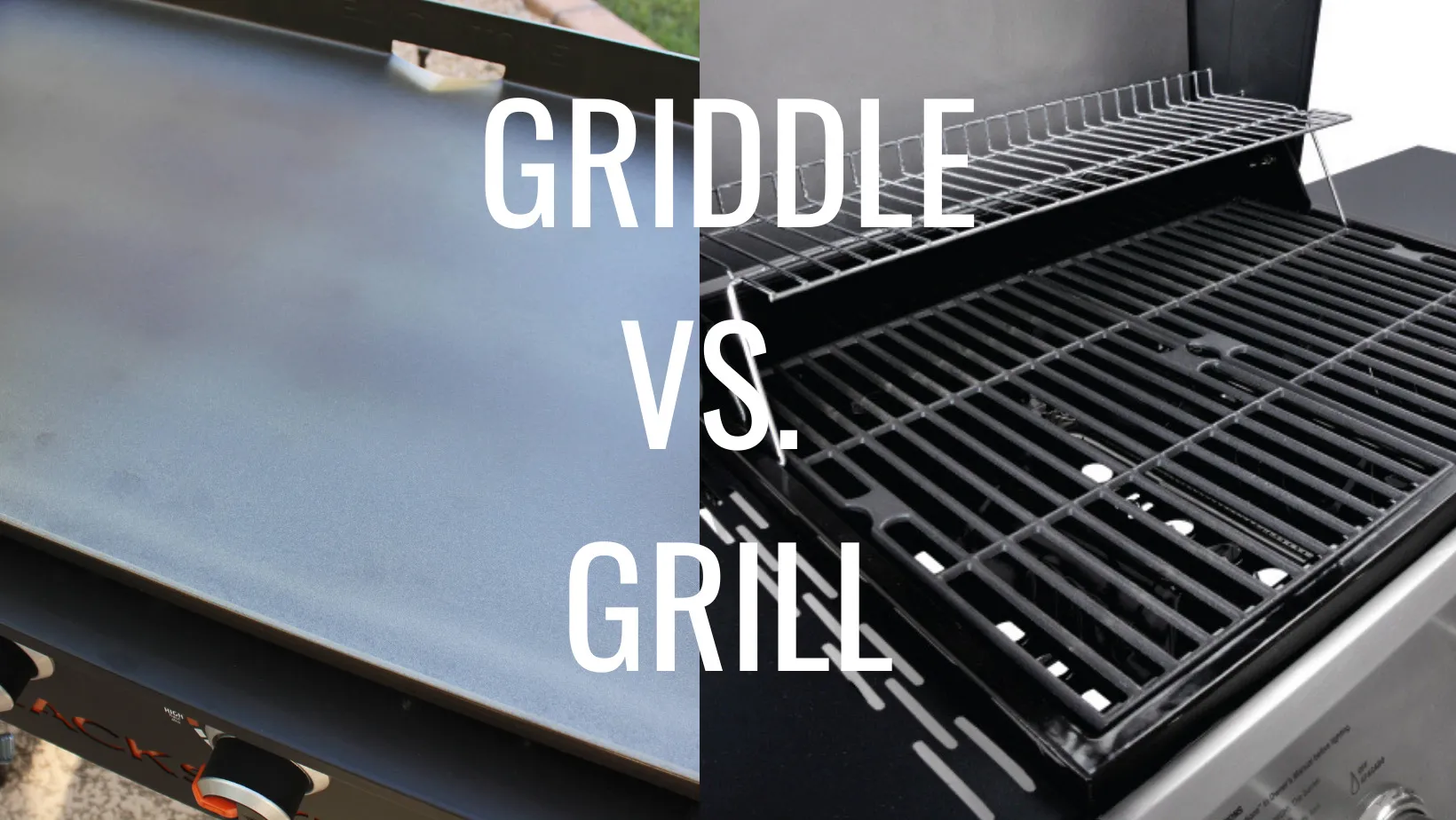
Griddle vs grill: the real differences, which is healthier, whether a griddle is worth it if you already own a grill, and which wins for steaks and burgers.
Why Is Everyone Selling Their Blackstone? An Honest Answer
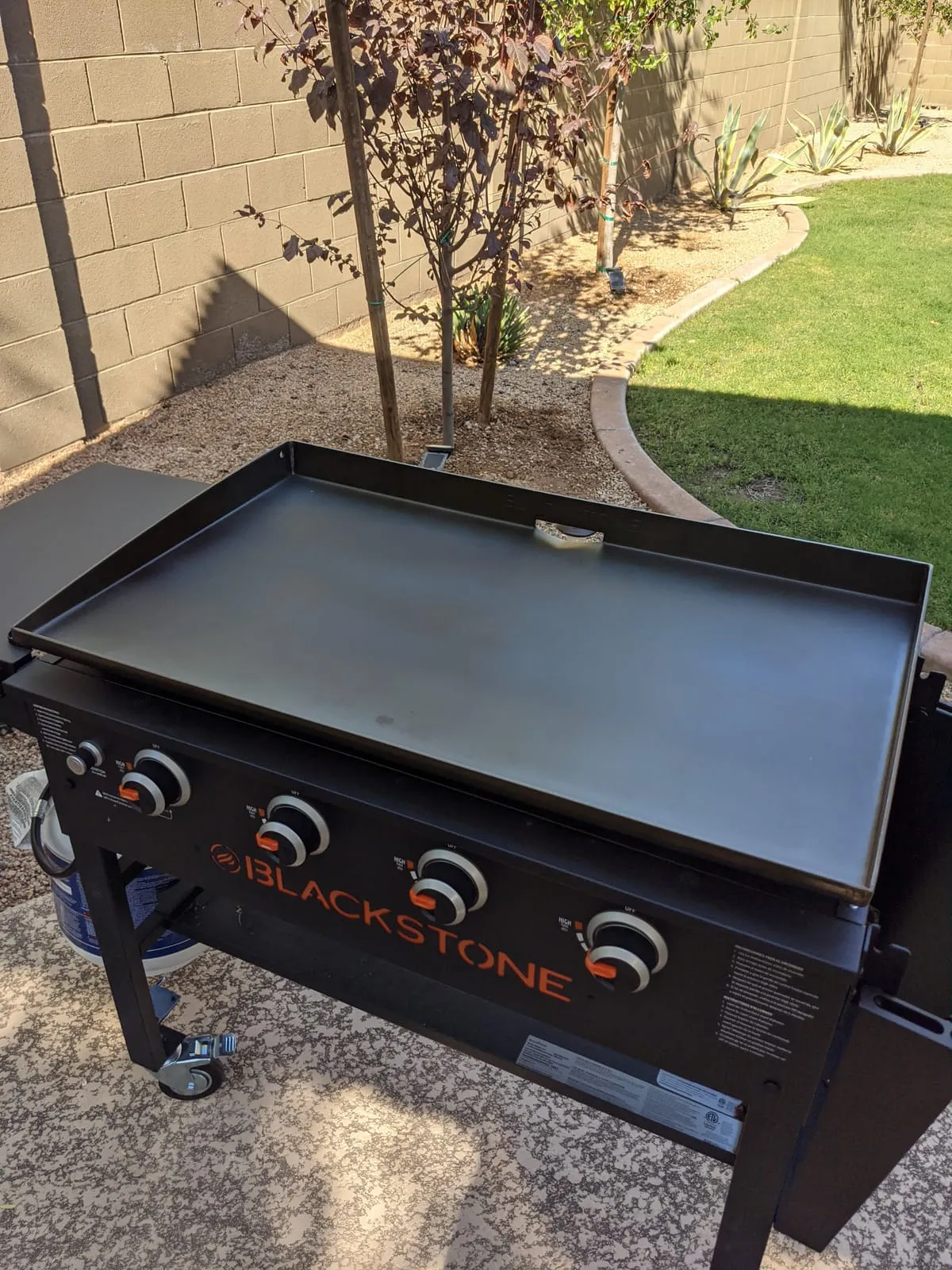
Why is everyone selling their Blackstone? Mostly, they aren't. Here's the honest story, plus the real cons, lifespan, the Walmart price, and if it's worth it.
Your First Blackstone Cook: Complete New Owner Guide
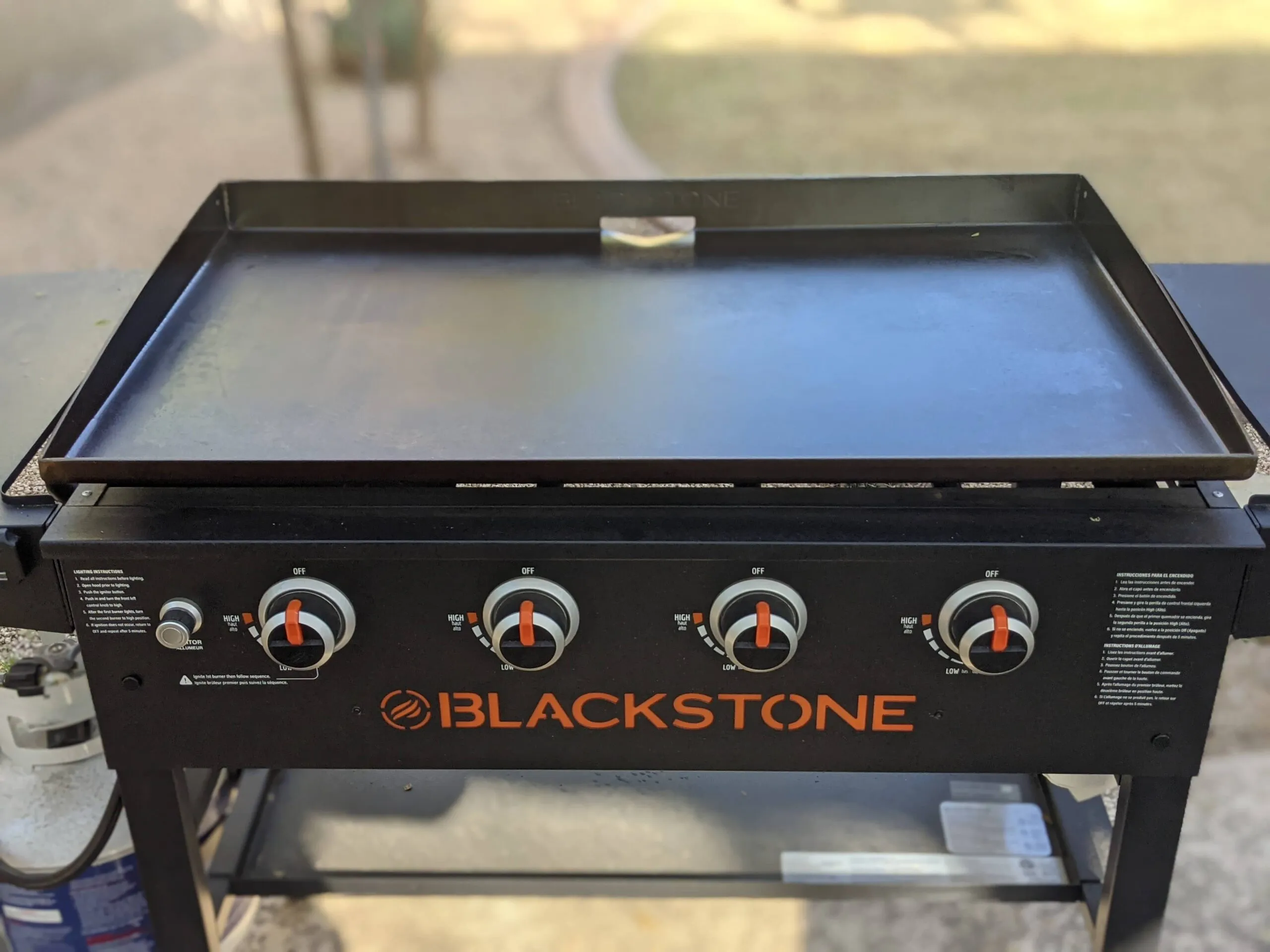
New Blackstone griddle? The full day-one sequence: assembly, the soapy wash Blackstone actually requires, first seasoning, what to cook first, and what's normal in week one.