
Blackstone Seasoning Sticky or Flaking? The Fix
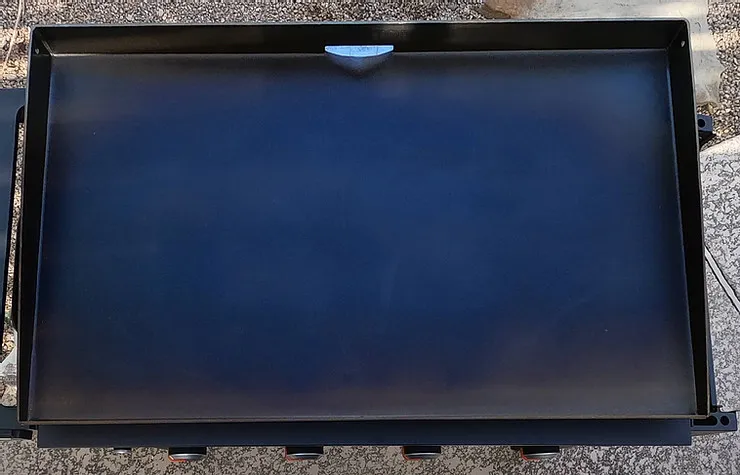
A well-seasoned Blackstone surface is smooth, dark, and slick. When it goes wrong, it goes wrong in one of two directions: sticky (a tacky, gummy film that grabs your spatula and your food) or flaking (black chips lifting off the surface and ending up in your eggs). Both are fixable, usually without stripping the griddle to bare steel, and both trace back to a short list of causes you can avoid next time.
Diagnose which one you have, then jump to its fix.
Why Seasoning Turns Sticky
Sticky seasoning is unpolymerized oil, oil that was applied too thick or heated too little, so it never finished converting into the hard, bonded coating that seasoning is supposed to be. Instead it half-cooks into a varnish-like gum.
The causes, in order of frequency:
- Too much oil in a single coat. This is the big one. A seasoning layer should be so thin it looks like the steel is barely damp. Pooled or visibly wet oil can’t polymerize evenly: the surface skins over while the oil underneath stays tacky.
- Not enough heat, or not enough time. Each coat needs to smoke until the smoking stops: that’s the polymerization finishing. Pulling the heat early leaves the job half done.
- Sugary sauces and marinades. Teriyaki, BBQ sauce, honey glazes: sugar residue left on the surface bakes into a tacky layer on the next cook. It’s not failed seasoning, but it feels identical.
- Cooking sprays. Aerosol sprays like PAM contain lecithin and additives that never polymerize cleanly and build a gummy film over time.
The Fix for Sticky Seasoning
You almost never need to strip the griddle for stickiness. Heat is the cure:
- Crank the griddle to high and let it run 10-15 minutes. The gummy layer will smoke heavily: that’s the leftover oil finally cooking off and carbonizing. Let it.
- Scrape hot. While the surface is at full temperature, work it over aggressively with a metal scraper, pushing the residue to the grease trap.
- Steam what’s left. Squirt a little water on the warm surface and scrape again. The steam lifts softened residue.
- Wipe clean, then re-oil thin. One paper-towel-thin coat of high smoke point oil, heated until the smoking stops.
If the surface is still tacky after two rounds of this, repeat the cycle. Only a badly neglected surface (layers of gum built over months) needs a full strip and re-season, and the seasoning guide covers that from-scratch process.
Why Seasoning Flakes Off
Flaking is the opposite failure: seasoning that bonded to something, just not to the steel. Black chips lift off the surface, usually in the hottest zones, and show up in your food.
The causes:
- Seasoning built over residue. If oil layers went down over food debris, old grease, or rust instead of clean steel, the seasoning bonded to that junk, and when the junk lets go, the seasoning goes with it.
- Too many thick layers. Heavy coats stack into a brittle crust. Steel expands and contracts with every heat cycle; a thick, rigid coating cracks and pops loose instead of flexing with the metal.
- Carbon buildup mistaken for seasoning. Burnt food carbon looks like dark seasoning but it’s just char sitting on the surface. It flakes as soon as a spatula catches an edge.
Are the black flakes dangerous? No, they’re carbonized oil and food residue, not a synthetic coating. Blackstone surfaces are bare cold-rolled steel with no non-stick chemicals to worry about. Unappetizing, yes; harmful, no.
The Fix for Flaking Seasoning
Don’t season over flaking. You’d be building on a failing foundation.
- Scrape the loose areas hard with a metal scraper while the griddle is warm. You want every flake that’s willing to come off, off.
- Smooth the transition zones. A griddle stone or scouring pad feathers the edges where intact seasoning meets bare patches, so the surface is even.
- Clean thoroughly: hot water steam, scrape, wipe until the towels come back mostly clean.
- Re-season the exposed steel with 2-3 paper-thin coats, letting each smoke off completely. Bare patches blend back into the surrounding seasoning within a few cooks.
Preventing Both
The same three habits prevent sticky and flaking seasoning alike:
- Thin coats, always. One heavy coat does less than three light ones. This is the entire game.
- Clean while it’s warm, every cook. Scrape, steam, wipe, thin oil. Residue never gets the chance to bake in. The cleaning guide covers the 5-minute routine.
- Use an oil that polymerizes well. Avocado, canola, or the Blackstone conditioner, and never cooking spray.
If rust is part of the picture (flaking plus orange-brown patches) deal with the rust first: the rust removal guide walks through it.
Related: Blackstone Troubleshooting Guide · How to Season a Blackstone Griddle · How to Clean a Blackstone Griddle · Blackstone Rust Removal
Frequently Asked Questions
Why is my Blackstone sticky after seasoning?
Too much oil per coat or too little heat. Seasoning oil must be applied paper-thin and heated until it completely stops smoking. Anything less leaves unpolymerized oil that turns gummy. Fix it by running the griddle on high until the smoking stops, scraping hot, and re-oiling with a much thinner coat.
Is flaking Blackstone seasoning dangerous to eat?
No. The black flakes are carbonized cooking oil and food residue. There’s no synthetic non-stick coating on a Blackstone to worry about. It’s a texture and appearance problem, not a safety problem. Scrape the loose material off and re-season the exposed areas.
Do I need to completely strip my Blackstone to fix sticky seasoning?
Rarely. Most sticky surfaces are fixed by running the griddle on high until the residue smokes off and carbonizes, scraping aggressively while hot, and re-seasoning with thin coats. A full strip to bare steel is only worth it when gummy buildup has accumulated in thick layers over a long period.
Why does my seasoning keep coming off in the same spot?
That zone’s seasoning bonded to residue or rust instead of clean steel, usually the hottest part of the griddle where buildup carbonizes fastest. Scrape it to clean metal, feather the edges with a griddle stone, and rebuild that area with 2-3 thin coats, letting each one smoke off fully.
What Not to Cook on a Blackstone (and What to Do Instead)
What doesn't work on a Blackstone griddle: low-and-slow cuts, big roasts, anything that sits in liquid, and deep-fried food, plus how to split the cook so the griddle still does the part it's good at.
Griddle vs Grill: Which Should You Get?
Griddle vs grill: the real differences, which is healthier, whether a griddle is worth it if you already own a grill, and which wins for steaks and burgers.
Why Is Everyone Selling Their Blackstone? An Honest Answer
Why is everyone selling their Blackstone? Mostly, they aren't. Here's the honest story, plus the real cons, lifespan, the Walmart price, and if it's worth it.