
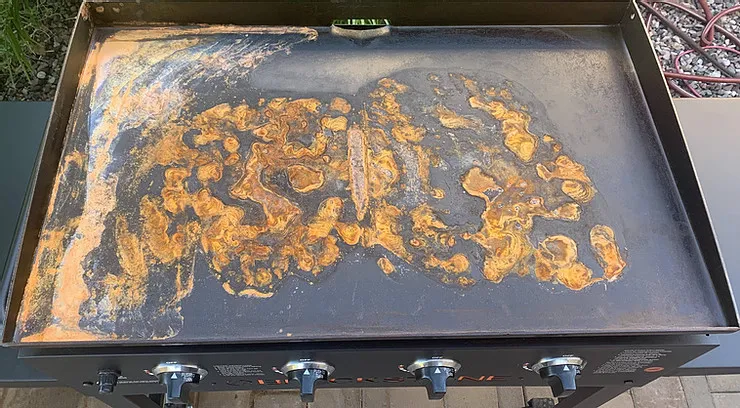
How to Remove Rust from a Blackstone Griddle
What changed: Added how to tell rust from black flakes, and what to do about rust under the griddle top or on the burners.
A rusted Blackstone griddle is not a ruined Blackstone griddle. Even a surface covered in heavy rust can be fully restored: the rolled steel Blackstone uses is tough, and rust is a surface problem, not a structural one. The griddle is salvageable. The question is just how much work it takes.
This guide covers rust removal by severity (light, moderate, and heavy), what to do immediately after the rust is gone, and what changes to make so it doesn’t come back.
Can You Cook on a Rusted Blackstone Griddle?
No, not until the rust is removed. Iron oxide (rust) is not food-safe, and cooking on a rusted surface means rust particles end up in your food. The good news is that removing surface rust takes 20-45 minutes depending on severity, after which the griddle is fully safe to cook on again.
If the rust is purely on the surface of the steel (which it almost always is on a Blackstone) the griddle is completely restorable. If the steel itself has pitted or corroded through, that’s a structural issue and the griddle top may need replacement. But that level of damage requires years of total neglect.
Is It Rust or Just Black Flakes?
Not every flake on a griddle is rust. Rust is orange to reddish-brown, and if you wipe an oiled paper towel across it, the towel comes up orange. Black flakes are almost always seasoning or burnt-on carbon lifting off the surface. That’s a seasoning problem with a different fix, covered in the sticky and flaking seasoning guide. If you’re seeing both, take care of the rust first, then rebuild the seasoning.
What You’ll Need
| Tool / Supply | What It’s For |
|---|---|
| Metal scraper | Scraping loose rust and debris |
| Griddle stone / pumice brick | The primary rust removal tool: abrasive but steel-safe |
| Coarse steel wool | Heavy rust where a griddle stone isn’t enough |
| White vinegar | Chemical assist for stubborn heavy rust |
| Cooking oil | Used during scrubbing and for re-seasoning after |
| Paper towels | Wiping, drying, applying oil |
| Heat-resistant gloves | Safety when working on a warm surface |
For tools, see our must-have Blackstone accessories and best griddle scraper picks.
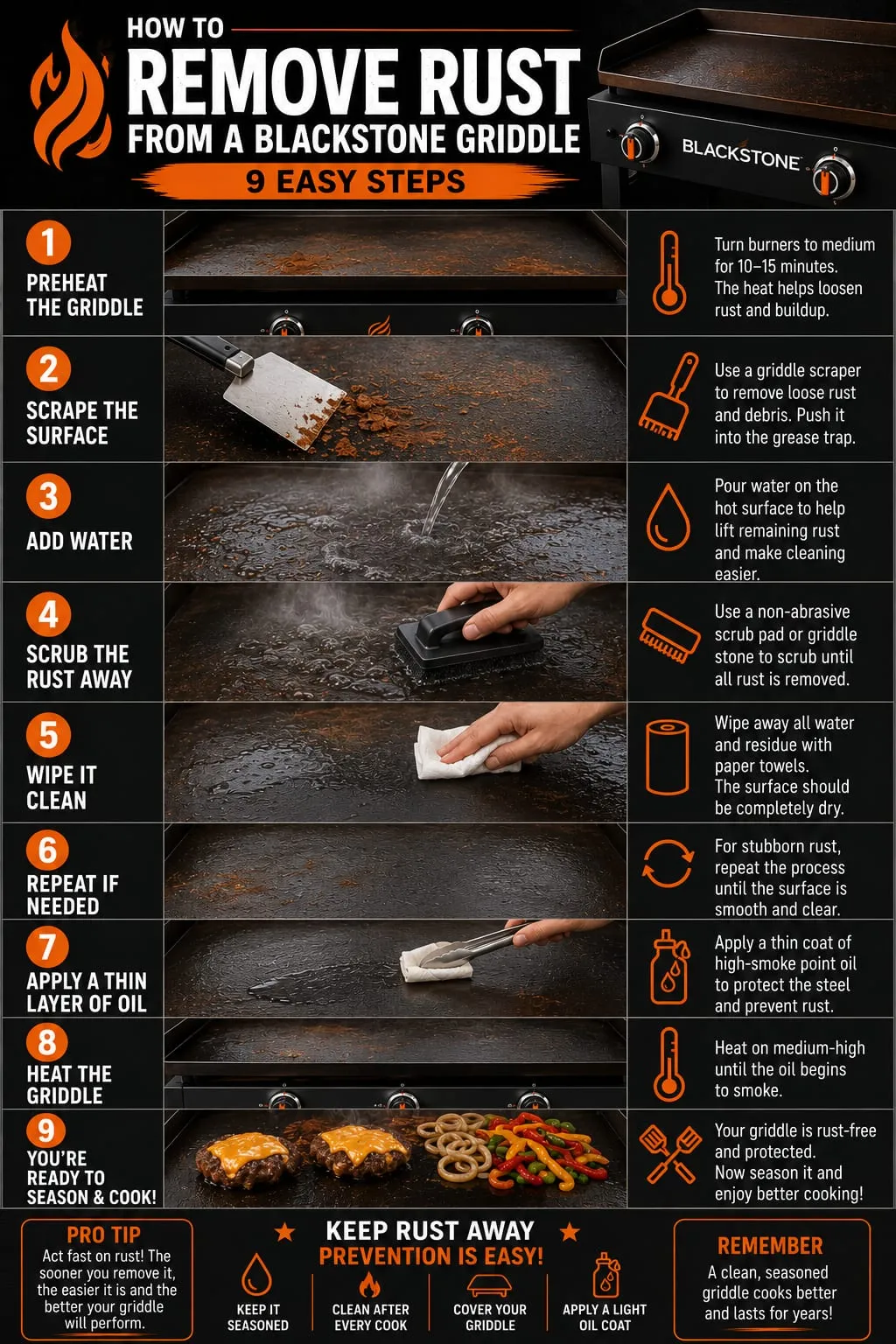
Rust Removal by Severity
Light Rust: Surface Spots
Light rust shows up as small orange or reddish-brown spots, usually in areas that didn’t get a good oil coat after the last cook. This is the most common scenario and the easiest to fix.
Time required: 15-20 minutes
- Heat the griddle to high for 10-15 minutes. Heat expands the steel slightly and helps loosen rust from the surface.
- Turn off the burners and let the griddle cool to warm, hot enough to steam water but not scorching.
- Scrape the surface with the metal scraper to remove all loose rust, debris, and flaking material. Push everything into the grease trap.
- Apply 2-3 tablespoons of cooking oil to the surface and scrub with the griddle stone in firm circular motions over the rust spots. The oil lubricates the abrasive action and lifts rust without scratching the steel.
- Wipe clean with paper towels. Check the surface. If you still see rust, repeat steps 4-5.
- Re-season immediately with 3-4 thin coats of oil. See the full Blackstone seasoning guide for the step-by-step process.
Moderate Rust: Widespread Surface Coverage
Moderate rust covers a larger portion of the cooking surface, often the result of storing without an oil coat or leaving the griddle uncovered through rain.
Time required: 30-45 minutes
- Heat the griddle to high for 15-20 minutes to loosen the rust.
- Turn off burners and let cool to warm.
- Scrape aggressively across the entire surface with the metal scraper to remove everything loose.
- Apply cooking oil generously and work the griddle stone in overlapping circular passes across the whole cooking surface. Keep adding small amounts of oil as you go. Don’t let the stone work dry.
- Wipe down with paper towels. The paper towels will come up orange: that’s rust coming off, which is what you want. Keep going until the towels wipe relatively clean.
- Repeat the oil-scrub-wipe cycle 2-3 times until no rust is visible.
- Re-season with 4-5 thin coats before cooking again.
Heavy Rust: Deep or Persistent
Heavy rust that doesn’t yield to oil and a griddle stone needs a chemical assist first. White vinegar’s acidity breaks down iron oxide without permanently damaging the steel, as long as contact time is controlled.
Time required: 45-60 minutes
- Skip preheating for very heavy rust. You’ll be using vinegar first.
- Spray or wipe white vinegar across all rusted areas using a spray bottle or paper towels.
- Let it sit for 3-5 minutes maximum. Vinegar works fast. Longer contact time can etch the steel. Set a timer.
- Scrub immediately with coarse steel wool while the vinegar is still active. Work in overlapping passes.
- Rinse with warm water and dry immediately and completely with paper towels. Leaving vinegar or water on the surface causes flash rusting, so speed matters here.
- Apply cooking oil and continue with the griddle stone to remove remaining rust residue and any surface roughness left by the steel wool.
- Wipe clean and repeat until no rust is visible.
- Re-season with 4-5 coats before cooking again. The surface will need more coats than normal because the vinegar and steel wool start from bare metal.
Rust Under the Griddle Top or on the Burners
The underside of the griddle top never touches food, so a little surface rust there won’t end up in anything you cook. With the griddle cool, scrape off anything loose with a metal scraper so it doesn’t drop onto the burners, and keep the griddle covered and dry so it doesn’t spread.
Burners are a different story. A burner that’s rusted through, cracked, or has holes in the tube should be replaced, not cleaned. Replacement burners are inexpensive from Blackstone, and griddles under a year old are covered by warranty. The flame problems guide shows what a damaged burner looks like once it’s lit.
Re-Seasoning After Rust Removal
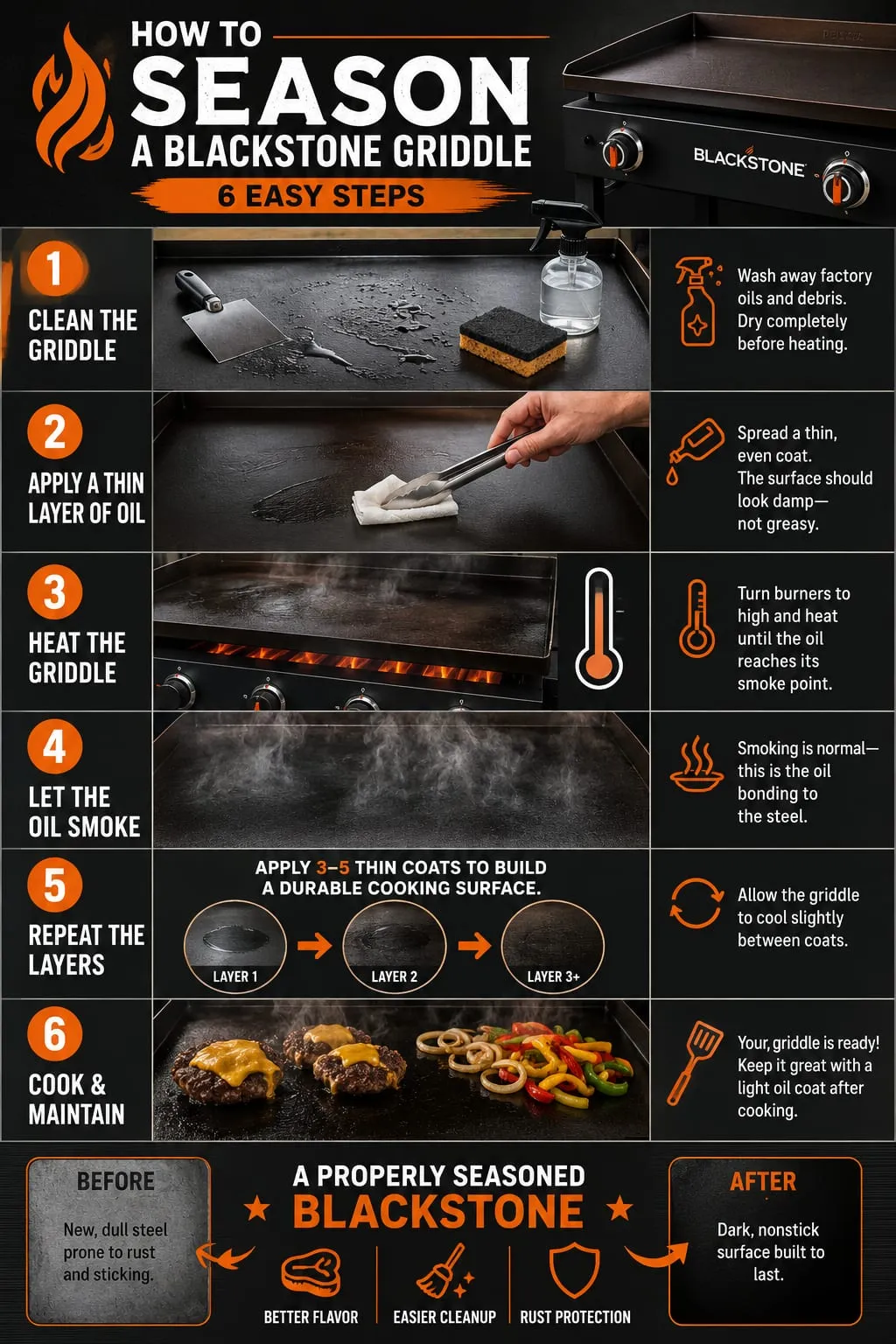
This step is not optional. You’ve just stripped the surface back to bare steel. Without re-seasoning immediately, rust will return within hours in humid conditions.
Apply thin coats of high-smoke-point oil (avocado, canola, or grapeseed), heat until each coat stops smoking, and repeat 3-5 times. The full process is covered step-by-step in the Blackstone seasoning guide.
After the initial re-seasoning, cook something fatty for the first 2-3 sessions: bacon, chicken thighs, smash burgers. Rendered fat adds to and reinforces new seasoning layers better than anything else.
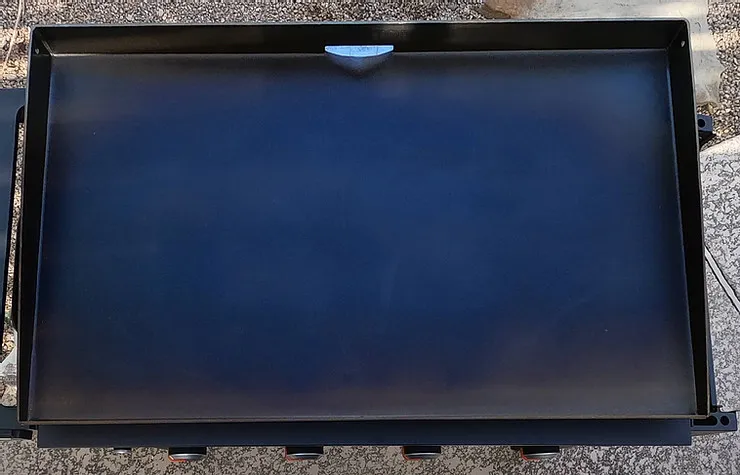
A restored griddle should look dark and have a slight sheen after re-seasoning. If it looks dull or patchy after 3-4 coats, add more.
How to Prevent Rust from Coming Back
Rust returns for one reason: bare steel met moisture. Every prevention strategy comes back to either keeping the seasoning intact or keeping moisture away.
Apply an oil coat after every cook, without exception. This is the single highest-impact habit. While the griddle is still warm after cleaning, wipe a thin layer of oil across the entire surface including the edges. It takes 30 seconds and seals the steel until next time. See the full Blackstone cleaning guide for the complete after-cook routine.
Use a cover. A fitted hard cover provides far better rust protection than a soft cloth cover, especially in humid climates or coastal areas.
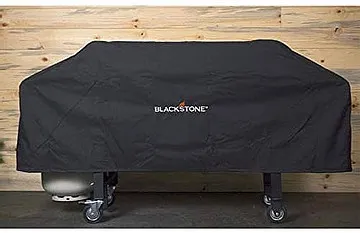
For outdoor storage, the best setup is a hard cover over a soft cover. The soft cover keeps dust off; the hard cover keeps rain and humidity out. If you’re only going to use one, make it the hard cover.
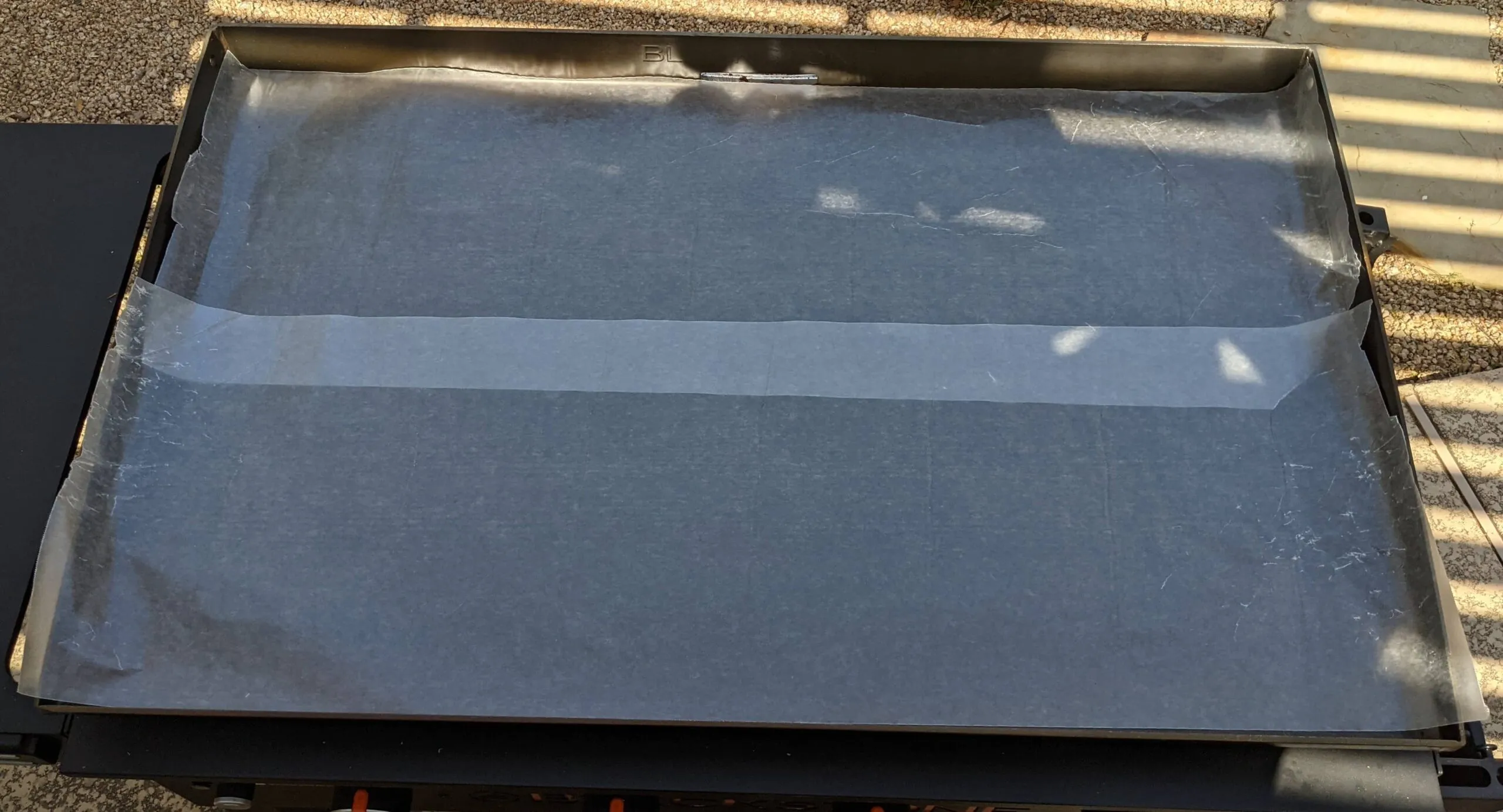
Use parchment or wax paper for extended storage. After cleaning and oiling, lay a sheet of parchment or wax paper across the cooking surface before covering. It adds a physical moisture barrier between the steel and the air trapped under the cover.
Store indoors when possible. Even a covered outdoor griddle is exposed to humidity swings. A garage or shed keeps conditions more stable.
Cook on it regularly. A griddle that gets used and re-oiled weekly stays in far better shape than one that sits for months. The best protection is an active, well-used cooking surface.
Rust rarely travels alone. If the griddle came out of storage with other problems too, the Blackstone troubleshooting guide diagnoses all of them in one place.
Ready to cook again? Smash Burgers · Blackstone Steak · Chicken Fajitas · Fried Rice
Shop Blackstone Cleaning Kit on Amazon Shop Griddle Scraper on Amazon Shop Griddle Cover on Amazon
Frequently Asked Questions
Is a rusted Blackstone griddle ruined?
No. Rust on a Blackstone is almost always a surface problem: the rolled steel beneath is structurally fine. Even heavily rusted griddles can be fully restored with a griddle stone, some oil, and re-seasoning. The only exception is if the steel has pitted or corroded through, which requires years of total neglect and complete lack of storage protection.
Can you cook on a rusted Blackstone griddle?
No, not until the rust is removed. Iron oxide (rust) is not food-safe and will end up in your food. The removal process takes 20-45 minutes depending on severity, and once done the griddle is completely safe to cook on again.
Why does my Blackstone griddle keep rusting?
The root cause is always bare steel meeting moisture. The most common reasons: skipping the oil coat after cleaning, no cover during storage, storing in a humid environment, or cooking with the seasoning stripped (from soap use or heavy scrubbing without re-seasoning). Fix the storage habit and never skip the post-cook oil coat.
Is it rust or is my seasoning flaking?
Check the color. Rust is orange to reddish-brown, and an oiled paper towel wiped over it comes up orange. Black flakes are seasoning or burnt-on carbon coming loose, which is fixed by scraping and re-seasoning rather than by rust removal.
Is rust under the griddle top a problem?
Not for your food, since the underside never touches it. Scrape off loose rust with a metal scraper while the griddle is cool, and keep it covered and dry. Rust on the burners themselves is different: a burner that’s rusted through or has holes should be replaced.
Can I use WD-40 to remove rust from my Blackstone griddle?
No. WD-40 is a petroleum-based product, not food-safe and not appropriate on a cooking surface. For rust removal, use cooking oil with a griddle stone for light to moderate rust, or white vinegar followed by steel wool for heavy rust.
Can I use vinegar to remove rust from a Blackstone griddle?
Yes, but with strict time limits. White vinegar’s acidity breaks down rust effectively, but contact time must be 3-5 minutes maximum. Longer contact etches and can damage the steel. Rinse immediately and thoroughly after, then dry and re-season right away.
Can I use sandpaper on my Blackstone griddle?
Medium-grit wet/dry sandpaper (120-220 grit) can be used for stubborn heavy rust when a griddle stone and steel wool aren’t cutting it. Keep strokes in one direction and work the whole surface evenly to avoid creating uneven areas. Re-season with extra coats after using sandpaper since you’re starting from bare metal.
My new Blackstone has rust spots. What do I do?
Very common. Blackstone griddles ship with a factory protective coating (not seasoning), and if the griddle sat in a warehouse or on a truck in humid conditions, light rust can form under that coating. Follow the light rust removal process (it takes about 20 minutes) then season with 3-4 coats before your first cook.
How long does rust removal take?
Light surface spots: 15-20 minutes. Moderate widespread rust: 30-45 minutes. Heavy rust requiring vinegar and steel wool: 45-60 minutes. Add 60-90 minutes for the re-seasoning process that must follow.
What if the rust won’t come off?
If a griddle stone and multiple oil-scrub cycles aren’t removing the rust, step up to coarse steel wool. If steel wool isn’t working, add white vinegar (3-5 minutes max) before scrubbing. If rust remains after all of these, medium-grit sandpaper is the last resort. A griddle that has been completely neglected outdoors for years without a cover may have pitting that makes full restoration impractical.
How do I know when all the rust is removed?
The paper towels should come up with no orange or reddish-brown color when you wipe the oiled surface. The steel should look uniformly dark or gray-silver (depending on how much seasoning was present) with no discolored patches. Apply your re-seasoning coats after that point.
Does cooking on a Blackstone prevent rust?
Yes, regular cooking is one of the best maintenance habits. Each cook adds fat to the seasoning layer and reinforces the protective barrier. A griddle that gets cooked on several times a week rarely develops rust problems compared to one that sits unused for months.
What oil should I use for rust removal and re-seasoning?
Any high-smoke-point cooking oil works for the scrubbing process. Canola is cheap and effective. For re-seasoning after rust removal, use avocado oil or canola oil. See the best oil for Blackstone griddle guide for a full comparison.
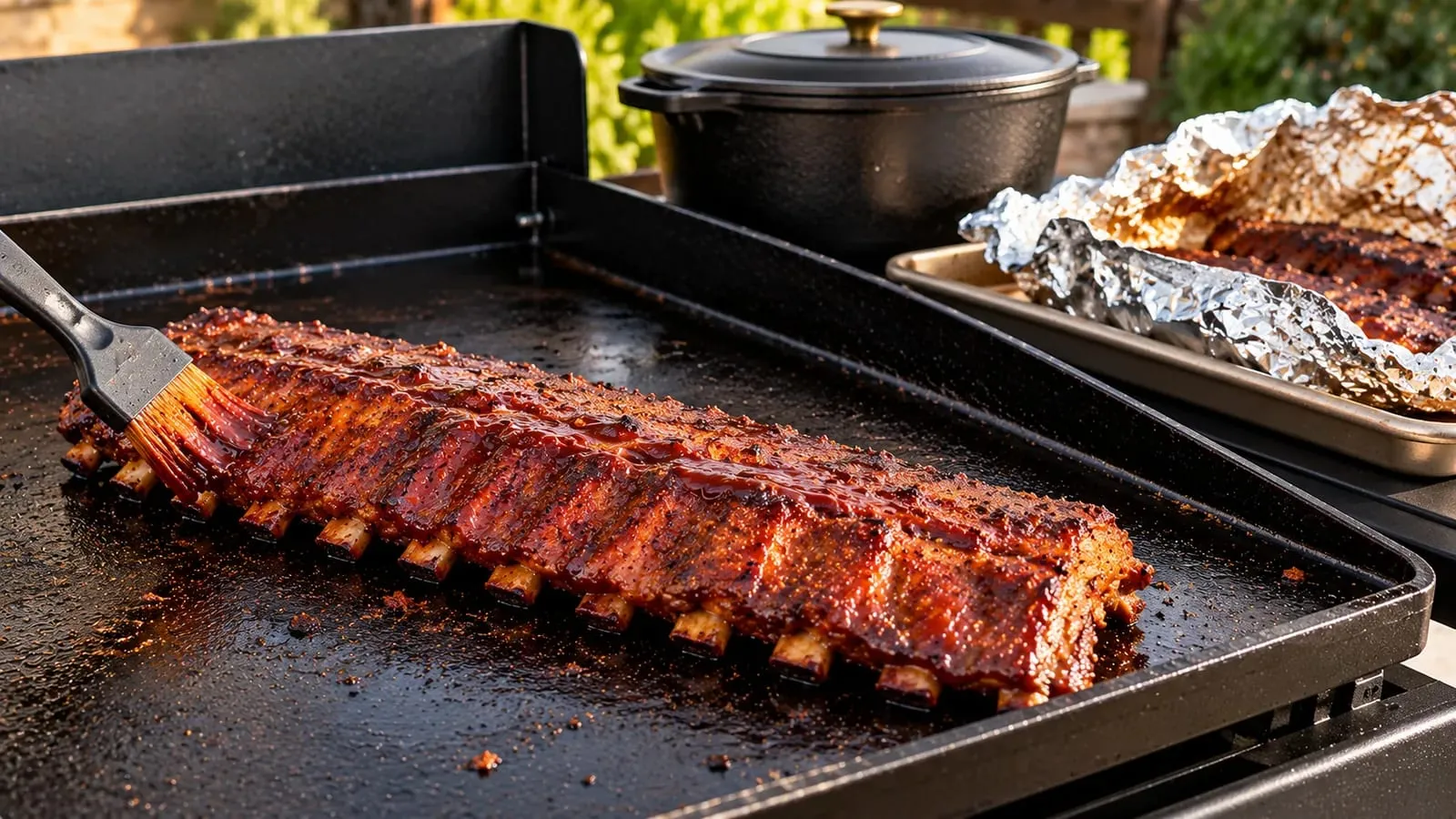
What Not to Cook on a Blackstone (and What to Do Instead)
What doesn't work on a Blackstone griddle: low-and-slow cuts, big roasts, anything that sits in liquid, and deep-fried food, plus how to split the cook so the griddle still does the part it's good at.
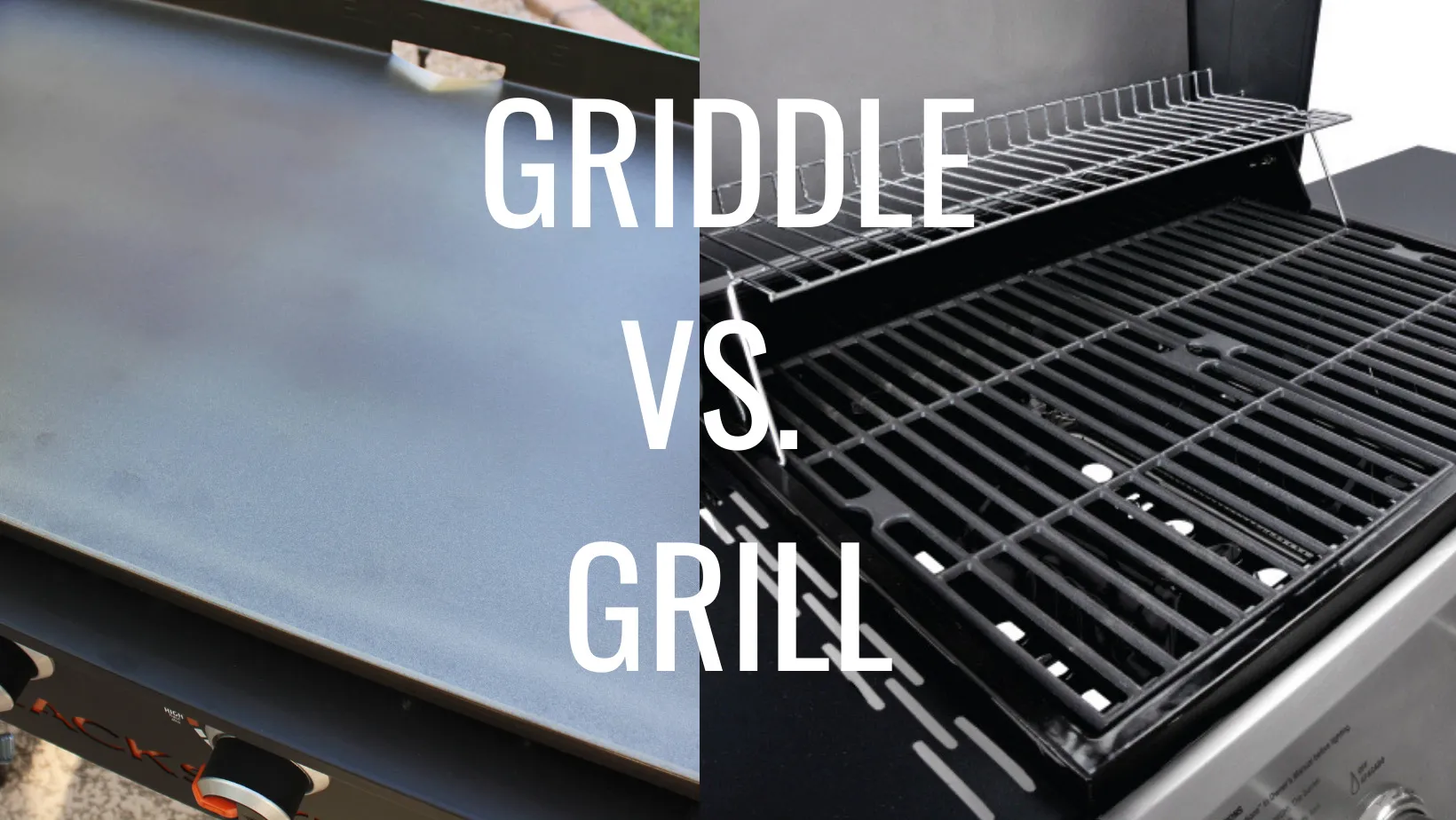
Griddle vs Grill: Which Should You Get?
Griddle vs grill: the real differences, which is healthier, whether a griddle is worth it if you already own a grill, and which wins for steaks and burgers.
Why Is Everyone Selling Their Blackstone? An Honest Answer
Why is everyone selling their Blackstone? Mostly, they aren't. Here's the honest story, plus the real cons, lifespan, the Walmart price, and if it's worth it.