
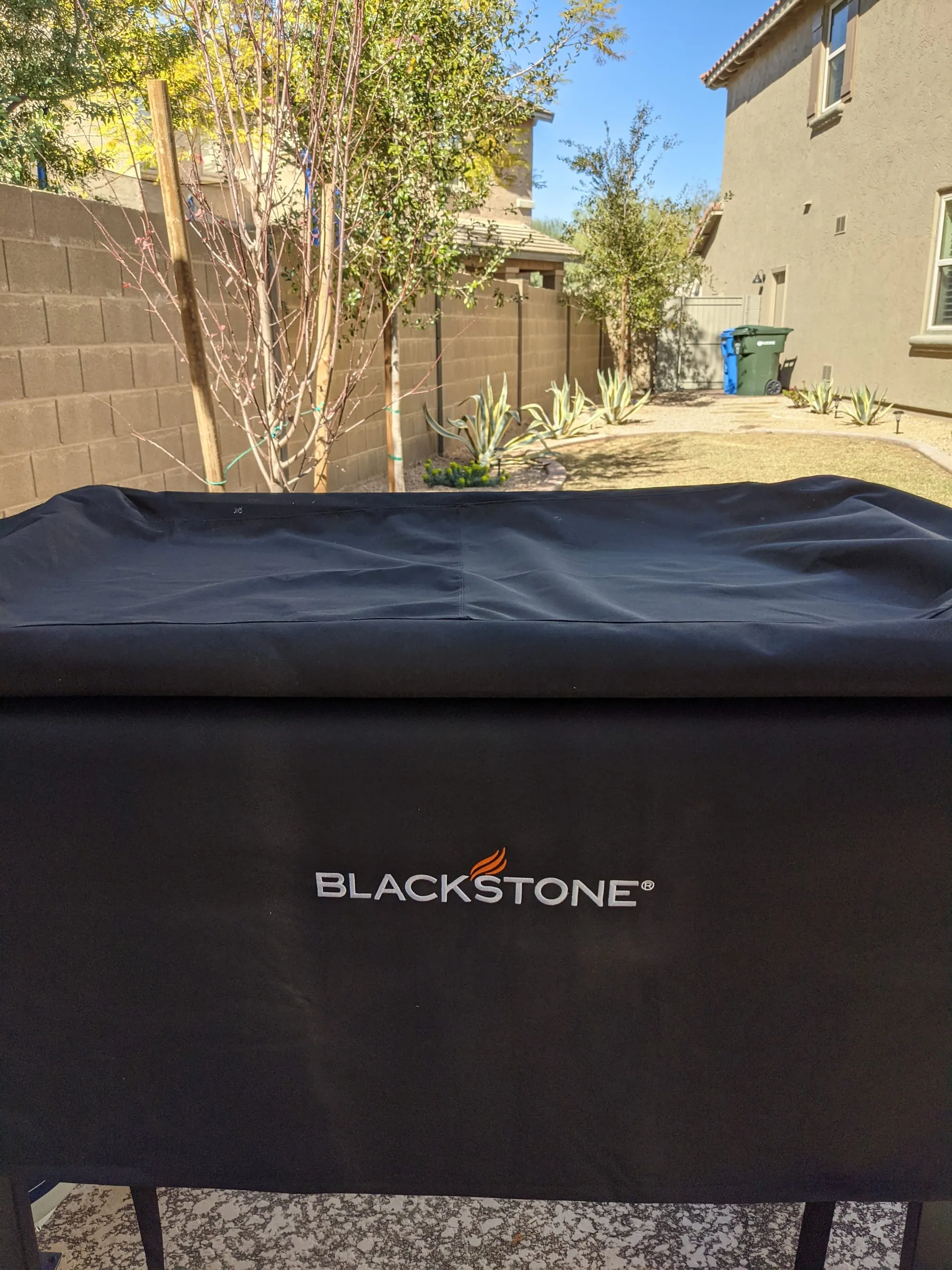
How to Winterize and Store a Blackstone Griddle
A Blackstone that goes into storage wrong comes out of storage orange. The cooking surface is bare cold-rolled steel: months of trapped moisture under a cover is exactly the environment rust loves, and a spring rust-removal project is a lot more work than the twenty minutes of winterizing that prevents it.
If you plan to keep cooking through the cold months instead (completely doable) that’s the winter griddling guide. This guide is for putting the griddle away properly and getting it back out without surprises.
Step 1: Deep Clean the Cooking Surface
Storage rust starts under leftover food residue and grease, which trap moisture against the steel. Before the griddle goes away, give it the most thorough version of your normal cleanup:
- Heat the surface to warm, scrape everything loose to the grease trap.
- Steam with small amounts of water, scrape again, and wipe until paper towels come back mostly clean.
- Empty and wipe out the grease trap and drip area completely. Grease left in the trap over winter goes rancid and draws pests. (If the trap has been overflowing or draining badly all season, fix that before storage: grease problems.)
The full routine is in the cleaning guide. Storage prep is the one time to be genuinely obsessive about it.
Step 2: Oil Heavier Than Usual
After every normal cook you apply a thin film of oil. For storage, go heavier, a generous, visible coat of high smoke point oil or Blackstone conditioner across the entire surface, plus:
- The sides and edges of the top: they rust first because everyone forgets them
- The back splash guard and grease chute
- A light wipe on any exposed hardware that’s shown rust before
This coat is sacrificial: it’s the barrier between steel and six months of humidity. You’ll wipe off the excess and cook it in with a fresh thin coat at spring startup.
Step 3: Deal With the Propane Correctly
- Disconnect the tank. Close the valve fully, disconnect the regulator, and check the hose for cracks while you’re there.
- Store the tank outdoors, never inside. Not in the garage, not in the basement, not in a shed attached to the house. A propane tank stores safely outside year-round: upright, valve closed, away from the house, ideally on a paver rather than bare ground. Cold does not hurt a propane tank; an enclosed space with a slow leak is the danger.
- The griddle itself, with the tank disconnected, is safe to store anywhere.
Step 4: Choose the Storage Spot (and Cover It Right)
Best: indoors. A garage or shed removes weather from the equation entirely. Even indoors, use the oil coat and a cover. Garages swing through humidity cycles all winter.
Outdoors works with a proper cover. Two rules make the difference:
- Use a fitted, breathable griddle cover, not a plastic tarp. A tarp cinched tight traps ground moisture and condensation against the steel and creates the exact rust chamber you’re trying to avoid. Fitted covers shed rain while letting air circulate underneath.
- Cover a bone-dry, oiled griddle only. Trapping moisture under the cover on day one defeats everything above.
If the griddle stores outdoors, lift the cover for a quick surface check after the first hard weather stretch. Catching a rust freckle in January beats discovering a rust field in April.
Step 5: The Spring Startup Checklist
When cooking season returns:
- Inspect the surface. Small rust spots wipe out easily with oil and a scouring pad; anything more, the rust removal guide has the full process.
- Check the burner tubes for spiders. Insects nesting in burner tubes over winter are one of the most common causes of weak, uneven flames at spring startup. The low flame guide covers clearing them.
- Inspect the hose and regulator, reconnect, and open the tank valve slowly.
- Burn off the storage oil. Run the griddle at medium for 10-15 minutes, wipe down, and apply one fresh thin coat.
Twenty minutes, and you’re cooking on a surface that looks the way you left it.
Related: Blackstone Troubleshooting Guide · Cooking on a Blackstone in Winter · Blackstone Rust Removal · Blackstone Not Getting Hot?
Frequently Asked Questions
Can I leave my Blackstone outside all winter?
Yes, if it’s cleaned, heavily oiled, and under a fitted breathable cover, not a plastic tarp, which traps condensation against the steel. Indoors is still better. Check under the cover occasionally through the winter to catch any rust early.
Can I store a propane tank in the garage over winter?
No. Propane tanks should never be stored in enclosed spaces attached to or inside a home: garage, basement, or house. Store the tank outdoors: upright, valve closed, away from the structure. Cold weather does not damage propane tanks.
Should I oil my Blackstone before storing it?
Yes, heavier than a normal post-cook coat. Apply a generous layer of high smoke point oil or griddle conditioner across the surface, edges, and sides. It acts as the moisture barrier for the whole storage period, and you burn it off with a quick medium-heat cycle in spring.
Why is my Blackstone weak or uneven when I fire it up in spring?
Usually spiders or debris in the burner tubes: they nest there over winter storage. Clear the tubes with a flexible brush or compressed air. If all burners are uniformly weak instead, reset the regulator: disconnect it, wait 60 seconds, reconnect, and open the tank valve slowly.
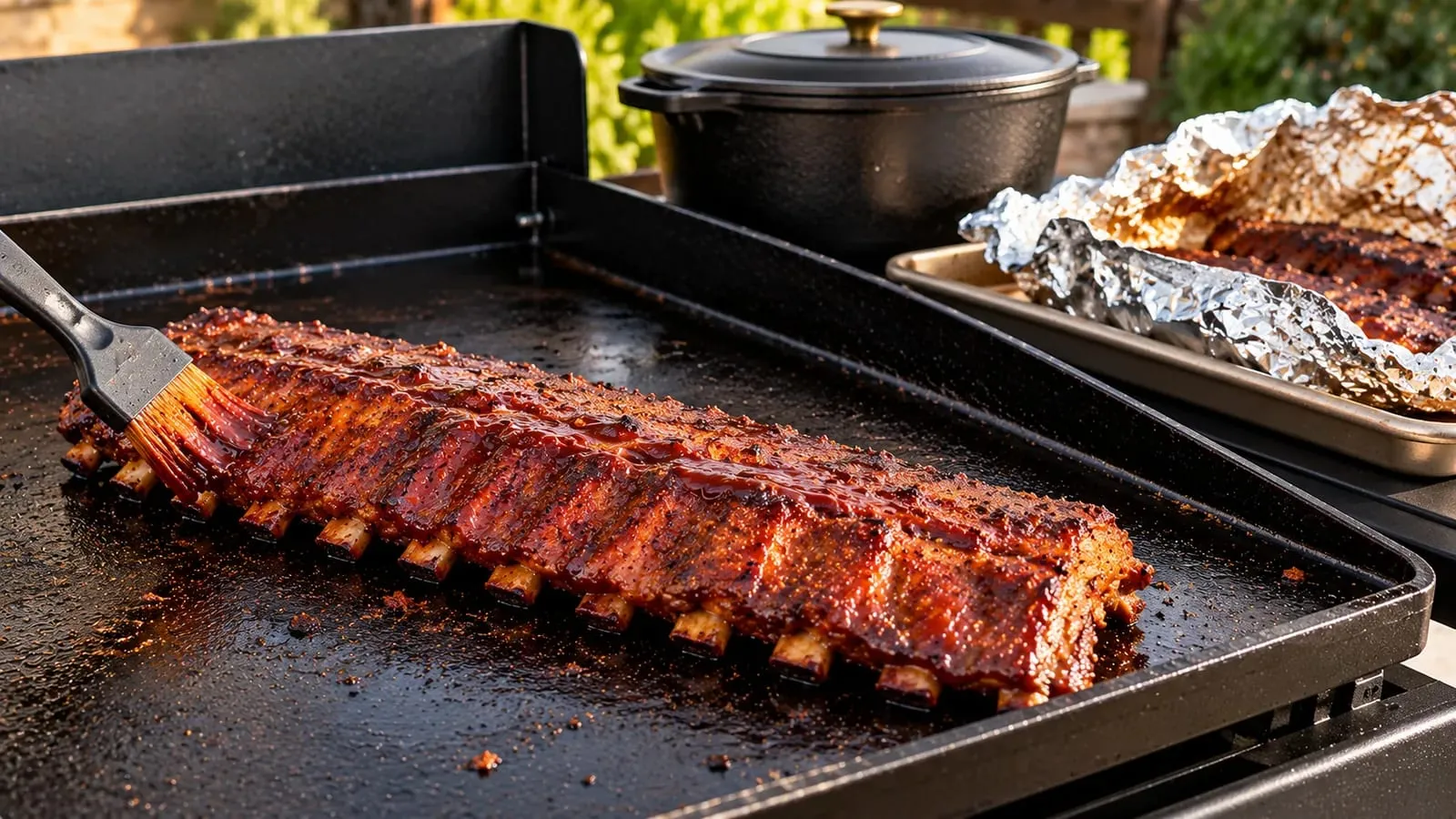
What Not to Cook on a Blackstone (and What to Do Instead)
What doesn't work on a Blackstone griddle: low-and-slow cuts, big roasts, anything that sits in liquid, and deep-fried food, plus how to split the cook so the griddle still does the part it's good at.
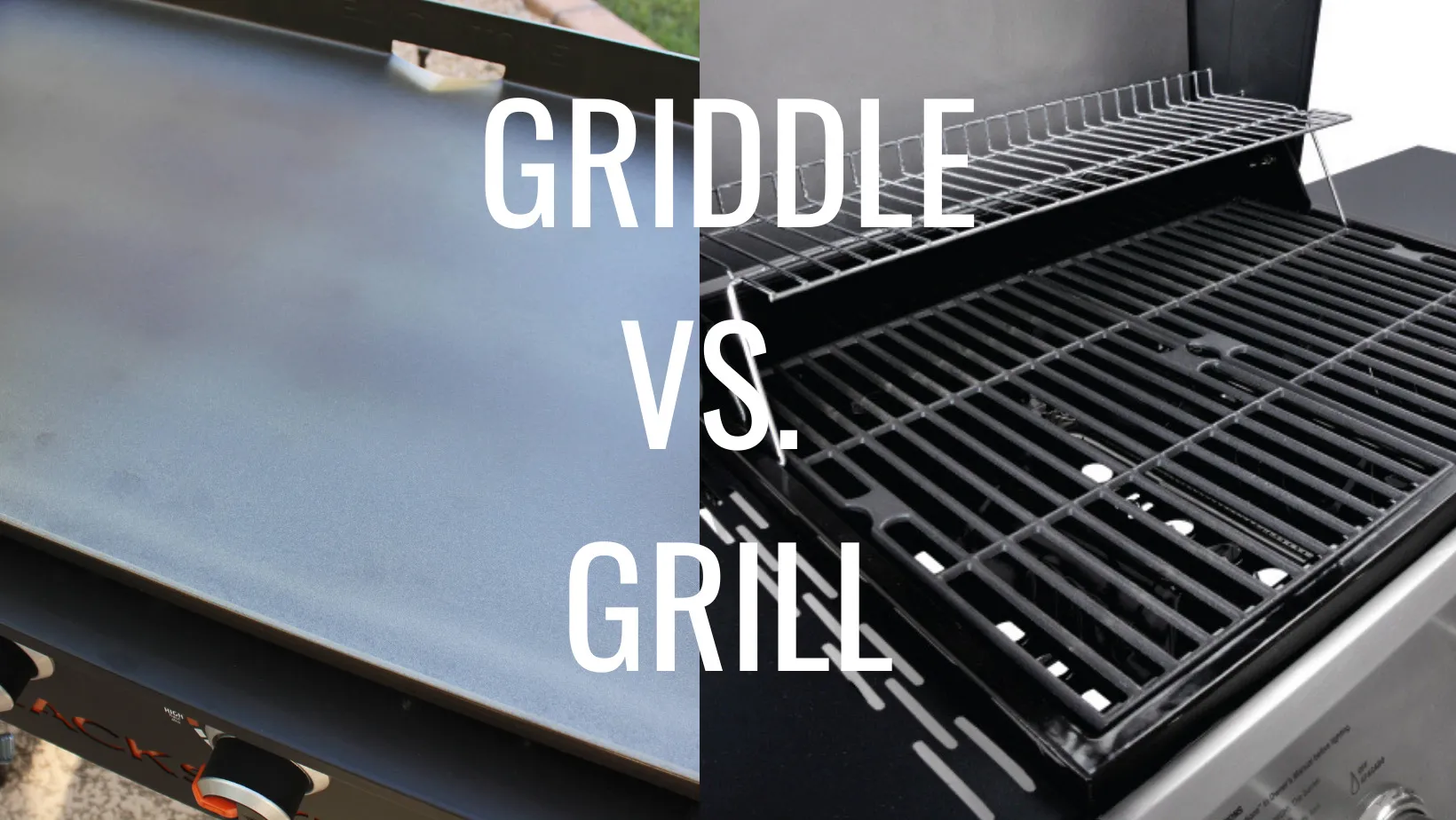
Griddle vs Grill: Which Should You Get?
Griddle vs grill: the real differences, which is healthier, whether a griddle is worth it if you already own a grill, and which wins for steaks and burgers.
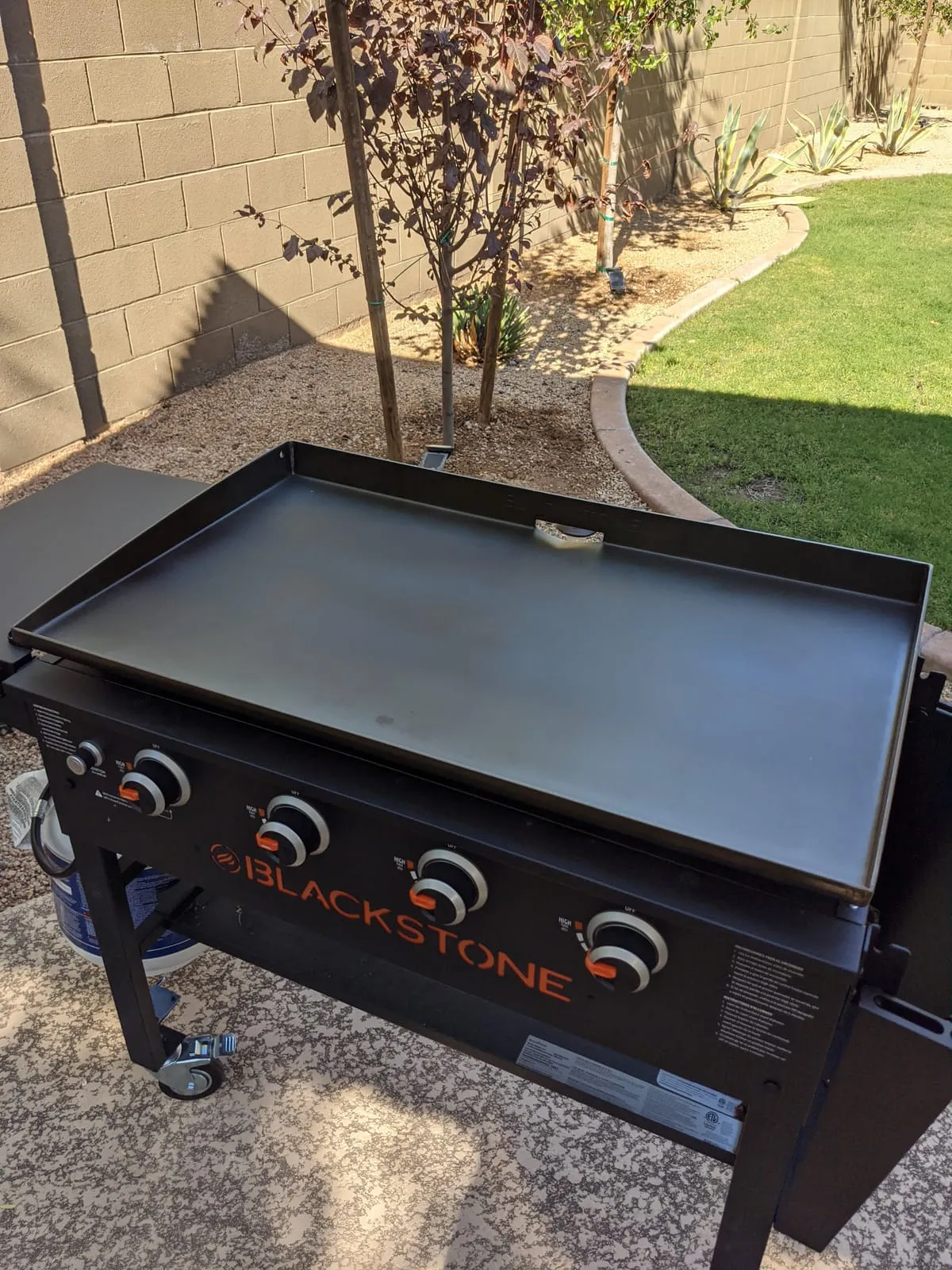
Why Is Everyone Selling Their Blackstone? An Honest Answer
Why is everyone selling their Blackstone? Mostly, they aren't. Here's the honest story, plus the real cons, lifespan, the Walmart price, and if it's worth it.