
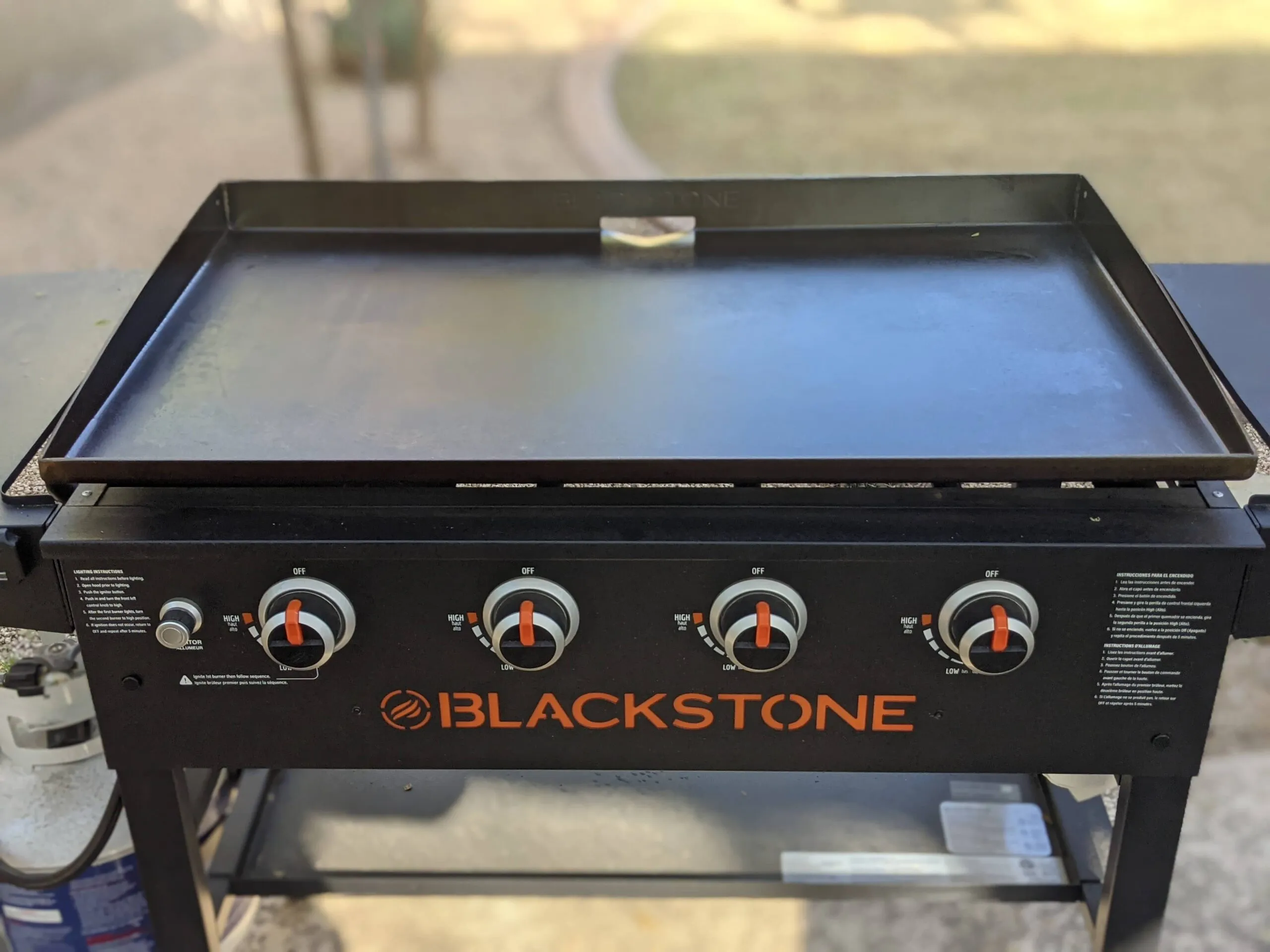
Blackstone Grease Problems: Overflow, Leaks, and Grease Fires
Grease management is the least glamorous part of owning a Blackstone and the part that causes the most mess when it goes wrong: a cup that overflows mid-cook, grease running off the front edge instead of into the trap, or a slick puddle under the cart that you find days later.
Nearly all of it comes down to three things: which way your griddle drains, whether it’s sitting level, and how often you empty the cup. Here’s the diagnosis for each symptom, plus the grease fire section that everyone should read before they need it.
Know Which Way Yours Drains
Before troubleshooting anything, confirm your griddle’s drain direction, because the fix depends on it:
- Rear drain: grease exits through a hole at the back of the cooktop into a cup behind the griddle. Most current Blackstone models.
- Front drain: grease exits at the front into a cup below the front edge. Common on older models and some tabletops.
Look for the hole in the cooktop and follow it to the cup. Everything below assumes you know which you have, because “grease runs to the front” is a problem on a rear-drain griddle and normal operation on a front-drain one.
Grease Runs the Wrong Way (or Off the Edge)
If grease pools at the wrong end of the cooktop or spills over an edge, the griddle isn’t sitting level. This is the cause of the overwhelming majority of grease complaints.
The fix:
- Set a level on the cooktop, front to back and side to side. No level handy? A puddle of water on the cold surface shows you which way it runs.
- Adjust the leg levelers if your model has them, or shim the low legs with anything stable and non-flammable: pavers, deck shims, folded metal.
- Aim for dead level side to side and a very slight tilt toward the drain. Patios almost always slope for water runoff, so a griddle that’s level on paper often isn’t in place.
For tabletop models, the table itself is usually the culprit: a picnic table with a slope you never noticed becomes obvious the moment bacon fat starts migrating.
The Grease Cup Overflows
Two causes, both easy:
You’re not emptying it often enough. Grease cups are small, the tabletop cups especially. A single bacon-heavy breakfast or a batch of smash burgers can fill one. Check it before every cook, not after the overflow.
Foil liners or oversized liners. Disposable liners are convenient, but a liner that doesn’t seat properly blocks the drain hole or diverts grease around the cup entirely. If you use liners, confirm the grease is actually landing inside.
A tip worth adopting: pour a small amount of water into a freshly emptied cup before cooking. Hot grease hits water instead of bare metal, it’s dramatically easier to clean out afterward, and it eliminates the baked-on crust that makes people avoid the job.
Grease Backs Up on the Cooktop
If grease pools on the surface and won’t drain, the drain hole is blocked, usually with carbonized food debris, a hardened grease plug, or an ill-fitting liner. Clear it while the griddle is warm (grease flows, cold grease doesn’t) using a scraper and a paper towel. If it’s genuinely plugged, a wooden skewer or bottle brush clears the channel.
Persistent buildup around the drain means the after-cook routine is being skipped. Scraping debris to the trap after every cook is what keeps that channel clear. The cleaning guide covers the whole 5-minute routine.
Grease Under the Griddle or on the Ground
A slick under the cart usually means one of:
- An overflowed cup you didn’t catch. Check and empty first.
- A missing or misaligned rear grease chute: the piece that channels grease from the cooktop hole into the cup can shift during transport. Confirm it’s seated.
- Grease finding seams on a badly out-of-level griddle, running along the underside of the top and dripping from the frame instead of reaching the drain. Leveling fixes it.
A drip tray, a paver, or a grill mat under the griddle saves the patio while you sort it out, and a mat is worth having permanently on stone or composite decking, which stain fast.
Grease Fires: Read This Before You Need It
A grease fire on a griddle is uncommon but not rare. It happens when accumulated grease in the trap or on the surface reaches its ignition point, usually during a high-heat cook on a griddle that hasn’t been cleaned in a while.
If you have a grease fire:
- Turn off the burners and close the propane tank valve if you can reach it safely.
- Smother it. Cover the flames with the basting dome, the hood, or a metal lid to cut off oxygen. Baking soda works on small flare-ups.
- Never use water. Water hitting burning grease vaporizes instantly and throws flaming grease outward. It turns a contained fire into a spreading one. (Water on a hot cooktop is also how griddle tops warp.)
- A Class B or Class K fire extinguisher is the right tool if smothering doesn’t work. Keep one near where you cook.
- If it’s spreading or you’re unsure, leave and call the fire department. A griddle is replaceable.
Prevention is the entire game: empty the grease cup regularly, scrape the cooktop after every cook, and never leave a hot griddle unattended. Long flare-ups from a heavy bacon cook are normal; a fire that keeps burning after the food is off is not. More in the outdoor griddle safety guide.
Related: Blackstone Troubleshooting Guide · How to Clean a Blackstone · Outdoor Griddle Safety · Winterize and Store a Blackstone
Frequently Asked Questions
Why is grease not going into the grease trap on my Blackstone?
The griddle isn’t level, or the drain hole is blocked. Check with a level (or a puddle of water on the cold surface) and adjust the leg levelers or shim the low side. Patios usually slope. If the surface is level and grease still pools, clear the drain hole of carbonized debris while the griddle is warm.
How often should you empty a Blackstone grease cup?
Check it before every cook and empty it whenever it’s more than half full. Grease cups are small, and a single bacon-heavy breakfast can fill one. Waiting until it overflows is how grease ends up on the patio.
Why is grease running off the front of my Blackstone?
On a rear-drain model, that means the griddle is tilted forward. Level it front to back. On a front-drain model, that’s how it’s designed to work; the issue is only whether the grease is reaching the cup, so check the chute alignment and the cup position.
How do you put out a grease fire on a griddle?
Turn off the burners, close the propane tank valve if you can do it safely, and smother the flames with the dome, hood, or a metal lid to cut off oxygen. Baking soda works on small flare-ups, and a Class B or K extinguisher is the right tool if smothering fails. Never use water. It throws burning grease outward. If the fire spreads, leave and call the fire department.
Should you put water in a Blackstone grease cup?
A small amount before cooking helps a lot. Hot grease lands in water instead of on bare metal, which makes the cup far easier to clean and prevents baked-on crust. Just don’t overfill it, and never pour water onto a grease fire.
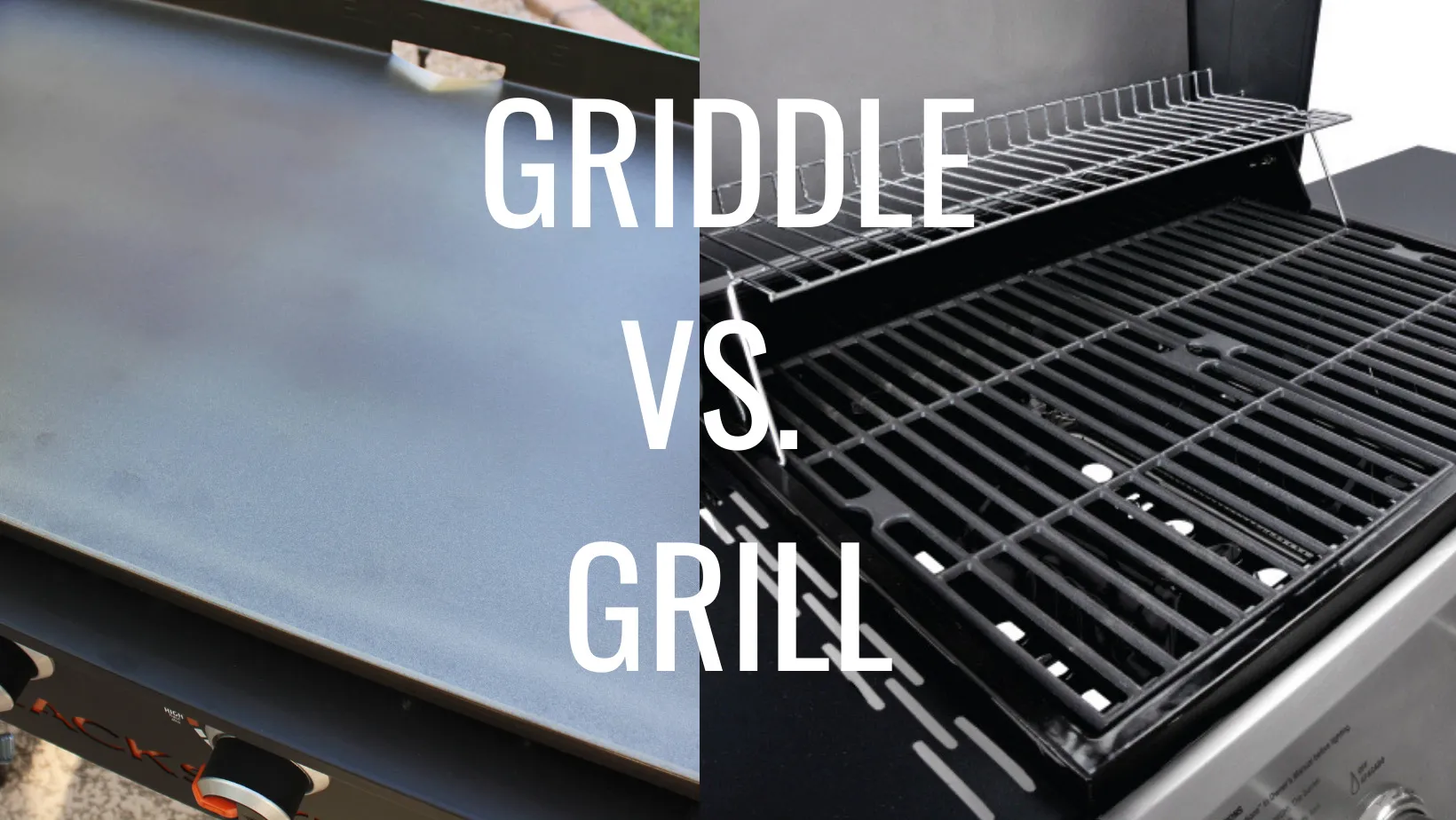
Griddle vs Grill: Which Should You Get?
Griddle vs grill: the real differences, which is healthier, whether a griddle is worth it if you already own a grill, and which wins for steaks and burgers.
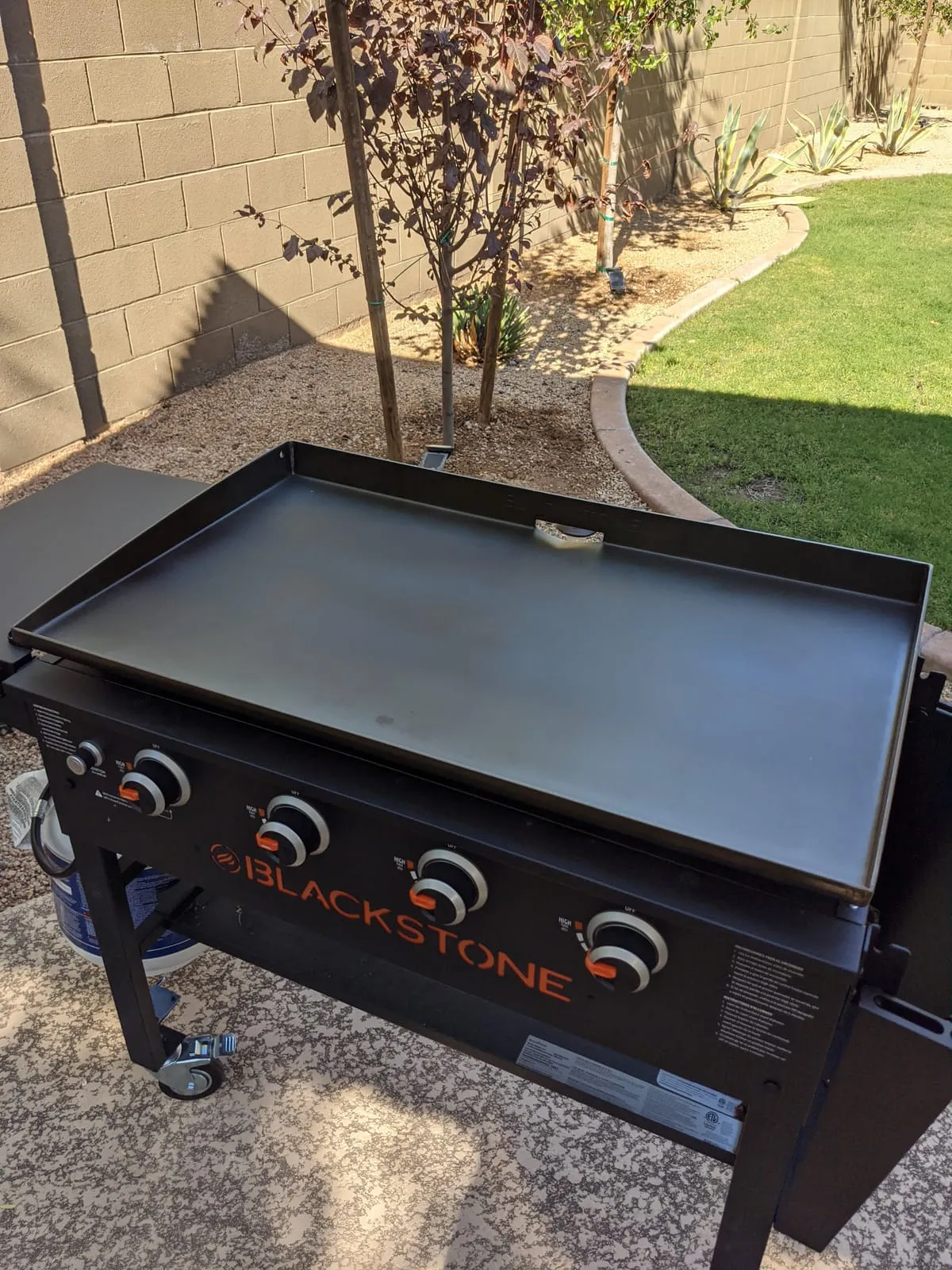
Why Is Everyone Selling Their Blackstone? An Honest Answer
Why is everyone selling their Blackstone? Mostly, they aren't. Here's the honest story, plus the real cons, lifespan, the Walmart price, and if it's worth it.
Your First Blackstone Cook: Complete New Owner Guide
New Blackstone griddle? The full day-one sequence: assembly, the soapy wash Blackstone actually requires, first seasoning, what to cook first, and what's normal in week one.