
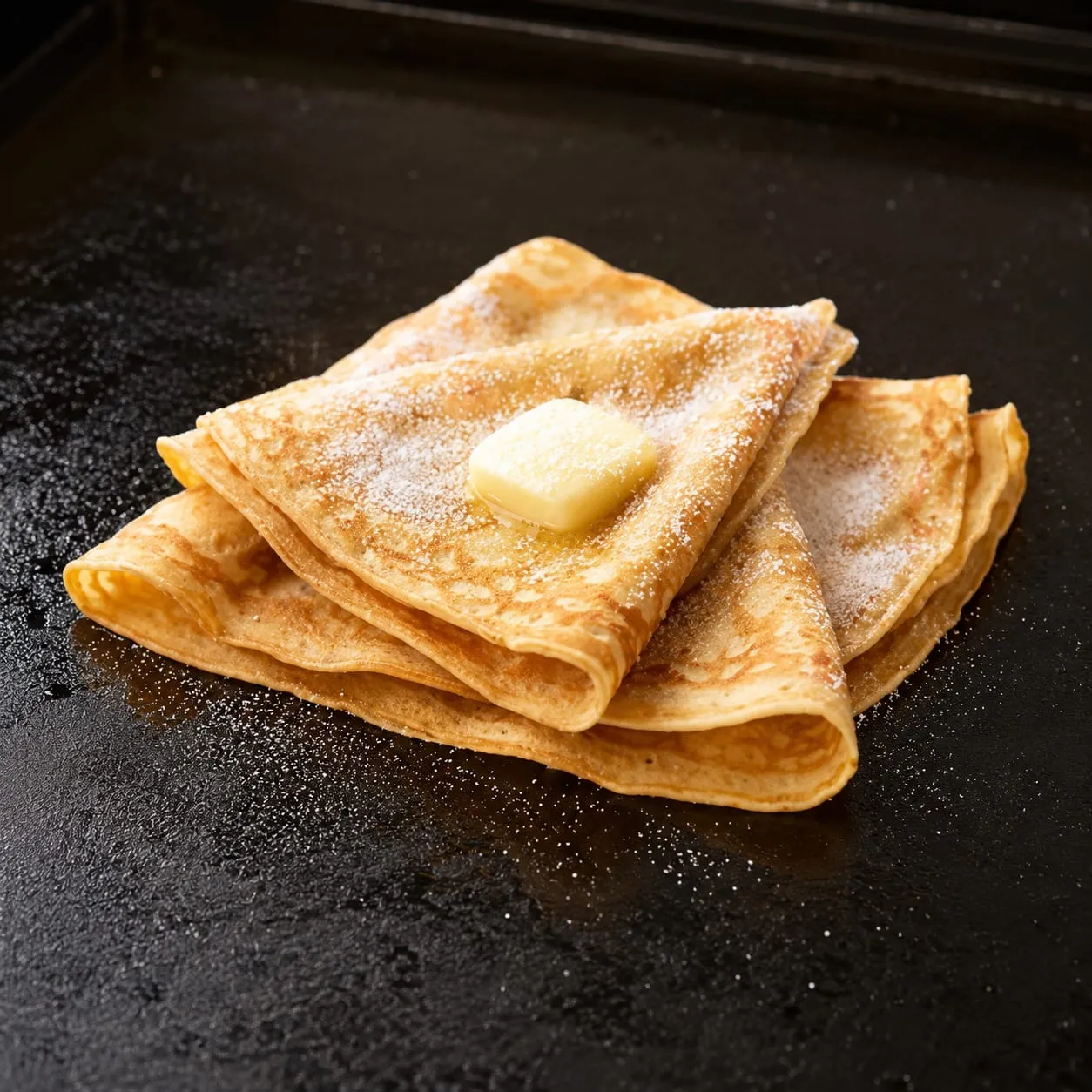
Blackstone Crepes: Base Recipe + 4 Variations
Crepes on a Blackstone are easier than they look and better than most people expect. The wide, flat surface gives you room to spread thin batter into an even circle without fighting the curved sides of a pan, and the consistent heat means no burnt spots in the center while the edges stay pale.
One batter, four directions. The base recipe below works for all variations (sweet and savory) with small tweaks noted for each.
Yields: 18-20 crepes · Prep time: 7 minutes · Chill time: 45 minutes · Cook time: 15 minutes
The Base Batter
This blender batter works for every variation below. The 45-minute rest in the fridge is the only patience required.
Ingredients
- 1 cup whole milk
- ¼ cup water
- 2 large eggs
- 2 tbsp unsalted butter, melted
- 1 cup all-purpose flour
- Pinch of fine sea salt
- Vegetable oil for the griddle
For sweet variations: add 1 tbsp sugar and ½ tsp vanilla extract. For savory variations: omit sugar and vanilla, add a pinch of white pepper.
Instructions
Step 1: Blend Add all ingredients to a blender. Blend 20-30 seconds until completely smooth. The batter should be thin: closer to heavy cream than pancake batter.
Step 2: Chill Refrigerate the batter for at least 45 minutes (up to overnight). This rest allows the gluten to relax, which produces a more tender crepe and reduces tearing when you flip. Don’t skip it.
You’ll also need
- Crepe spreader (or the back of a large spoon)
- Thin, flexible spatula for flipping
How to Cook Crepes on a Blackstone
Temperature: medium-low, 300-325°F. Crepes cook at a lower temperature than almost anything else on a griddle. Too hot and the edges brown before the center has time to set.
Step 1: Preheat slowly. Set burners to medium-low. After 5 minutes, test the surface: a drop of water should sizzle gently, not spit aggressively. Rub with an oiled paper towel.
Step 2: Pour and spread immediately. Pour about 2 tablespoons of batter onto the griddle. Immediately use the crepe spreader to sweep in a circular motion, thinning the batter into a 6-7 inch circle. You have about 5 seconds before the batter starts to set. Have the spreader in hand before you pour.
Step 3: Wait for the edges. Cook for about 30 seconds until the edges look dry and slightly lifted, and the surface appears matte instead of wet.
Step 4: Flip once. Slide a thin spatula under the edge, get fully underneath, and flip. Cook 10 seconds on the second side. The second side looks spottier and less even. That’s normal and is the inside of the crepe.
Step 5: Stack carefully. Let each crepe cool slightly before stacking. Hot crepes stuck together tear.
Re-oil every 2-3 crepes. The first crepe is almost always a throwaway. It calibrates the surface. Eat it and adjust the heat before the second.
Variation 1: Classic Butter and Sugar
The French original. Simple, elegant, and the best way to taste the crepe itself.
What to add to the base batter: 1 tbsp sugar, ½ tsp vanilla extract.
To serve: spread each warm crepe with softened butter, sprinkle with granulated sugar, fold into quarters. Finish with a squeeze of fresh lemon juice.
Upgrade: brown the butter before adding it to the batter (cook in a small pan until it smells nutty, about 3 minutes). The nuttiness adds depth without changing the texture.
Variation 2: Lemon Honey
Bright and slightly floral. The lemon zest in the batter itself makes every bite fragrant.
What to add to the base batter: 1 tbsp honey (instead of sugar), 1 tsp fresh lemon zest, ½ tsp vanilla extract.
To serve: drizzle warm crepes with additional honey and a squeeze of fresh lemon juice. Fold into quarters or roll loosely. Finish with a pinch of flaky salt to balance the sweetness.
Also excellent with: fresh berries, whipped cream, or a spoonful of lemon curd tucked inside before folding.
Variation 3: Nutella Banana
The crowd-pleaser. Works for dessert, brunch, or anywhere a crowd needs impressing quickly.
Use the sweet base batter (with sugar and vanilla).
To serve: spread each warm crepe with a generous layer of Nutella, lay 4-5 thin banana slices across the center, and roll tightly. Dust with powdered sugar. Optional: add a small scoop of vanilla ice cream alongside.
Tip: warm the Nutella in a small bowl for 15-20 seconds in the microwave before spreading. It goes on much more evenly when slightly loosened.
Variation 4: Savory Ham and Cheese
The same technique, completely different direction. A proper French galette-style filling: ham, melted Gruyère, a runny egg if you want it.
Use the savory base batter (omit sugar and vanilla, add pinch of white pepper).
Filling (per crepe):
- 1-2 thin slices Black Forest ham
- 2 tbsp shredded Gruyère or Swiss cheese
- 1 egg (optional, for a galette complète)
- Dijon mustard (optional spread)
To make: cook the crepe until the first side is set. Flip. While the second side cooks (10 seconds), lay ham across the center and scatter cheese over the top. The residual heat melts the cheese as you fold.
For a galette complète: after flipping, crack one egg directly onto the crepe surface. Cover loosely with a dome or lid for 60-90 seconds until the white sets. Fold the edges in to make a square frame around the runny yolk. Serve immediately.
Tips for Blackstone Crepes
- The first crepe is always a throwaway. The surface calibrates as you cook. The first one almost always sticks or cooks unevenly. This is expected. Adjust heat, re-oil, continue.
- Work fast with the spreader. You have 5 seconds from pour to spreading before the batter sets. Have everything ready before you pour.
- Thin batter = thin crepes. If they’re coming out thick, add 1-2 tbsp more water or milk. The batter should flow like thin cream.
- Don’t skip the chill time. 45 minutes of rest makes a measurable difference in tenderness. The gluten relaxes, the batter spreads more evenly, and the crepes tear less when you flip.
- Make the batter the night before. It keeps 2 days in the fridge. Morning crepes with no prep.
More flat-top recipes: Blackstone Breakfast Recipes · Blackstone Dessert Recipes
Frequently Asked Questions
What temperature should the Blackstone be for crepes?
Medium-low, around 300-325°F. Crepes are thinner and more delicate than pancakes and need lower heat to cook through without browning too fast. If your crepes are darkening in under 20 seconds, turn the heat down.
Why do my crepes tear when I flip them on the Blackstone?
Three most common causes: not cooked long enough on the first side (the edge should look completely dry and slightly lifted before you flip), batter didn’t rest, or the griddle is too hot. A thin, flexible spatula helps more than a stiff one.
Do I need a crepe spreader?
A dedicated spreader gives the most consistent results, but the back of a large spoon or a small offset spatula works. Move in quick outward circular sweeps right after pouring.
How far ahead can I make the batter?
Up to 2 days covered in the refrigerator. The ingredients may separate slightly. Give it a quick whisk before cooking. This makes crepes an excellent make-ahead breakfast or brunch option.
Can I make both sweet and savory crepes from the same batch?
The base batter (without sugar or vanilla) works for both. If you’ve already made a sweet batter, you can still use it for savory fillings. The small amount of sugar isn’t enough to conflict with ham and cheese.
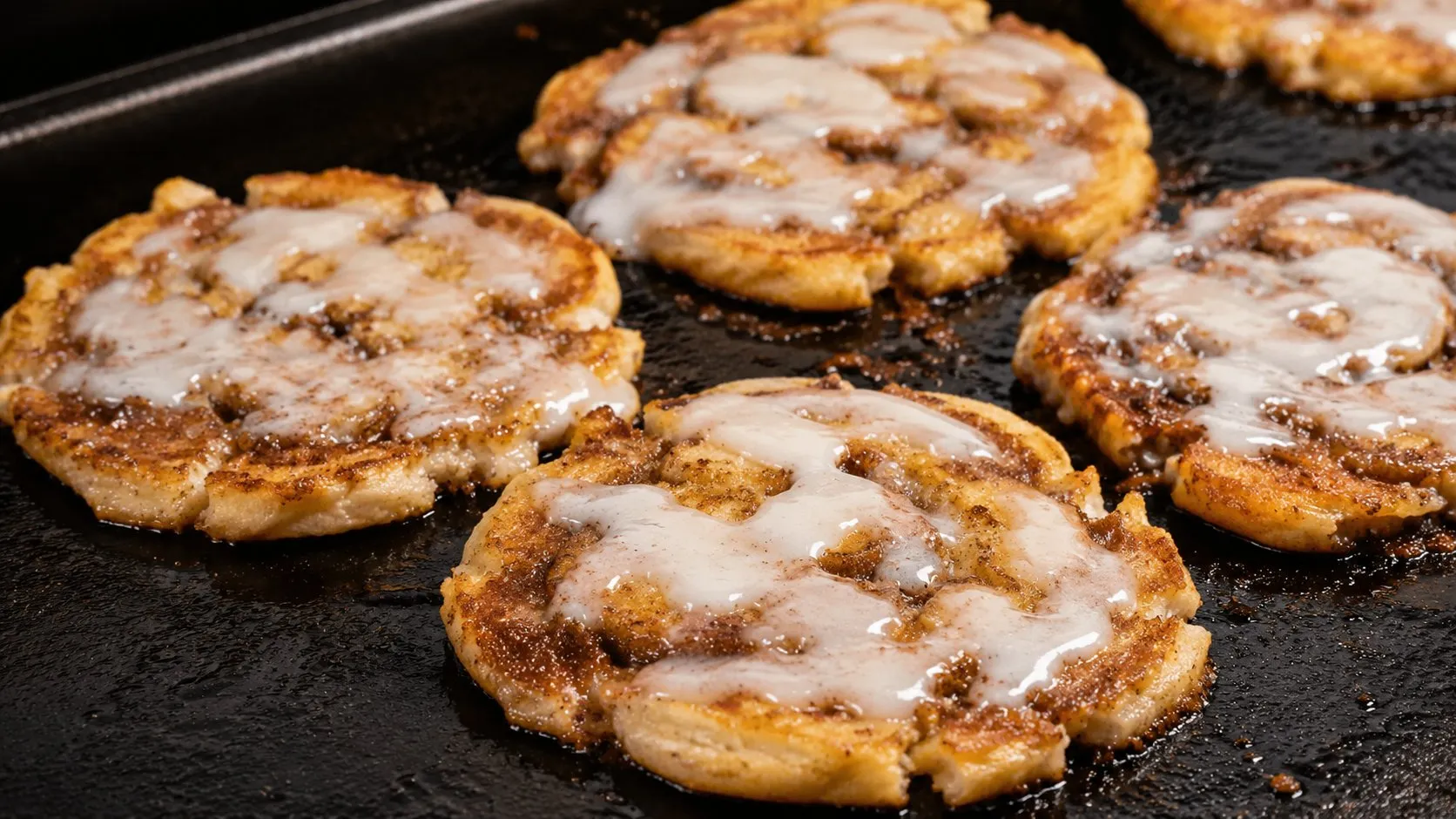
Blackstone Smashed Cinnamon Rolls (Viral Griddle Method)
Smashed cinnamon rolls on the Blackstone griddle: canned rolls pressed flat and cooked in butter at 325°F until crispy-edged and gooey, then iced warm. 10 minutes.
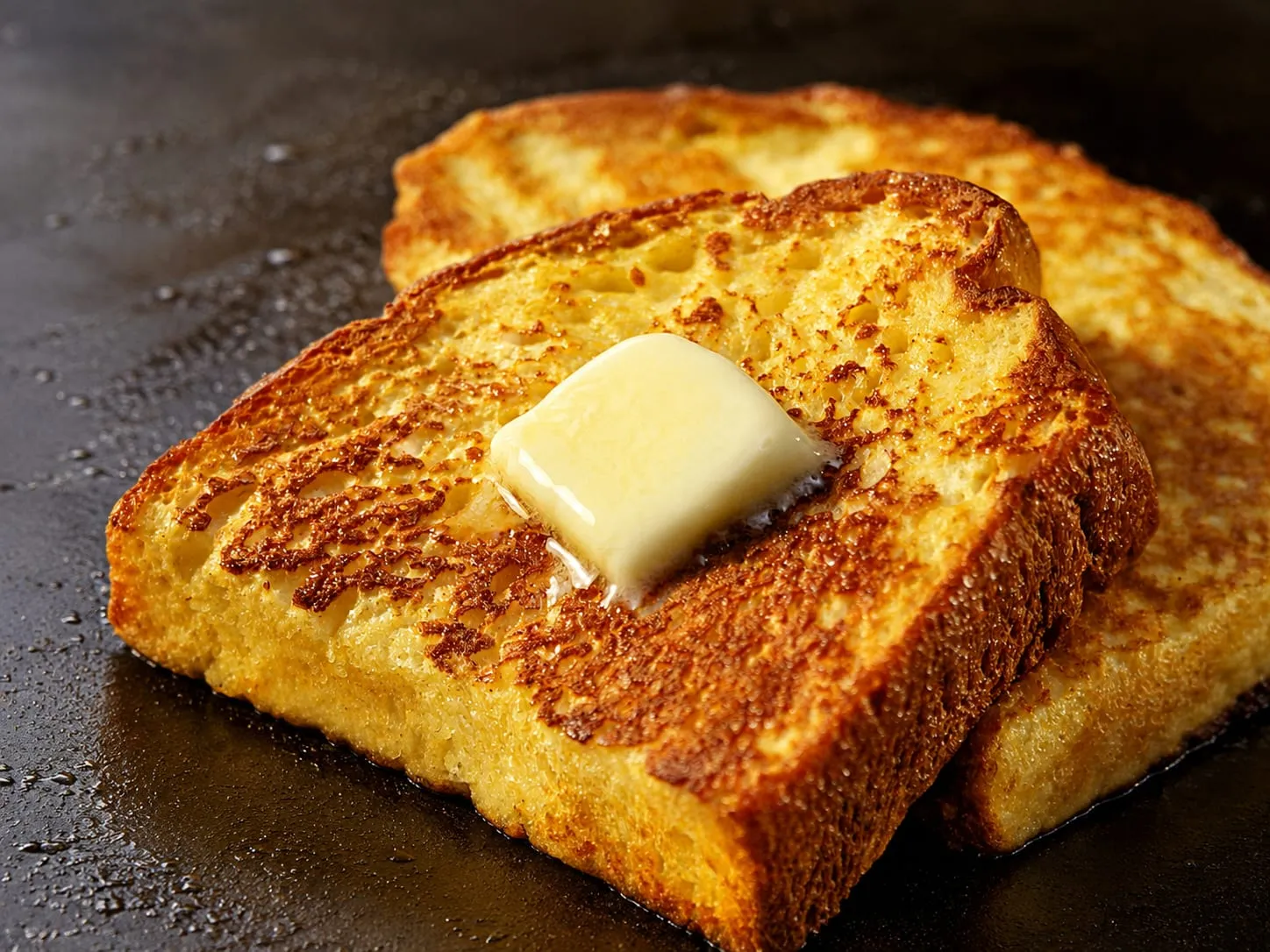
Blackstone French Toast Recipe: Golden, Fluffy, and Fast
The best French toast on a Blackstone griddle: thick-cut brioche, a rich egg custard, and a golden crust that a stovetop skillet can't match. Ready in 20 minutes.
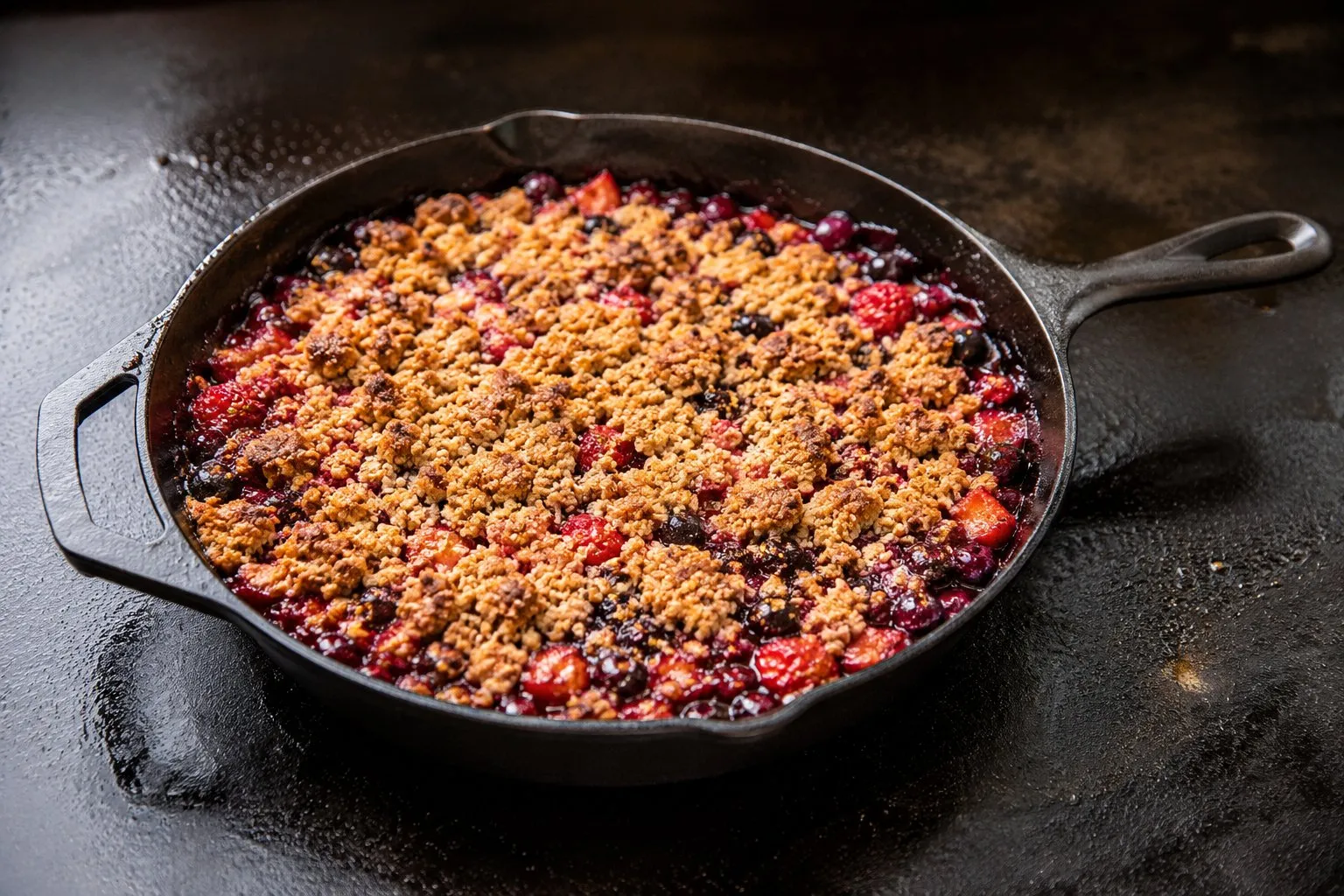
Blackstone Berry Crisp (Cast Iron on the Griddle)
Berry crisp on the Blackstone griddle: mixed berries and a brown sugar oat crumble in a cast iron skillet, domed at 350°F until bubbling. Deeper caramelization than the oven.