
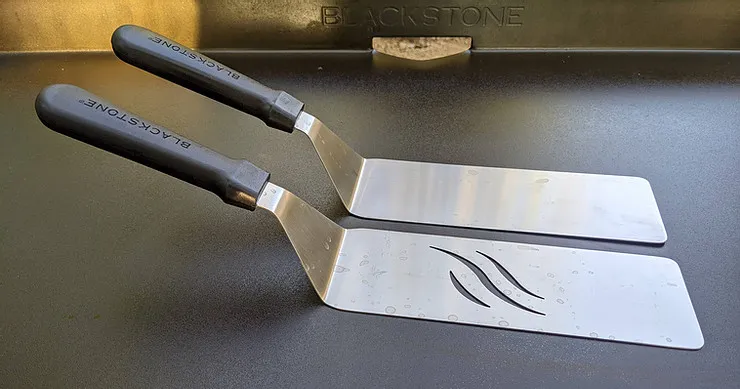
Best Griddle Spatulas for Blackstone Flat-Tops (2026)
The right spatula makes flat-top cooking faster and more precise. Griddle cooking demands a stiff, thin-edged stainless blade that can scrape the surface clean, slide under delicate food without tearing it, and hold up under constant high-heat use. A regular kitchen spatula won’t cut it: a thin, flexible blade warps under griddle heat and flexes when you need it not to.
The advice most buying guides skip: buy two. Not two identical spatulas: one stiff blade for scraping and pressing, one thinner blade for sliding under delicate food. Every experienced flat-top cook works two-handed, using one spatula to steady food while the other flips it. It’s the single biggest technique upgrade available for under $30, and it’s why several picks below are pairs or sets.
Making smash burgers? That’s a different tool, a wide, stiff turner built to press. Our best spatulas for smash burgers covers those specifically. This page is for everything else you cook on a flat top.
| Spatula | Best For | Blade | Link |
|---|---|---|---|
| Mannkitchen Professional | Best overall | 1.8mm | Amazon |
| Blackstone Pro Series Set | Best pair to start with | 2-pack | Amazon |
| Anmarko Professional Set | Best full set | 1.1mm | Amazon |
| Leonyo Slotted Set | Best for greasy foods | 1.1mm | Amazon |
| Slotted fish turner | Best for eggs & fish | thin/flexible | Amazon |
| Blackstone Signature Spatula | Best budget single | ~$13 | Amazon |
The 6 Best Griddle Spatulas
#1 Mannkitchen Professional Grade Stainless Steel Spatula: Best Overall
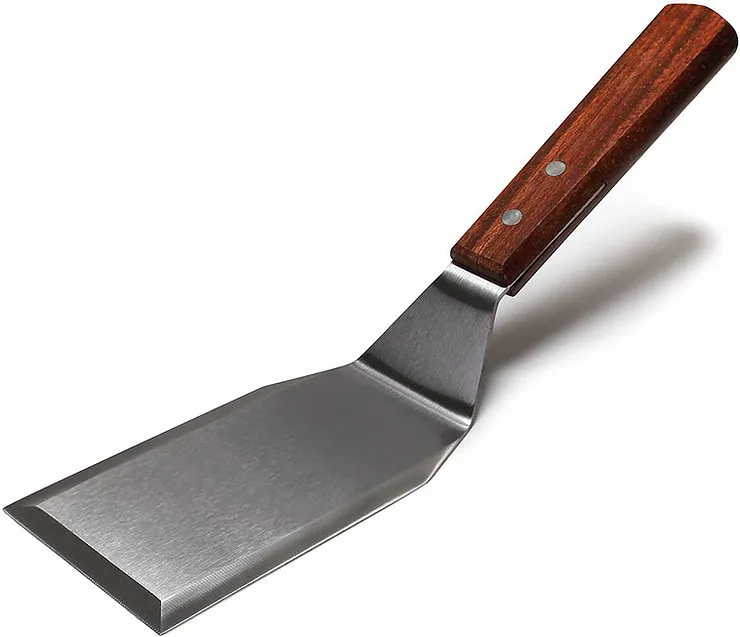
The best single spatula for flat-top cooking. At 1.8mm, the 420 stainless blade is nearly twice as thick as most alternatives: it eliminates flex, handles aggressive scraping without warping, and is stiff enough to press a smash burger without bending at the heel. The precision-beveled edge still slides cleanly under eggs and fish. The tapered hardwood handle stays comfortable near the burners.
If you buy one spatula and want it to last a decade, this is it. Pair it with something thinner for delicate work and you’ve covered the whole griddle.
Pros:
- 1.8mm blade is the thickest and most rigid option here
- Precision-beveled edge scrapes and lifts without tearing
- Heat-resistant tapered hardwood handle
- 420 stainless resists rust and corrosion
Cons:
- Sold as a single: you’ll still want a second, thinner blade
- Wood handle is not dishwasher safe
#2 Blackstone Pro Series Griddle Spatula Set: Best Pair to Start With
Blackstone’s own two-pack, and the most direct route to the two-spatula setup this page recommends. Stainless blades with beveled edges for chopping and scraping, ergonomic slip-resistant handles rated to stay cool at the griddle edge, and around $25 for the pair. If you’re outfitting a new griddle and want tools that match it without deliberating, start here.
Honest caveat: Blackstone’s included blades run thinner than the Mannkitchen and other premium options. They’re fine for everyday flipping, chopping, and scraping, but if you regularly lean hard into a scrape or press, you’ll feel the flex. Many owners run this pair as their daily drivers and add one heavy blade for the rough work.
Pros:
- Two spatulas out of the box, the right starting setup
- Beveled edges for chopping and scraping on the surface
- Slip-resistant, heat-resistant handles
- Brand-matched and widely available
Cons:
- Thinner blades than premium single spatulas
- Not the tool for heavy scraping or hard presses
#3 Anmarko Professional Spatula Set: Best Full Set
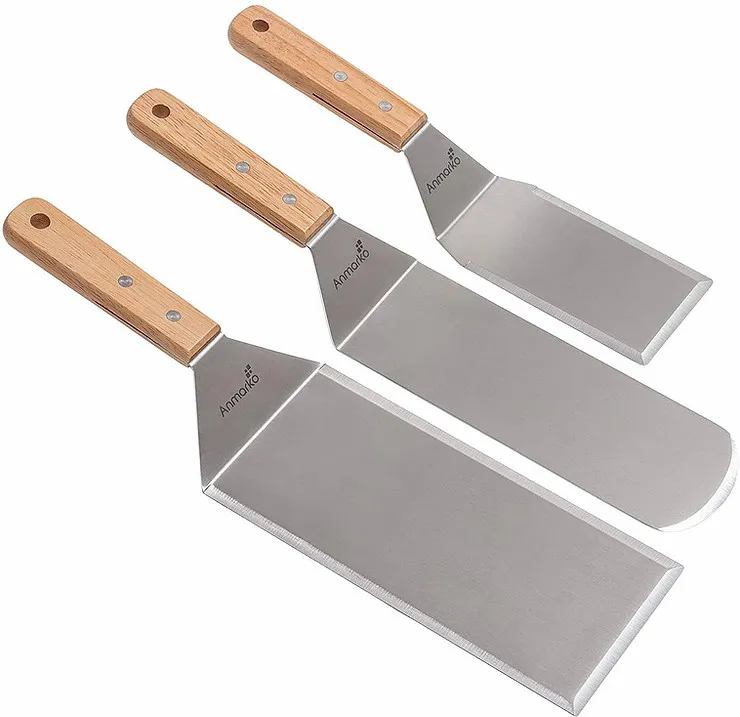
Three tools for three jobs: a wide griddle turner with beveled edges for scraping and chopping directly on the surface, a rounded spatula for pancakes and larger foods, and a smaller spatula for detail work. The 1.1mm blades are lighter and more flexible than the Mannkitchen, better for fast multi-tasking, less suited to heavy scraping under sustained pressure. Ergonomic wooden handles with hanging holes.
Pros:
- Three spatulas cover most griddle cooking tasks
- Rounded middle spatula works well for pancakes
- Ergonomic wood handles with hanging holes
- Good value for a complete set
Cons:
- 1.1mm blades flex more under heavy scraping
- Not dishwasher safe
#4 Leonyo Griddle Teppanyaki Slotted Spatulas: Best for Greasy Foods
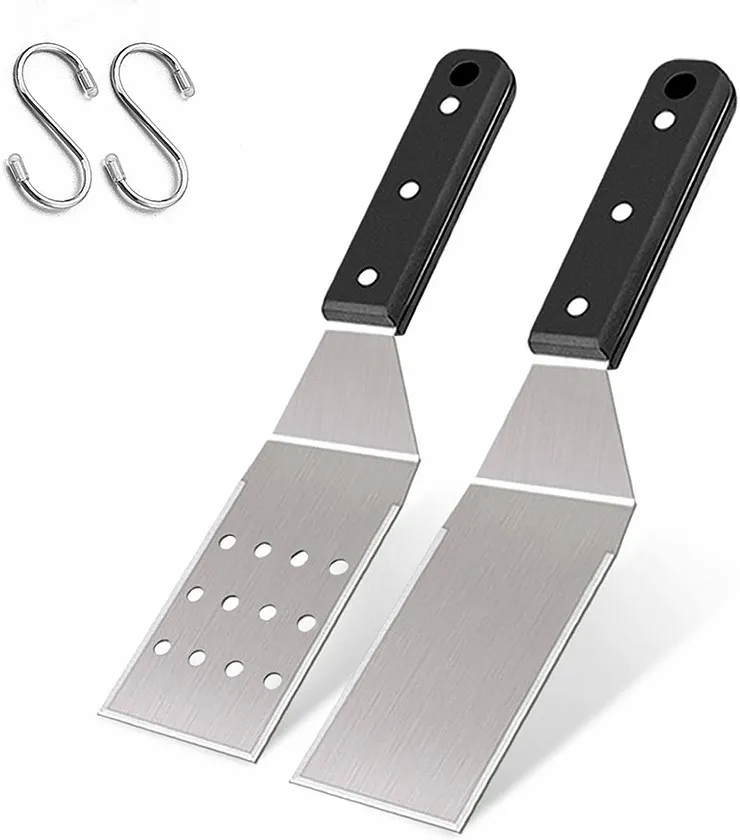
The set here that includes a slotted spatula, the one you want when bacon, sausage, or anything cooked in rendered fat needs to leave the grease behind on the griddle instead of on the plate. Full-tang handles give better stability than half-tang designs when pressing or scraping. Choose plastic handles (dishwasher safe) or wood at the same price; plastic is the more practical pick for regular griddle use.
Pros:
- Slotted spatula drains fat as you lift
- Full-tang handles for better rigidity
- 420 stainless steel blades
- Plastic handle option is dishwasher safe
Cons:
- Both spatulas are the same size, no blade variety
- No beveled edges, which limits scraping
#5 Slotted Fish Turner: Best for Eggs and Fish
The specialist worth owning, and the tool most griddle cooks are missing. A fish turner is the opposite of a smash spatula: a thin, slightly flexible, slotted blade with an angled front edge, designed to slide under delicate food without tearing it. For fish, eggs, and salmon fillets, nothing else compares. A thick rigid blade shoves delicate food around instead of getting beneath it.
Rather than a single model, buy on the specs: a thin flexible blade, slots, an angled leading edge, and a handle that clears griddle heat. Mercer and Dexter-Russell both make well-regarded versions, and they’re the same brands that top our smash burger spatula list. The two tools sit at opposite ends of the same brands’ lineups, which tells you how different the jobs are.
Pros:
- The only blade thin enough to get cleanly under fish and eggs
- Slots drain fat and reduce suction against the surface
- Flexes to follow the food rather than tearing it
- Inexpensive for how much frustration it prevents
Cons:
- Too flexible for scraping or pressing, strictly a specialist
- Thin blades can bend permanently if used as a pry bar
#6 Blackstone Signature Griddle Spatula: Best Budget Single
Around $13 for a stainless griddle spatula with a beveled edge and a heat-resistant handle. It’s the cheapest sensible entry point on this list and a genuinely useful second blade if you already own something heavier. Buying two of these still costs less than one premium spatula.
Expect what the price implies: it’s thinner and lighter than the Mannkitchen, so it’s a flipper rather than a scraper. As a first spatula for a new griddle owner, or as the extra blade that turns you into a two-handed cook, it does the job.
Pros:
- Cheapest reasonable option here
- Beveled edge for light scraping and chopping
- Heat-resistant handle
- Easy to justify buying two
Cons:
- Thin blade flexes under real pressure
- Won’t hold up to aggressive daily scraping
What to Look for in a Griddle Spatula
Buy Two, Not One
The two-blade setup is the whole game: one thick, stiff blade for scraping, chopping, and pressing; one thinner blade for sliding under eggs, fish, and pancakes. Beyond covering both jobs properly, it lets you cook two-handed: one spatula holds food steady while the other gets underneath, which is how you flip a smash burger or a fillet without tearing it. Sets like the Blackstone Pro Series pair or the Anmarko three-piece get you there in one purchase.
Blade Thickness
Thicker blades are more rigid and better for aggressive scraping and pressing. Thinner blades flex more but slide more easily under delicate food. Roughly: 1.5-2mm for a scraping and pressing blade, around 1mm or less for a delicate-food blade. The Mannkitchen at 1.8mm is the stiffest here; the 1.1mm sets are the versatile middle ground; a fish turner sits thinnest.
Tang Length
The tang is the metal portion of the blade extending into the handle. A full-length tang (identifiable by rivets running the entire handle length) keeps the spatula rigid when you apply lateral or downward force. A half-tang flexes at the connection point, wasting force. It’s the spec manufacturers are least consistent about disclosing, so the reliable move is visual: look at the product photos and count the rivets. If they stop halfway down the handle, so does the metal.
Slotted vs. Solid
A slotted blade lets fat drain as you lift, best for bacon, sausage, and anything cooked in rendered grease. A solid blade retains heat under the food and keeps small pieces (diced onions, rice) from falling through. Ideally you own one of each, which is another argument for a set.
Handle Material
Wood handles stay cool and feel good, but they can’t go in the dishwasher and will crack if soaked. Polypropylene handles are dishwasher safe and tolerate sustained heat better. Both work. Pick based on how you clean. Whatever you buy, don’t leave any handle resting on the hot surface.
Final Thoughts
Most griddle cooks are best served by two blades: the Mannkitchen for scraping, chopping, and pressing, plus something thinner for delicate food. If you’d rather solve it in one purchase, the Blackstone Pro Series pair or the Anmarko three-piece covers the range. Add a slotted fish turner if eggs and fish are regulars in your rotation.
Your spatula is also the tool behind two things that go wrong most often on a griddle: it’s what performs the release test when food sticks (sliding gently under a corner to check whether the crust has formed) and it’s the primary tool in the after-cook cleaning routine. A blade that flexes makes both harder.
For the full kit, see our must-have Blackstone accessories guide.
Related: Best Spatulas for Smash Burgers · Best Griddle Scraper · Best Smash Burger Press · Must-Have Accessories
Frequently Asked Questions
How many spatulas do you need for griddle cooking?
Two is the practical minimum, one stiff blade for scraping, chopping, and pressing, and one thinner blade for sliding under delicate food. Beyond covering both jobs, two spatulas let you cook two-handed: one steadies the food while the other flips it, which is how you turn a smash burger or a fish fillet cleanly.
How thick should a griddle spatula blade be?
For a scraping and pressing blade, 1.5-2mm is the sweet spot. The Mannkitchen at 1.8mm is a good benchmark. For flipping delicate foods, around 1mm or thinner works better because it slides under food more easily. Most griddle cooks want one of each rather than a single compromise blade.
Do you need a slotted spatula for griddle cooking?
Not essential, but genuinely useful for bacon, sausage, and anything cooked in rendered fat. The slots let grease drain as you lift instead of carrying it to the plate. For drier cooking, a solid blade is better because it holds heat under the food and keeps small pieces from falling through.
What’s the difference between a griddle spatula and a regular kitchen spatula?
A griddle spatula is thicker, stiffer stainless steel built for scraping hot steel, chopping on the surface, and constant high-heat use. A regular kitchen spatula is thinner and more flexible, designed for non-stick pans where a stiff metal blade would scratch the coating. A thin kitchen spatula will flex on a griddle and can warp permanently under sustained heat.
Can you put metal griddle spatulas in the dishwasher?
Stainless blades are dishwasher safe. The handle decides it. Wood handles crack and fade in a dishwasher and should be hand washed. Polypropylene and other plastic handles are typically dishwasher safe. Check the specific product, since the same blade is often sold with both handle types.
What spatula do you use for eggs on a griddle?
A thin, slightly flexible slotted turner: a fish turner is ideal. Thick rigid blades push eggs around instead of getting underneath them. Pair the thin blade with lower heat (300-325°F) and enough butter or oil, and eggs stop being the hardest thing on the griddle.
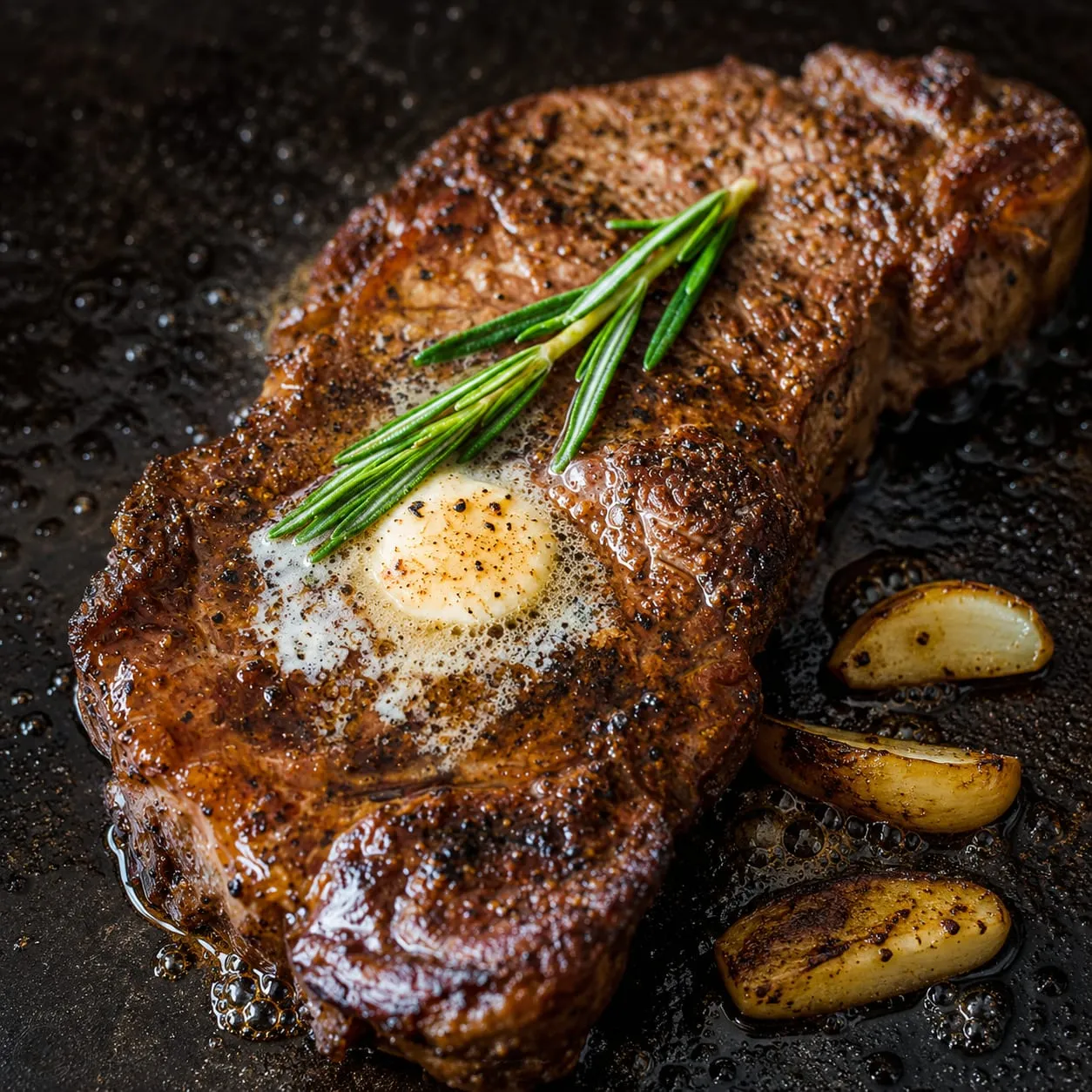
Best Blackstone Steak Recipes (Ribeye, Filet Mignon, Skirt, and More)
Every steak recipe on this site in one place: ribeye and strip, filet mignon, skirt steak with chimichurri, carne asada, fajitas, and steak bites, with the pull temp for each cut.
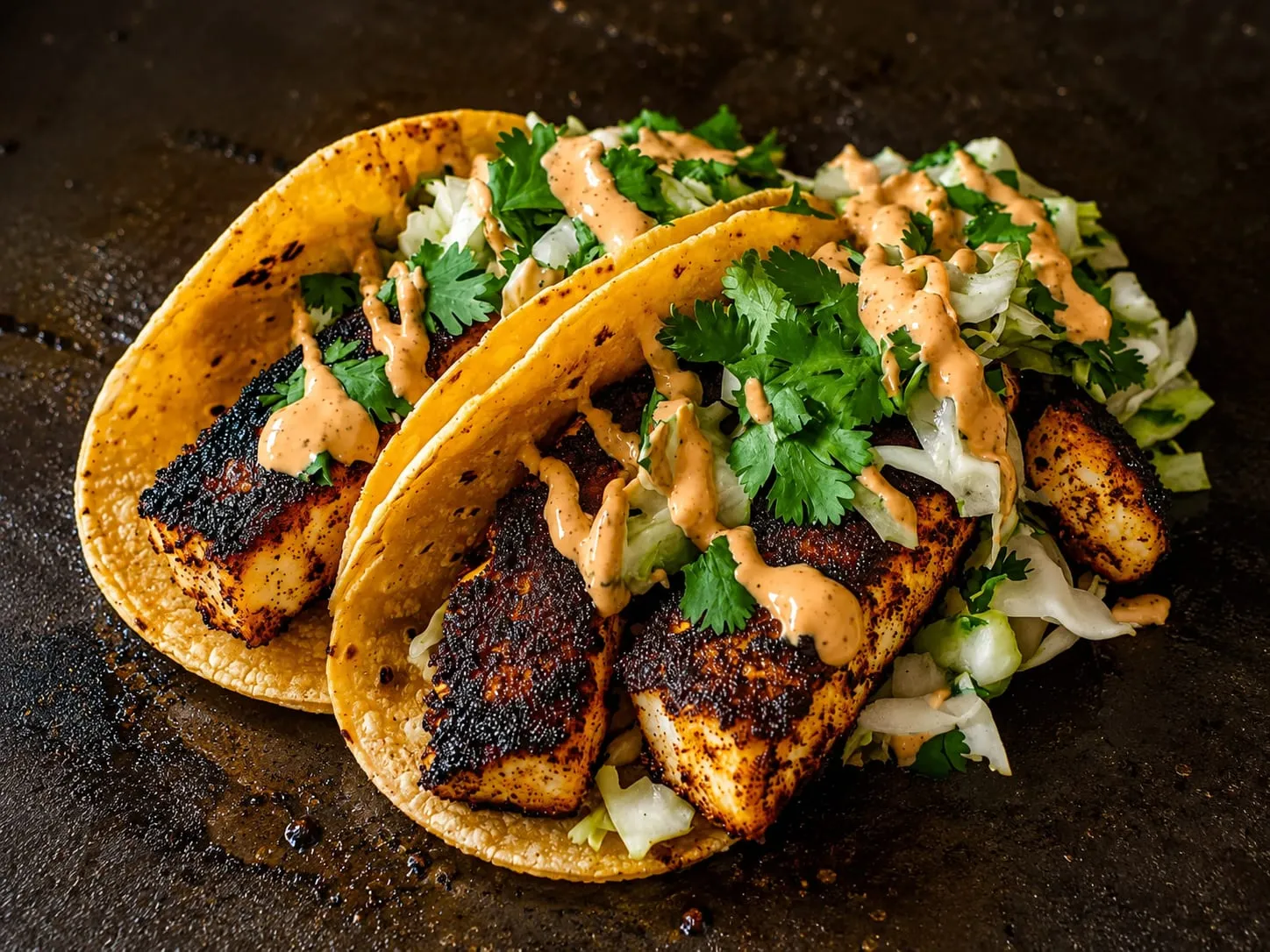
Gluten-Free Blackstone Recipes (30 Flat-Top Meals)
Gluten-free Blackstone recipes across proteins, tacos, vegetables, and sauces, plus the honest limitation of cooking gluten-free on a griddle that also cooks bread and buns.
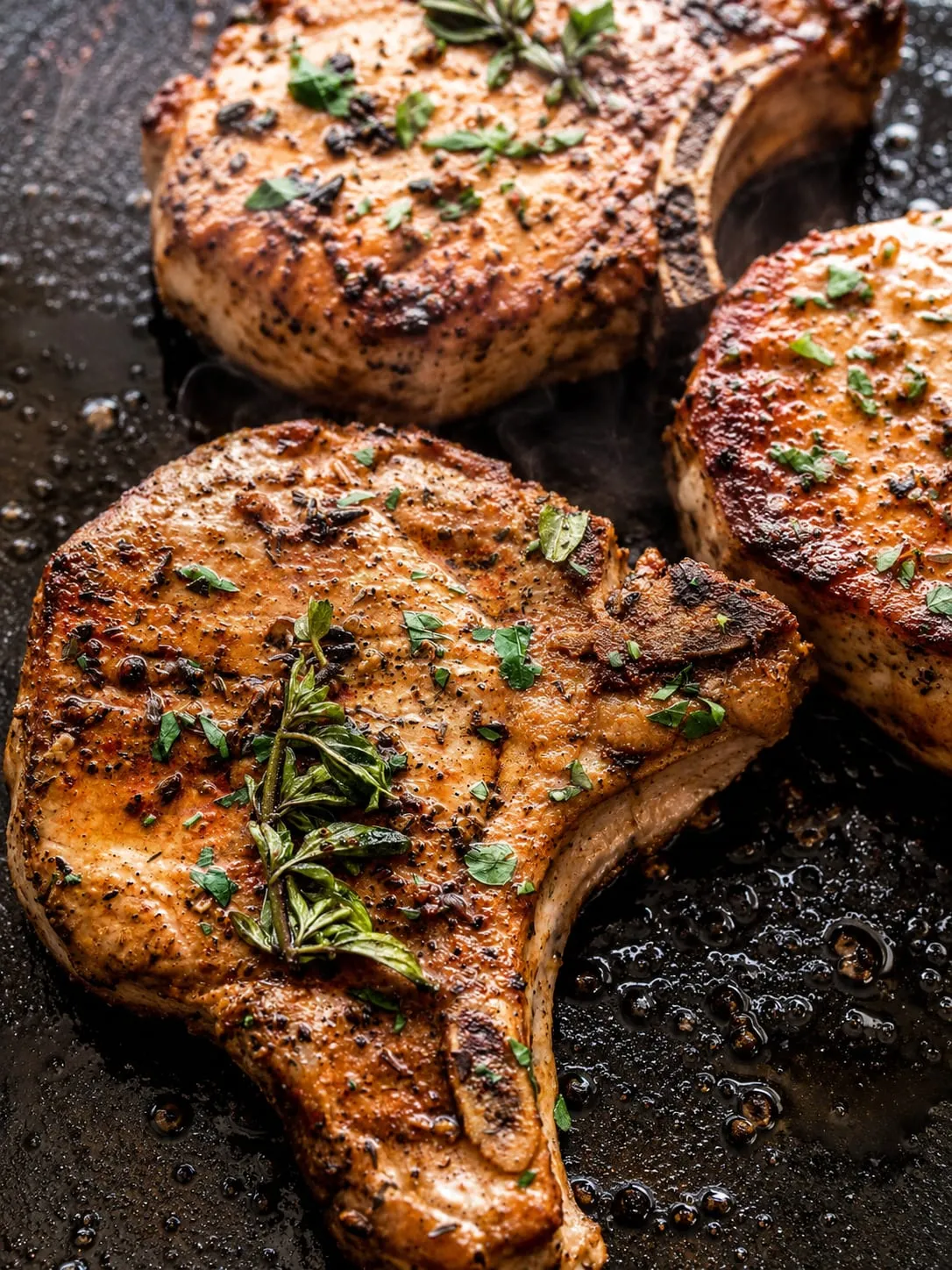
Best Blackstone Pork Recipes (Chops, Tenderloin, Brats, and More)
The best pork recipes for a Blackstone griddle: chops, tenderloin, bratwurst, and a pressed Cuban, plus the two internal temperatures that keep pork from drying out.