
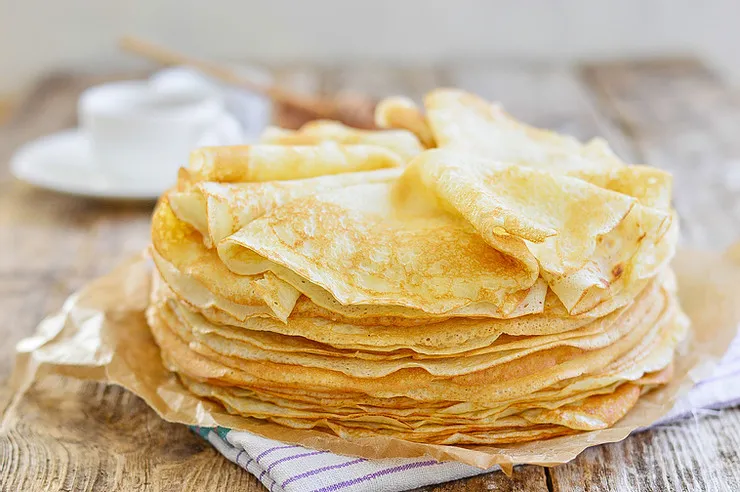
Best Crepe Makers for Home Crepes (2026)
A crepe maker is a specialized flat-surface cooking tool optimized for the thin, delicate crepe batter that would tear or fold on a standard griddle. The key specs are the cooking surface diameter (larger = bigger crepes), the method of heat (electric or stovetop), and whether the tool comes with a spreader and spatula, essential for getting thin, even crepes without tearing.
Here are the six best crepe makers available today, from stovetop pans to professional electric models.
| Crepe Maker | Best For | Diameter | Link |
|---|---|---|---|
| Health & Home 13” | Best Overall | 13 in | Amazon |
| Nordic Ware French Steel Pan | Best Stovetop Pan | Larger than standard | Amazon |
| Chefman Electric | Best Budget | 12 in | Amazon |
| Salton Cordless | Best Portable | 7.5 in dip-style | Amazon |
| Waring WSC160X | Best Commercial | 16 in | Amazon |
| Cuisinart CPP-200 | Best Multi-Function | Multiple plates | Amazon |
Top 6 Crepe Makers
#1 Health & Home 13-Inch Crepe Maker & Electric Griddle: Best Overall
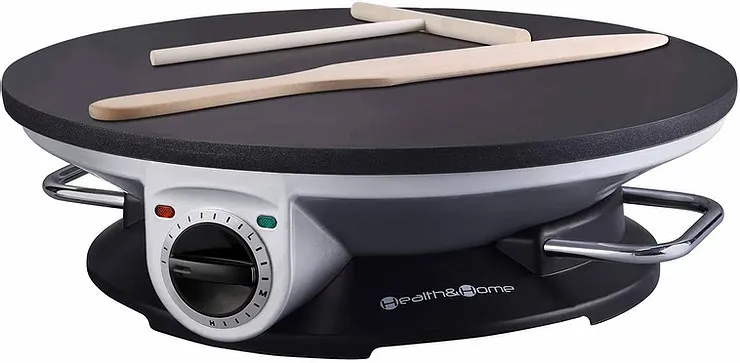
The Health & Home 13-inch is the best electric crepe maker for home use. The 1000-watt heating element and 13-inch diameter surface produce large, thin, even crepes quickly. The surface heats to consistent temperature without hot spots, crucial for delicate crepe batter that will burn in seconds if the surface is uneven. Includes a wooden spreader and spatula. The non-stick surface releases crepes cleanly. Also works as a general countertop electric griddle for pancakes and thin proteins.
Pros:
- 13-inch diameter for large restaurant-style crepes
- 1000W heats quickly and maintains consistent temperature
- Non-stick surface for clean crepe release
- Includes wooden spreader and spatula
- Doubles as a general electric griddle
Cons:
- Takes up significant counter space
- Fixed temperature control, no precise degree setting
#2 Nordic Ware Traditional French Steel Crepe Pan: Best Stovetop Pan
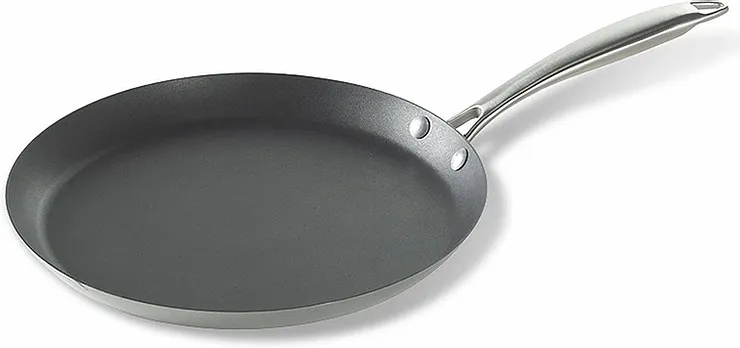
The Nordic Ware French Steel crepe pan is the traditional stovetop approach, the same style of pan used in French creperies. The aluminized steel construction heats evenly, and the sloped, low-profile edge makes it easy to slide a spatula under a crepe and flip it without tearing. The non-stick surface seasons over time (like cast iron) and improves with use. If you prefer stovetop cooking and want the authentic French crepe pan method, this is the right tool.
Pros:
- Traditional French crepe pan style, the authentic approach
- Aluminized steel heats evenly and develops seasoning over time
- Low-profile sloped edge for easy spatula access and flipping
- Non-stick surface improves with seasoning and use
- Works on gas, electric, and induction (check induction compatibility before purchasing)
Cons:
- Requires stovetop, not standalone like electric options
- Needs seasoning maintenance like any steel pan
- Learning curve to achieve consistent thin crepes on stovetop
#3 Chefman Electric Crepe Maker Griddle: Best Budget
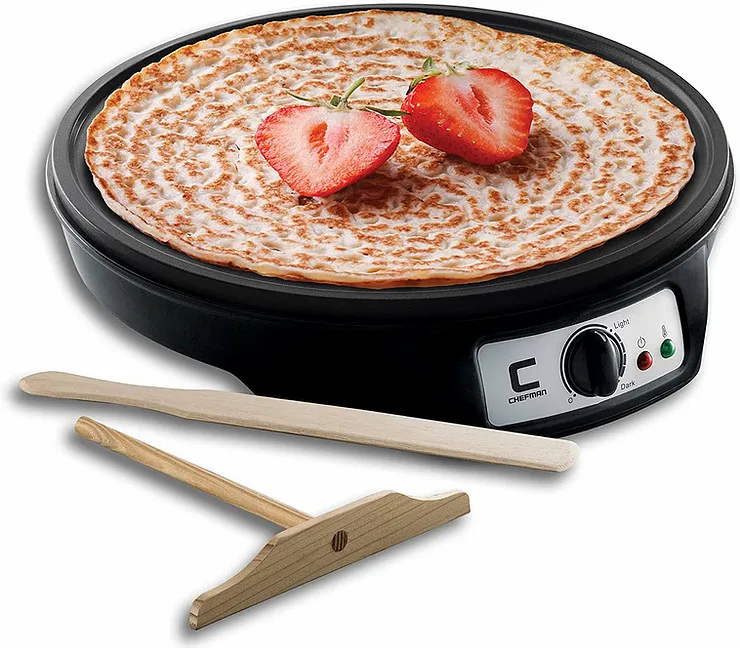
The Chefman is the most affordable standalone electric crepe maker on this list. The 12-inch non-stick surface handles full-size crepes, and the temperature control knob and indicator light make it easy to operate. Also cooks pancakes, blintzes, bacon, and eggs, versatile beyond just crepes. Comes with a 30-day guarantee and a 1-year warranty. If you want a standalone electric crepe maker without spending much, this is the reliable budget option.
Pros:
- Lower price than the Health & Home or Waring
- 12” non-stick surface for full-size crepes
- Temperature control knob with indicator light
- 30-day guarantee and 1-year warranty
- Versatile, works for pancakes, blintzes, bacon, and eggs too
Cons:
- Smaller 12” surface than the Health & Home 13” option
- 1500W heats very fast but can overshoot temperature without careful monitoring
- Temperature control is less precise than professional models
#4 Salton Cordless Electric Crepe Maker: Best Portable
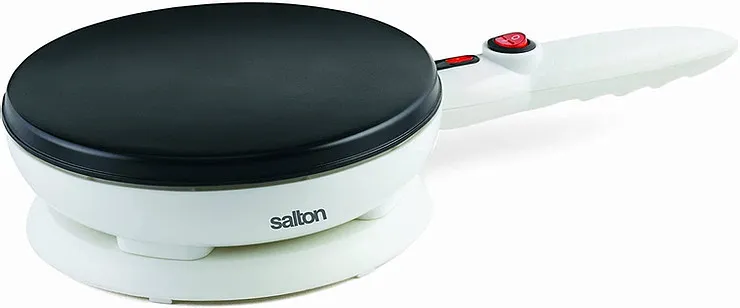
The Salton Cordless uses a dip-style approach: you heat the 7.5-inch pan, dip it face-down into a shallow bowl of batter, then flip it upright to cook. This technique eliminates the spreader step entirely and produces consistently thin crepes without the learning curve of pouring and spreading. Cordless design with a built-in cord keeper. The compact size makes it the most portable crepe maker on this list, practical for small kitchens and travel use.
Pros:
- Dip-style method eliminates spreading technique, easier for beginners
- Cordless design is compact and easy to store
- Produces consistently thin crepes without spreader skill
- Small 7.5” footprint
Cons:
- Dip-style requires a wide, shallow batter bowl (not included)
- Produces smaller crepes than the electric flat-surface options
- Not ideal if you want large restaurant-style crepes
#5 Waring Commercial WSC160X Heavy-Duty Crepe Maker: Best Commercial
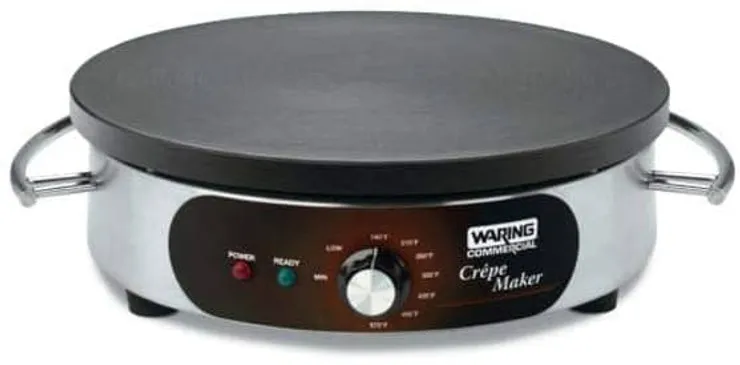
The Waring WSC160X is the professional-grade option, a 16-inch cast iron cooking surface on a heavy-duty stainless steel base, built for restaurant-level crepe volume. The cast iron surface holds heat exceptionally well and distributes it evenly across the full 16-inch diameter. This is the right choice if you want to make large quantities of crepes consistently, or if you’re running a home catering operation or a small food business.
Pros:
- 16-inch diameter, the largest cooking surface on this list
- Cast iron surface for excellent, even heat retention
- Heavy-duty stainless steel base built for high-volume use
- Commercial-grade construction that will last years of heavy use
Cons:
- Significantly higher price than home-use options
- Very heavy, not meant to be moved frequently
- Overkill for occasional home crepe making
#6 Cuisinart CPP-200 International Chef: Best Multi-Function
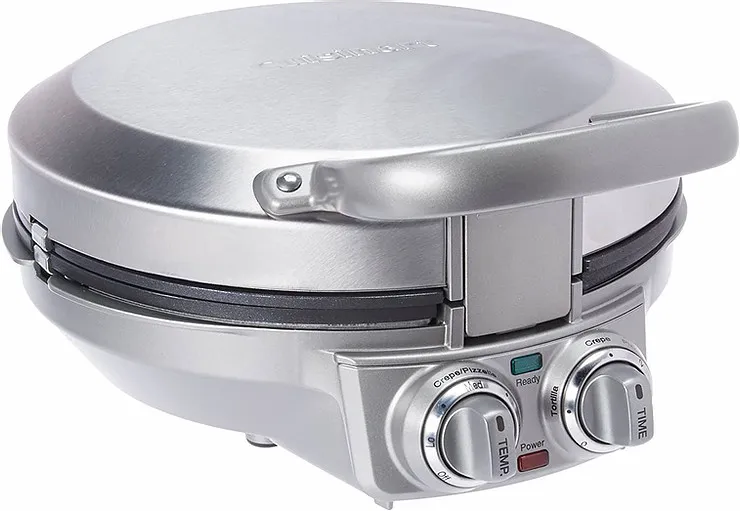
The Cuisinart CPP-200 comes with three reversible cooking plates: crepe maker, pizzelle iron, and pancake/waffle maker. One appliance covers three different baked/cooked round goods. The crepe plates work well for standard-size crepes, and the interchangeable plates turn it into a pizzelle iron or pancake maker with the flip of the plate. If you want one appliance that handles multiple specialty foods, this is the most versatile option on this list.
Pros:
- Three cooking plates: crepe, pizzelle, pancake/waffle
- One appliance covers multiple specialty cooking tasks
- Compact storage when not in use
- Good for occasional crepe-making alongside other specialty cooking
Cons:
- Crepe performance is secondary to a dedicated crepe maker
- Smaller cooking surface than the Health & Home or Waring
- Learning curve for swapping and storing multiple plates
What to Look for in a Crepe Maker
Electric vs. Stovetop
Electric crepe makers maintain a consistent, controlled temperature without adjustment, better for beginners who want consistent results. Stovetop crepe pans require stove temperature management but are more versatile (can be used on any heat source) and season over time for improved performance. For ease of use, start with an electric maker. For authenticity and long-term flexibility, stovetop pans develop into excellent tools over time.
Diameter
A 10-inch crepe is restaurant-sized. Most electric crepe makers in the 12-13 inch range produce crepes that are generously large, appropriate for main course crepes or dessert crepes that you fill and fold. A 7.5-inch dip-style crepe (Salton) is more of a personal-size crepe. The Waring at 16 inches produces the largest crepes on the market for home use.
What’s Included
A wooden or plastic spreader is essential for pouring-style electric crepe makers: you pour batter on the heated surface and spread it in a thin circle using the spreader. If your crepe maker doesn’t include one, you’ll need to buy one separately. The Health & Home and Chefman both include spreaders.
Final Thoughts
The Health & Home 13-inch is the best electric crepe maker for most home cooks. It’s large enough for restaurant-style crepes, includes the spreader and spatula, and is priced reasonably. On a budget, the Chefman delivers solid performance for less. For the easiest beginner experience, the Salton cordless dip method removes the spreading skill requirement entirely. Serious home cooks who want to produce large quantities should look at the Waring WSC160X.
Related: Blackstone Crepes Recipe · Best Electric Griddles
Frequently Asked Questions
What’s the difference between a crepe maker and a regular griddle?
Crepe makers have a low, sloped edge that allows a spatula to slide easily under a delicate crepe without tearing it. A regular griddle has higher sides that make crepe flipping harder. Crepe makers also typically have a more precisely controlled temperature zone suited to the thin batter, and many include a spreader designed for the thin, even batter layer that crepes require.
What temperature do you cook crepes at?
Between 350-375°F is the sweet spot for most crepe recipes, hot enough to cook the batter quickly into a thin, even layer before it sticks, but not so hot that the edges burn before the center sets. Electric crepe makers in the medium-high setting usually hit this range. For stovetop pans, medium heat on most gas burners is close.
Do you need a wooden spreader for making crepes?
Yes, for pour-style electric crepe makers and stovetop pans. The spreader is how you achieve the thin, even layer that defines a crepe. Without it, poured batter will pool in the center instead of spreading thin. The Salton dip-style method is the one exception that eliminates the spreader step.
Can you make savory crepes (galettes) on a home crepe maker?
Yes. Savory crepes (galettes) made with buckwheat flour use the same cooking method as sweet crepes and work on any of the crepe makers on this list. They cook the same way and are filled with cheese, ham, and eggs for French-style galettes. The cooking surface prep is the same.
How do you keep crepes from sticking to the pan?
Oil or butter the surface lightly before each crepe. Don’t skip this even with non-stick surfaces. For stovetop steel pans, the seasoning layer that builds up over multiple uses is the primary non-stick layer; new pans stick more until they’ve been used several times. Always let the surface reach full cooking temperature before adding batter. Cold or warm (not hot) surfaces cause sticking.
Best Blackstone Steak Recipes (Ribeye, Filet Mignon, Skirt, and More)
Every steak recipe on this site in one place: ribeye and strip, filet mignon, skirt steak with chimichurri, carne asada, fajitas, and steak bites, with the pull temp for each cut.
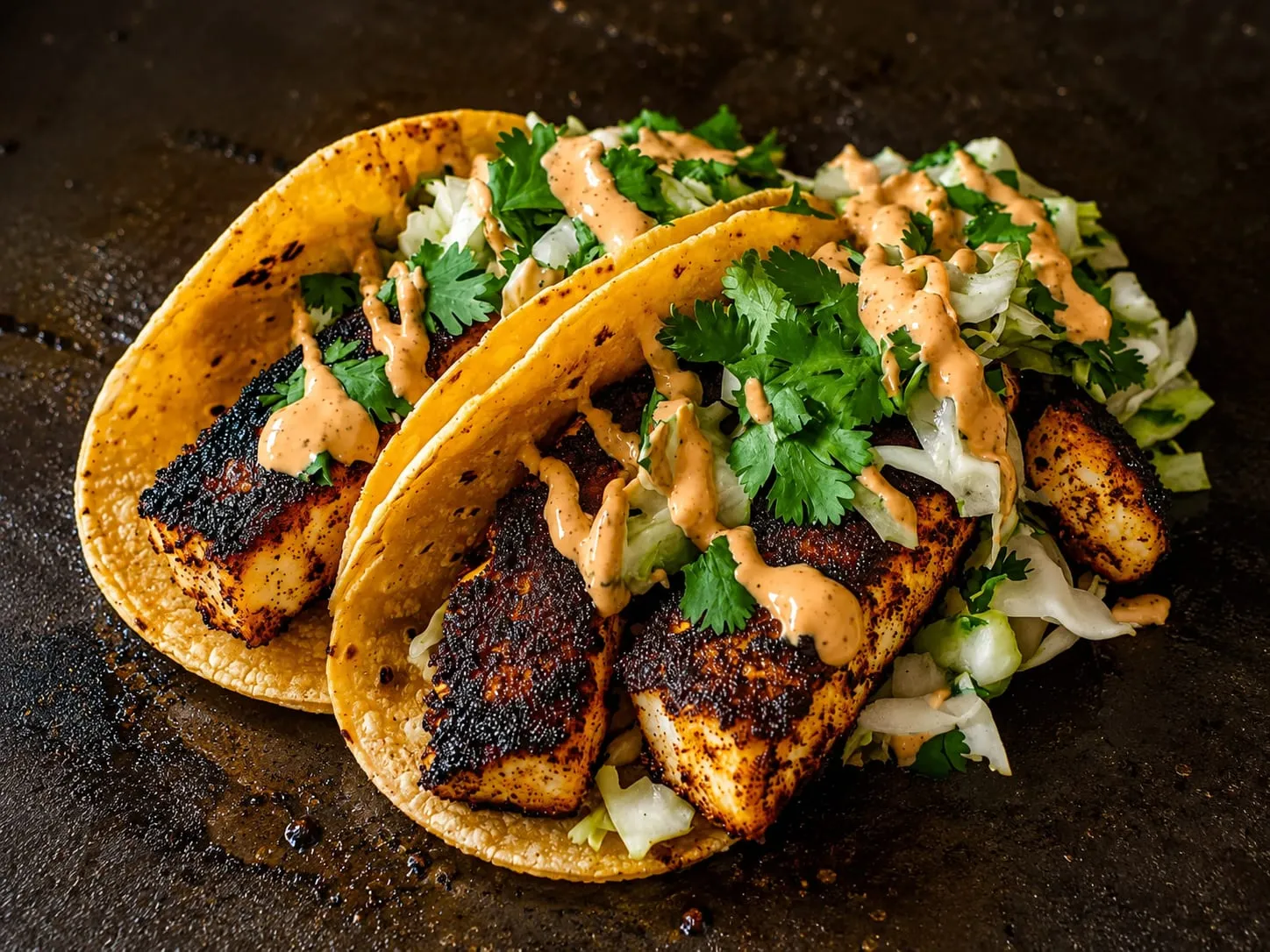
Gluten-Free Blackstone Recipes (30 Flat-Top Meals)
Gluten-free Blackstone recipes across proteins, tacos, vegetables, and sauces, plus the honest limitation of cooking gluten-free on a griddle that also cooks bread and buns.
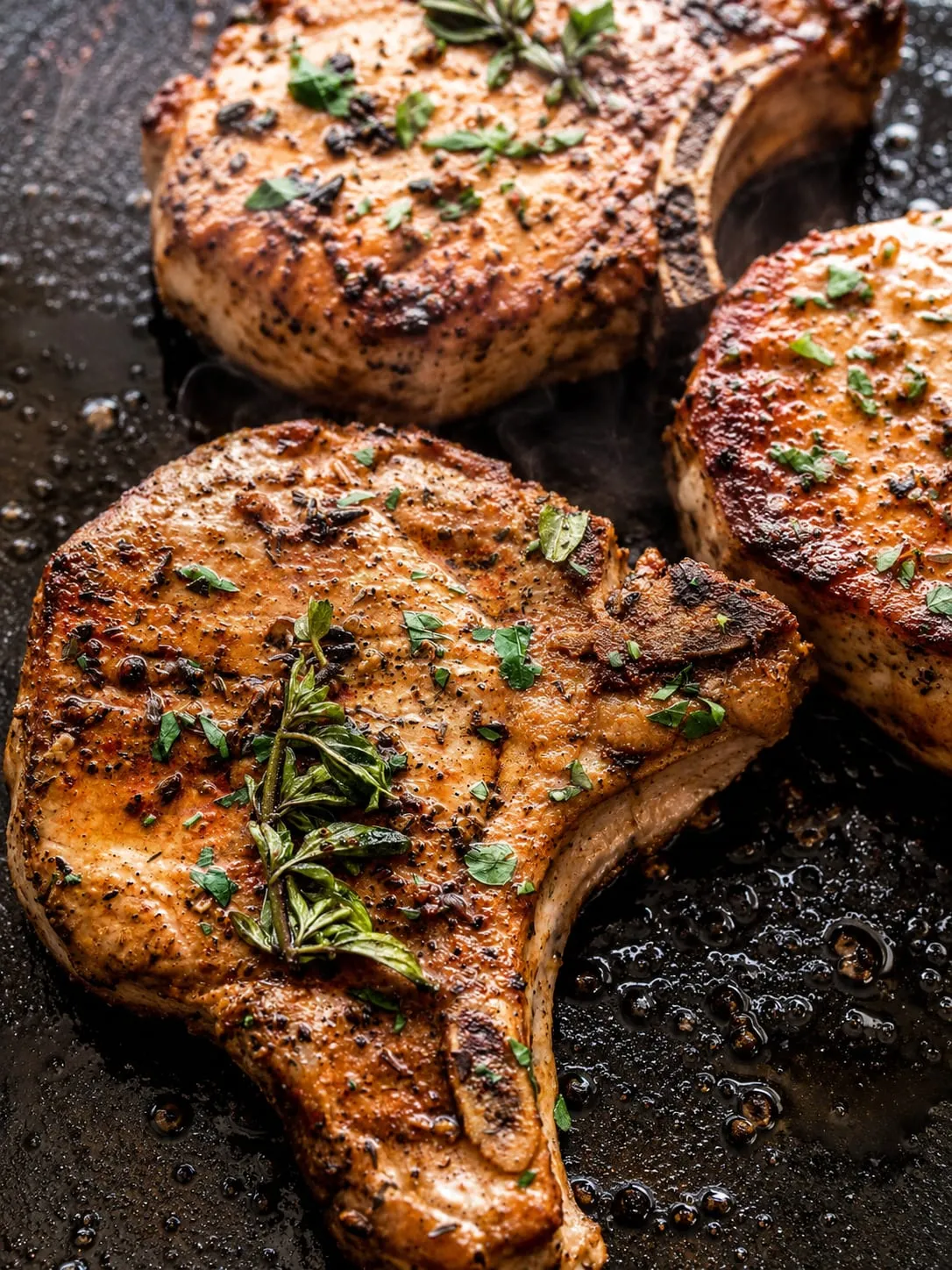
Best Blackstone Pork Recipes (Chops, Tenderloin, Brats, and More)
The best pork recipes for a Blackstone griddle: chops, tenderloin, bratwurst, and a pressed Cuban, plus the two internal temperatures that keep pork from drying out.