
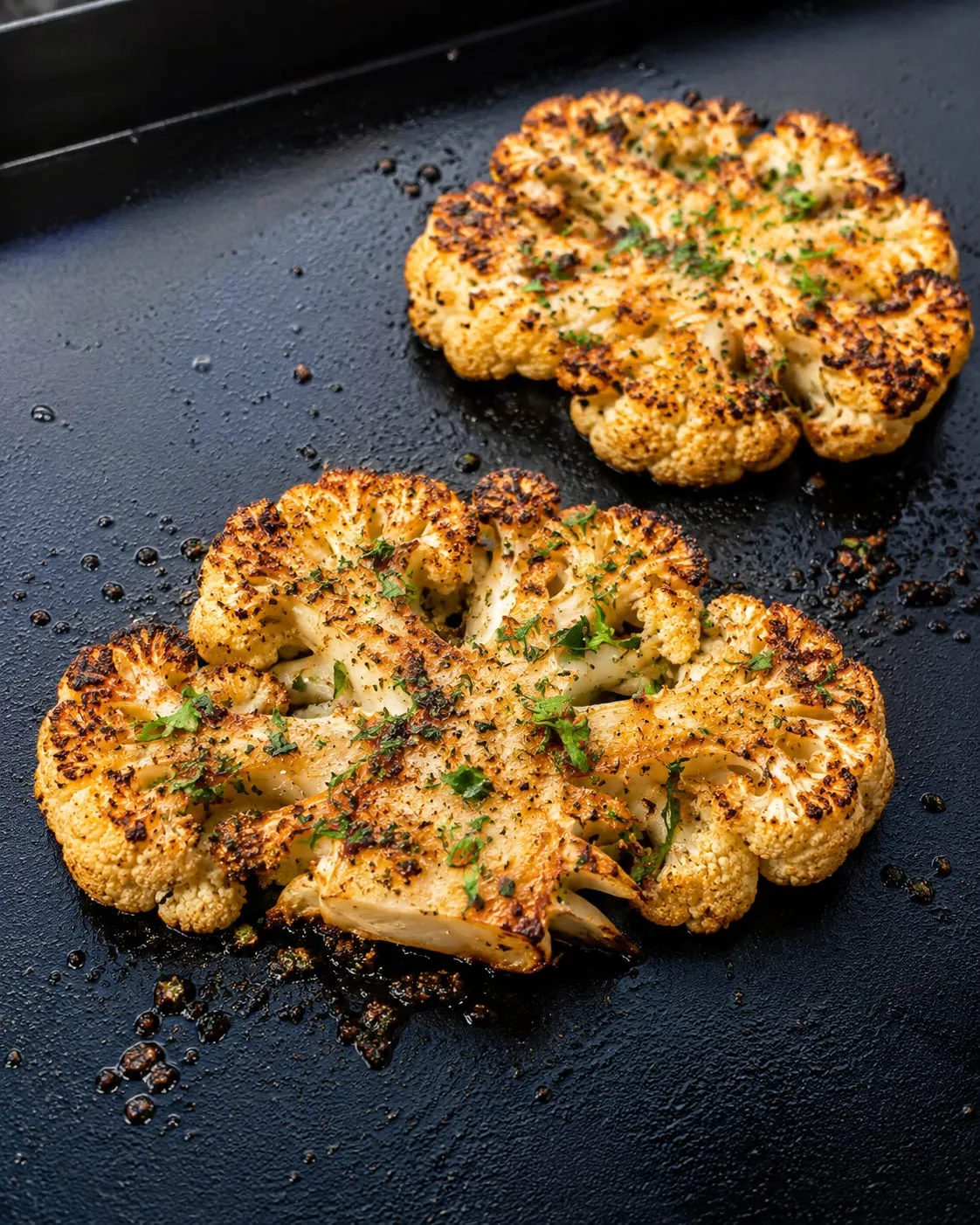
Blackstone Cauliflower: Charred Steaks and Crispy Florets
Equipment
Cauliflower on a Blackstone is one of the better vegetable moves on the flat-top. The wide steel surface gets the cut faces of the cauliflower in full contact with heat, producing a deep golden-brown crust that you can’t get from steaming or roasting. It’s naturally low-carb, takes well to bold seasoning, and is substantial enough to work as a main dish, not just a side.
Two approaches below: cauliflower steaks (thick slabs cut through the head) for a more dramatic presentation and deeper char, and florets for a quicker side dish.
Cauliflower Steaks vs. Florets
Steaks: Slice a whole head of cauliflower vertically into 1-inch slabs from stem to crown. The center slabs hold together well; the outer slabs may crumble. Save those pieces and cook them as florets alongside. Steaks get the best crust and the most visual impact. Good as a main dish or a substantial side.
Florets: Break or cut the head into individual florets, halved so each piece has a flat face. Faster to cook than steaks, easier to season evenly, and better for cooking alongside other dishes on the same griddle. Less dramatic but perfectly good.
Ingredients
- 1 large head cauliflower
- 3 tbsp avocado oil or olive oil
- 1 tsp kosher salt
- ½ tsp black pepper
- 1 tsp garlic powder
- ½ tsp smoked paprika
For the dome trick:
- 2-3 tbsp water
Instructions: Cauliflower Steaks
Step 1: Cut the Steaks
Remove outer leaves and trim the base of the stem. Stand the head upright and cut vertically through the center into 1-inch slabs. You’ll get 2-3 solid steaks from the center of the head. Cut remaining loose florets in half and set aside to cook alongside.
Step 2: Oil and Season
Brush both sides of each steak generously with oil. Season both sides with salt, pepper, garlic powder, and smoked paprika.
Step 3: Preheat to Medium-High
Set Blackstone to medium-high heat (375-400°F) and preheat 8 minutes. Check the griddle temperature guide for reference.
Step 4: Cook the First Side
Add steaks to the griddle. Cook undisturbed for 5-6 minutes until the bottom face is deeply golden-brown and caramelized. Cauliflower takes longer than most vegetables. Resist the urge to flip early.
Step 5: Flip and Steam
Flip each steak carefully with a wide spatula. Add 2-3 tbsp water to the griddle near (not under) the steaks and cover with a basting dome. The steam penetrates the dense core and finishes the interior. Steam for 90 seconds.
Step 6: Remove the Dome and Finish
Remove the dome and cook uncovered another 2-3 minutes until the second side is golden and a knife slides into the center without resistance. The steak should be tender throughout with a caramelized crust on both faces.
Instructions: Florets
Same process, shorter times: 3-4 minutes on the first side (flat-side down), dome trick for 60 seconds, then 2 minutes uncovered on the second side. Total cook time is 8-10 minutes.
Tips
- Don’t skip the dome. Cauliflower is dense. Without steam, the outside chars before the center cooks through, especially for steaks. The dome is what makes cauliflower steaks viable on the griddle without pre-cooking.
- Oil generously. Cauliflower is dryer than most vegetables and absorbs oil quickly. Under-oiled cauliflower sticks and chars unevenly. Use more than you think you need.
- Wide spatula for steaks. A thin burger spatula will cut through the steak when you flip. Use the widest spatula you have and support the steak from underneath as you turn it.
- Season boldly. Cauliflower has a mild flavor that benefits from assertive seasoning. The smoked paprika in the base recipe is important. It adds depth to what would otherwise be a neutral vegetable.
Variations
Buffalo Cauliflower
Cook florets as written. Immediately after pulling from the griddle, toss in buffalo sauce (Frank’s RedHot + melted butter, 2:1 ratio). Serve with blue cheese dressing and celery. A low-carb answer to buffalo wings.
Garlic Parmesan Cauliflower
Cook as written. Finish immediately with grated parmesan, minced fresh garlic or garlic powder, and chopped parsley. The residual heat melts the parmesan into the char.
Curry Cauliflower
Add 1 tsp curry powder and ¼ tsp turmeric to the seasoning mix before cooking. Finish with a squeeze of lime and fresh cilantro. Pairs well with yogurt for dipping.
Chimichurri Cauliflower Steak
Cook steaks as written, keeping seasoning simple (salt, pepper, oil). Spoon chimichurri over the top just before serving. The herb sauce pairs exceptionally well with the caramelized crust. Works as a standalone main dish.
Serving Suggestions
Cauliflower steaks work as a vegetarian main dish. For a complete plate, pair with:
- A side of Blackstone zucchini cooked on the same griddle
- Blackstone asparagus with lemon herb seasoning
- Serve alongside Blackstone carne asada or steak for a low-carb side that doesn’t need a separate pan
More flat-top recipes: Blackstone Side Dishes
Frequently Asked Questions
What temperature for cauliflower on a Blackstone?
Medium-high: 375-400°F. Cauliflower needs high enough heat to char and caramelize the cut faces. Lower heat produces pale, slightly steamed cauliflower without the golden crust.
How do you cook cauliflower through on a Blackstone without burning the outside?
The basting dome and a splash of water. After the first side is deeply charred (5-6 minutes for steaks, 3-4 for florets), flip, add water to the griddle, and cover with a dome. The trapped steam cooks the dense center in 60-90 seconds without over-charring the outside.
How long do cauliflower steaks take on a Blackstone?
5-6 minutes on the first side, 90 seconds under the dome, then 2-3 minutes uncovered on the second side, until a knife slides into the center without resistance. Florets take 8-10 minutes.
Is cauliflower good on a Blackstone for keto or low-carb?
Yes. Cauliflower has about 5g of carbs per cup and is one of the most versatile low-carb vegetables. Cooked on a Blackstone with oil, salt, and garlic, it fits comfortably in keto and low-carb eating and is more satisfying than most vegetable sides.
Can you make cauliflower steaks without them falling apart?
Cut through the center of the head in 1-inch vertical slabs. The stem connects the florets and holds the steak together. The outer cuts will crumble; cook those as florets. Handle steaks with a wide spatula and flip confidently rather than hesitating mid-flip, which causes breaks.
What temperature do you cook cauliflower on a Blackstone griddle?
Cook cauliflower at 375-400°F (medium-high heat). At that temperature the cut faces caramelize in 5-6 minutes for steaks and 3-4 minutes for florets, which is where the nutty, roasted flavor comes from.
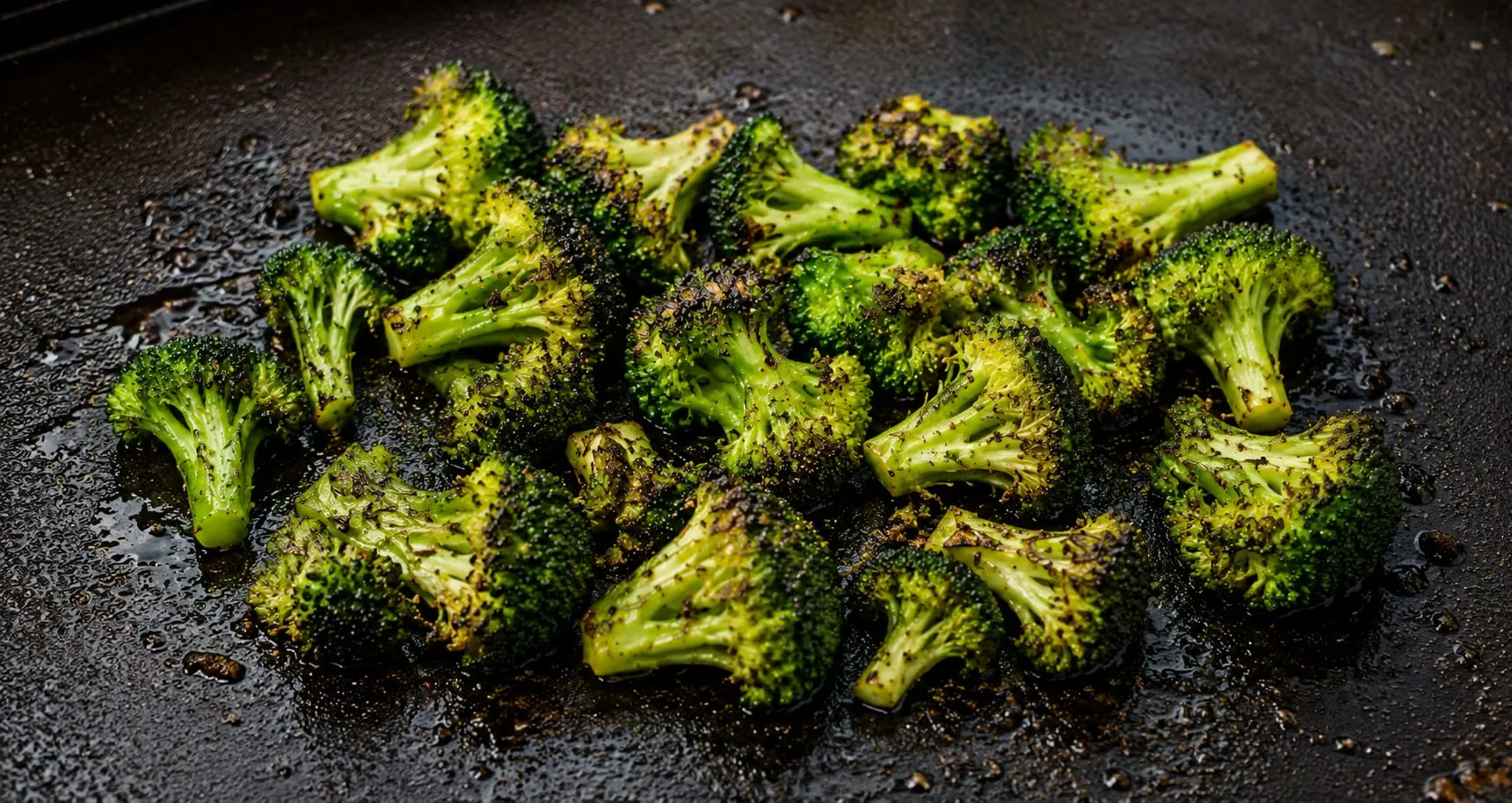
Blackstone Broccoli: Charred Florets, Tender Center
How to cook broccoli on a Blackstone griddle: high heat, the dome trick, and four seasoning variations. A 10-minute side that goes with anything.
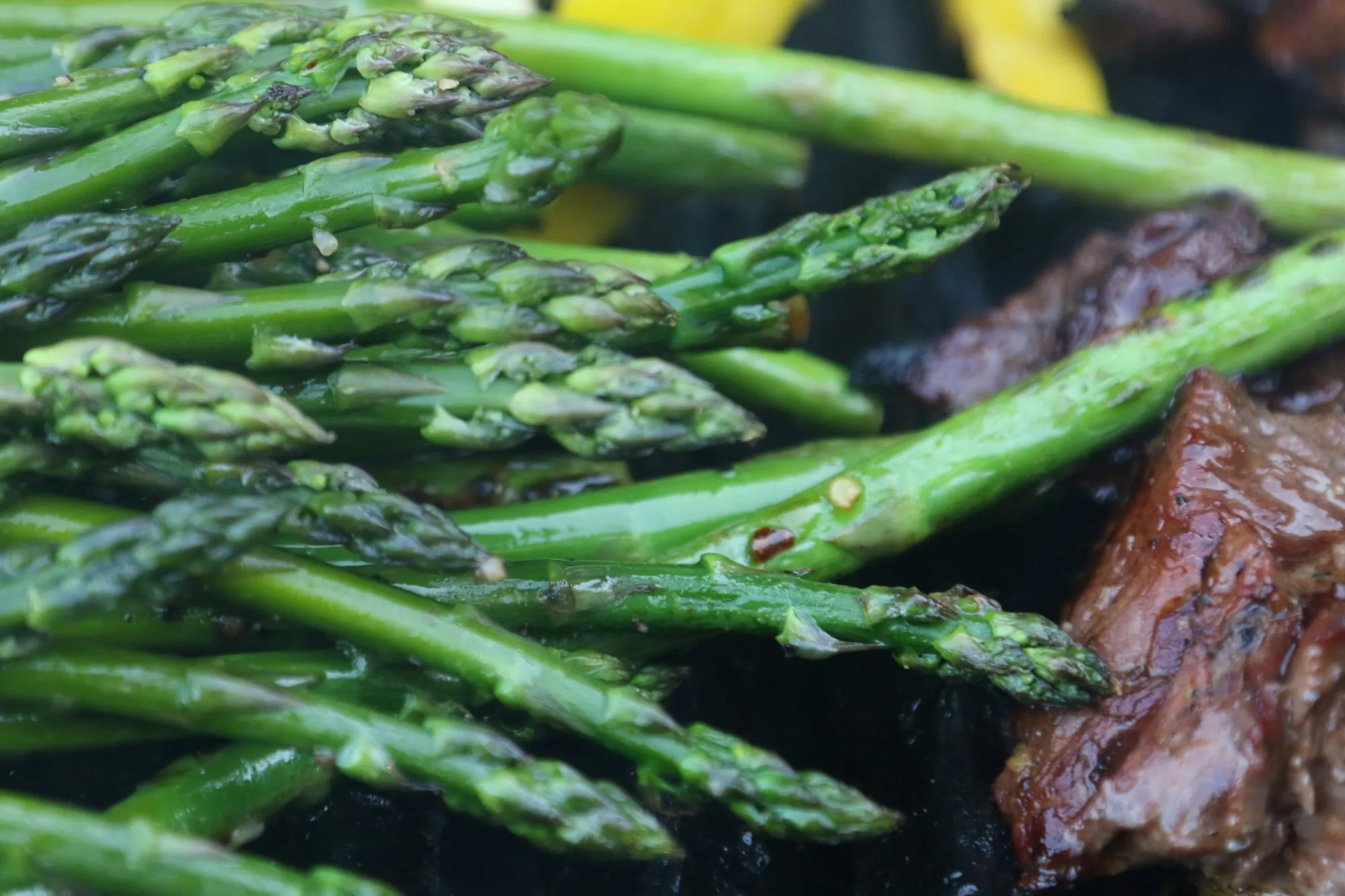
Asparagus on Blackstone: Charred, Tender, Done in 8 Minutes
How to cook asparagus on a Blackstone: temperature, timing by thickness, and three variations: garlic butter, lemon parmesan, and bacon-wrapped.
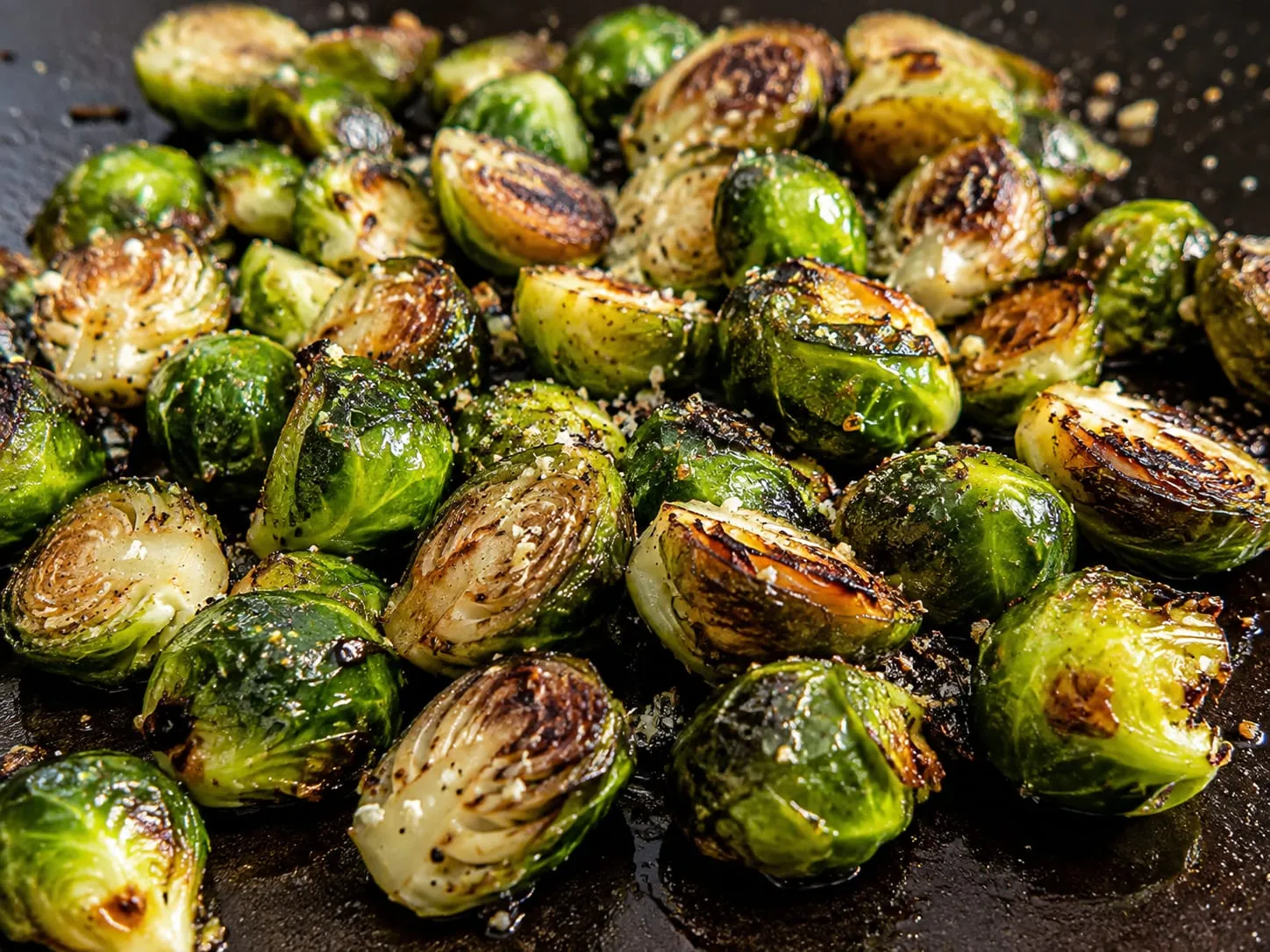
Brussels Sprouts on Blackstone: Smashed and Caramelized
How to cook Brussels sprouts on a Blackstone griddle: halved and cut-side seared until deeply caramelized, with balsamic, bacon, and garlic parmesan variations.