
Best Blackstone Steak Recipes (Ribeye, Filet Mignon, Skirt, and More)
A flat top handles steak differently depending on which cut is on it, and treating every cut the same way is the most common mistake people bring to a griddle. Marbled cuts want dry high heat straight through. Lean cuts want a gentler finish. Thin cuts want maximum heat and no patience at all.
Here’s every steak recipe on this site, organized by cut, with the technique and pull temp for each.
Same Griddle, Different Technique Per Cut
| Cut | Pull temp (medium-rare) | Technique |
|---|---|---|
| Ribeye & NY Strip | 125°F | High heat straight through, marbling self-bastes, finished with a butter baste after the flip |
| Filet Mignon | 125°F | Hard sear, then reduced heat for an extended butter baste, or a reverse sear for filets over 1.75” |
| Skirt Steak | 125-130°F | Maximum heat, no basting, done in about 6 minutes, always sliced against the grain |
| Carne Asada | 125°F | Citrus-marinated skirt or flank, same fast high-heat sear as plain skirt steak |
| Steak Fajitas | 130°F | Skirt or flank on one zone, peppers and onions caramelizing on an adjacent cooler zone |
| Steak Bites | 125-130°F | Cubed and seared in a single layer so multiple sides get contact, tossed rather than flipped |
| Tri-Tip | 130°F | Reverse-seared on two zones, low heat first then a hard sear, sliced in two directions to follow the grain change |
The pattern: the more fat a cut carries, the more heat and time it can absorb before it dries out. The leaner or thinner the cut, the less margin there is, which is why filet gets a gentler finish and skirt gets none at all.
The Classic Sear
1. Ribeye & New York Strip
The standard Blackstone steak: very high heat (450-500°F), no moving the steak until the crust releases on its own, then a butter baste with garlic and thyme after the flip. Ribeye’s marbling makes it the most forgiving cut on the griddle and the one most people should start with; strip is leaner but still full of flavor.
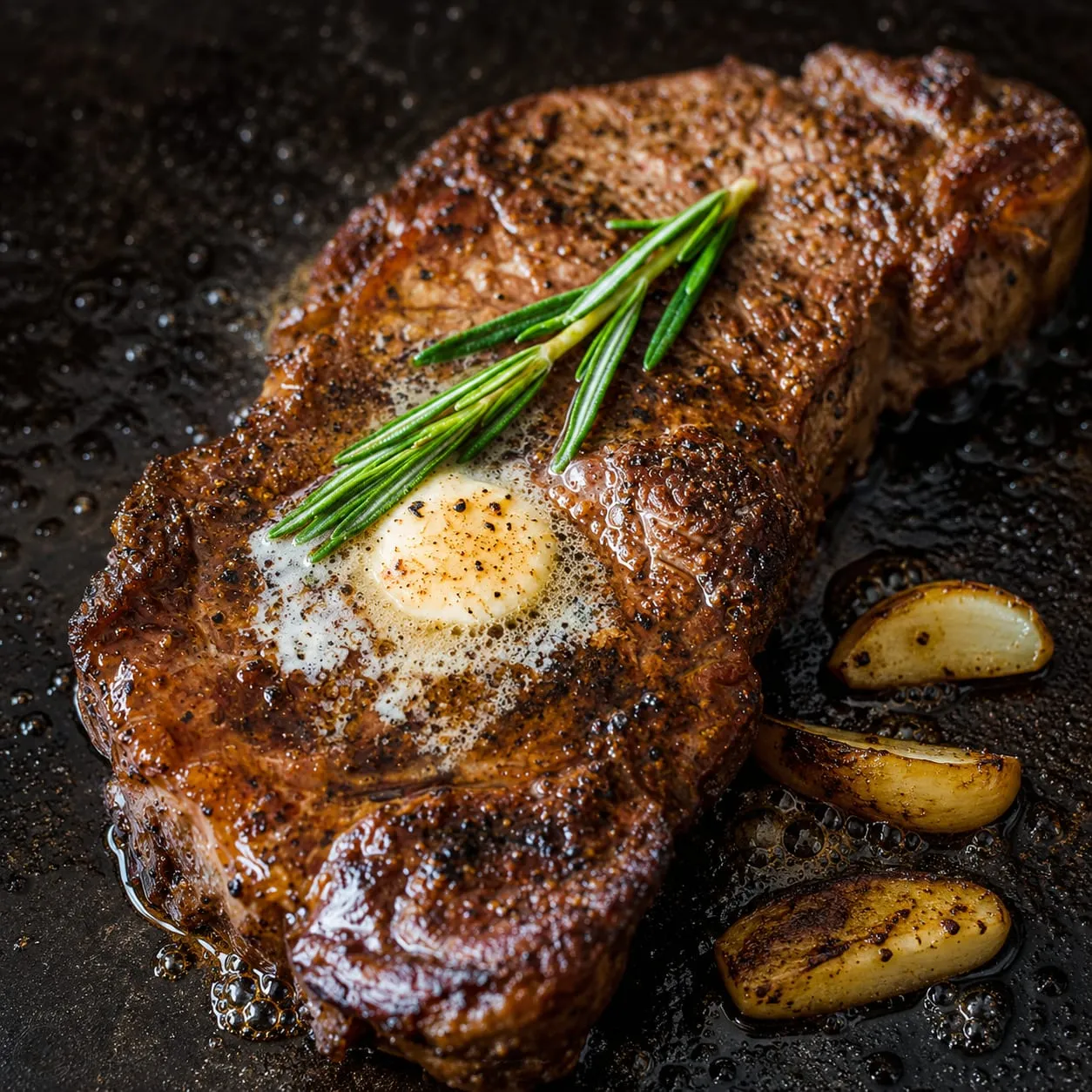
Full ribeye and strip steak recipe →
2. Filet Mignon
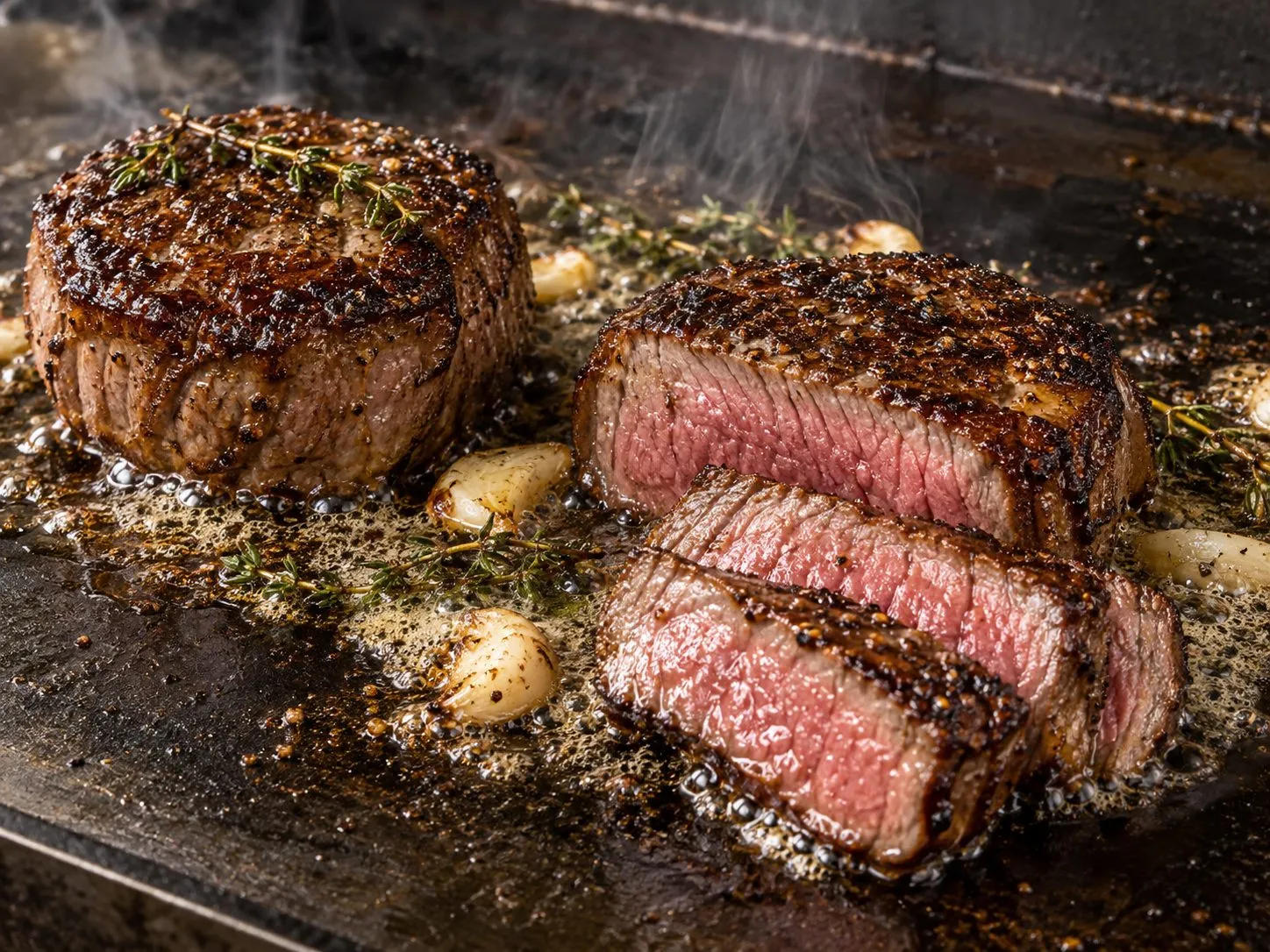
The most tender cut and the most easily overcooked one. A hard sear followed by a reduced-heat garlic-herb butter baste brings a thick, lean filet to temperature without drying it out. For filets over 1.75 inches, a reverse-sear method (a slow oven stage, then a fast finish on the griddle) works better than the baste alone.
Thin-Cut and Fast
3. Skirt Steak with Chimichurri
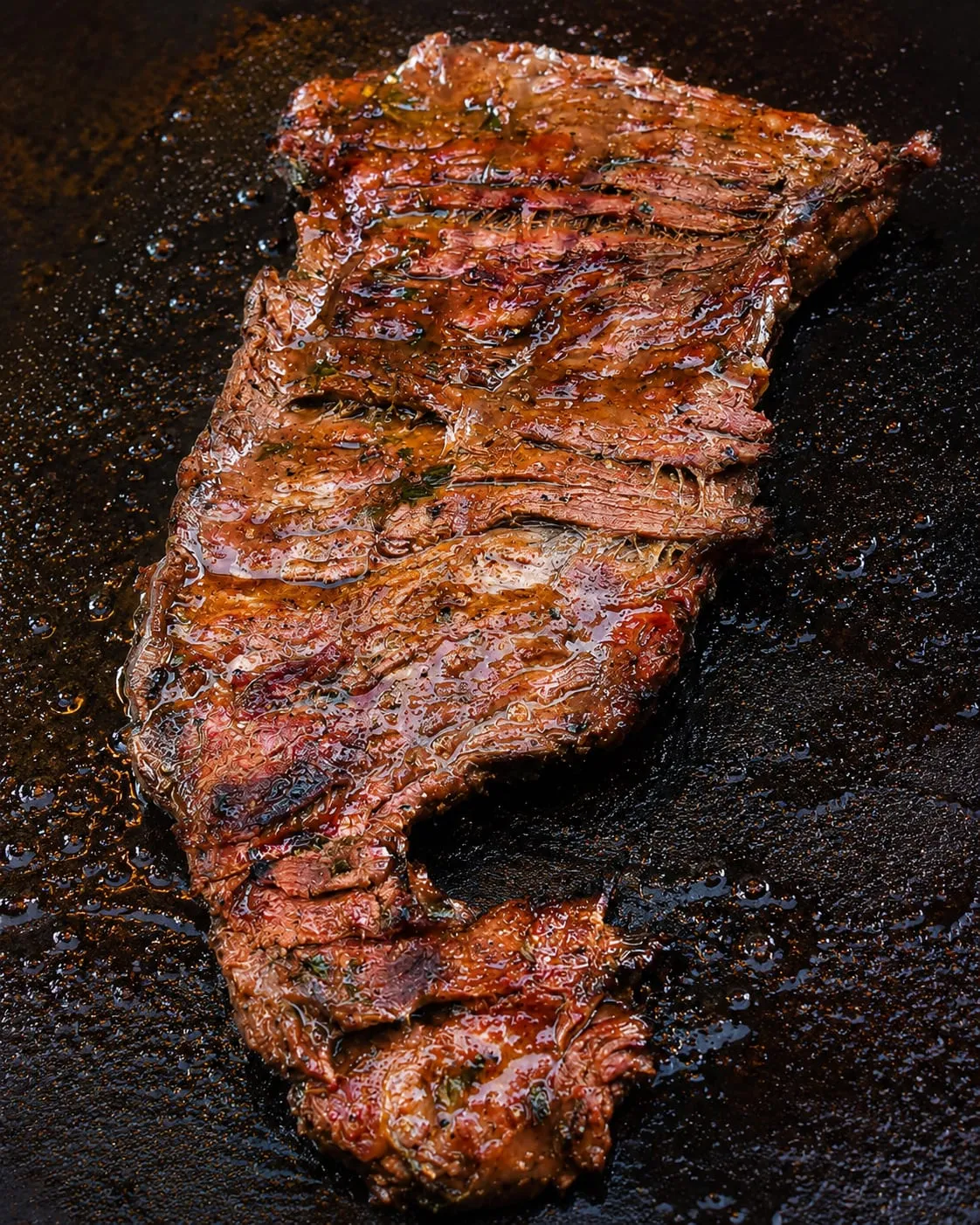
Thin, intensely flavored, and done in about 6 minutes at maximum heat: no butter basting, no thermometer babysitting, just a hard sear and a slice against the grain. Served with an Argentine herb sauce rested 2 hours for the flavor to deepen.
Full skirt steak with chimichurri recipe →
4. Carne Asada
Citrus-marinated skirt or flank steak, seared hot and fast, then sliced thin against the grain. Built for tortillas, rice, or burritos rather than eaten as a standalone plate.
5. Steak Fajitas
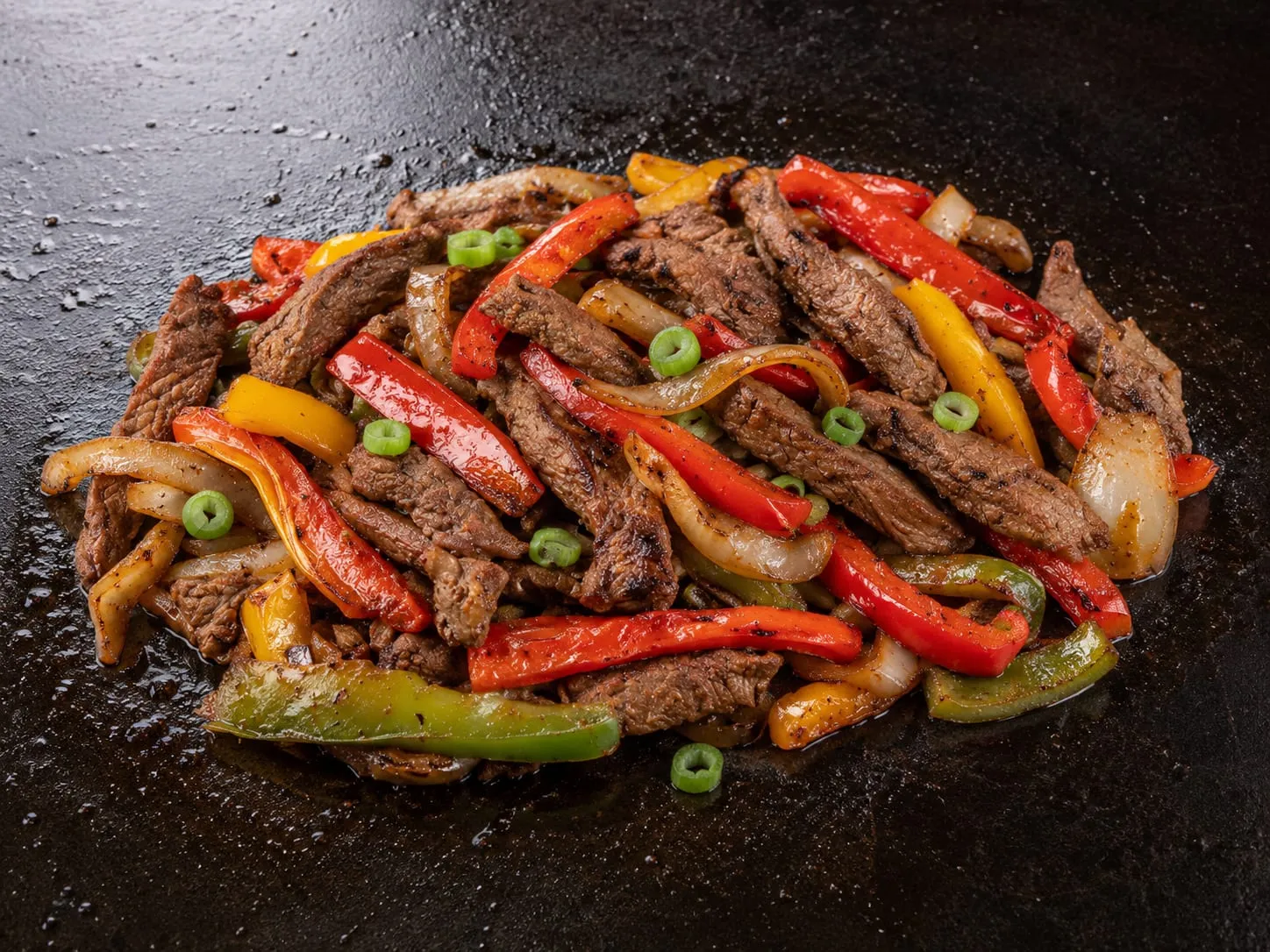
Skirt or flank steak on one high-heat zone while peppers and onions caramelize on an adjacent cooler zone, both finishing at the same time instead of one waiting on the other.
Cubed
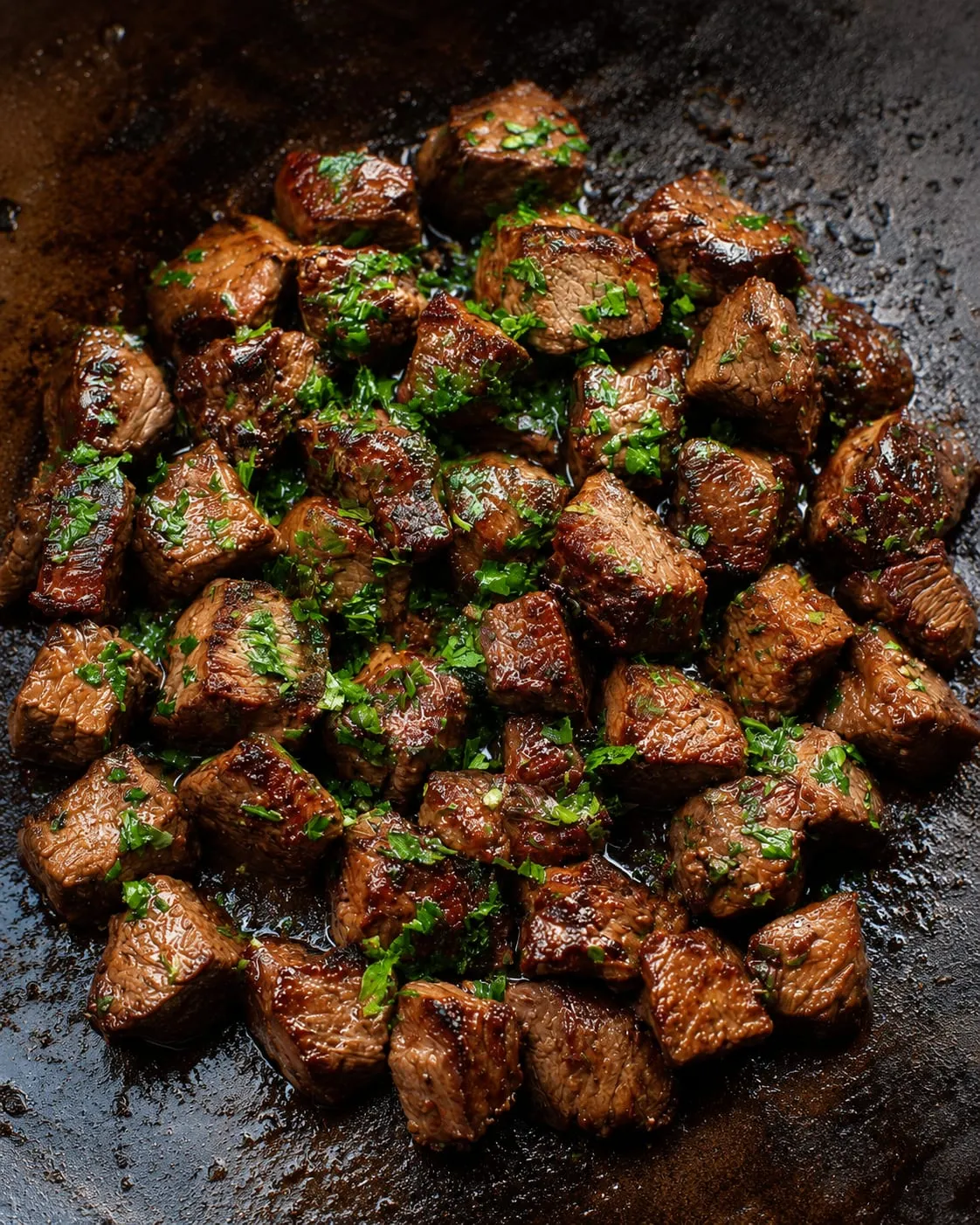
6. Garlic Butter Steak Bites
Bite-sized sirloin cubes seared in a single layer so multiple sides get real steel contact, tossed in butter and garlic for the final 90 seconds. Eight minutes start to finish, and the wide surface sears a full batch without crowding.
Whole Roast
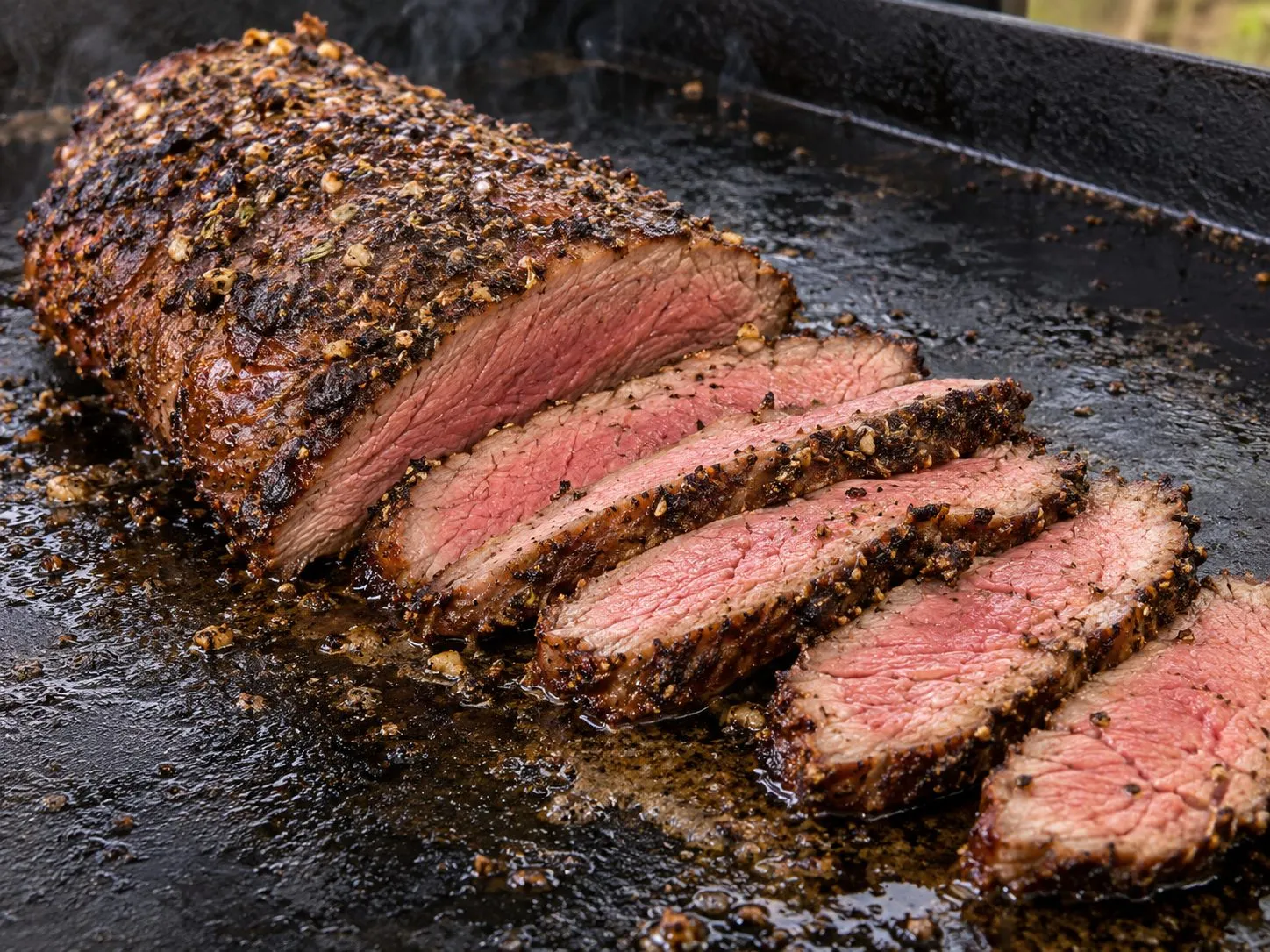
7. Tri-Tip
A small roast, not a steak, and the only cut here with two different grain directions in one piece of meat. Reverse-seared on two zones (a slow stage to bring the whole roast up to temperature, then a hard sear for crust), and sliced in two directions to follow the grain change through the middle.
More flat-top recipes: Blackstone Dinner Ideas · Blackstone Mexican Recipes · Must-Have Accessories
Frequently Asked Questions
What’s the best cut of steak for a Blackstone griddle?
Ribeye is the most forgiving and most popular pick because its marbling bastes itself as it renders. Filet mignon is the most tender if you don’t mind a leaner, milder steak. Skirt steak cooks fastest and is the right pick for tacos or a quick weeknight dinner.
What temperature should steak be pulled at for medium-rare on a Blackstone?
Between 125°F and 130°F internal, depending on the cut. Whole steaks like ribeye, strip, and filet pull at 125°F. Thinner cuts like skirt steak and carne asada run closer to 125-130°F since they carry over less during the rest. Every cut climbs another 5°F or so off the heat.
Do all steak cuts get butter basted?
No. Ribeye, strip, and filet get a butter baste because their cook time is long enough for it to matter. Thin cuts like skirt steak sear too fast for a baste to do anything, salt, pepper, and a hard sear is the whole technique there.
What’s the difference between steak bites and a whole steak on a Blackstone?
Steak bites are cubed before cooking, so they sear on multiple sides in the same few minutes a whole steak sears on one side. They’re tossed rather than flipped, and pulled at the same 125-130°F medium-rare target as a whole cut.
Can you cook multiple cuts of steak on a Blackstone at once?
Yes, that’s one of the flat top’s real advantages over a grill. Use separate heat zones: high heat for a hard sear on one zone, a cooler zone for anything that needs to hold or finish slower, like fajita vegetables cooking alongside the steak.
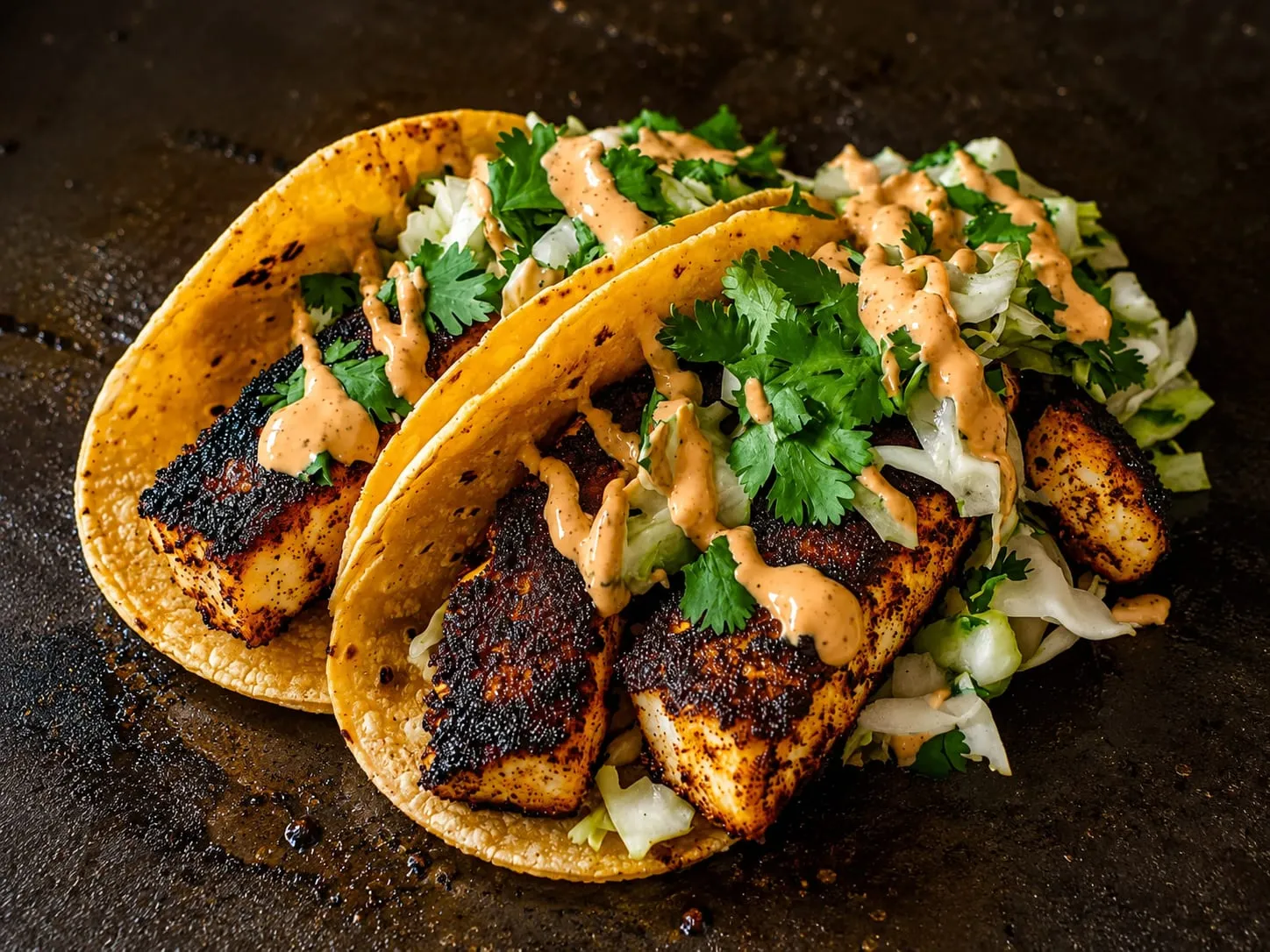
Gluten-Free Blackstone Recipes (30 Flat-Top Meals)
Gluten-free Blackstone recipes across proteins, tacos, vegetables, and sauces, plus the honest limitation of cooking gluten-free on a griddle that also cooks bread and buns.
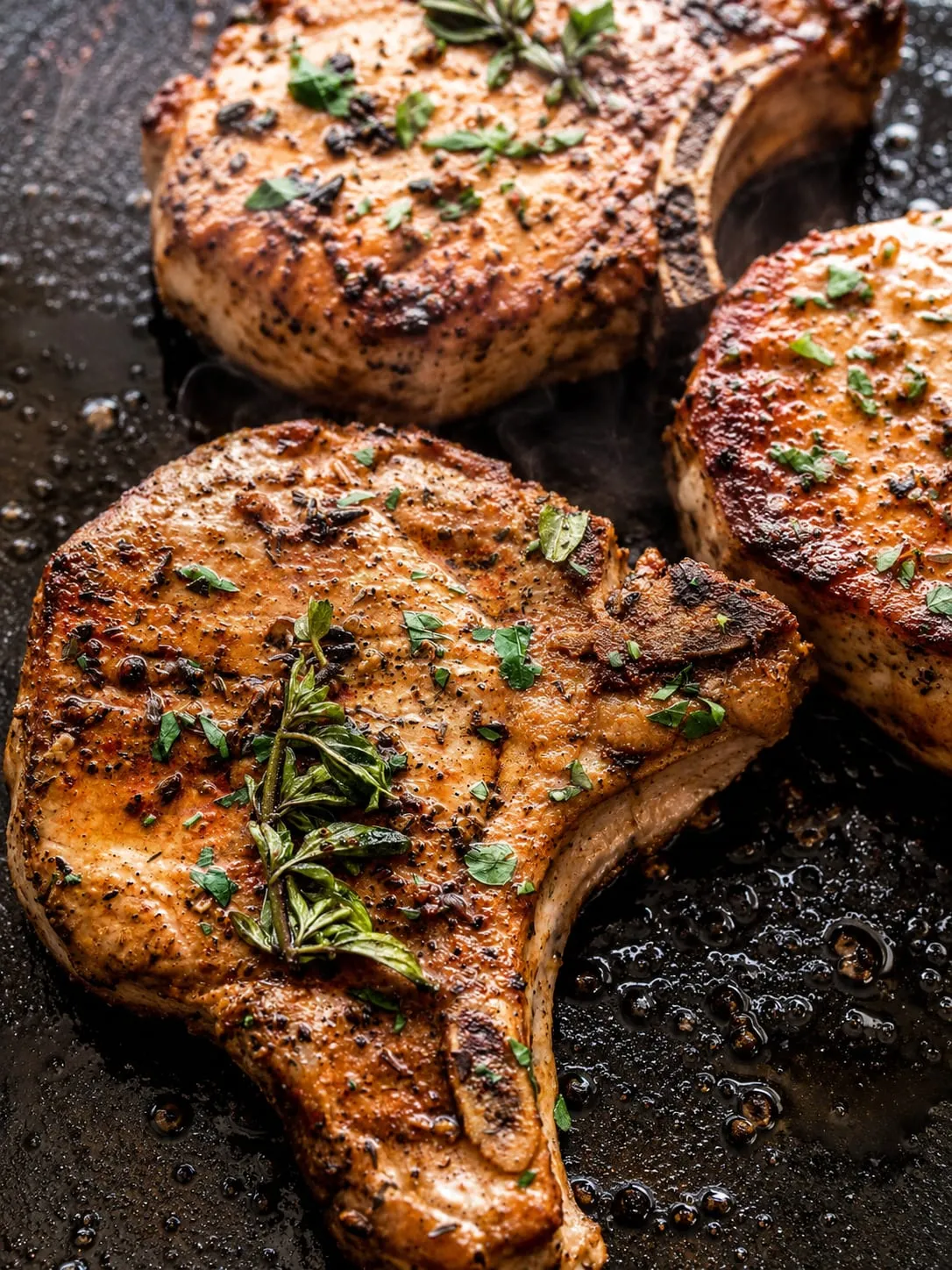
Best Blackstone Pork Recipes (Chops, Tenderloin, Brats, and More)
The best pork recipes for a Blackstone griddle: chops, tenderloin, bratwurst, and a pressed Cuban, plus the two internal temperatures that keep pork from drying out.
Keto Blackstone Recipes (15 Low-Carb Flat-Top Meals)
Keto Blackstone recipes with carb counts per serving: steak bites, chicken thighs, shrimp, and charred vegetables, plus the sauces that quietly break a low-carb cook.