
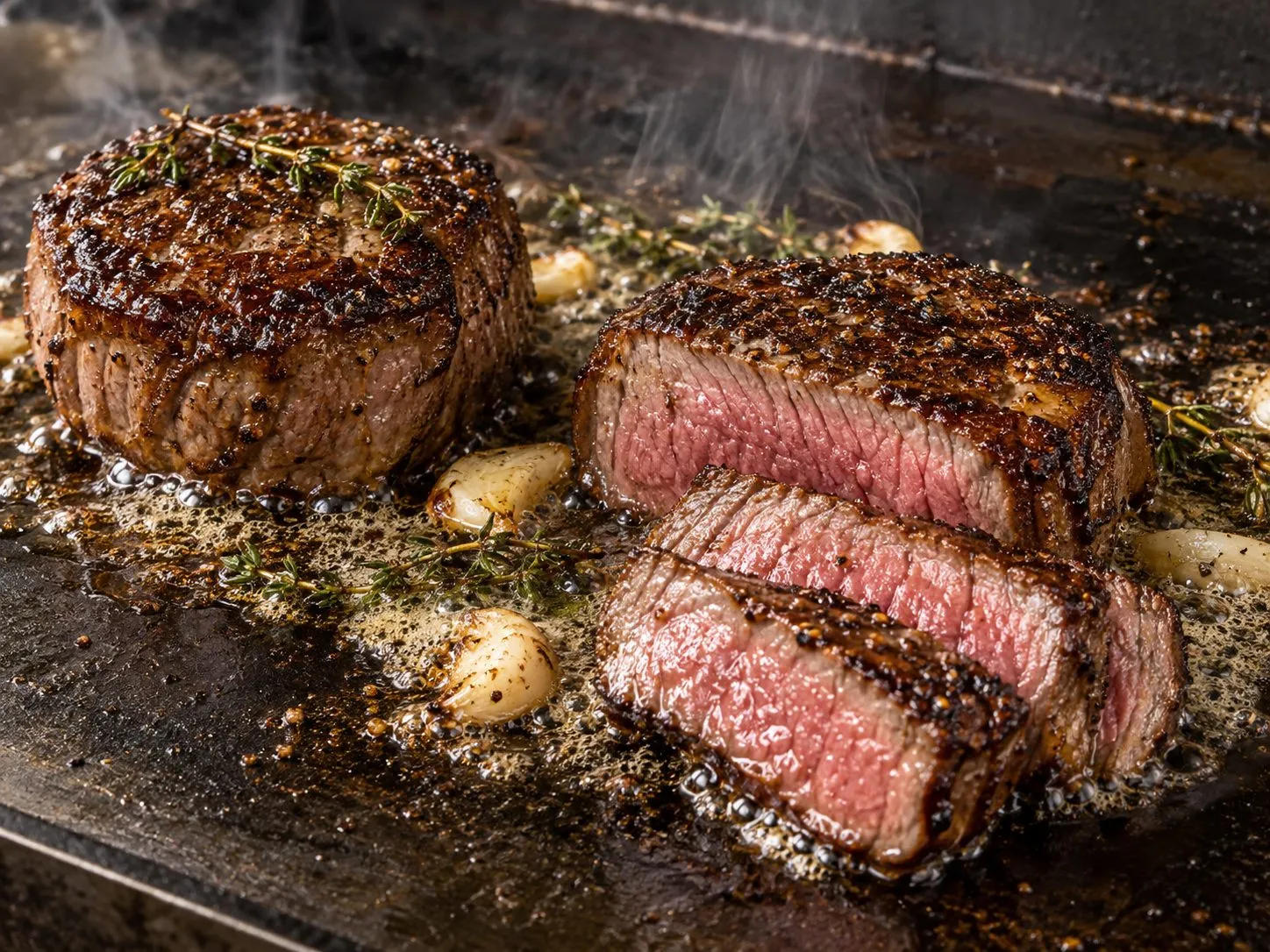
Blackstone Filet Mignon
Filet mignon doesn’t cook like a ribeye or a strip. It’s lean and thick with almost none of the intramuscular fat that lets a fattier cut sit over high heat without drying out, so it needs a gentler build: sear the outside hard and fast, then let butter, garlic, and thyme do the rest of the work while the inside comes up to temperature.
Ingredients
- 4 filet mignon steaks (6-8 oz each, 1.5-2 inches thick), room temperature
- 2 tbsp avocado oil
- Kosher salt and coarse black pepper
- 4 tbsp butter, divided
- 4 cloves garlic, smashed
- 4 sprigs fresh thyme
- 2 sprigs fresh rosemary
Instructions
Step 1: Season and rest Pat the filets dry and season generously with salt and pepper on all sides, including the edges. Let them sit at room temperature 20-30 minutes before cooking so the center isn’t starting cold.
Step 2: Preheat Set the Blackstone to high (450°F) and preheat 10 minutes. Add the avocado oil to a zone in the center of the griddle.
Step 3: Sear Place the filets in the oil and sear undisturbed 2-3 minutes per side until a deep brown crust forms. Don’t move them before the crust releases on its own, a filet that’s ready to flip comes off the steel without resistance.
Step 4: Butter baste Reduce that zone to medium (350°F). Add the butter, garlic, thyme, and rosemary next to the steaks. Once the butter melts and starts to foam, tilt a spoon into the pool and continuously spoon it over the filets for 2-3 minutes, until they reach 125°F internal for medium-rare.
Step 5: Rest Move the filets to a plate and tent loosely with foil. Rest 5 minutes before serving, this is not optional on a cut this thick, the internal temperature climbs another 5-8°F during the rest and the juices redistribute instead of running out onto the plate.
Step 6: Serve Spoon any remaining garlic butter from the griddle over the top and serve.
Why Filet Mignon Needs a Different Approach Than Ribeye
The steak recipe on this site is built around ribeye and strip, cuts with enough fat marbling to sear hard at very high heat without drying out. Filet is a different animal:
It’s leaner, so it’s less forgiving. Ribeye’s fat cap and marbling insulate it slightly and add moisture back in as it renders. Filet has almost none of that, push it too far and it dries out fast with nothing to fall back on.
The butter baste isn’t optional flavor, it’s structural. A ribeye tastes great with just salt, pepper, and a hard sear. Filet is mild on its own; the garlic-herb butter is doing real flavor work that the meat itself doesn’t provide.
Thickness changes the technique. A 1.5-2 inch filet is thicker than most ribeye cuts on this site’s recipes. A hard sear alone would burn the outside before the center comes up to temperature, the reduced-heat baste stage after the initial sear is what gets it there gently.
Tips
Let it come to room temperature first. A cold filet straight from the fridge cooks unevenly, seared outside, cold center. Twenty to thirty minutes on the counter closes that gap.
Use a thermometer, not a timer. Filet’s thickness varies steak to steak, and it’s an expensive cut to guess wrong on. Pull at 125°F for medium-rare, 130-135°F for medium.
Don’t skip the rest. Cutting into it immediately loses juice that would otherwise redistribute through the meat in five minutes.
Tie thin filets if needed. If your butcher didn’t already, a single loop of kitchen twine around the middle keeps an unevenly cut filet from cooking lopsided.
For Extra-Thick Filets, Reverse Sear Instead
A filet over 1.75 inches thick pushes past what a straight sear-then-baste can handle evenly, the outside is done well before a 2-inch center catches up. Reverse searing flips the order and solves it:
Preheat your oven to 275°F. Season the filets and place them on a wire rack over a baking sheet. Cook until they hit 100-105°F internal, about 25-35 minutes depending on thickness, checking with a thermometer rather than guessing by time. Pull them out and let the surface air-dry for 5 minutes, this matters, a dry surface is what lets the griddle sear build a crust instead of steaming.
Preheat the Blackstone to high (450-500°F) and sear each filet 60-90 seconds per side, just enough to build color and push the center to your target temperature. Skip the extended butter-baste stage here, the oven already did the gentle work, this final sear is fast and hard. Rest 5 minutes and serve.
This is the opposite instinct from a thinner filet, which needs the low-and-slow stage built into the baste itself. A thick filet needs that stage separated out and done first, in the oven, so the griddle’s job shrinks down to just building the crust.
Compound Butter Variation
For a make-ahead version, skip the live butter baste and top the rested filets with a compound butter disc instead. Mash 4 tbsp softened butter with 1 clove minced garlic, 1 tsp chopped fresh thyme, and a pinch of salt. Roll into a log in plastic wrap and chill until firm, at least 30 minutes. Slice into coins and set one on top of each filet right after it comes off the rest.
The butter melts slowly into the meat as it sits rather than cooking into it on the griddle, a different flavor delivery than the live baste: less immediate richness on the crust, more butter that pools on the plate as you cut in. It’s also the more practical option for serving a crowd, since the butter can be made a day ahead and the filets don’t need the griddle-side basting attention.
What to Serve With It
Blackstone baked potatoes or Blackstone asparagus round this out as a steakhouse-style dinner without needing a second pan, both cook on the same griddle while the filets rest.
Storage
Refrigerate leftovers in an airtight container up to 3 days. Reheat gently in a low oven (275°F) until just warmed through, high heat will push an already-cooked filet past medium fast.
More flat-top recipes: Best Blackstone Steak Recipes · Blackstone Steak · Blackstone Steak Bites
Frequently Asked Questions
What temperature should filet mignon be cooked to?
125°F internal for medium-rare, 130-135°F for medium. Pull it 5°F before your target since it will continue rising during the rest. Filet has little fat to fall back on, so overshooting dries it out more noticeably than it would a fattier cut.
Why baste filet mignon in butter instead of just searing it?
Filet is lean and mild-flavored on its own. The butter, garlic, and herb baste adds moisture and flavor that a hard sear alone doesn’t provide, and the reduced heat during basting lets a thick cut come up to temperature without burning the crust.
How long should filet mignon rest before cutting?
Five minutes minimum, tented loosely with foil. The internal temperature keeps climbing 5-8°F during the rest, and cutting in early lets juices run out onto the plate instead of staying in the meat.
Should you reverse sear a thick filet mignon?
For anything over 1.75 inches thick, yes. A straight sear-then-baste can overcook the outside before a very thick center catches up. Reverse searing (a slow 275°F oven to 100-105°F internal, then a fast 60-90 second sear per side) separates the gentle warming stage from the crust-building stage instead of trying to do both at once.
What’s the difference between filet mignon and ribeye on a Blackstone?
Ribeye has heavy marbling that lets it sear hard at very high heat without drying out, so it works with a simpler salt-and-pepper approach. Filet is leaner and needs the gentler butter-baste stage after searing to come up to temperature without losing moisture.
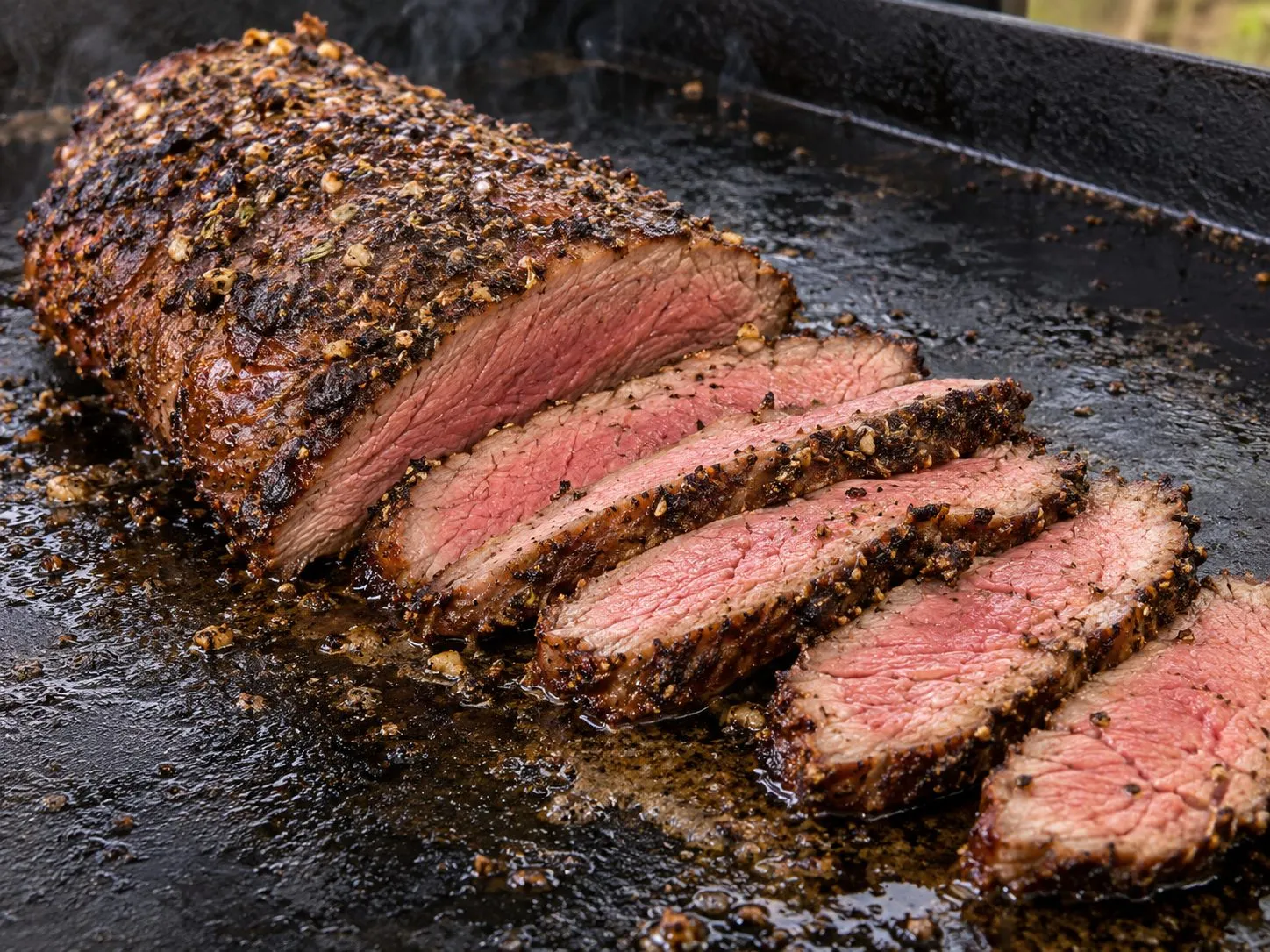
Blackstone Tri-Tip
Tri-tip on a Blackstone griddle: reverse-seared on two zones with a Santa Maria rub, then sliced against the grain on both sides of the cut's natural direction change.
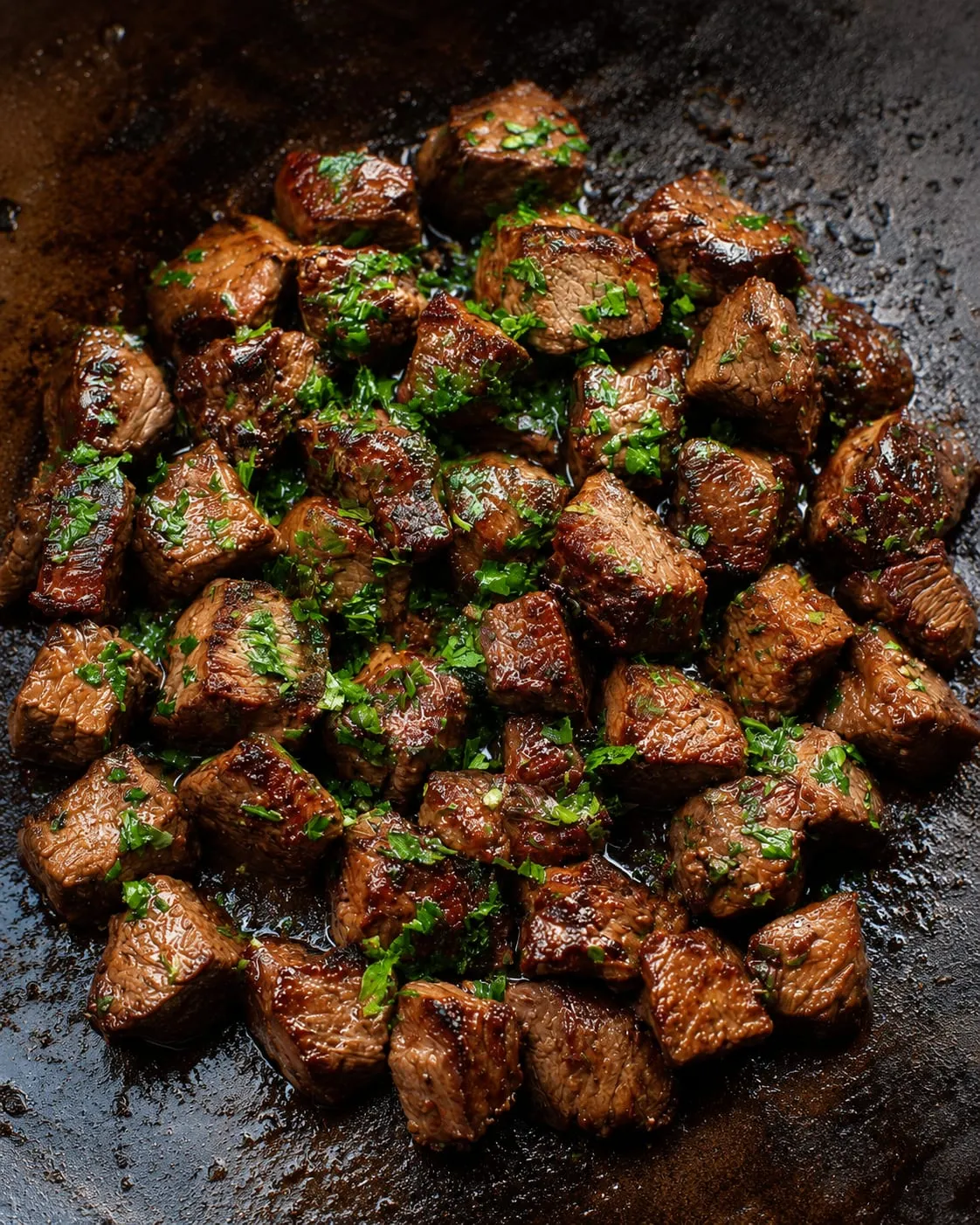
Blackstone Steak Bites (Garlic Butter, 10 Minutes)
Garlic butter steak bites on a Blackstone griddle: seared sirloin cubes tossed in melted garlic butter. Crusty outside, medium-rare inside, done in 10 minutes.
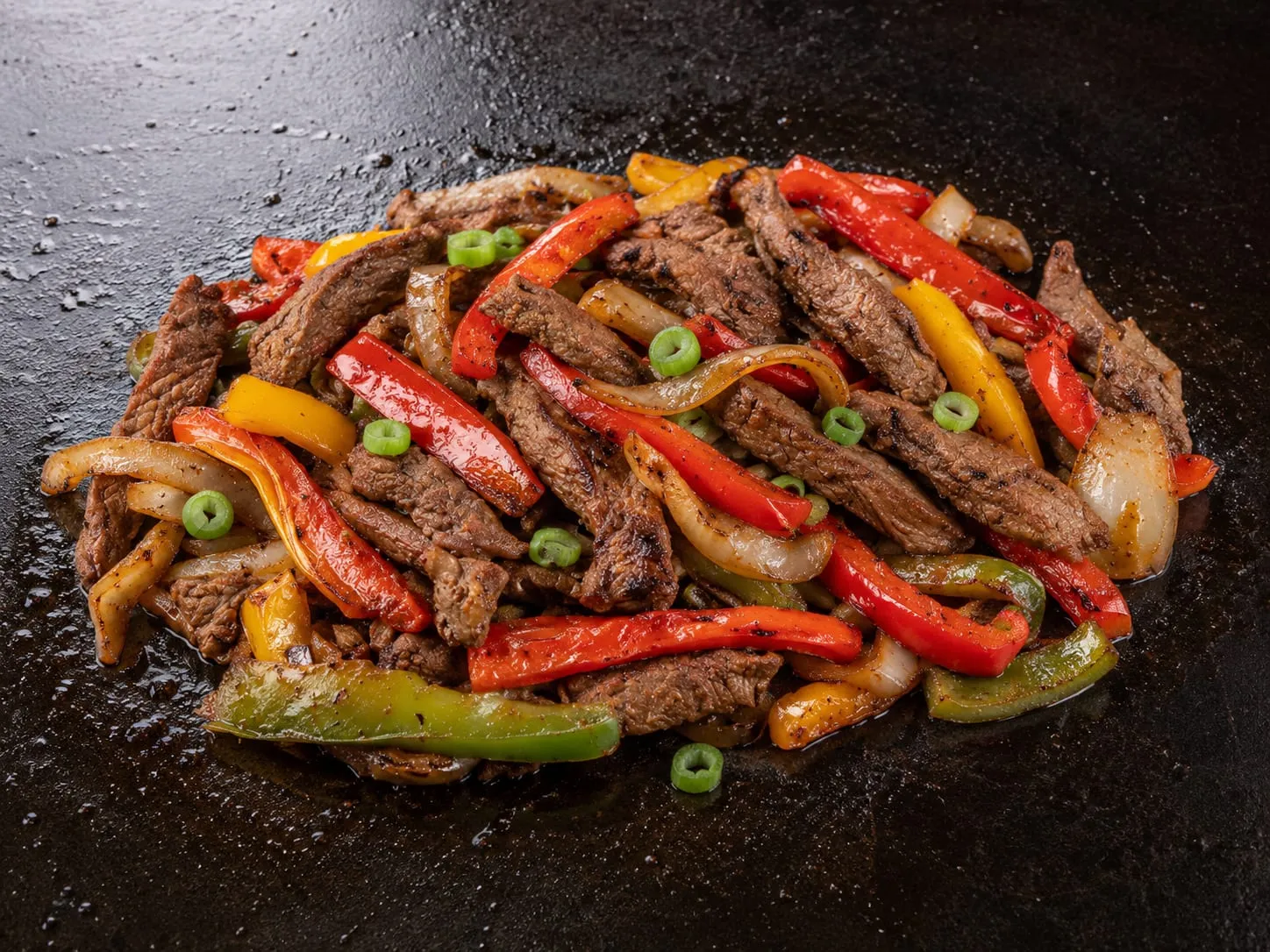
Blackstone Steak Fajitas: Seared Skirt Steak, Peppers, and Onions
Steak fajitas on a Blackstone griddle: citrus-marinated skirt steak seared hot, peppers and onions caramelized alongside, sliced thin for tortillas.