
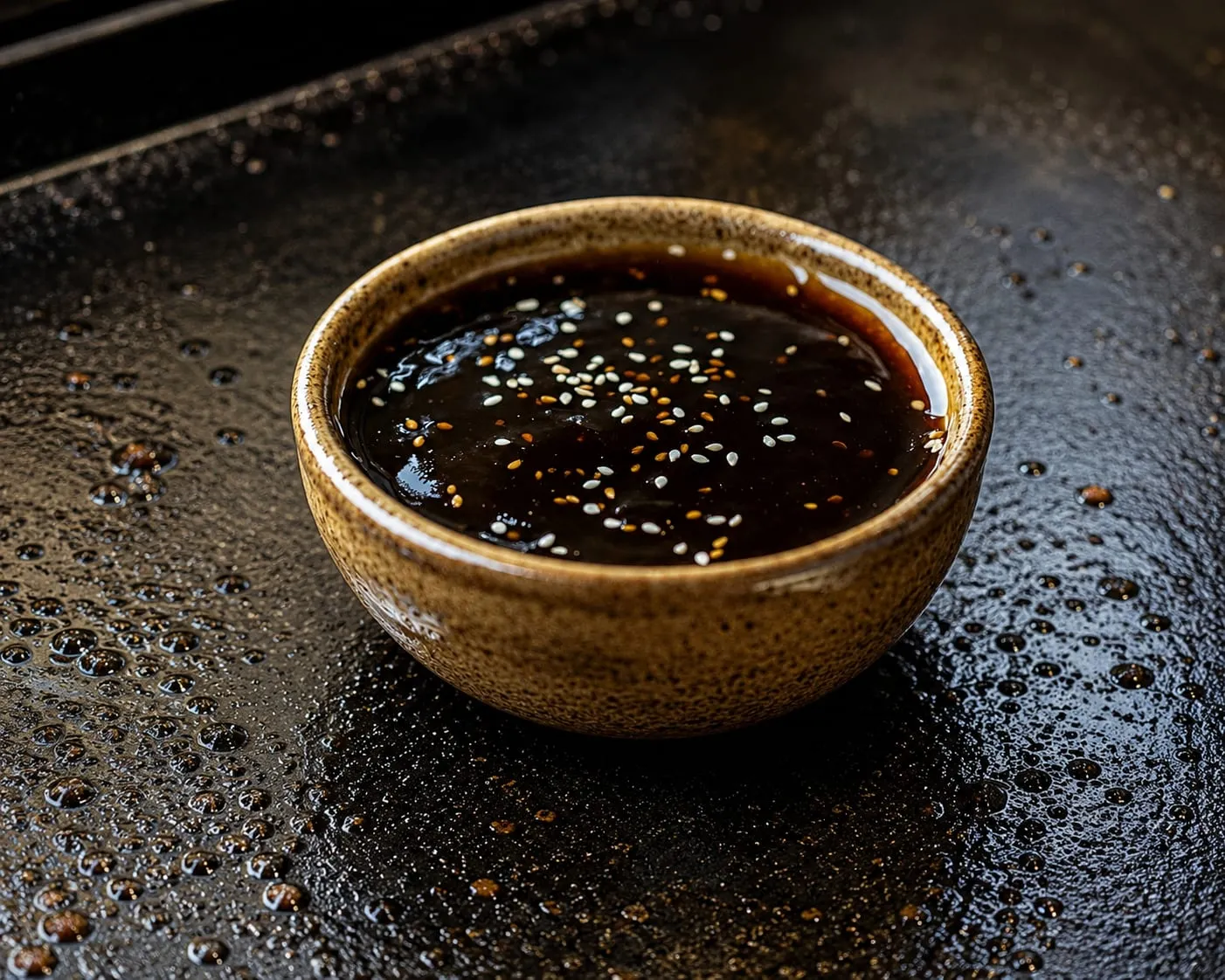
Blackstone Teriyaki Sauce (Made From Scratch)
Equipment
Bottled teriyaki sauce is one of those things that’s never quite right: too sweet, too thin, or with a chemical note that the bottle manages to hide until it hits a 450°F griddle and burns. Scratch teriyaki takes ten minutes and produces something noticeably better: a glossy, balanced glaze that caramelizes properly on flat-top proteins without going bitter.
The core is three ingredients: soy sauce, mirin, and sugar. Everything else adjusts the flavor. Make it thick enough to coat and it doubles as a glaze; thin it out and it works as a marinade.
Prep time: 5 minutes · Cook time: 10 minutes · Makes: about ¾ cup
Ingredients
- ½ cup soy sauce (low-sodium works fine)
- ¼ cup mirin
- 2 tbsp sake (or dry sherry as a substitute)
- 2 tbsp brown sugar
- 1 clove garlic, grated or minced fine
- 1 tsp fresh ginger, grated
- 1 tsp sesame oil
- For glazing consistency: 1 tbsp cornstarch + 2 tbsp cold water
Instructions
Step 1: Combine the base
Whisk together the soy sauce, mirin, sake, and brown sugar in a small saucepan until the sugar begins to dissolve.
Step 2: Simmer
Bring to a gentle simmer over medium heat. Add the garlic and ginger. Simmer uncovered for 5 minutes, stirring occasionally. The sauce will reduce slightly and the raw garlic smell will mellow.
Step 3: Thicken (if using as a glaze)
Whisk the cornstarch into cold water until fully dissolved, then pour into the simmering sauce while stirring constantly. Cook for 1-2 minutes until the sauce thickens to a glaze consistency. It should coat the back of a spoon and fall slowly. Remove from heat.
Skip this step if you’re using the sauce as a marinade or thin drizzle.
Step 4: Finish with sesame oil
Remove from heat and stir in the sesame oil. It’s added off heat to preserve the toasty sesame flavor. High heat destroys it quickly.
Let cool before storing. Use warm as a glaze or at room temperature as a sauce.
How to Use It
As a glaze (best use): Brush onto teriyaki chicken or salmon in the final 2-3 minutes of cooking. The sugar caramelizes on the hot surface. Watch it closely, as it can burn fast.
As a sauce: Drizzle over chicken fried rice or fried rice just before serving.
As a marinade: Combine with protein for 30 minutes to 4 hours before cooking. Remove from the marinade and pat dry before the griddle. Wet protein steams instead of sears.
Other pairings:
- Blackstone shrimp: glaze in the final minute
- Blackstone chicken stir fry: add to the wok zone mid-cook
- Blackstone egg roll in a bowl: a small amount tossed in at the end
Variations
Classic (no garlic/ginger): Omit the garlic and ginger entirely for a simpler, more traditional teriyaki. The flavor is cleaner and works better as a neutral glaze.
Spicy teriyaki: Add 1-2 tsp sriracha or a pinch of red pepper flakes to the base. Glaze teriyaki chicken with this, finish with sesame seeds.
Honey teriyaki: Replace brown sugar with 2 tbsp honey. Slightly floral, slightly thicker. Pairs especially well with salmon.
Pineapple teriyaki: Add 2 tbsp pineapple juice to the base and reduce slightly longer. Natural sweetness with a mild acidity that works on chicken and pork.
Tips
Mirin is not substitutable with rice wine vinegar. Mirin is sweet rice wine: low alcohol, high sugar. Rice wine vinegar is sour. They taste completely different. If you can’t find mirin, use 2 tbsp dry sherry plus 1 tbsp sugar rather than vinegar.
Low-sodium soy sauce is fine. Full-sodium soy makes the sauce noticeably salty after reduction. Start with low-sodium and add salt at the end if needed.
Don’t glaze too early. The sugar in teriyaki burns quickly on a hot griddle. Apply the glaze in the final 2-3 minutes, not at the beginning of the cook.
Make a double batch. It keeps for two weeks refrigerated and the flavor actually improves over 24 hours as the garlic and ginger meld.
More flat-top sauces: Chimichurri Sauce · Garlic Butter · Yum-Yum Sauce · All Blackstone Sauces
Frequently Asked Questions
What is teriyaki sauce made of?
Classic teriyaki is soy sauce, mirin (sweet rice wine), and sugar, usually in roughly equal ratios. The word “teriyaki” refers to the cooking technique of glazing protein with this sauce and cooking it until it caramelizes. Modern versions often add garlic, ginger, and sesame oil, which aren’t traditional but are standard in American-Japanese cooking.
Can I use store-bought teriyaki instead?
Yes, but thin it down before using as a glaze. Most bottled teriyaki is already very sweet and concentrated, and applying it full-strength to a hot griddle burns fast. Scratch-made produces a noticeably cleaner flavor with better caramelization.
How long does homemade teriyaki sauce last?
Up to two weeks refrigerated in a sealed container. The garlic and ginger mellow slightly and the sauce thickens further in the fridge. Bring to room temperature or warm briefly before using.
Is teriyaki sauce gluten-free?
Standard soy sauce contains wheat and is not gluten-free. Use tamari (gluten-free soy sauce) as a direct substitute. All other ingredients in this recipe are naturally gluten-free.
Can I skip the sake?
Yes, replace with an equal amount of dry sherry, or omit it and add an extra tablespoon of mirin. Sake adds a mild umami depth but the sauce works without it.
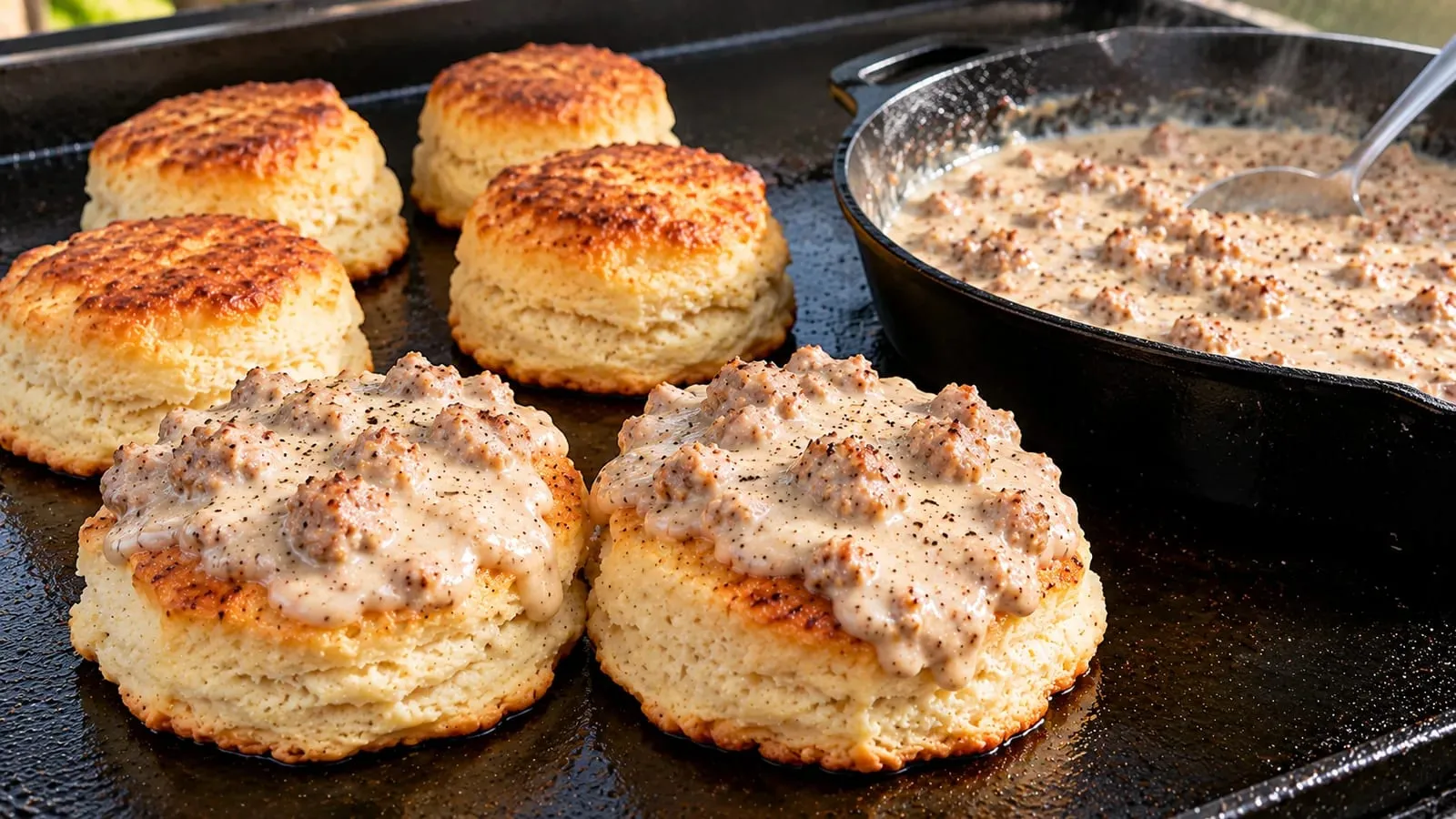
Blackstone Biscuits and Gravy
Biscuits and gravy on a Blackstone griddle: canned biscuits cooked under a dome on the flat top, with sausage gravy made in a cast-iron skillet on the same griddle.
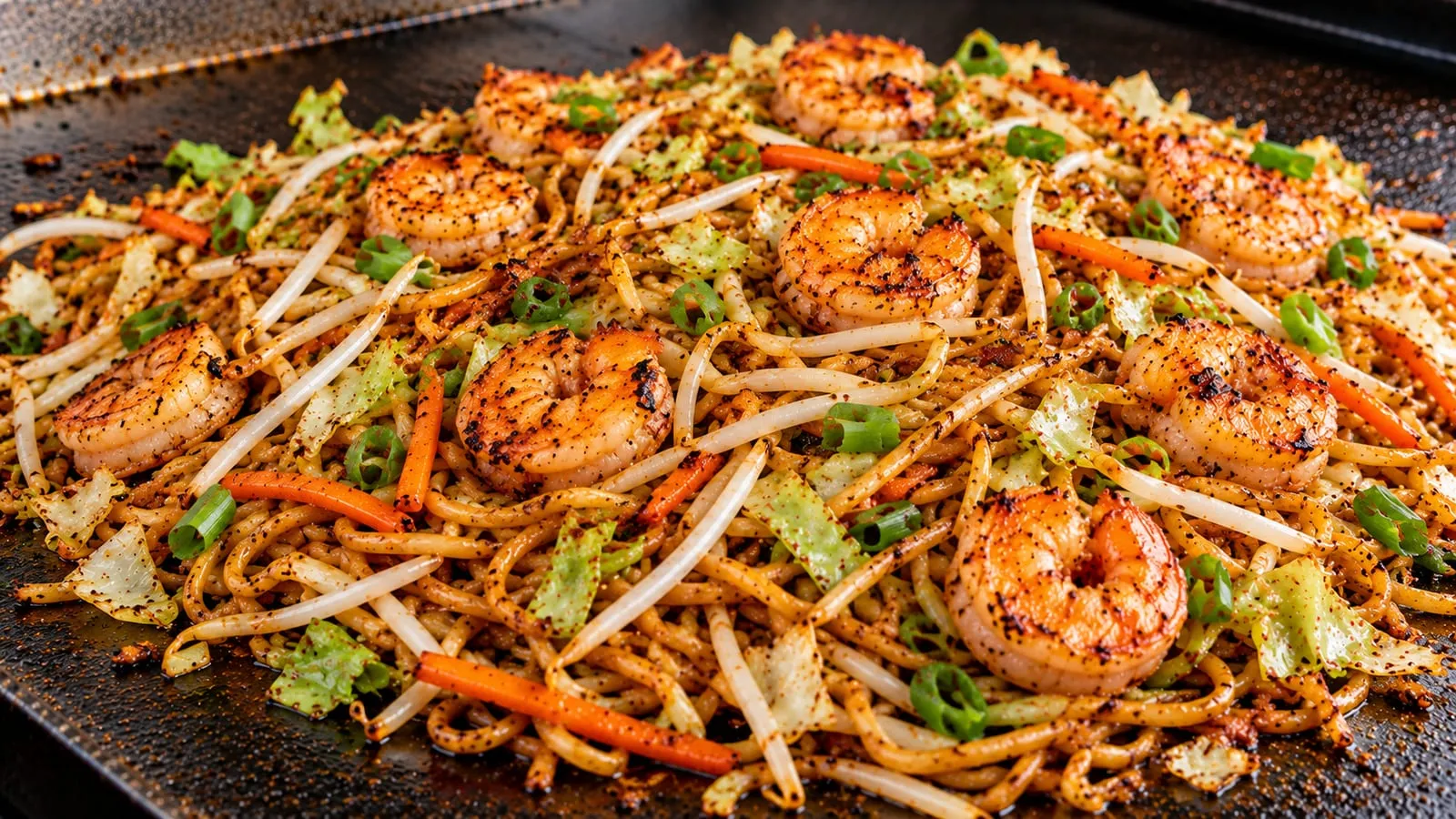
Blackstone Shrimp Chow Mein
Shrimp chow mein on a Blackstone griddle: noodles crisped flat on hot steel, seared shrimp, cabbage, carrots, and bean sprouts in a light soy and oyster sauce.
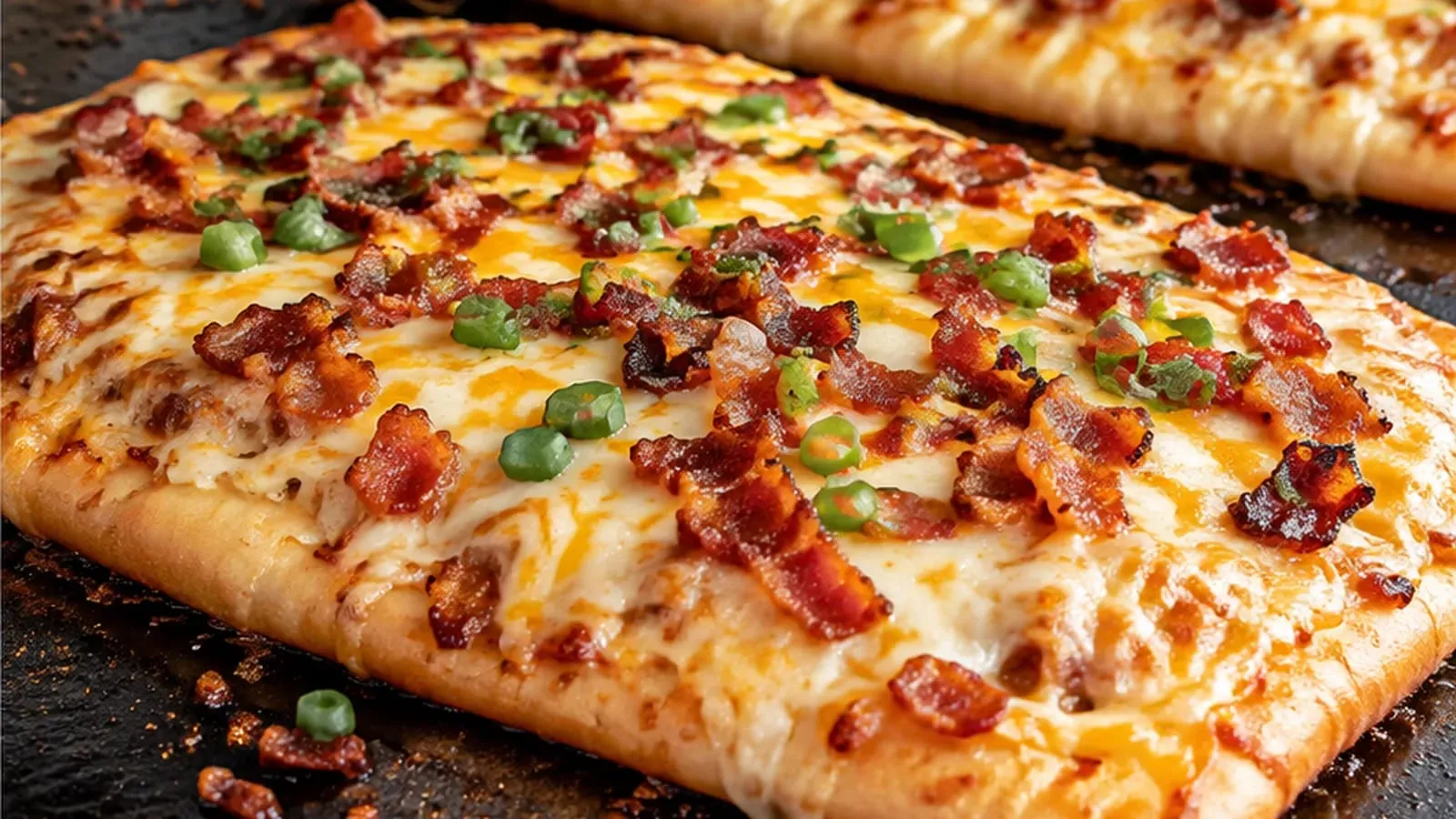
Blackstone Cheesy Bacon Flatbread
Cheesy bacon flatbread on a Blackstone griddle: store-bought naan crisped in rendered bacon fat, brushed with garlic butter, and topped with mozzarella, parmesan, and crumbled bacon.