
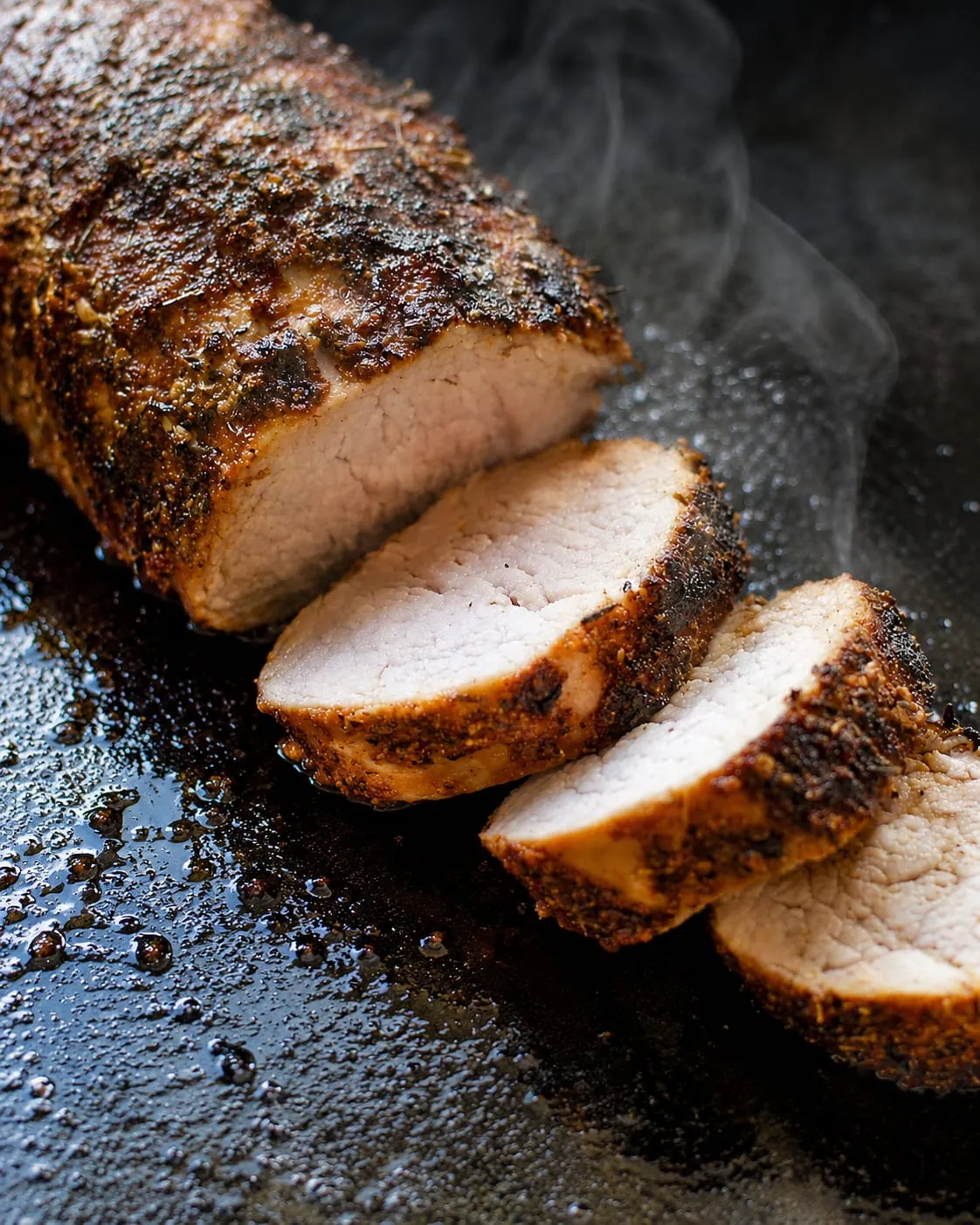
Blackstone Pork Tenderloin Recipe
Pork tenderloin is one of the best proteins for the Blackstone. It’s naturally lean, cooks fast, and the flat-top excels at the high-heat searing that develops the crust. The whole tenderloin fits right on the griddle surface and rotates in place for even browning on all sides. From raw to rested and sliced, it takes under 25 minutes.
The key is not overcooking it. Modern safe temperature for pork is 145°F (USDA), which leaves the center slightly pink, exactly where pork tenderloin should be.
Ingredients
- 1 pork tenderloin (1 to 1½ lbs)
- 2 tbsp avocado oil
- 1 tsp garlic powder
- 1 tsp onion powder
- 1 tsp smoked paprika
- 1 tsp kosher salt
- ½ tsp black pepper
- Optional: 1 tsp dried rosemary or thyme, pinch of cayenne
Pan sauce (optional):
- 2 tbsp butter
- 2 cloves garlic, minced
- ¼ cup chicken broth or white wine
- Fresh thyme
Instructions
Step 1: Trim and season
Trim the silver skin from the pork tenderloin. It doesn’t break down during cooking and gets chewy. Pat dry with paper towels. Rub with oil and season all over with garlic powder, onion powder, smoked paprika, salt, and pepper.
Step 2: Preheat
Bring the griddle to high heat (400°F). You want the surface very hot before the tenderloin goes on.
Step 3: Sear all sides
Place the tenderloin on the hot griddle. Sear for 3-4 minutes on the first side without moving. You need time to develop a deep golden crust. Rotate to the next “side” (pork tenderloins are roughly cylindrical, so rotate in thirds: top, left side, right side, bottom). Sear 2-3 minutes per position.
Total searing time: 10-12 minutes to get color all the way around.
Step 4: Check internal temperature
Use an instant-read thermometer. When the internal temperature reads 140-145°F, the tenderloin is done. Remove from the griddle immediately at 140°F. Carryover heat will bring it to 145°F as it rests.
Step 5: Rest and slice
Rest the tenderloin for 5-7 minutes before slicing. This is non-negotiable: cutting too soon drains all the juices. Slice into ½-inch medallions on the bias.
Step 6: Optional pan sauce
While the tenderloin rests, add butter to the griddle at medium heat. Sauté minced garlic for 30 seconds. Add chicken broth or wine and scrape up any fond (brown bits). Add fresh thyme and simmer 2 minutes until slightly reduced. Drizzle over sliced tenderloin.
Tips
Pat it dry. Moisture on the surface steams instead of searing. Dry = better crust.
High heat sear, then rest. The Blackstone doesn’t have an oven option, so the whole cook happens on the surface. The sear brings the exterior to the right temperature and color while the interior reaches 145°F. It works because pork tenderloin is thin enough that the interior reaches temp by the time the outside is well-seared.
145°F is your target. This is the USDA safe temperature for pork. At 145°F, the center of the tenderloin will be slightly pink. This is correct and safe, not undercooked.
Don’t walk away. Pork tenderloin is lean and goes from perfect to overcooked quickly. Check the temp at 10 minutes and stay attentive.
Glazes and Finishes
Honey garlic. Whisk 2 tablespoons honey with a minced garlic clove and a splash of soy sauce; brush over the tenderloin in the final 2 minutes of searing. Sugar burns, so this goes on late: the glaze caramelizes without charring.
Teriyaki. The homemade teriyaki sauce works the same way as the honey garlic, final minutes only, and turns the sliced medallions into rice-bowl territory.
Chimichurri. No glaze at all: spoon chimichurri over the rested, sliced medallions. The vinegar-herb brightness against the smoky crust is the best cold-sauce pairing this cut has.
Buying: Tenderloin Is Not Loin
The single most common mistake with this recipe happens at the store. Pork tenderloin is the long, narrow, 1-1½ lb cylinder this recipe is built for. Pork loin is a wide, flat roast that weighs 3-5 lbs, cooks completely differently, and will be raw in the middle on this timeline. The packages sit next to each other and the names are nearly identical. Check the shape and the weight. Tenderloins usually come two to a pack; cook both (the second one disappears into sandwiches) or freeze one.
What to Serve With It
Sweet potatoes (pork and sweet potato is a permanent pairing), plus cabbage caramelized on the next zone, or asparagus in the final eight minutes while the meat rests.
Storage and Reheating
Sliced tenderloin keeps 4 days refrigerated and is one of the best leftover proteins on this site: medallions reheat in 60 seconds per side on a medium griddle, and cold slices belong on sandwiches with grainy mustard or over a salad. For reheating without drying, keep the slices thick and the heat moderate. It’s a lean cut, and it’ll remind you if you rush it.
More flat-top recipes: Blackstone Dinner Ideas · Blackstone Pork Chops · Chimichurri Sauce
Frequently Asked Questions
What temperature do you cook pork tenderloin on a Blackstone griddle?
Sear at 400°F (high heat) to develop the crust, then work at medium (350°F) if you need more time to reach temperature. The internal target is 145°F, with a 5-minute rest. Many standard tenderloins (1-1¼ lbs) reach 145°F just from the high-heat sear without needing the lower heat zone.
How long does pork tenderloin take on a Blackstone?
10-12 minutes of searing (3-4 minutes on the first side, then 2-3 minutes per position as you rotate), plus 5-7 minutes of rest time. Total: about 20-25 minutes from cold griddle to plated dinner.
What internal temperature should pork tenderloin be?
145°F (USDA safe minimum), with a 5-minute rest. The center will be slightly pink at 145°F. This is correct and intentional. Pork cooked to 160°F is overcooked and dry.
How do you keep pork tenderloin from drying out on the griddle?
Pull it at 140°F (carryover brings it to 145°F), rest for 5-7 minutes, and don’t skip the rest. Overcooking is the only way to dry out a tenderloin. On the griddle, high heat and quick cooking actually favor juiciness compared to low-and-slow methods.
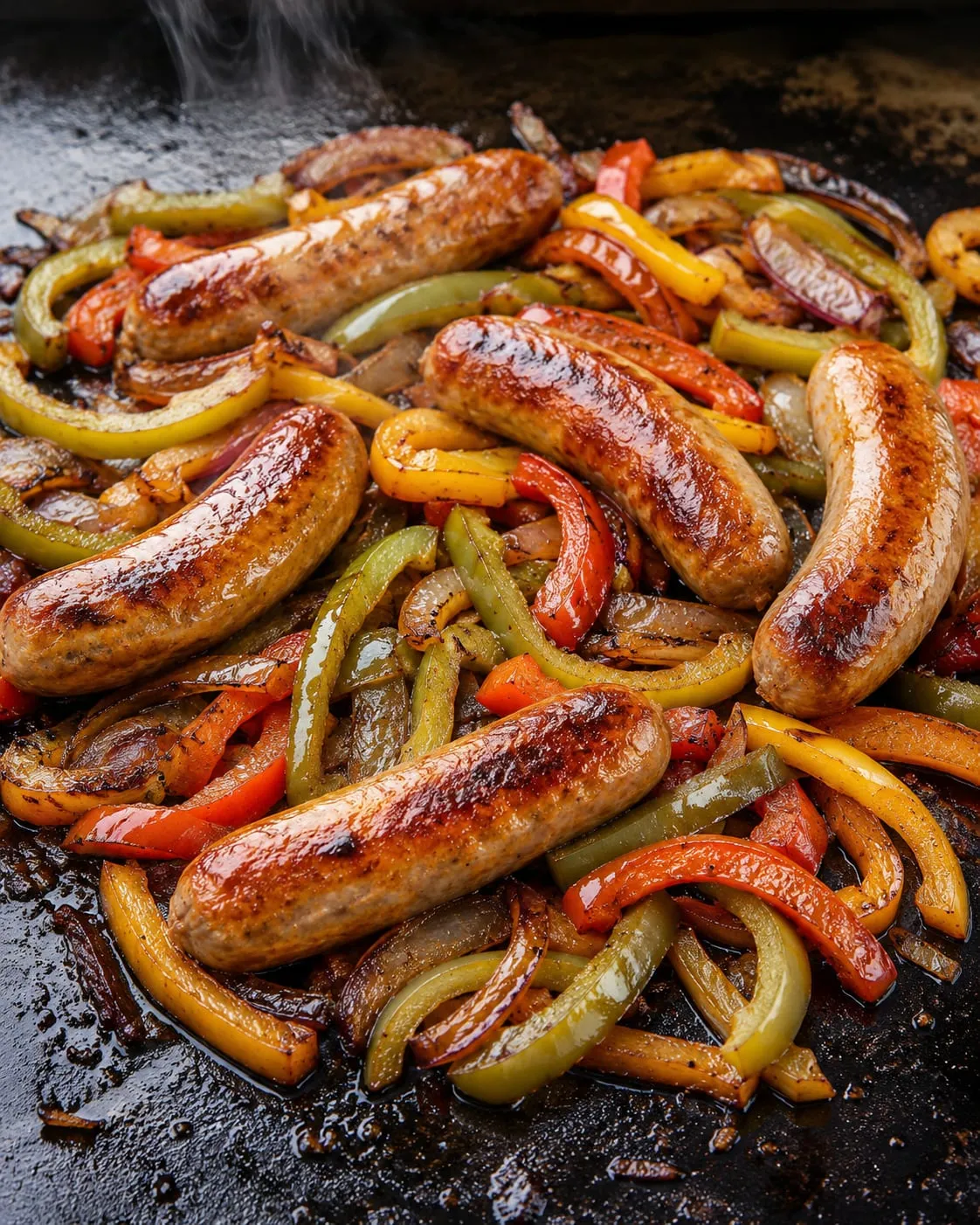
Blackstone Sausage and Peppers: Italian Sausage on the Flat-Top
Sausage and peppers on a Blackstone: Italian sausage seared until the casing snaps, peppers and onions caramelized in the fat. Ready in 25 minutes.
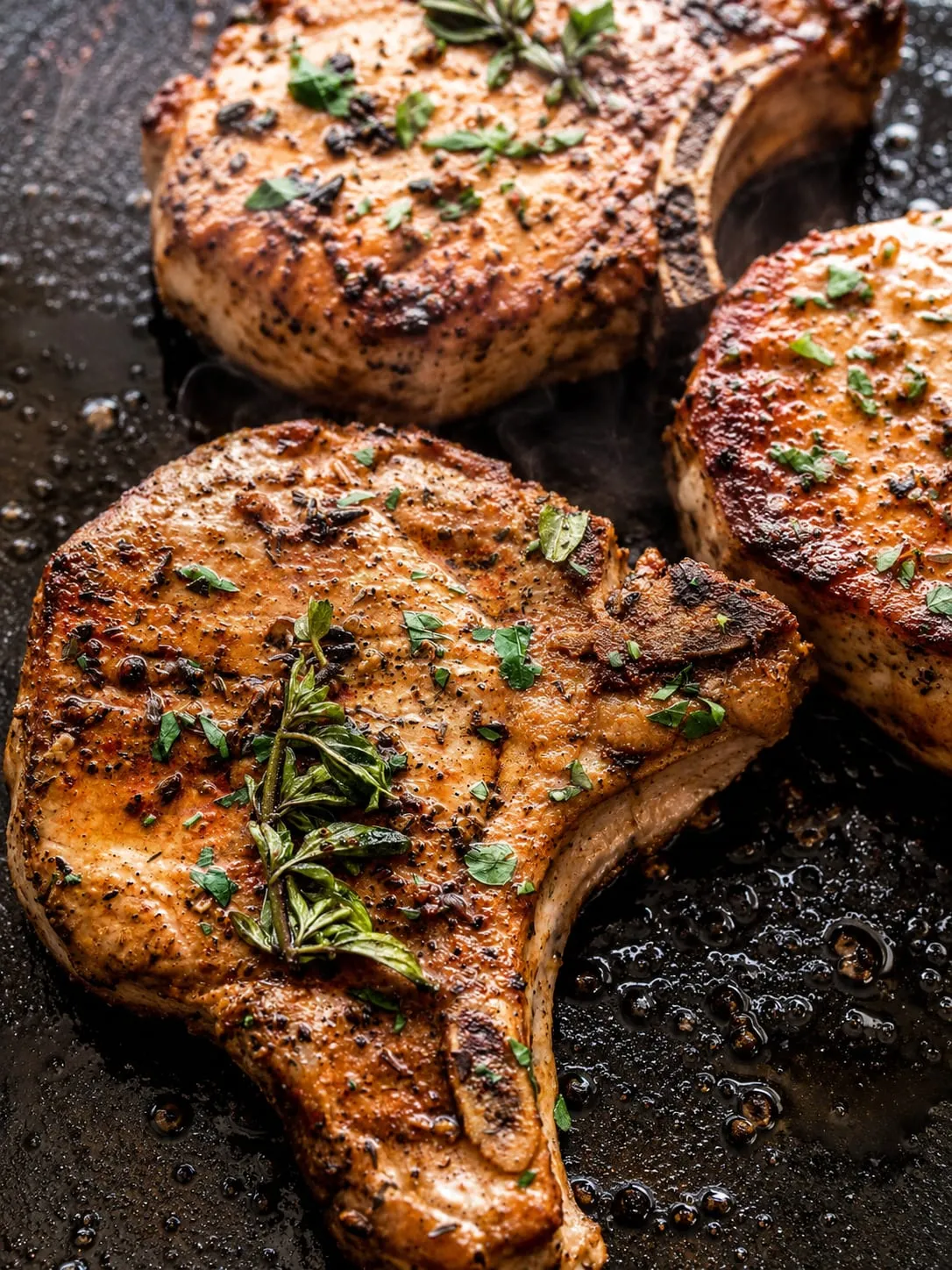
Blackstone Pork Chops: 3 Recipes for the Flat-Top
Pork chops on a Blackstone griddle: the right temperature and thickness, plus three recipes: garlic butter, peppercorn, and honey mustard.
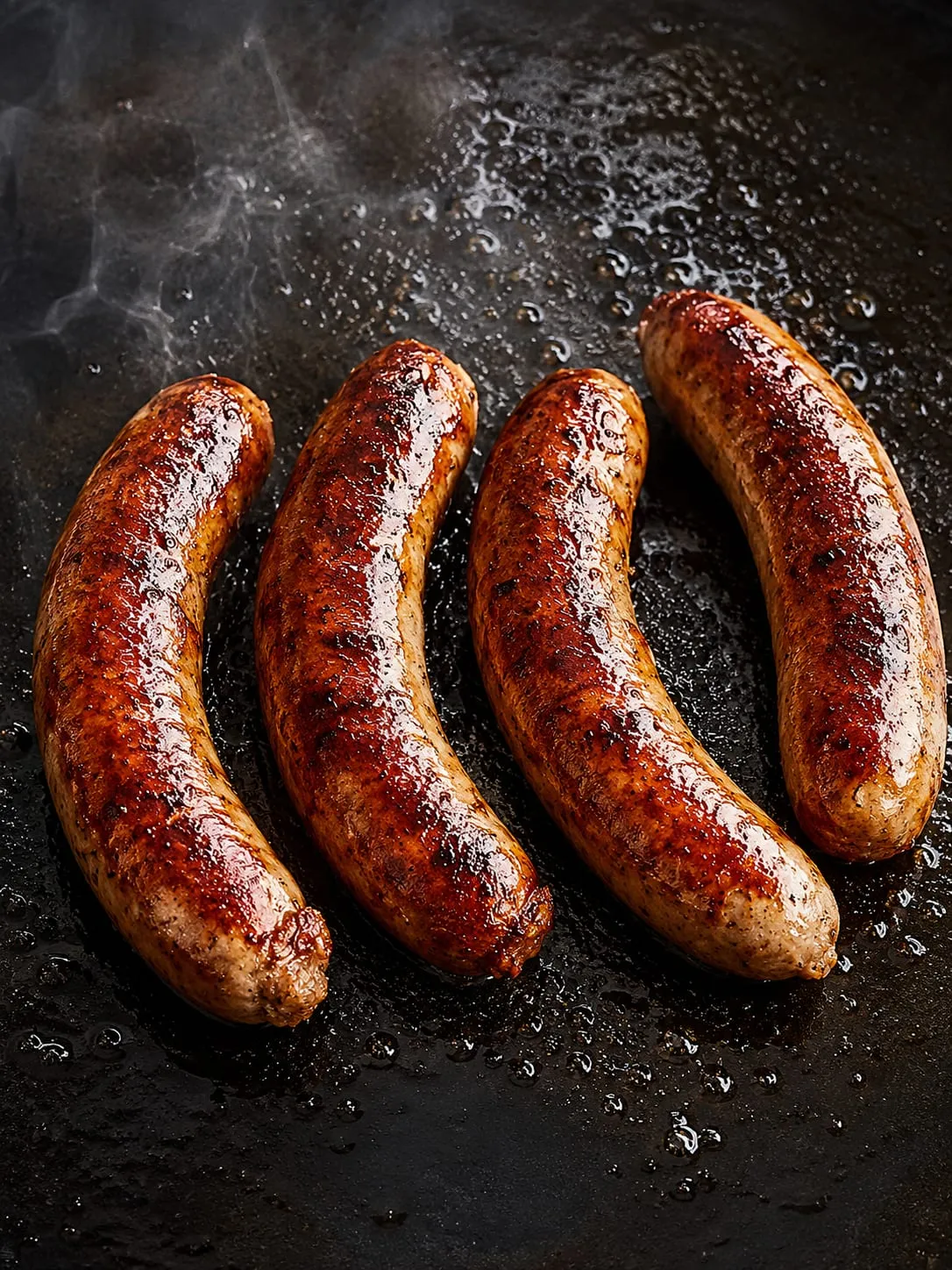
Blackstone Bratwurst: Beer Bath + Griddle Sear Method
How to cook bratwurst on a Blackstone: the beer bath method, then a hard sear for a snappy, caramelized crust. With caramelized onions and sauerkraut.