
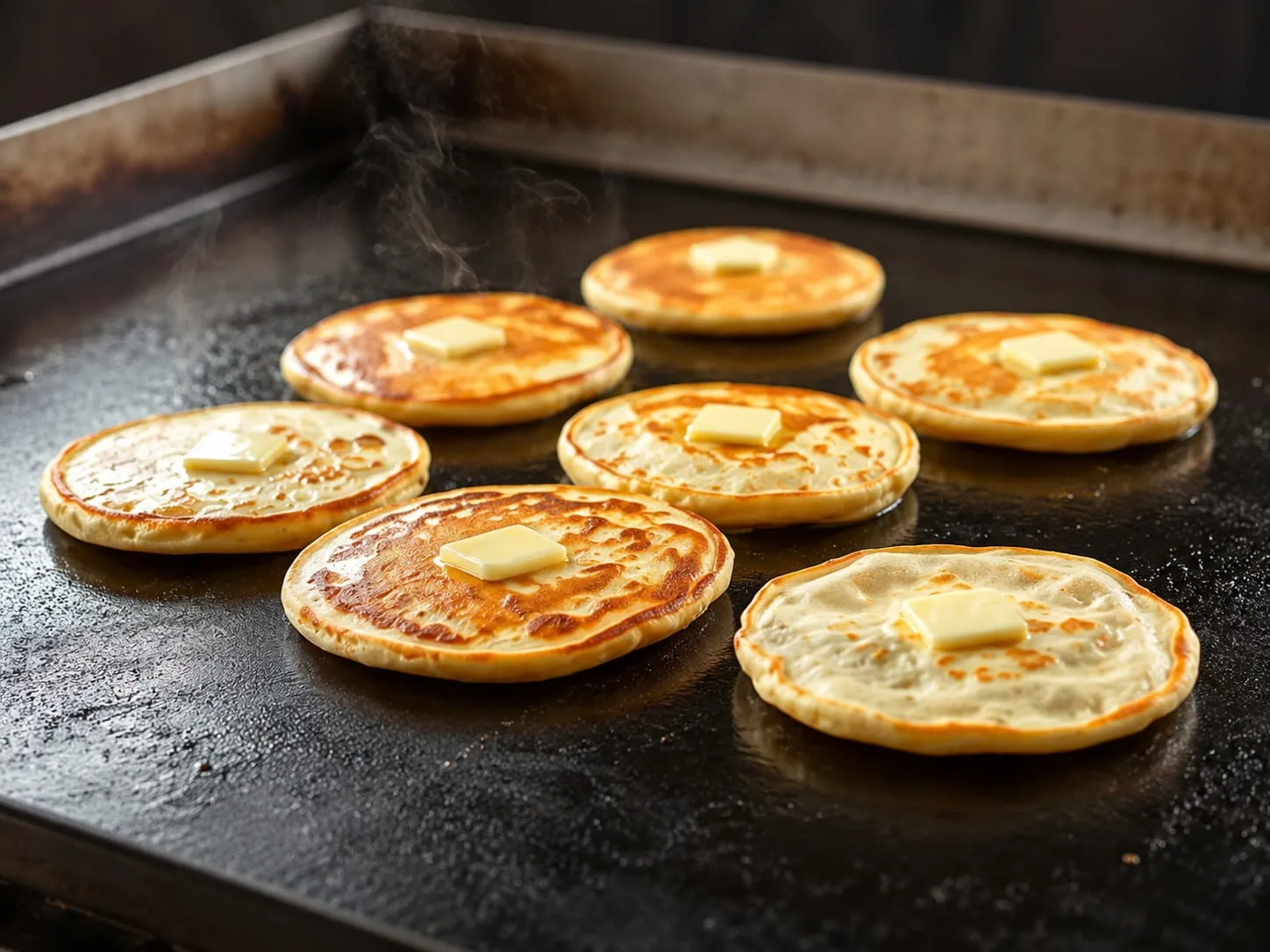
Blackstone Pancakes: Simple Batter and Buttermilk Recipes
The flat-top griddle is the best surface for pancakes, full stop. The wide, even steel heats the entire cake uniformly from edge to edge (no pale rings, no hot-spotted center) and you can cook a full batch at once instead of three at a time in a skillet. Diners have cooked pancakes on flat-tops for a century because it works. Weekend pancakes are also the reason my 17” electric earned permanent indoor counter space: same technique, no burner juggling.
The two things that ruin griddle pancakes: too-high heat and overmixed batter. Get both right and you’ll make the best pancakes you’ve had at home.
Two recipes below: a quick simple batter and a buttermilk batter from scratch. Both use the same technique.
The Right Temperature
350°F: medium heat. This is lower than most people run a griddle, and it’s right. Pancakes need time for the center to set and rise before the outside gets too dark. At 375°F+ you get golden exteriors with raw centers. At 350°F you get golden exteriors and cooked-through, fluffy middles.
How to check without a thermometer: Drop a few drops of water on the surface. If they ball up and skitter across the steel, the griddle is at the right temperature. If they sizzle and evaporate immediately, it’s too hot. If they just sit and spread, it’s not ready.
Heat the griddle slowly. Start on low heat and bring it up to medium gradually: a 5-minute preheat on low before nudging to medium. A griddle that heats too fast develops hot spots, and pancakes will cook unevenly as a result.
What Oil to Use
A mix of butter and avocado oil: butter for flavor, oil to raise the smoke point so the butter doesn’t burn at 350°F. Roughly 50/50. Apply a light coat before each batch, not just the first.
Butter alone burns at sustained griddle heat. Oil alone gives you no flavor. The combination is the right call.
If you want a distinctly buttery taste without burning: ghee (clarified butter) has a smoke point well above 350°F and can be used straight without mixing.
Recipe 1: Simple Batter (10 Minutes)
The everyday recipe: one bowl, no buttermilk, done in 10 minutes. The brown sugar adds a subtle caramel note that box mix doesn’t have.
Ingredients
- 1 cup all-purpose flour
- ½ tsp baking soda
- ¼ tsp baking powder
- Pinch of fine salt
- 1 tbsp granulated sugar
- 1 tbsp light brown sugar
- 1 cup whole milk
- 2 tbsp unsalted butter, melted
- Butter and avocado oil for the griddle
Instructions
- Whisk flour, baking soda, baking powder, salt, and both sugars in a bowl.
- Add milk and whisk until just combined. A few lumps are fine.
- Fold in melted butter. Stop mixing the moment it’s incorporated.
- Rest batter 5 minutes while the griddle heats.
- Cook per the instructions below.
Yields: 8 pancakes (¼ cup batter each)
Recipe 2: Buttermilk Pancakes (From Scratch)
The version worth making when you have an extra 5 minutes. Buttermilk reacts with the baking soda to create a lighter, fluffier crumb than regular milk. This is the scratch recipe that competes with your favorite breakfast spot.
Dry Ingredients
- 2 cups all-purpose flour
- 2 tsp baking powder
- 1 tsp baking soda
- ½ tsp salt
- 2 tbsp granulated sugar
Wet Ingredients
- 2 cups buttermilk
- 2 large eggs, lightly beaten
- 1 tsp vanilla extract
- 3 tbsp unsalted butter, melted
Instructions
- Whisk all dry ingredients together in a large bowl.
- In a separate bowl or measuring cup, whisk together buttermilk, eggs, and vanilla.
- Pour the wet ingredients into the dry and whisk until just combined. Do not overmix, some small lumps are fine.
- Fold in the melted butter.
- Rest batter 5-10 minutes while the griddle heats.
- Cook per the instructions below.
Yields: 12-14 pancakes (¼ cup batter each)
No buttermilk? Add 1 tbsp white vinegar or lemon juice to 1 cup whole milk and let it sit 5 minutes. It’s not identical but works well.
How to Cook Pancakes on the Blackstone
These steps apply to both recipes above.
Step 1: Preheat slowly
Start on low heat. After 5 minutes, bring up to medium and let the surface reach 350°F, about 3-4 more minutes. Don’t rush this. Verify with the water drop test or an infrared thermometer.
Step 2: Oil the surface
Apply a thin, even coat of the butter-oil mix across the cooking zone. Let it heat for 30 seconds.
Step 3: Ladle the batter
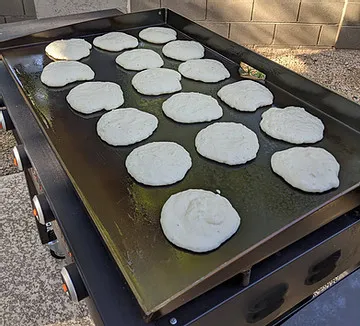
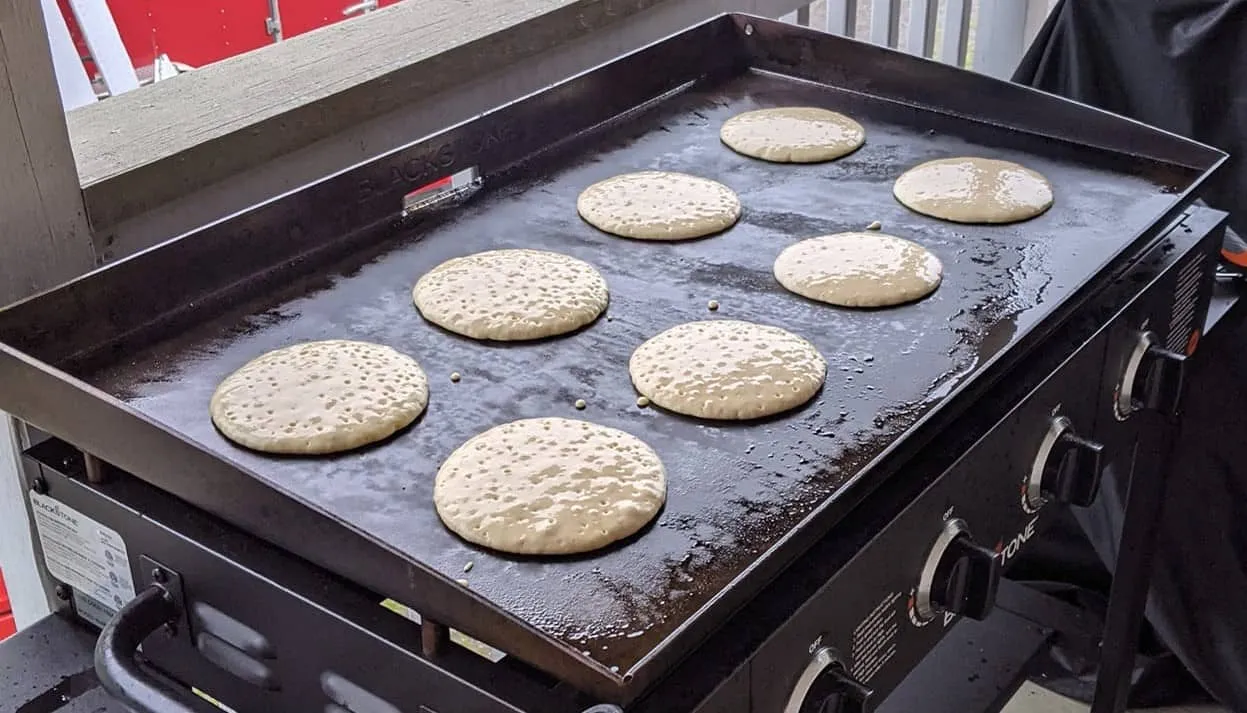
Pour ¼ cup of batter per pancake onto the griddle, leaving 2 inches between each. Use a measuring cup or ladle for consistent sizing.
Step 4: Add mix-ins now
If adding blueberries, chocolate chips, or other mix-ins, drop them onto each pancake now and cover with a small drizzle of batter. This is important. Toppings sitting directly on the surface burn when you flip. The layer of batter between the mix-in and the griddle protects them.
Step 5: Wait for the bubble signal
Do not flip until bubbles appear across the entire surface of the pancake and the edges look set and slightly dry, not just the center. This takes about 90 seconds at 350°F. Flipping too early means the batter is still liquid inside and the cake collapses.
Step 6: Flip once
Slide your spatula fully under the pancake before lifting. Get the whole surface, not just the edge. Flip in one smooth motion. Cook another 60-90 seconds until the second side is golden brown.
Step 7: Keep warm and serve
Push finished pancakes to a low-heat zone while you cook the rest. Or hold them on a baking sheet in a 200°F oven. Serve with softened butter (take it out 20 minutes ahead) and warm maple syrup.
Variations
Blueberry: Drop 6-8 blueberries onto each cake right after pouring the batter, then cover with a small drizzle of batter. Don’t stir them into the batter: they sink, make the batter purple, and burn against the griddle on the flip.
Chocolate chip: Same technique. Scatter chips on top right after pouring, cover with a drizzle of batter before flipping.
Cinnamon brown butter: Brown the butter in a small pan until it smells nutty (about 3 minutes), then let it cool slightly before adding to the batter. Add ½ tsp cinnamon to the dry ingredients.
Lemon ricotta: Replace ¼ cup of the milk with whole-milk ricotta, add zest of 1 lemon, and reduce sugar to 1 tsp. Results in a denser, richer cake.
Tips
Don’t overmix. This is the single most common pancake mistake. Overmixing develops gluten and makes the cakes tough and flat. Stir until the dry ingredients disappear. That’s it.
Rest the batter. Even 5 minutes makes a difference. Resting allows the baking agents to start activating and the gluten to relax, giving you a lighter result.
Re-oil between batches. The first batch uses up most of the oil. Add a fresh coat before every subsequent batch or the second and third batches will be drier and darker.
The bubble test is the only reliable flip signal. Pancake thickness and batter hydration vary too much to cook by time alone. Bubbles across the whole surface, dry edges. Flip.
Freeze leftovers properly. Let pancakes cool completely on a wire rack, then stack with wax or parchment paper between each one and seal in a freezer bag. Reheat on the griddle at low heat for 2 minutes per side. Far better than the microwave.
More flat-top recipes: Blackstone Breakfast Recipes · Blackstone Recipes for Beginners · Blackstone Dessert Recipes
Frequently Asked Questions
What temperature should a Blackstone be for pancakes?
350°F: medium heat. Lower than most griddle cooking. High heat sets the exterior before the center has time to cook through and rise, giving you golden outsides and raw middles. If you don’t have a thermometer, the water drop test is reliable: drops should ball up and skitter, not sizzle or sit still.
Why are my pancakes flat instead of fluffy?
Three most common causes: overmixed batter (develops gluten and prevents the rise), old leavening (baking soda and powder lose potency, replace them if they’ve been open more than 6 months), or griddle too hot (sets the exterior before the interior can puff). Check all three.
How do I know when to flip pancakes on the Blackstone?
Bubbles across the entire surface and edges that look set and slightly dry, not just the center bubbling. Flipping too early means the interior is still liquid and the cake collapses. At 350°F this takes about 90 seconds.
Can I use box mix on a Blackstone?
Yes. Mix according to the package, rest 5 minutes, and cook exactly as described above. The technique is the same. Box mix just skips the measuring.
What’s the difference between simple batter and buttermilk pancakes?
Buttermilk reacts with the baking soda to produce more carbon dioxide, making the crumb lighter and fluffier. It also adds a slight tang that balances the sweetness. Simple batter is faster and still excellent. Buttermilk is worth it when you have it.
Can I make pancake batter ahead of time?
Keep the dry and wet ingredients separate and combine right before cooking. Pre-mixed batter loses leavening potency overnight as the baking soda reaction runs out. If you do mix ahead, add a pinch of baking soda right before cooking to revive some lift.
Blackstone French Toast Recipe: Golden, Fluffy, and Fast
The best French toast on a Blackstone griddle: thick-cut brioche, a rich egg custard, and a golden crust that a stovetop skillet can't match. Ready in 20 minutes.
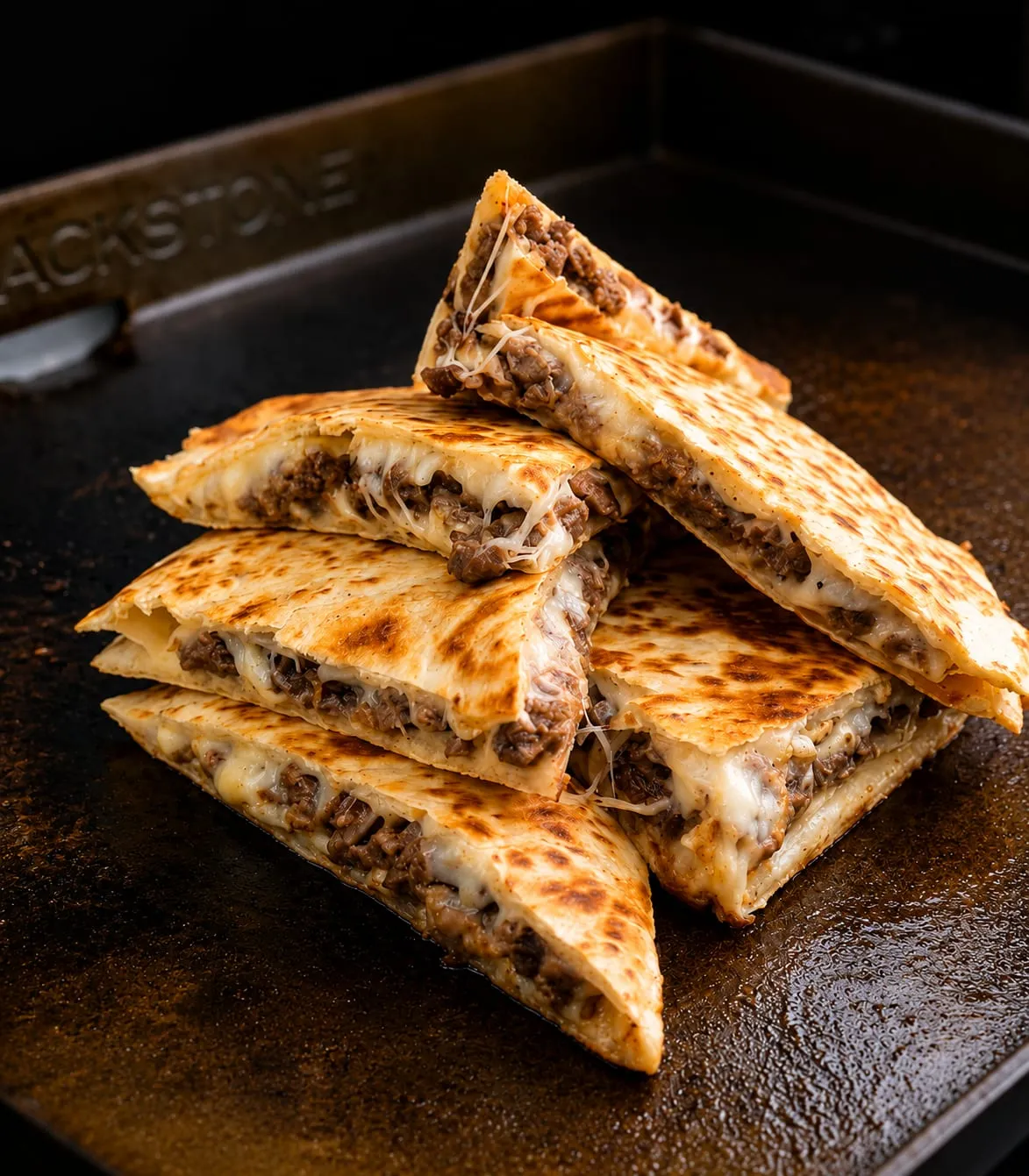
Blackstone Quesadillas Recipe: Crispy Every Time
Blackstone quesadillas with perfectly crispy tortillas and melted cheese, a simple flat-top method that beats the stovetop every time. Ready in 15 minutes.
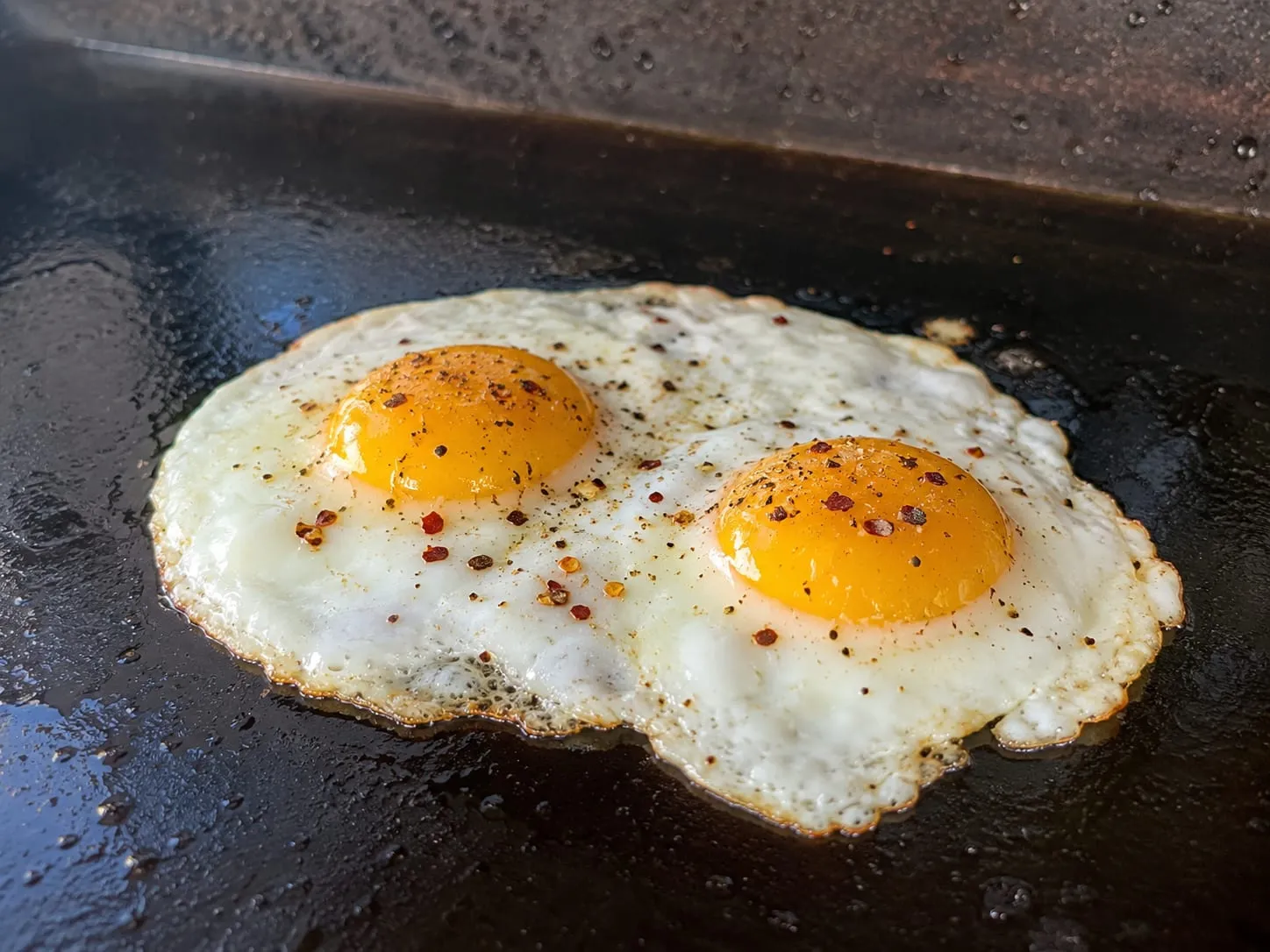
Blackstone Eggs: 6 Ways to Cook Them on the Flat-Top
How to cook eggs on a Blackstone griddle: fried, scrambled, over easy, omelets, and egg-in-a-hole, with the right temperature and tips for each.