
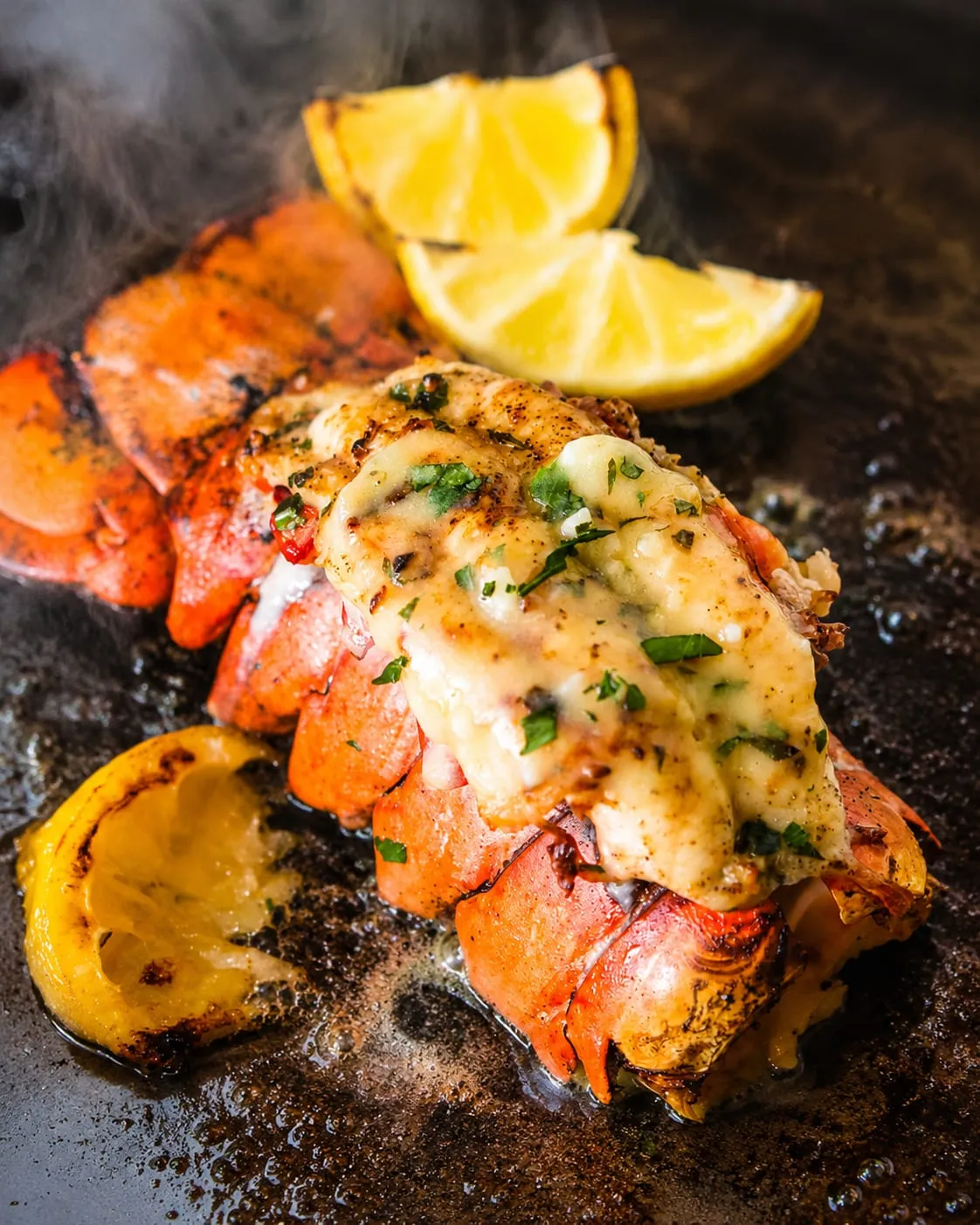
Blackstone Lobster Tail Recipe (Butter-Basted Flat Top)
Lobster tail on the Blackstone cooks fast, stays juicy, and gets a butter-basted richness that oven broiling can’t match. The flat-top surface gives you direct, even heat under the shell, which acts as a natural cup to hold the butter and juices as the meat steams from below. The result is restaurant-quality lobster in under 12 minutes with almost no technique required.
Use a cast iron press or griddle press to ensure flat contact if your tails are curved.
Ingredients
- 4 lobster tails (6-8 oz each)
- 4 tbsp unsalted butter, melted
- 4 cloves garlic, minced
- 1 lemon, zested and cut into wedges
- 1 tbsp fresh parsley, chopped
- ½ tsp smoked paprika
- ¼ tsp cayenne (optional)
- Salt and white pepper
- Extra butter for basting
Instructions
Step 1: Prep the lobster tails
Using kitchen shears, cut through the top of the shell lengthwise down the center (don’t cut all the way through the bottom shell). Use your fingers to gently butterfly the meat. Spread it open and rest it on top of the split shell. This “piggyback” style exposes the meat for even cooking and makes basting easy.
Step 2: Season
Brush the exposed meat with half the melted garlic butter. Season with salt, white pepper, smoked paprika, and lemon zest.
Step 3: Preheat the griddle
Bring the griddle to medium-high (375°F). Avoid high heat. Lobster meat is delicate and overcooked lobster is rubbery.
Step 4: Cook shell-side down
Place the lobster tails shell-side down on the griddle. The shells act as natural cups to hold the butter and juices.
Step 5: Butter-baste
Spoon the remaining garlic butter over the exposed meat every 2 minutes. Close the Blackstone hood if you have one, or tent loosely with foil. The trapped heat cooks the top of the meat without requiring you to flip.
Step 6: Cook to opaque
Cook 8-12 minutes total (depending on size). The meat is done when it’s fully opaque (no translucent gray areas) and reads 140-145°F on an instant-read thermometer. For 6-oz tails: 8-9 minutes. For 8-oz tails: 10-12 minutes.
Step 7: Finish and serve
Remove from griddle. Sprinkle with fresh parsley. Drizzle with any remaining butter. Serve immediately with lemon wedges.
Tips
Don’t flip. Cooking shell-side down the entire time is the right method for the griddle. The shell protects the bottom from direct heat while the trapped steam cooks the top. Flipping directly exposes the meat to the steel and overcooks the outside fast.
Don’t overcook. Lobster goes from perfect to rubbery within 1-2 minutes. Pull at 140°F. The meat will be firm and opaque but not tight and dry.
Butterfly the meat. Piggyback-style (meat resting on top of the shell) exposes the meat evenly to heat and makes butter-basting practical. Cooking inside the shell without butterflying produces uneven results.
Medium-high, not high. Unlike steak or burgers, lobster is a delicate protein that doesn’t benefit from extreme heat. 375°F is the right balance of speed and control.
Buying Lobster Tails
The label that matters is cold-water vs. warm-water. Cold-water tails (Maine, Canada, Australia) have firmer, sweeter meat; warm-water tails (Caribbean, Latin America) are cheaper but softer and occasionally mushy. If the price looks too good, that’s usually why. Buy 6-8 oz tails for even cooking; giant tails look impressive but cook unevenly on a flat-top. Frozen is the default almost everywhere and completely fine: thaw overnight in the refrigerator, never cook from frozen. Frozen-center tails overcook outside before the middle turns opaque.
Surf and Turf on One Griddle
Lobster tails share the surface naturally with steak, and the timing works in your favor: sear steaks on the hot zone first, and start the tails shell-side down on medium-high as the steaks flip. Both finish within minutes of each other, and both rest while you toast bread or finish a vegetable. For a crowd version, garlic butter steak bites alongside the tails turns the same two proteins into a platter. One garlic butter batch covers everything.
What to Serve With It
Asparagus seared while the tails finish, smashed potatoes done ahead and held warm, and lemon wedges that spent a minute cut-side down on the steel. Charred lemon over lobster is a small upgrade that reads like a big one.
Storage
Lobster is a cook-and-eat dish; reheating firms it toward rubber. If you have leftover tails, refrigerate up to 2 days and go cold: chop the meat, dress lightly with melted butter or mayo and lemon, and pile it into a split-top bun toasted in butter on the griddle. A leftover lobster roll is the only second act this dish needs.
More flat-top recipes: Blackstone Fish Recipes · Blackstone Dinner Ideas
Frequently Asked Questions
What temperature do you cook lobster tail on a Blackstone griddle?
375°F: medium-high heat. Lobster is a delicate protein that overcooks quickly. High heat sears the exterior faster than the interior can cook through, producing tough, rubbery meat. Medium-high heat gives you enough speed without sacrificing texture.
How long does lobster tail take on a Blackstone?
8-9 minutes for 6-oz tails, 10-12 minutes for 8-oz tails, cooked shell-side down the entire time. The internal temperature should reach 140-145°F. Check at 8 minutes and adjust.
Do you flip lobster tail on a Blackstone?
No. Cook shell-side down the entire time. The shell protects the meat from direct heat while the closed hood or foil tent cooks the top with radiant and trapped steam heat. Flipping exposes the meat directly to the steel and overcooks it.
How do you know when lobster tail is done on the Blackstone?
The meat is fully opaque: no gray, translucent areas. An instant-read thermometer reads 140-145°F. The texture should be firm but not tight. Overcooked lobster is rubbery and dry; undercooked is translucent and gelatinous.
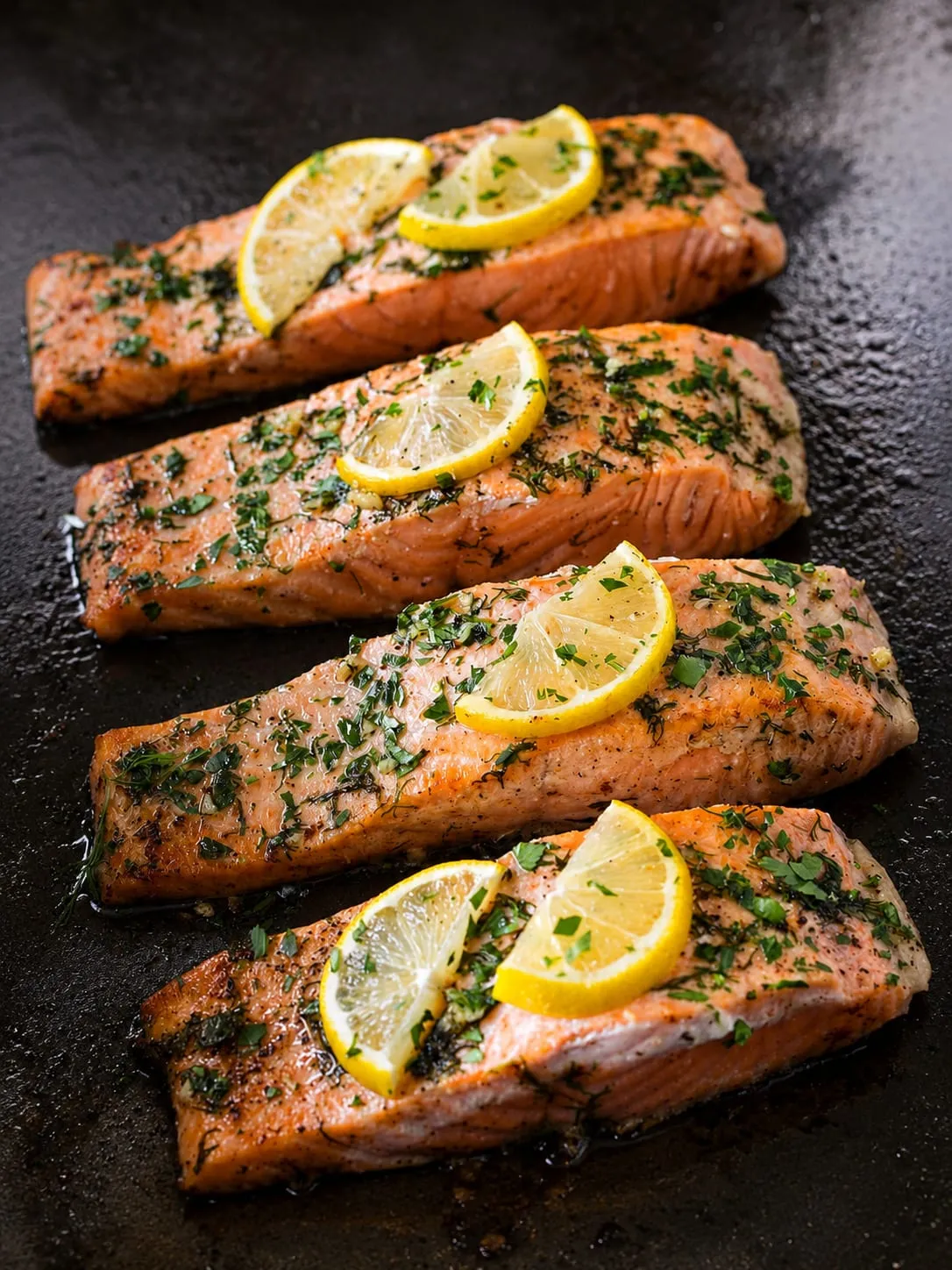
Blackstone Salmon: Perfect Sear, Crispy Skin, Three Glazes
Salmon on a Blackstone griddle, the right temp, flesh-side-down technique, times by thickness, and three glazes from lemon butter to honey sriracha.
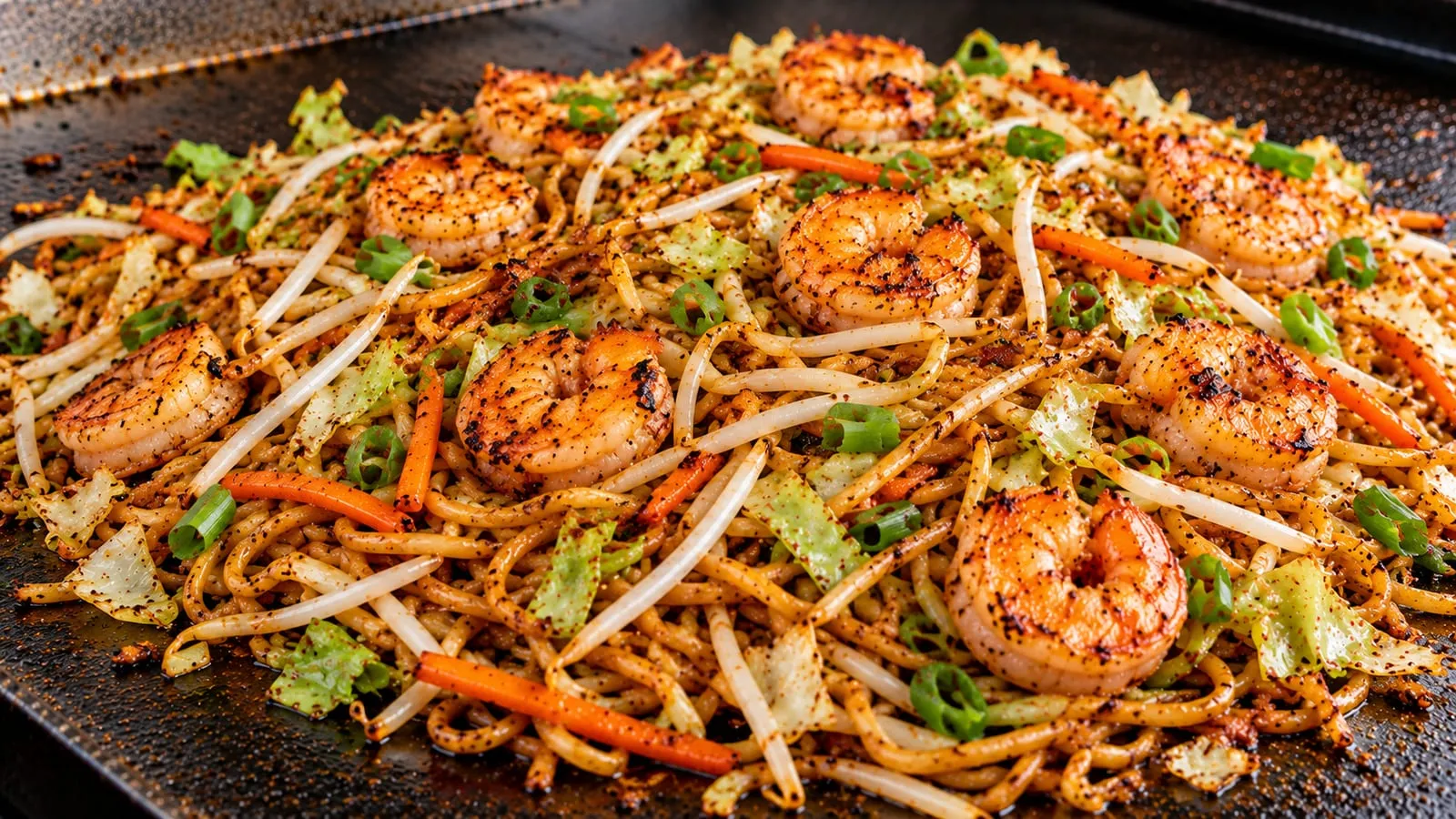
Blackstone Shrimp Chow Mein
Shrimp chow mein on a Blackstone griddle: noodles crisped flat on hot steel, seared shrimp, cabbage, carrots, and bean sprouts in a light soy and oyster sauce.
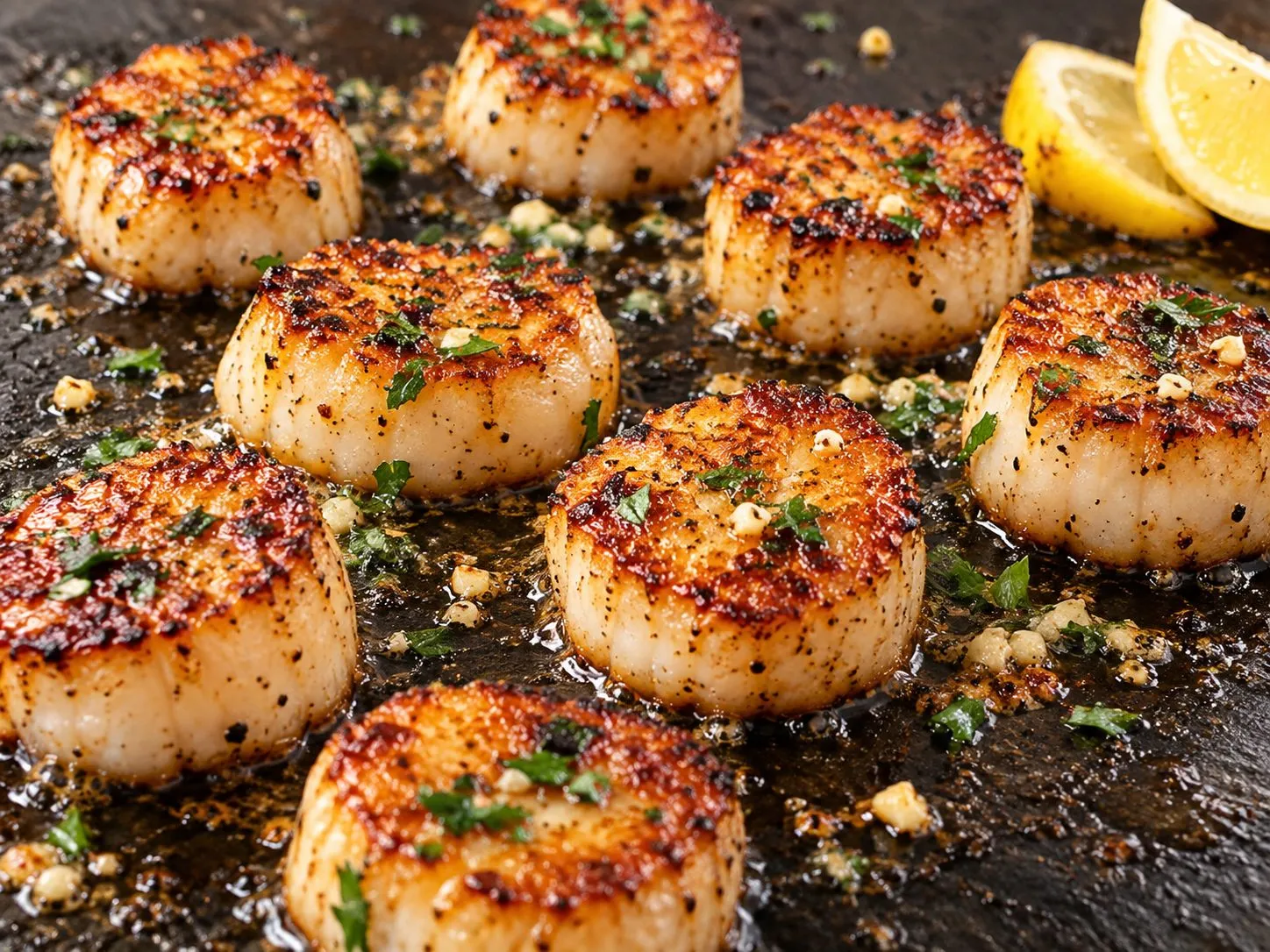
Blackstone Scallops Recipe (Seared Flat-Top)
How to sear scallops on a Blackstone griddle: buying the right kind, drying them properly, and getting a real golden crust without overcooking the center.