
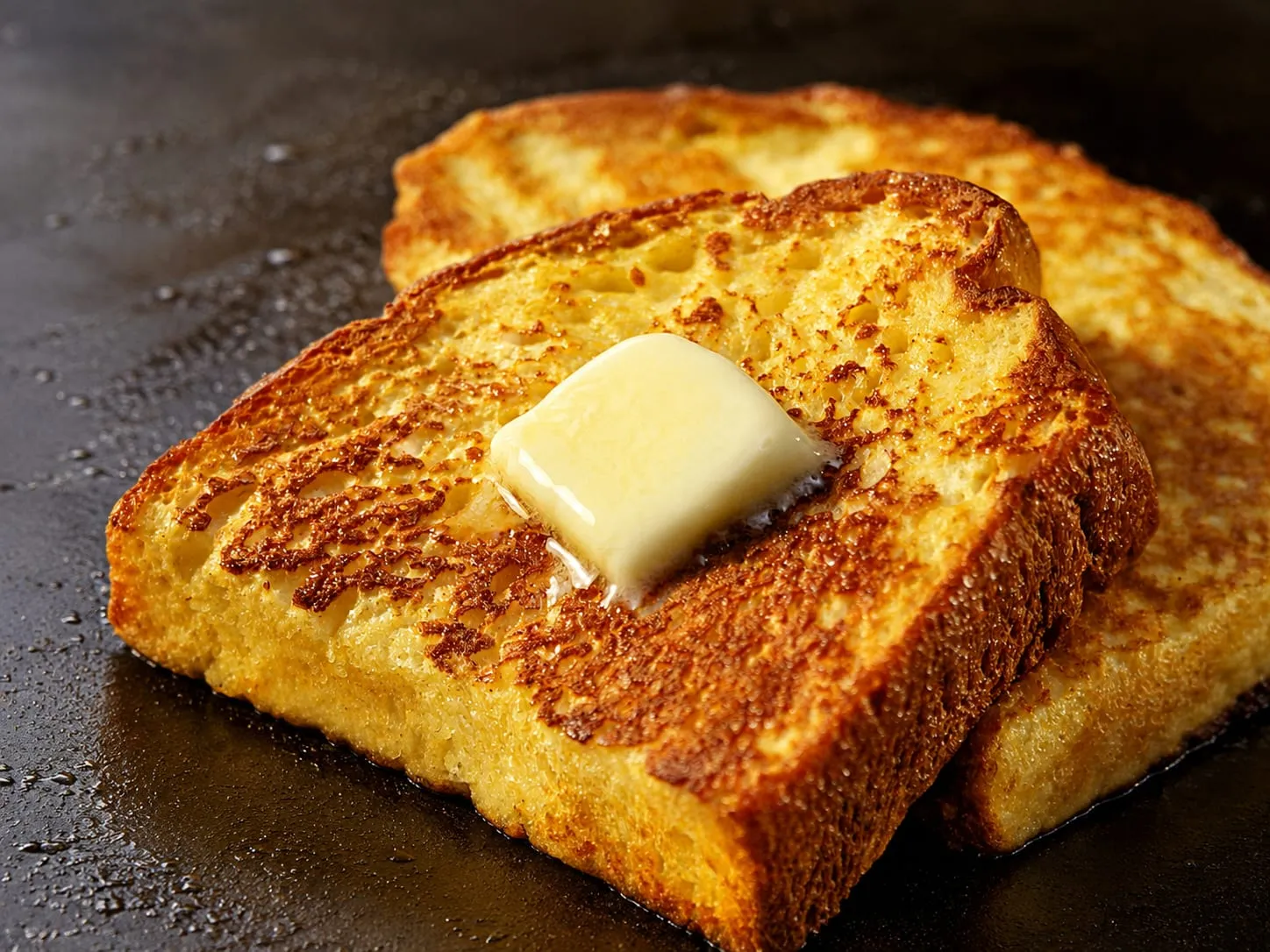
Blackstone French Toast Recipe: Golden, Fluffy, and Fast
French toast on a Blackstone is genuinely better than stovetop. The wide, flat surface heats the entire slice uniformly from edge to edge (no pale corners, no burnt center) and you can cook eight slices at once instead of two at a time in a pan. That even heat is what gives you a consistently golden crust across the whole face of each piece.
The two things that matter most: thick bread and low heat. Thin bread gets soggy before the outside can set. High heat burns the custard coating before the center warms through. Get both right and you have French toast worth making.
The Best Bread for Griddle French Toast
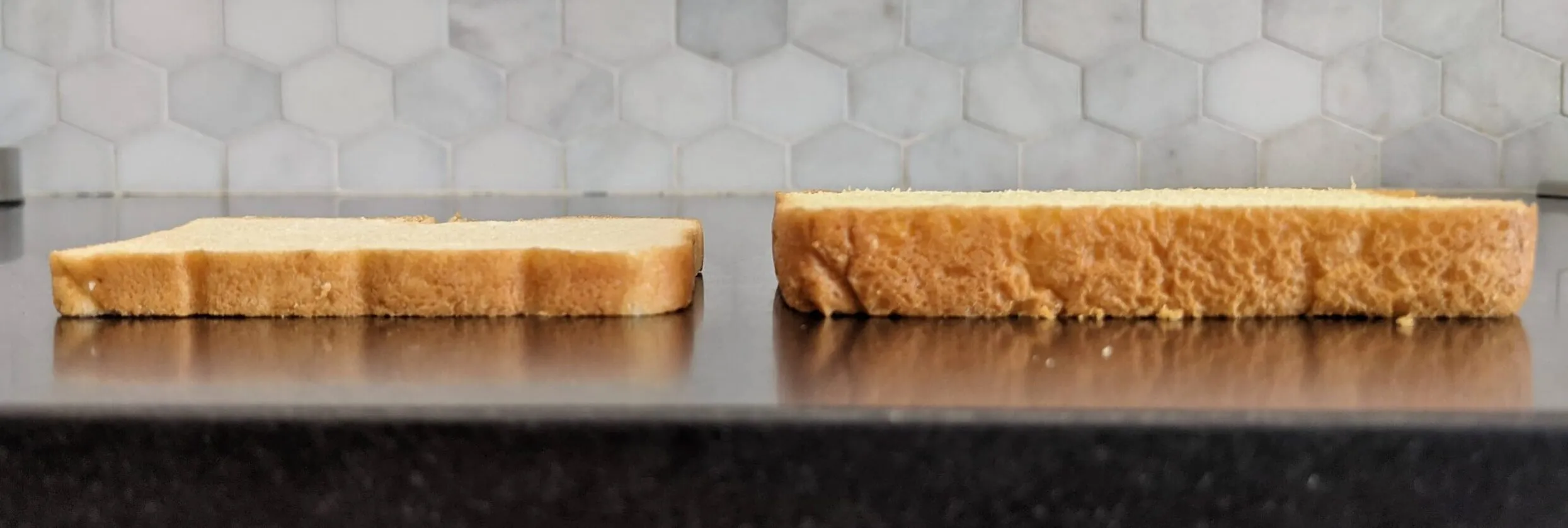
Brioche is the best choice by a clear margin. It’s made with eggs, butter, and sugar, which means it has a rich flavor that pairs naturally with the custard, and its tight crumb holds the egg mixture without falling apart. Buy a loaf and slice it yourself to ¾-1 inch thick.
Thick-cut white bread is the everyday alternative: neutral flavor, widely available, good results. If you can find an unsliced loaf, cut it yourself for thicker pieces.
Other options that work: Challah, sourdough, French bread, cinnamon raisin. The common thread: firm, thick slices. Thin sandwich bread absorbs too much custard and turns soggy on the griddle.
One trick: Lightly toast the bread on the griddle for 30 seconds per side before dipping in the custard. This dries the surface slightly and helps prevent sogginess.
Ingredients
The Custard
- 4 large eggs
- ¼ cup whole milk (or heavy cream for richer results)
- 2 tbsp granulated sugar
- 1 tsp vanilla extract
- 1 tsp ground cinnamon
- ¼ tsp ground nutmeg
- Pinch of salt
Everything Else
- 8 slices thick-cut brioche or white bread (¾-1 inch thick)
- 2 tbsp unsalted butter
- Avocado oil (to mix with butter, prevents burning)
For Serving
- Maple syrup (warm it)
- Powdered sugar
- Fresh berries
- Whipped cream or whipped butter
Instructions
Step 1: Make the Custard
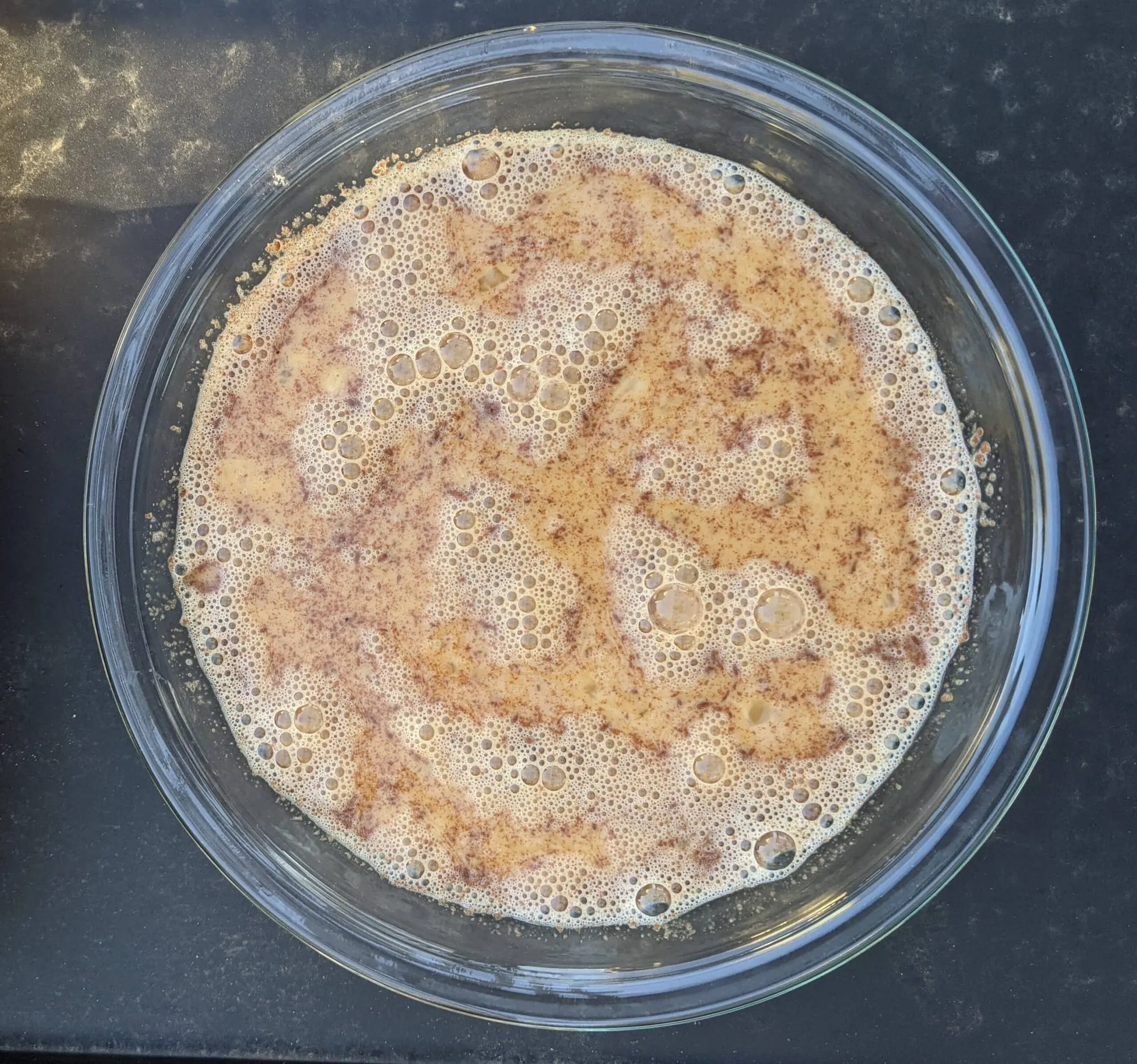
Whisk together eggs, milk, sugar, vanilla, cinnamon, nutmeg, and salt in a large shallow bowl: a glass baking dish works perfectly. The bowl needs to be wide enough to lay a slice of bread flat.
Step 2: Preheat the Blackstone
Set to medium-low heat and preheat 8-10 minutes. Target surface temperature: 325°F. French toast needs lower heat than most griddle cooking. The custard coating burns quickly above 350°F.
Step 3: Soak the Bread
Dip each slice into the custard for 5-10 seconds per side, no longer. You want the custard to coat the surface and penetrate slightly, not saturate the bread. Too long in the custard and the bread gets soggy and falls apart on the griddle. Lift each slice, let excess drip off for a second, then place on the griddle or hold on a plate.
Step 4: Butter the Griddle
Add a mix of butter and a small drizzle of avocado oil to the griddle surface. The oil raises the smoke point of the butter so you can use it at 325°F without burning. Let the butter foam before adding the bread.
Step 5: Cook
Place soaked bread slices on the buttered surface. Cook undisturbed for 3 minutes until the bottom is deep golden brown. Flip once and cook another 2-3 minutes on the second side.
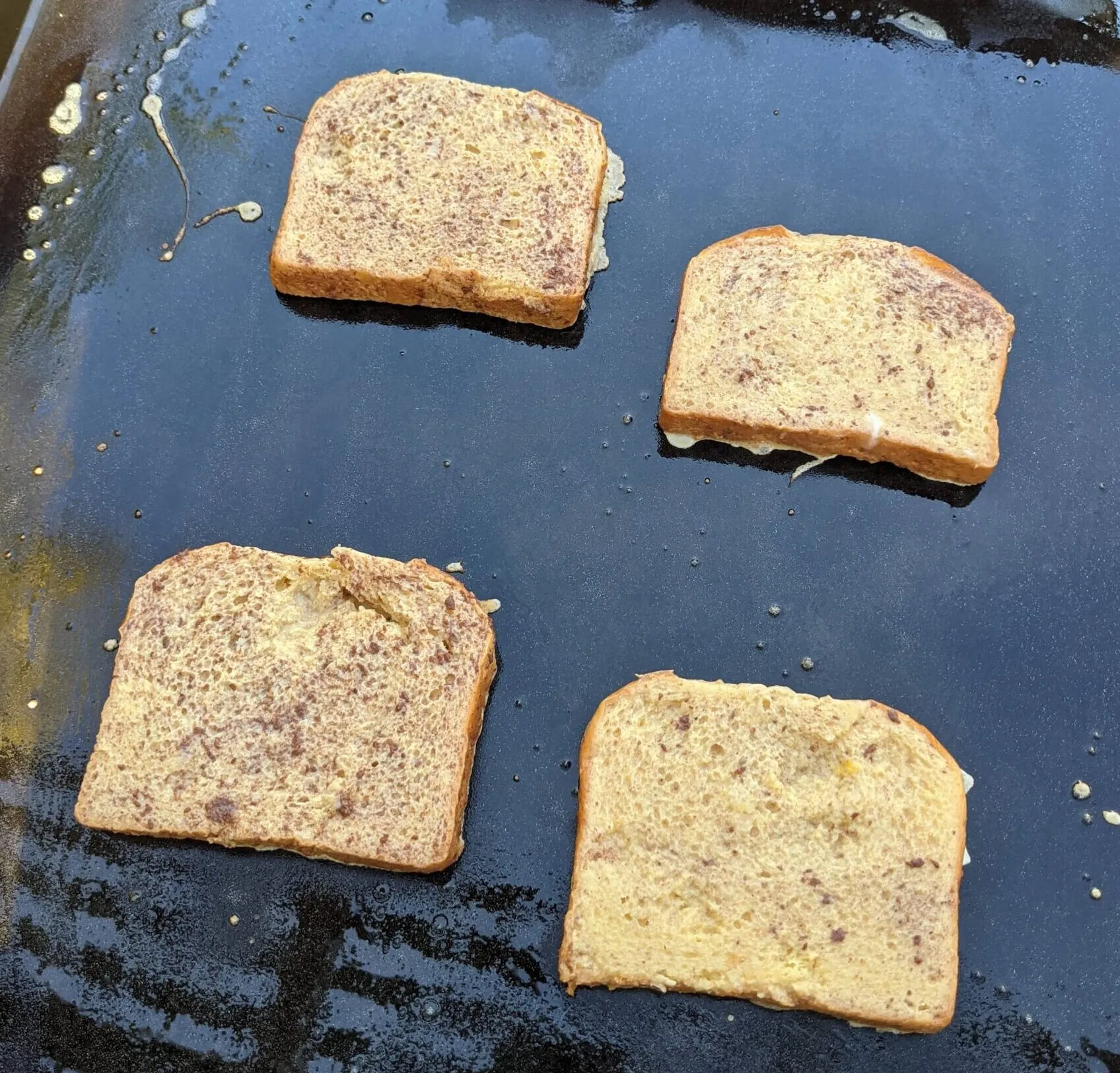
Don’t press down on the bread. Don’t move it around. Just let it cook.
Step 6: Serve Immediately
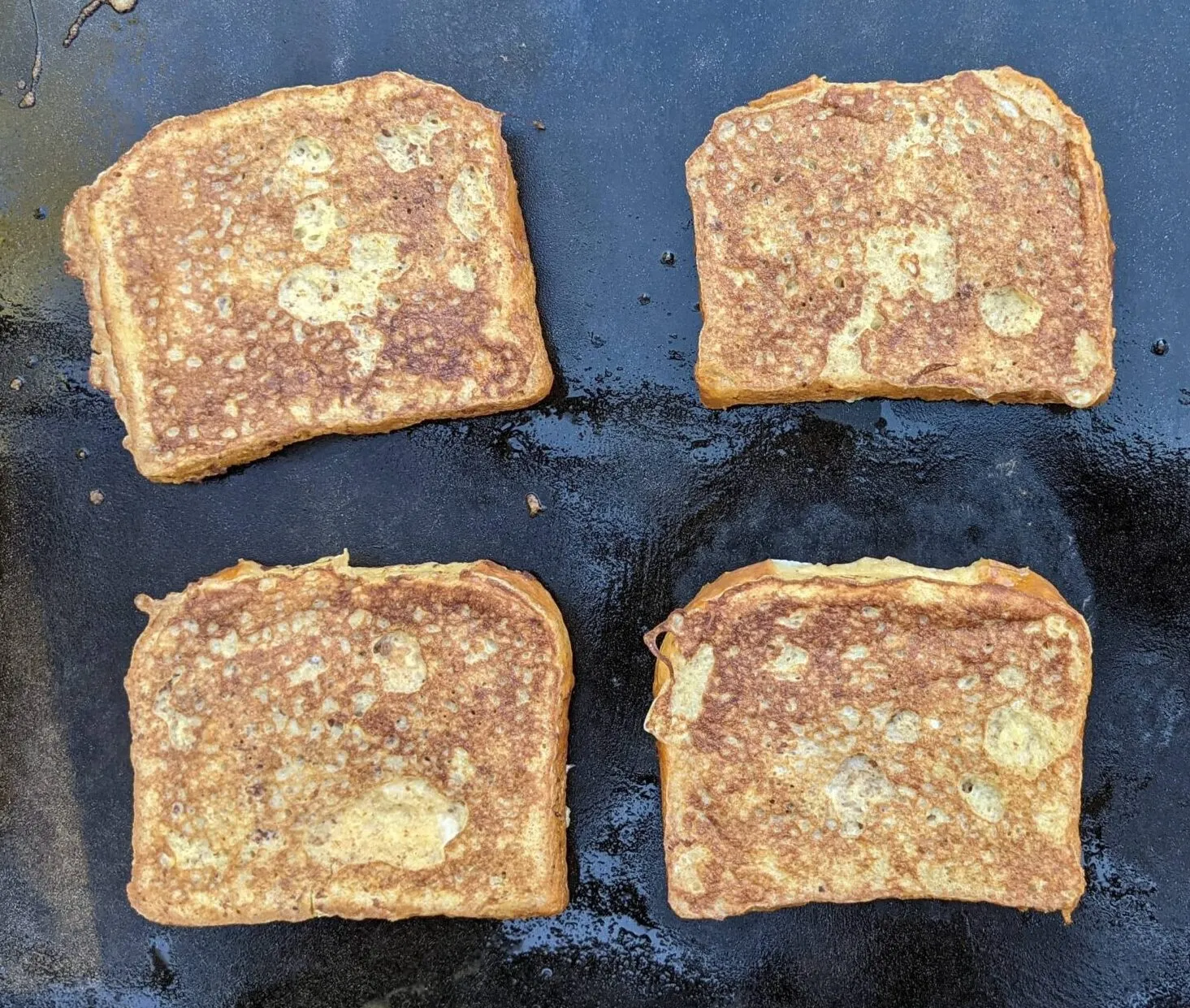
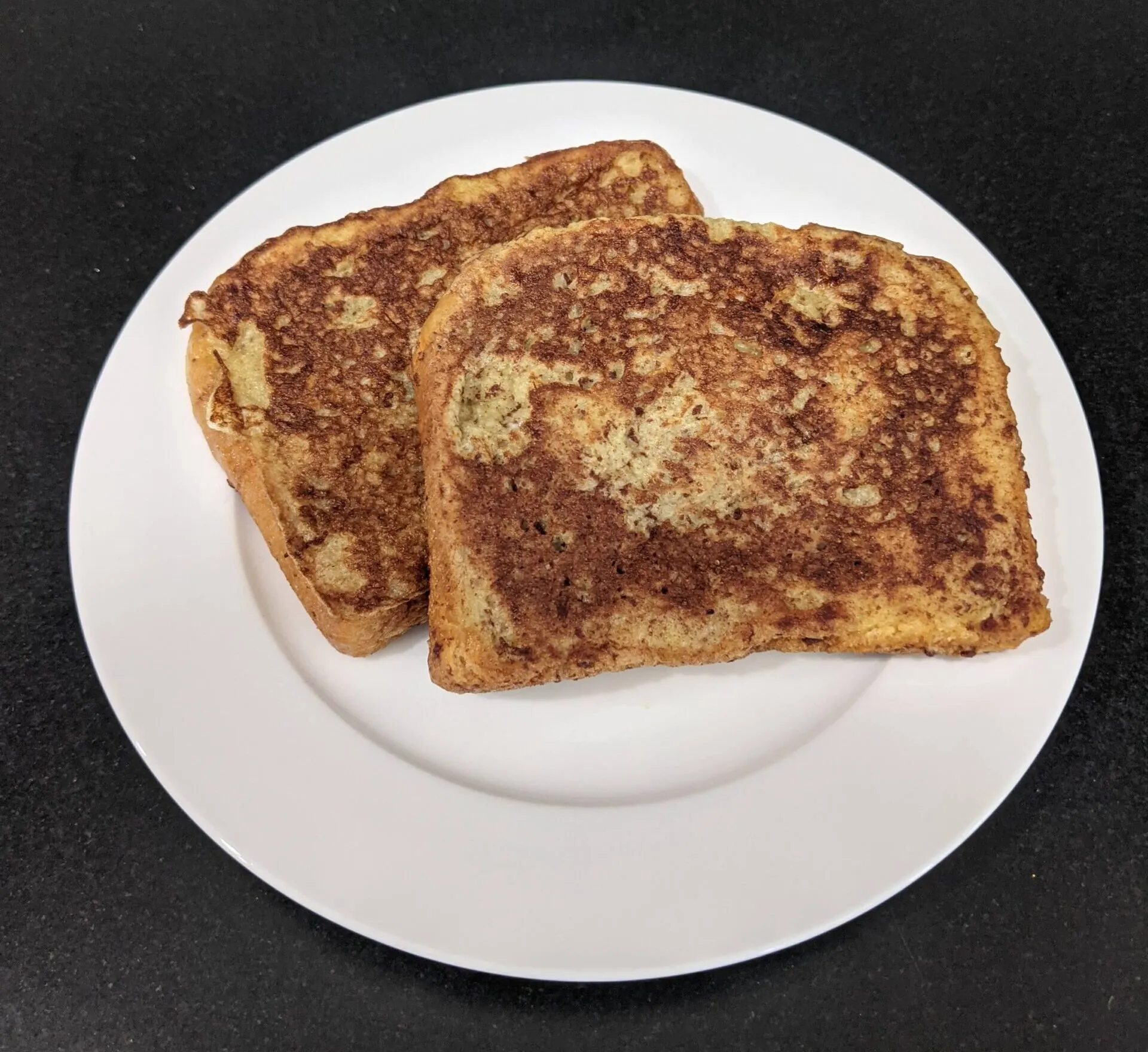
French toast doesn’t hold well. Serve it straight off the griddle with warm maple syrup and whatever toppings you like. If cooking multiple batches, hold finished pieces on a baking sheet in a 200°F oven.
Tips
Rewhisk the custard between batches. The cinnamon and sugar settle to the bottom. Give it a quick stir so each slice gets the same coating.
Butter burns at high heat, keep it medium-low. If your butter is browning in under 30 seconds after hitting the griddle, it’s too hot. Let it cool or add more oil to the mix.
Cream instead of milk makes a richer, more custardy interior. If you want that diner-style thick French toast, use half-and-half or heavy cream.
Freeze leftovers properly. Let pieces cool completely, place wax paper between each slice, and freeze in a bag. Reheat on the griddle at medium-low heat for 2-3 minutes per side. Far better than a microwave.
More flat-top recipes: Blackstone Breakfast Recipes · Monte Cristo (the savory version of this exact technique) · Blackstone Dessert Recipes
Frequently Asked Questions
What temperature should a Blackstone be for French toast?
325°F: medium-low heat. High heat burns the sugary egg custard before the bread warms through. If you don’t have an infrared thermometer, medium-low on most Blackstones lands around 325°F.
What bread is best for French toast on a griddle?
Thick-cut brioche: slice it yourself to ¾-1 inch. It has a rich, slightly sweet flavor that pairs perfectly with the custard, and its tight crumb holds up to soaking without falling apart. Thick-cut white bread, challah, and sourdough are good alternatives.
How do I keep French toast from getting soggy?
Two things: use thick bread (thin bread absorbs too much custard) and limit the soak to 5-10 seconds per side. Letting bread sit in the custard too long saturates it and it falls apart on the griddle.
How long does French toast take on a Blackstone?
3 minutes on the first side, 2-3 minutes on the second, 5-6 minutes per batch. At 325°F, the custard sets into a golden crust without rushing. Eight slices fit on a 36-inch Blackstone simultaneously.
Can I make French toast on a Blackstone for a crowd?
Yes. This is one of the best uses for a flat-top. A 36-inch Blackstone fits 8 thick slices at once. Make the custard in advance, have all your bread pre-sliced, and you can knock out French toast for 8-10 people in two batches. Pair with Blackstone bacon or Blackstone hashbrowns for a full griddle breakfast.
What temperature do you cook French toast on a Blackstone griddle?
Cook French toast at 325 degrees F (medium-low heat) on a Blackstone griddle. The egg custard mixture needs time to set through the bread without burning the exterior, about 3 minutes per side. Higher heat browns the outside while the center stays soggy.
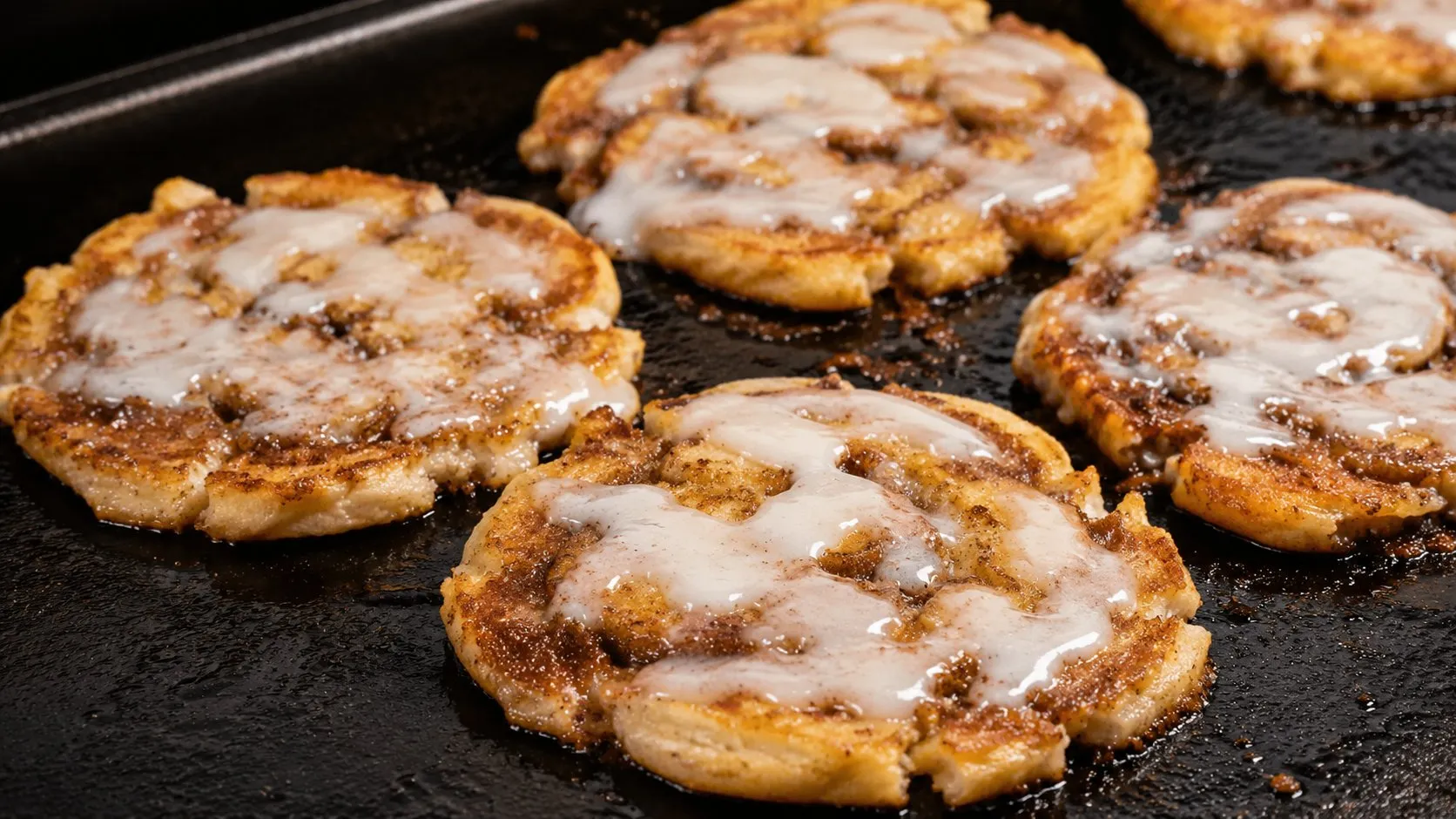
Blackstone Smashed Cinnamon Rolls (Viral Griddle Method)
Smashed cinnamon rolls on the Blackstone griddle: canned rolls pressed flat and cooked in butter at 325°F until crispy-edged and gooey, then iced warm. 10 minutes.
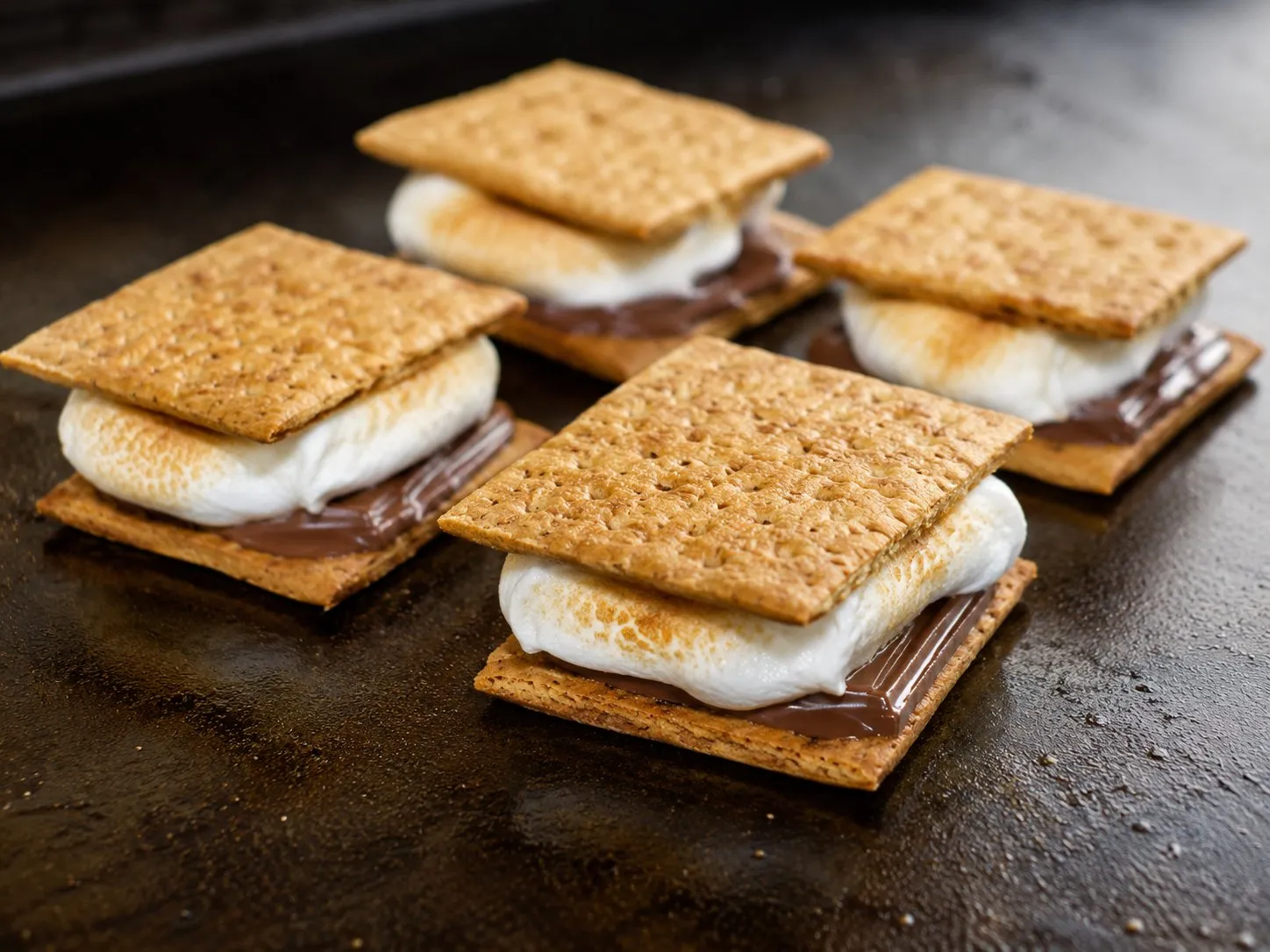
Blackstone S'mores (No Campfire Needed)
S'mores on the Blackstone griddle: a basting dome melts the chocolate and puffs the marshmallows evenly, no campfire required. Done in 10 minutes at 325°F.
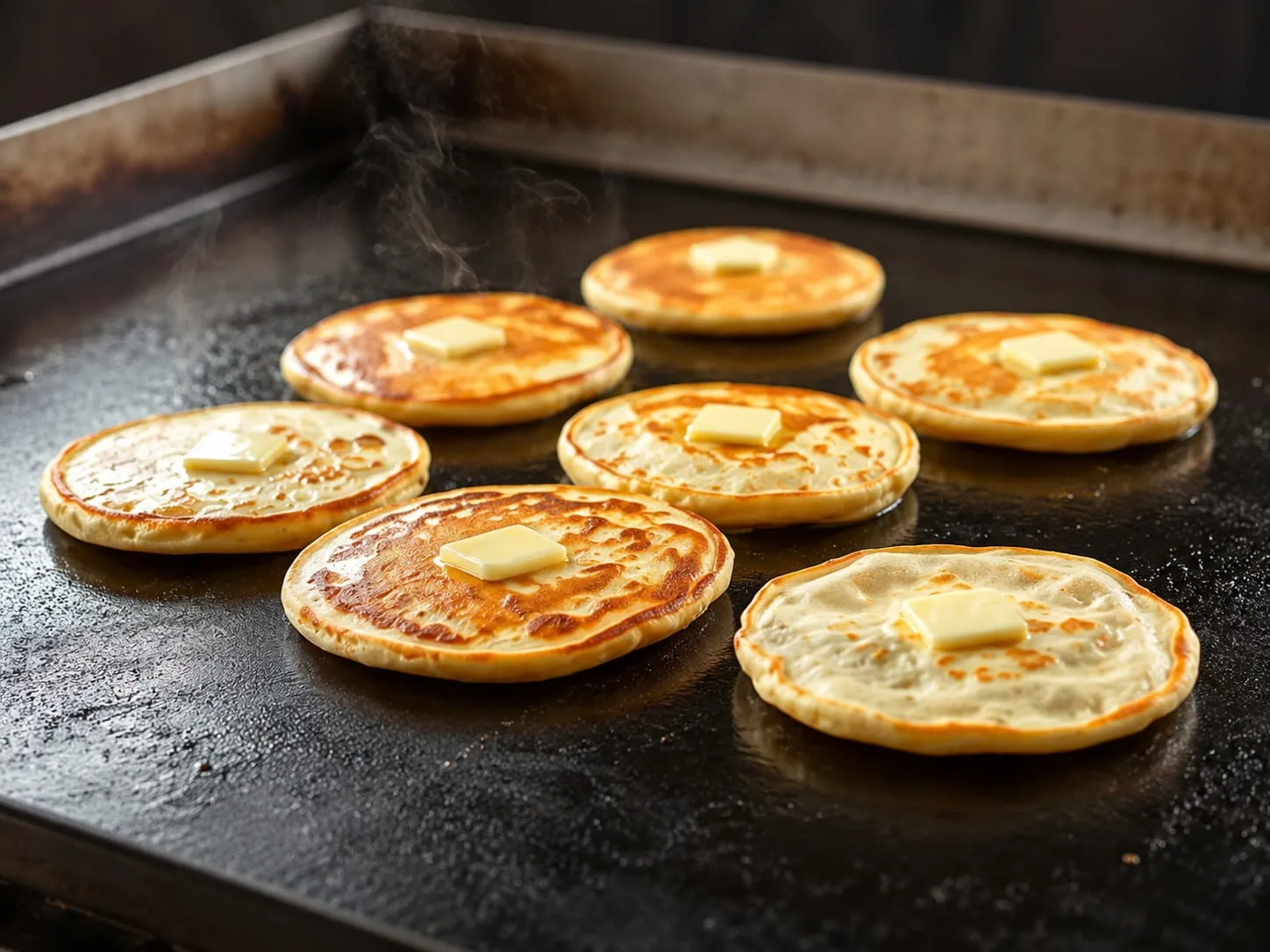
Blackstone Pancakes: Simple Batter and Buttermilk Recipes
Perfect pancakes on a Blackstone griddle: the right temperature, two from-scratch recipes (classic and buttermilk), and tips for light, fluffy results every time.