
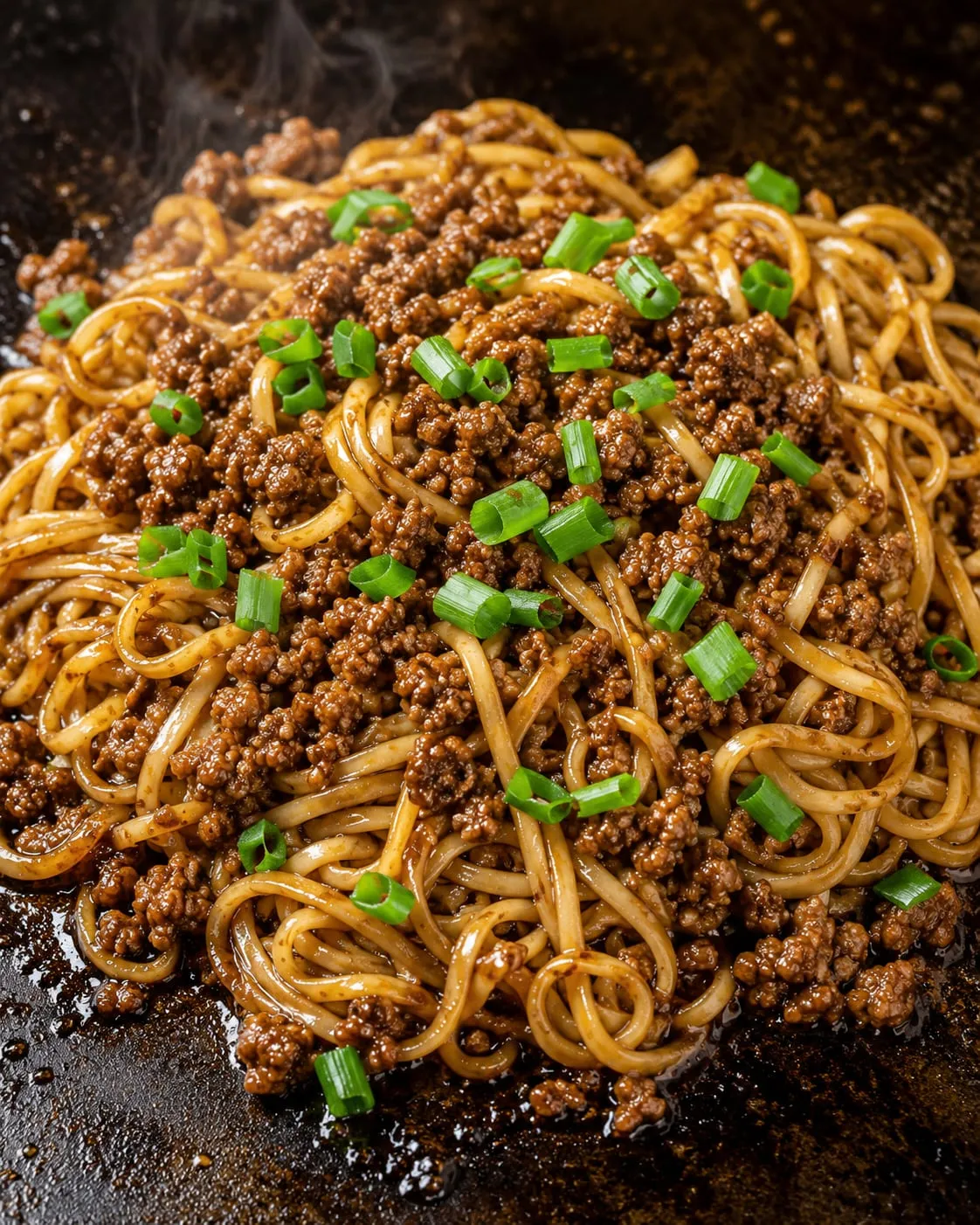
Blackstone Mongolian Ground Beef Noodles: 25-Minute Recipe
Equipment
Mongolian ground beef noodles have been everywhere lately, and for good reason. The dish is fast, uses cheap ingredients most people already have, and the Mongolian sauce (brown sugar, soy sauce, garlic, ginger, and a touch of hoisin) is one of those flavors that tastes like it took an hour and actually took five minutes to make.
On a Blackstone, the whole thing comes together on one surface. The ground beef browns properly in the high heat, the sauce caramelizes at the edges the way it would in a wok, and you can fold the noodles directly into the pan without dirtying a separate pot if you par-cook them ahead of time.
This is a genuine 25-minute weeknight dinner, and it feeds four.
Ingredients
The Beef
- 1.5 lbs 80/20 ground beef
- Salt and pepper to taste
- 1 tbsp avocado or vegetable oil
Mongolian Sauce
- ⅓ cup low-sodium soy sauce
- 3 tbsp brown sugar
- 2 tbsp hoisin sauce
- 1 tbsp oyster sauce
- 4 garlic cloves, minced
- 1 tsp fresh ginger, grated (or ½ tsp ground ginger)
- 1 tsp sesame oil
- ½ tsp red chili flakes (optional, for heat)
- ¼ cup water
The Noodles
- 12 oz dried lo mein noodles (or ramen noodles, spaghetti in a pinch)
- 1 tbsp sesame oil (for tossing after cooking)
Vegetables
- 4 green onions, cut into 1-inch pieces (white and green parts separated)
- 3 garlic cloves, thinly sliced
- 1 cup shredded carrots (optional but good)
For Serving
- Additional sliced green onions
- Sesame seeds
- Chili oil or sriracha
Make the Sauce First
Whisk together the soy sauce, brown sugar, hoisin, oyster sauce, garlic, ginger, sesame oil, chili flakes, and water in a small bowl until the sugar dissolves. Set aside. This goes on the beef and noodles during the last few minutes of cooking. You can make this up to a week ahead and keep it in the fridge.
Cook the Noodles Ahead
Boil the lo mein noodles according to package directions (usually 3-4 minutes). Cook them about 1 minute short of done. They’ll finish on the griddle. Drain, toss with 1 tbsp sesame oil to prevent sticking, and set aside. Have them ready at room temp before you start cooking.
If you’re using ramen noodle bricks, break them up and cook 2 minutes. Discard the seasoning packets.
Instructions
Step 1: Preheat the Blackstone
Set to medium-high heat and preheat 10 minutes. You want the surface around 400°F: hot enough to properly brown the beef without steaming it.
Step 2: Brown the Ground Beef
Add a thin layer of oil to the griddle. Add the ground beef and spread it out into a thin, even layer. Do not stir for 2 minutes: let it sear and develop color on the bottom. Then break it apart with a spatula and cook another 3-4 minutes, chopping as you go, until fully browned with no pink remaining and some crispy edges forming. Season with salt and pepper.
Push the beef to a lower-heat zone on the side.
Step 3: Cook the Aromatics
Add the white parts of the green onions and the sliced garlic to the open zone of the griddle with a drizzle of oil. Stir-fry for 60-90 seconds until fragrant and just softened. Add the shredded carrots if using and cook another minute.
Step 4: Add the Noodles
Add the par-cooked noodles to the griddle. Spread them out and let them sit on the hot surface for 30-45 seconds without moving. You want a few lightly crisped spots. Toss with two spatulas to mix in the aromatics.
Step 5: Combine with Beef and Add Sauce
Fold the browned beef back into the noodles. Pour the Mongolian sauce over everything. Toss everything together continuously for 1-2 minutes as the sauce coats the noodles and beef and caramelizes slightly at the edges. The sauce will thicken and reduce. Once it’s glossy and clinging to the noodles rather than pooling at the bottom, you’re done.
Add the green parts of the green onions in the last 30 seconds.
Step 6: Serve
Plate immediately. Top with extra sliced green onions, a sprinkle of sesame seeds, and a drizzle of chili oil if you want heat.
Tips for the Best Results
Don’t skip the sear on the beef. Ground beef dumped and immediately stirred on the griddle browns unevenly and never gets the crispy bits that give this dish texture contrast. Let it sit and build color, then break it up.
Slightly undercook the noodles. Lo mein that’s cooked fully before it hits the griddle turns mushy when the sauce coats it. Pull it 1 minute short. The griddle finishes it perfectly.
The sauce thickens fast. Once it hits the hot griddle, the sugar reduces quickly. Keep tossing and don’t walk away. 90 seconds of tossing is usually enough; more than that and the sauce starts to stick.
80/20 beef is the right choice. The fat content is what lets the beef get those crispy edges when left alone on the griddle. Leaner beef just steams in its own juices.
Make a double batch of sauce. It keeps in the fridge for a week and works on chicken, shrimp, or just straight fried rice. The ratio is easy to scale.
Variations
Spicy Mongolian noodles: Double the red chili flakes and add 1 tbsp sriracha to the sauce. Finish with chili oil instead of sesame oil.
Ground turkey version: Works well. Turkey is leaner, so don’t skip the oil and pull it off the heat faster. It dries out more readily than beef.
Add vegetables: Broccoli florets, snap peas, and baby bok choy all work well. Cook them separately on a second zone of the Blackstone while the beef browns, then combine at Step 5.
Swap the protein: Thinly sliced flank steak or chicken thighs cooked on the griddle first work in place of ground beef. See Blackstone carne asada for the flank steak approach. Cook as described for those proteins, slice, and fold in at Step 5.
More flat-top recipes: Blackstone Asian Recipes · Blackstone Ground Beef Recipes · Blackstone Dinner Ideas
Frequently Asked Questions
What noodles are best for Mongolian beef noodles?
Lo mein noodles are the most authentic choice and hold up well to the sauce without going mushy. Ramen noodles (the block kind, without the seasoning packets) are an excellent budget substitute. In a pinch, spaghetti or linguine cooked to al dente works fine. Just don’t overcook it.
Can I make Mongolian ground beef noodles without a griddle?
Yes. A large wok or cast iron skillet over high heat works. The Blackstone advantage is the surface area (you can cook the beef in a flat layer without crowding) and the higher, more even heat. On a stovetop, cook in batches if needed.
What is Mongolian sauce made of?
The base is soy sauce, brown sugar, garlic, and ginger: the same flavor profile as Mongolian beef at Chinese-American restaurants. Hoisin and oyster sauce add depth and a slight sweetness. Sesame oil adds the finish. It’s not an authentic Mongolian recipe; the name comes from the American Chinese restaurant style.
Can I use ground turkey or chicken instead of beef?
Yes. Ground turkey works well and has a lighter flavor that takes on the sauce nicely. Chicken is a bit drier. Add a splash of oil to the griddle before cooking and don’t cook past 165°F. The technique is the same as for beef.
How do I keep the noodles from sticking together before they go on the griddle?
Toss them with a tablespoon of sesame oil immediately after draining. The oil coats each strand and prevents clumping. Don’t rinse the noodles with water. That washes off the starch that helps the sauce cling.
How do I store and reheat leftover Mongolian beef noodles?
Refrigerate in an airtight container for up to 4 days. Reheat in a pan over medium heat with a splash of water or soy sauce to loosen the sauce. Microwaving works but the noodles go softer. The leftovers are genuinely good: the sauce develops more depth overnight.
What temperature do you cook Mongolian ground beef noodles on a Blackstone griddle?
Cook Mongolian ground beef noodles at around 400°F (medium-high heat). That is hot enough to brown the beef without steaming it, and the noodles pick up a few crisp spots when they sit on the same surface for 30-45 seconds before you toss them in the sauce.
Egg Roll in a Bowl on Blackstone: Easy, Healthy, 15 Minutes
Egg roll in a bowl on a Blackstone griddle, ground pork or chicken with cabbage, carrots, and a savory ginger-soy sauce. Fast, healthy, and done in 20 minutes.
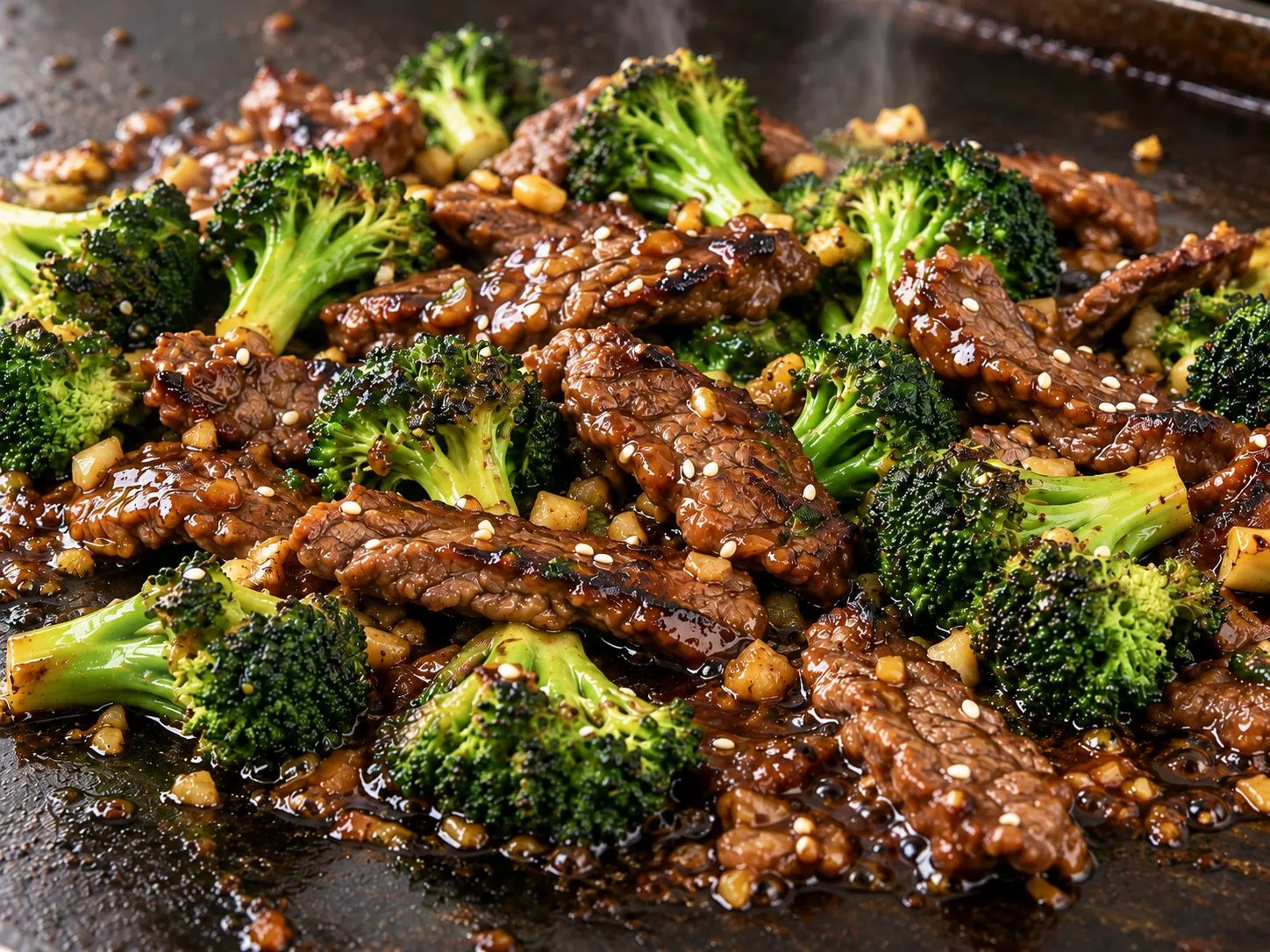
Blackstone Beef and Broccoli
Beef and broccoli on a Blackstone griddle: velveted flank steak seared hard, broccoli charred crisp-tender, tossed in a glossy oyster sauce. Ready in 35 minutes.
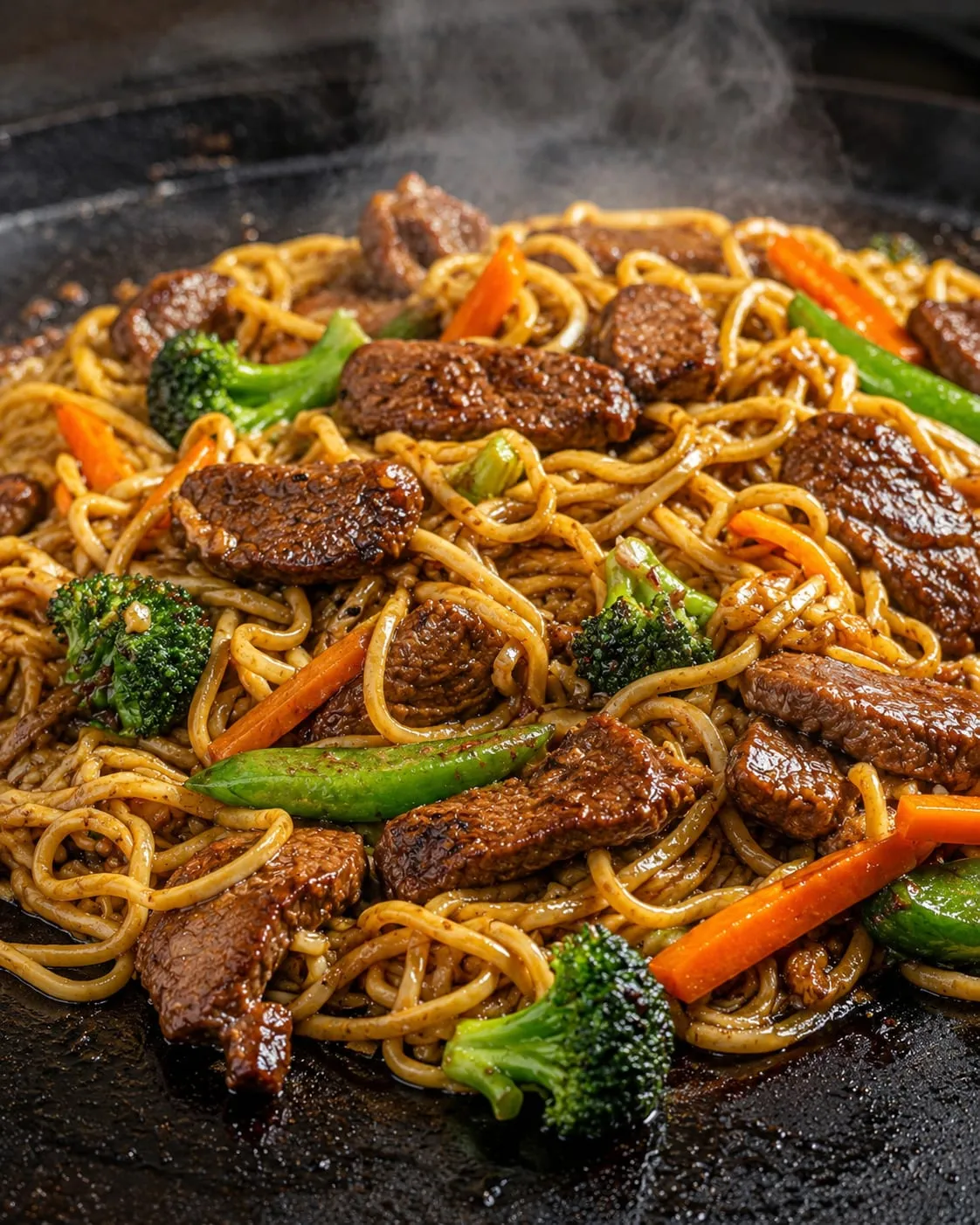
Blackstone Lo Mein: Better Than Takeout on the Flat Top
How to make lo mein on a Blackstone griddle: egg noodles, vegetables, and your choice of protein stir-fried in a savory soy and sesame sauce at high heat.