
Blackstone Hibachi Chicken Recipe (Better Than the Restaurant)
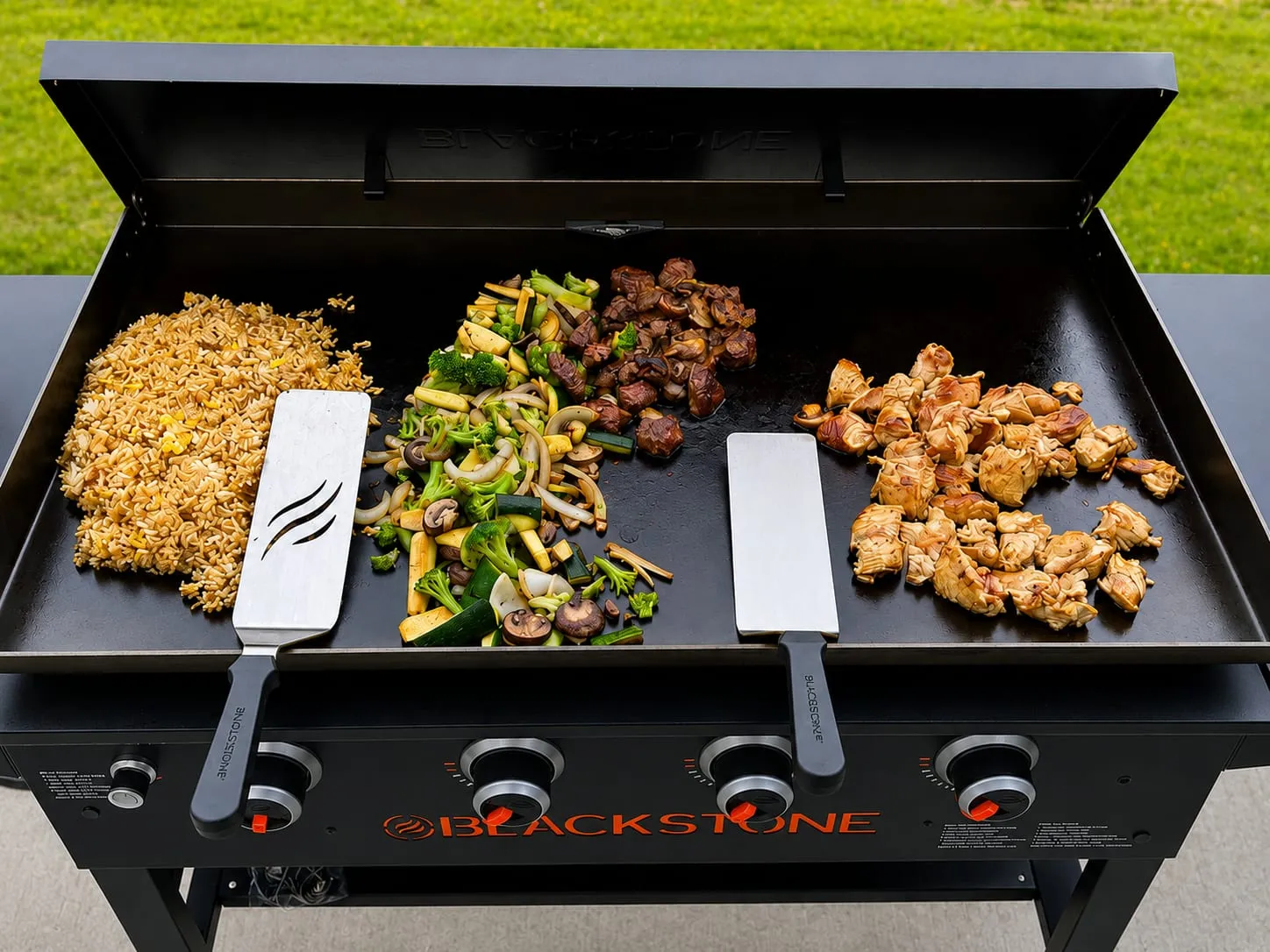
Blackstone hibachi chicken is one of the most requested things you can make on a flat-top, and once you understand what actually makes hibachi taste like hibachi, you’ll never pay restaurant prices again. The answer is simple: butter, garlic, and soy sauce at high heat. That combination on a screaming-hot Blackstone creates the same caramelized, savory crust you get at a Japanese steakhouse, and the wide flat surface lets you cook the chicken, fried rice, and vegetables all at once, just like the pros. Running all three zones at once takes practice. The layout below is the one that finally made it repeatable for me.
This recipe covers the full meal: garlic butter hibachi chicken, hibachi fried rice, stir-fried vegetables, and a homemade yum yum sauce that takes about two minutes to make. Plan for 30-35 minutes start to finish.
Prep time: 15 minutes · Cook time: 20 minutes · Serves: 4
What Makes It Taste Like Hibachi
Three things separate hibachi chicken from regular grilled chicken:
- Butter over oil. Hibachi chefs use butter generously. It creates richness and helps caramelize the soy sauce against the hot surface.
- High heat and quick cooking. The chicken goes on a hot griddle (400°F+) and cooks fast. This creates a sear rather than a steam.
- The sauce goes on at the end. Adding the hibachi glaze in the last minute lets it caramelize against the steel instead of just coating wet chicken.
Ingredients
Hibachi Chicken
- 2 lbs boneless, skinless chicken thighs, cut into 1½-inch pieces
- 3 tbsp unsalted butter
- 4 garlic cloves, minced
- 3 tbsp soy sauce
- 1 tbsp sesame oil
- 1 tsp fresh ginger, grated (or ½ tsp ground ginger)
- Salt and black pepper
- Vegetable oil for the griddle
Hibachi Vegetables
- 1 large zucchini, sliced into half-moons
- 1 large yellow onion, cut into wedges
- 8 oz mushrooms (cremini or button), halved
- 1 tbsp butter
- 2 tbsp soy sauce
- Salt and pepper
Hibachi Fried Rice
- 4 cups cooked white rice, chilled overnight (this is non-negotiable: fresh rice turns to mush)
- 2 eggs, beaten
- ½ cup frozen peas and carrots, thawed
- ½ yellow onion, diced small
- 2 tbsp butter
- 3 tbsp soy sauce
- 2 green onions, sliced
Yum Yum Sauce (White Sauce)
- ½ cup mayonnaise
- 1 tbsp ketchup
- 1 tbsp melted butter
- 1 tsp garlic powder
- 1 tsp sugar
- ½ tsp paprika
- 1 tbsp water (to thin)
- Salt to taste
Make the Yum Yum Sauce First
Whisk all sauce ingredients together in a small bowl until smooth. Taste and adjust: more ketchup for color, more sugar for sweetness, more garlic powder for punch. Cover and refrigerate while you cook. It keeps for a week in the fridge and gets better as the flavors meld.
This is the sauce that makes or breaks the meal. Make it at least 30 minutes ahead if you can.
How to Cook Hibachi on a Blackstone
Step 1: Preheat and Set Up Zones
Preheat all burners on high for 10-15 minutes. You want the surface at 400-425°F before anything goes on. Set up three zones:
- Left side (high): Chicken
- Center (medium-high): Fried rice
- Right side (medium): Vegetables
Step 2: Cook the Vegetables First
Add a thin layer of oil and 1 tbsp butter to the right side. Add onions first. They take the longest. Cook 3 minutes, stirring occasionally, then add mushrooms and zucchini. Season with salt and pepper. After 4-5 minutes, add soy sauce, toss to coat, and push to the far right edge to hold.
Step 3: Start the Fried Rice
Add 2 tbsp butter to the center zone. Add the diced onion and cook 2 minutes. Add cold rice and break it up with your spatula. Every grain should separate. Let it sit undisturbed for 60 seconds to develop a crust, then toss with two spatulas. Push rice to the sides to create a well, crack in the eggs and scramble. Fold eggs into rice. Add peas, carrots, soy sauce, and green onions. Toss to combine. Move to the holding zone (low heat edge) while you cook the chicken.
Step 4: Cook the Hibachi Chicken
Add a thin layer of oil to the high-heat zone. Add chicken pieces in a single layer. Don’t crowd. Season with salt and pepper. Don’t move them for 2-3 minutes. Let the sear develop. Flip and cook another 2-3 minutes.
In a small bowl, combine butter, minced garlic, soy sauce, sesame oil, and ginger. Pour over the chicken in the last 90 seconds of cooking. Let it sizzle and caramelize, tossing the chicken in the glaze as it bubbles. Pull when internal temp hits 165°F.
Step 5: Plate and Serve
Plate rice and vegetables on one side, chicken on the other. Add a side of yum yum sauce for dipping. Garnish with sliced green onions and sesame seeds if you have them.
Tips for the Best Results
Use chicken thighs, not breasts. Thighs have more fat and stay juicy at high heat. Breasts dry out fast if you’re even slightly over.
Cold rice is mandatory. Freshly cooked rice has too much moisture. It steams instead of frying and turns into a sticky clump. Cook your rice the day before and refrigerate it.
Cook in the right order. Vegetables → Rice → Chicken. The chicken takes the least time and should come off the griddle last and go directly to the table.
Don’t overcrowd the chicken. If pieces are touching, they steam instead of sear. Cook in batches if your griddle is small.
The glaze goes in last. Adding soy sauce and butter too early causes burning. Add it in the final 90 seconds so it caramelizes against the hot surface rather than charring.
More flat-top recipes: Blackstone Asian Recipes · Potstickers · Blackstone Dinner Ideas · Yum Yum Sauce Recipe · Mushrooms and Onions
Frequently Asked Questions
What is the difference between hibachi and teppanyaki?
In the US, “hibachi” has become the common term for the Japanese steakhouse cooking style, but the technically correct term is teppanyaki, cooking on a large flat iron plate (teppan). A traditional hibachi is a small charcoal grill. On a Blackstone, you’re doing teppanyaki-style cooking, even if everyone calls it hibachi.
What cut of chicken is best for hibachi?
Boneless, skinless chicken thighs. They stay juicy at the high heat required for a proper sear and have more flavor than breast meat. If you prefer chicken breast, cut it thicker (1½ inches) and pull it at exactly 165°F internal temp.
Can I make hibachi steak on the Blackstone instead?
Yes. Use ribeye or sirloin cut into bite-sized pieces. Cook on the same high-heat zone. Steak cooks faster than chicken, so cut thicker (1½ inches) and pull at 130-135°F for medium-rare, or 145°F for medium.
What oil should I use for hibachi on a Blackstone?
Vegetable oil or avocado oil for the griddle surface. Use butter for the chicken glaze itself: butter is part of what gives hibachi its distinct richness, and it handles short bursts of high heat fine when added near the end of cooking.
Can I add shrimp to this recipe?
Absolutely. Cook shrimp separately on the high-heat zone. They take 1-2 minutes per side max. Pull them the moment they turn pink and opaque. Add to the plate alongside the chicken.
How do I make the fried rice not stick to the griddle?
Two things: use cold day-old rice, and make sure the griddle is well-seasoned with butter before the rice goes on. If rice is sticking, add a small amount of butter and keep the heat at medium-high. Lower heat causes more sticking than higher heat.
What temperature should the Blackstone be for hibachi cooking?
Preheat all burners on high until the surface reads 400-425°F, then set three zones: high for the chicken, medium-high for the fried rice, and medium for the vegetables. Use an infrared thermometer to check. Burner knob positions vary between griddles. See my griddle temperature guide for the full breakdown.
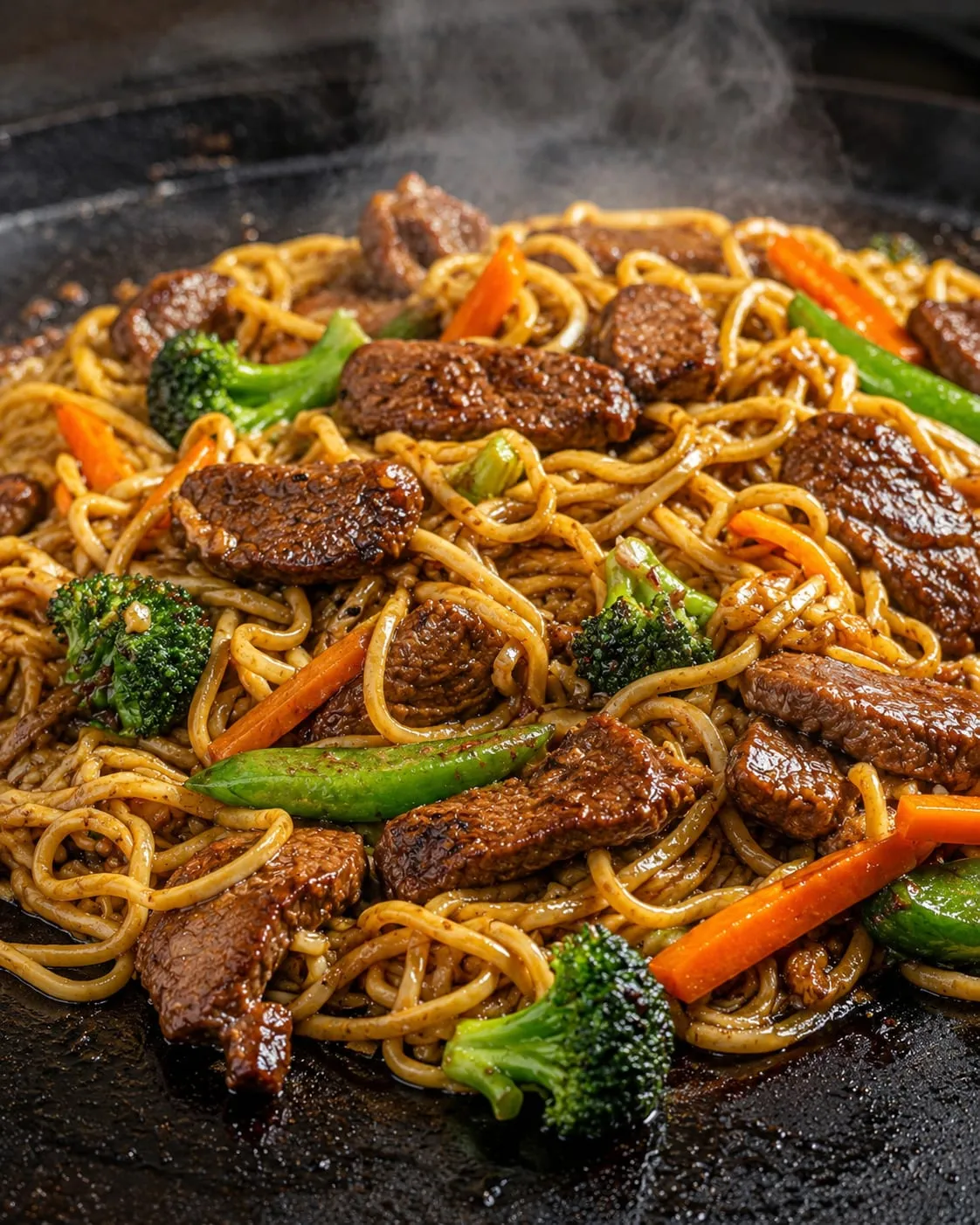
Blackstone Lo Mein: Better Than Takeout on the Flat Top
How to make lo mein on a Blackstone griddle: egg noodles, vegetables, and your choice of protein stir-fried in a savory soy and sesame sauce at high heat.
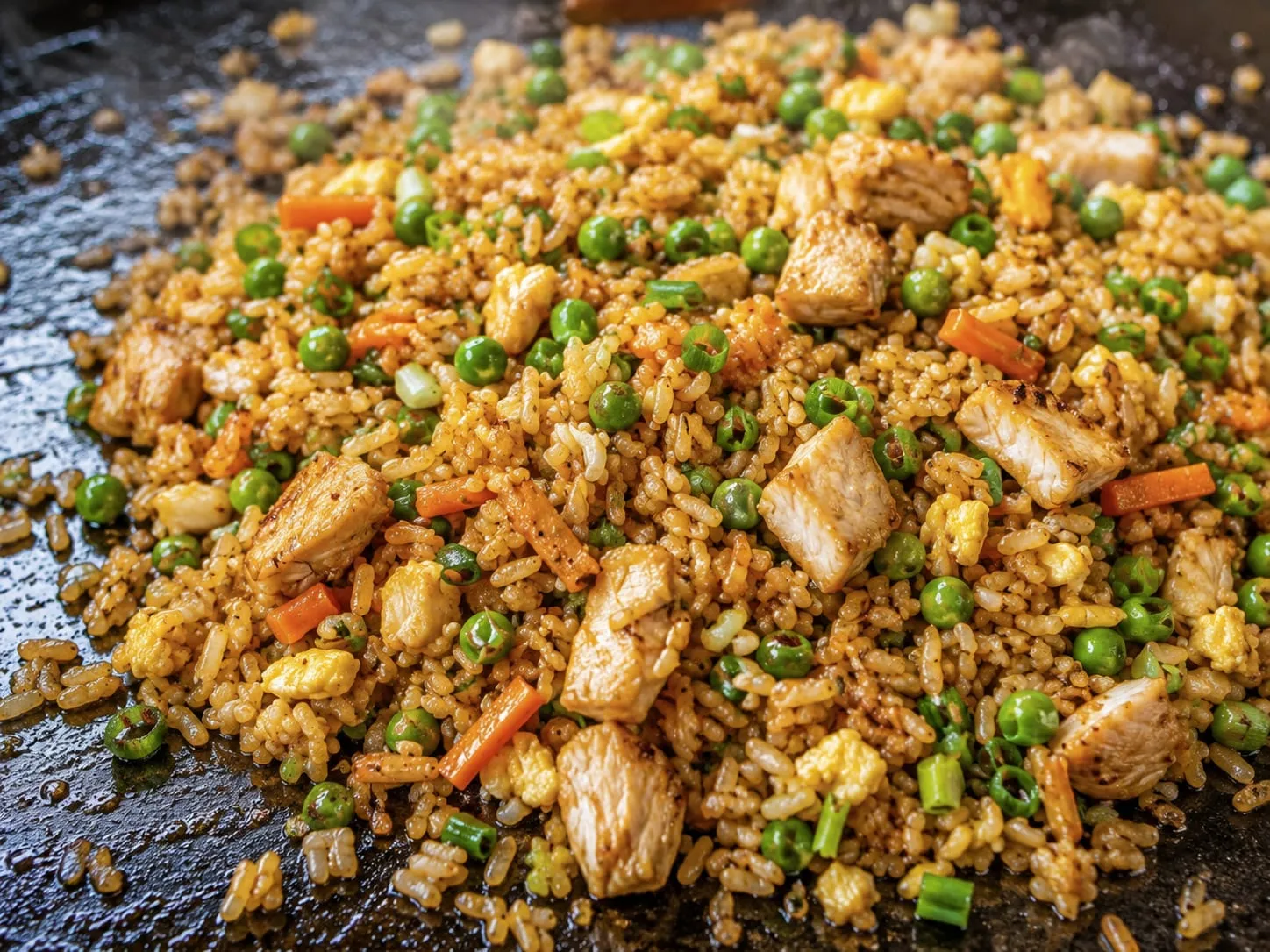
Blackstone Chicken Fried Rice: A Complete One-Griddle Meal
The best Blackstone chicken fried rice, seasoned thighs, day-old rice, eggs, and vegetables stir-fried on a screaming-hot flat-top in 25 minutes.
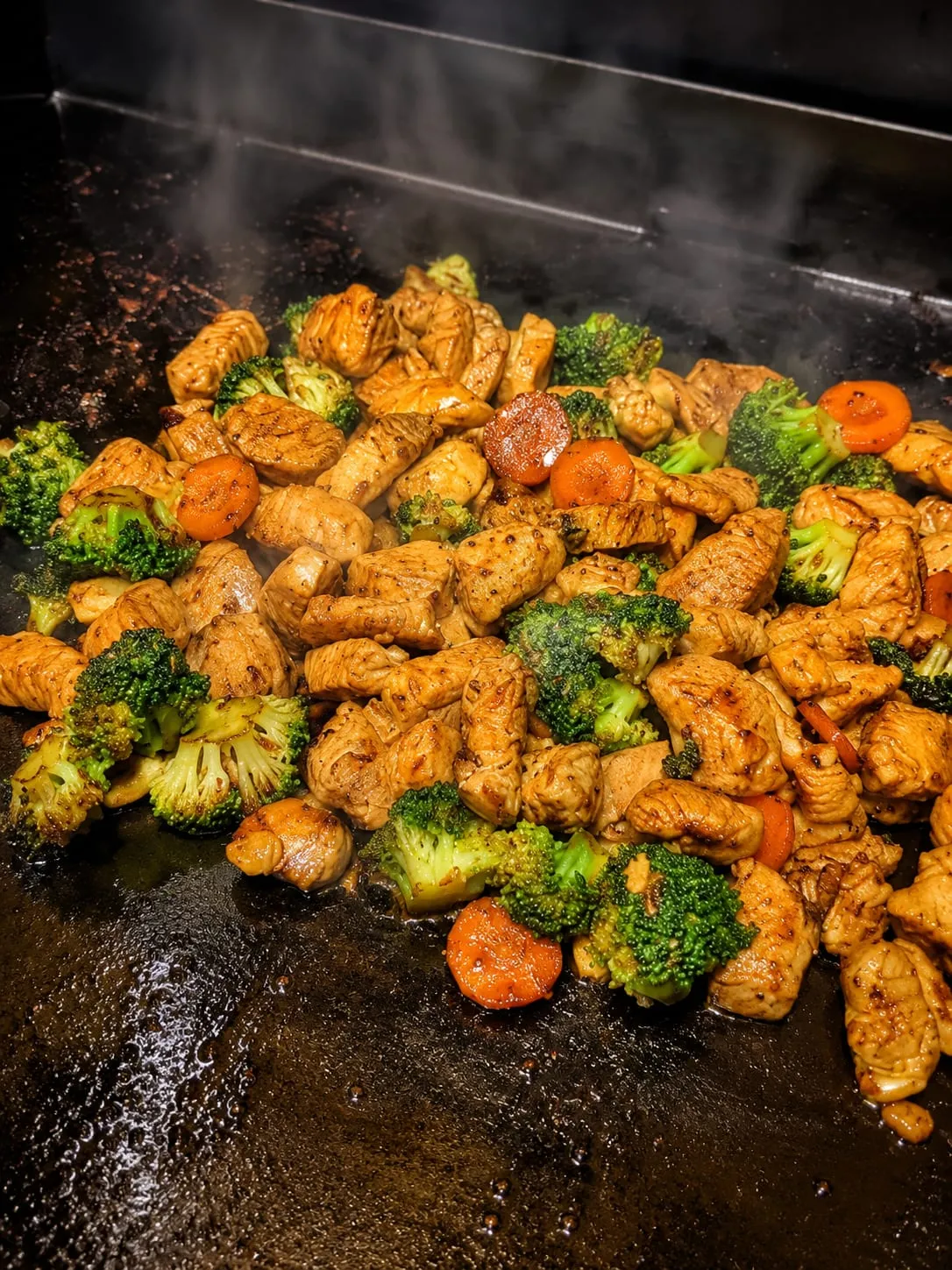
Blackstone Chicken Stir Fry with Noodles: Better Than Takeout
Chicken stir fry on a Blackstone griddle: high-heat seared chicken, crispy vegetables, and lo mein noodles in a savory sauce. Ready in 20 minutes.