
How to Clean a Blackstone Griddle (Daily + Deep Clean)
Cleaning a Blackstone griddle the right way takes about five minutes after most cooks. Do it consistently and you’ll almost never need to deep clean, and you’ll rarely deal with rust. Skip it or do it wrong and you’ll spend 45 minutes restoring a surface you could have maintained in five.
This guide covers everything: the after-cook routine you should do every single time, when and how to deep clean, how to maintain the grease trap, rust removal, the mistakes that ruin griddles faster than anything else, and long-term storage care.
Tools You’ll Need
Keep these within reach of your griddle at all times:
| Tool | What It’s For |
|---|---|
| Metal scraper | Primary debris removal, the most-used tool you own |
| Squirt bottle with water | Controlled steam cleaning; never flood the surface |
| Paper towels | Wiping, drying, applying oil |
| High smoke point oil | Protective coat after every clean, see our best oil for Blackstone griddle guide |
| Griddle stone / pumice brick | Deep cleaning and carbon removal without chemicals |
| Coarse steel wool | Heavy rust removal only, requires full re-seasoning after |
| White vinegar | Loosening stubborn rust (5-minute max contact time) |
| Heat-resistant gloves | Safety when working on a warm surface |
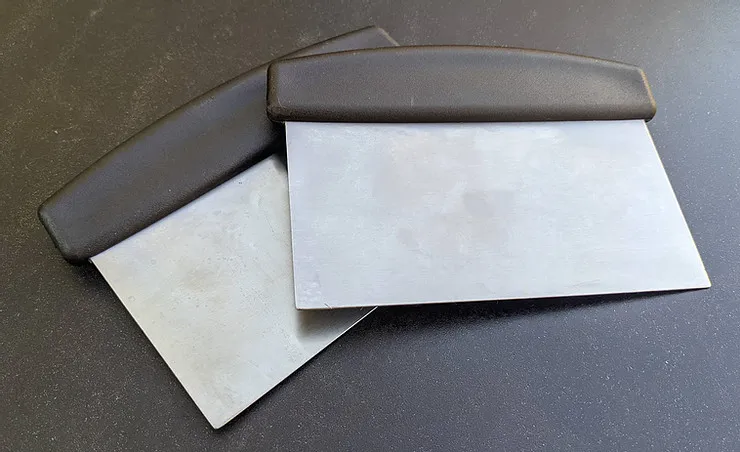
A good scraper is the most important tool on this list. See our best griddle scraper picks if yours isn’t cutting it.
After Every Cook: The 5-Minute Routine
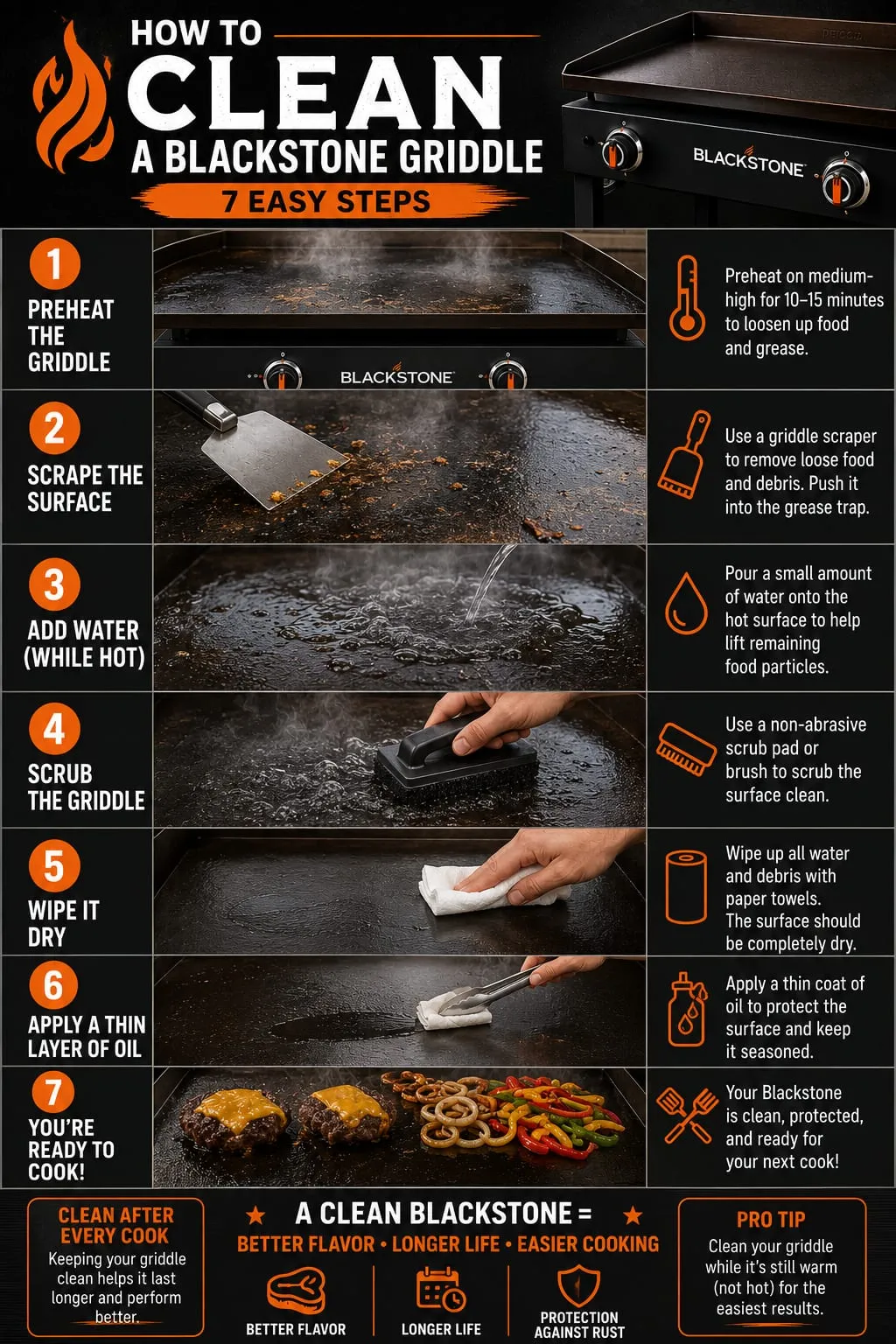
This is the routine that matters most. Do it every single cook (no exceptions) and deep cleaning becomes rare.
Step 1: Scrape While the Surface Is Still Warm
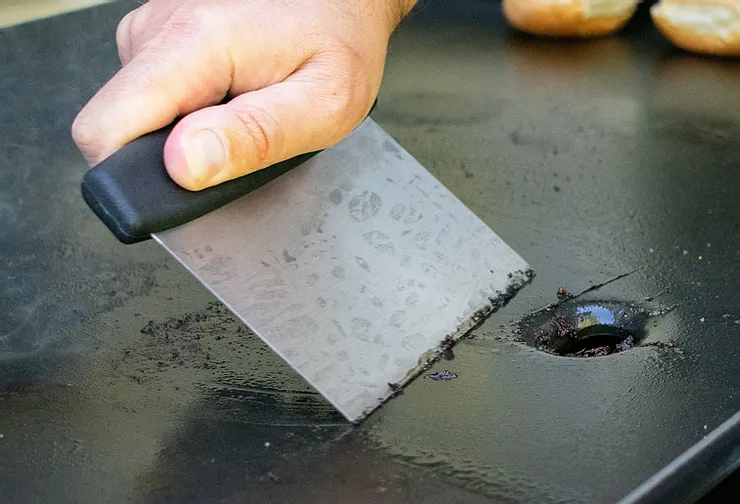
Turn off the burners as soon as you finish cooking. While the surface is still warm (not scorching hot, but still warm enough to steam) use your metal scraper to push all food debris toward the grease trap. Work in overlapping passes from the back forward.
Don’t wait until the griddle is cold. Food residue and grease bond tightly to cold steel and become exponentially harder to remove. Warm is the window.
Step 2: Hit Stubborn Spots With Water
Squirt a small amount of warm water directly onto any stuck-on bits. It will steam immediately on contact with the warm surface, lifting the residue from the steel. Scrape again. Repeat until the surface is clear.
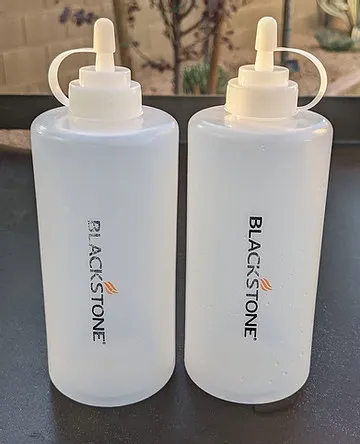
Never pour cold water on a hot griddle. The thermal shock from cold water hitting a heat-expanded steel surface can warp it permanently. Room temperature or warm water only.
Step 3: Wipe Down Completely
Use paper towels to wipe the entire surface dry. Don’t skip this step: any standing water left on the steel overnight will start rust. If you cook outdoors in humid conditions, this step matters even more.
Step 4: Apply a Thin Protective Oil Coat
While the griddle is still warm, add about two tablespoons of oil and spread it in a thin, even layer across the entire cooking surface including the edges and corners. The surface should look barely damp, not wet, not pooling.
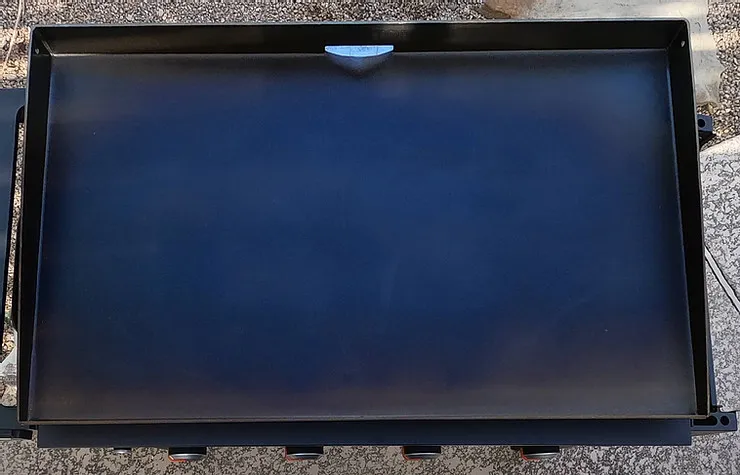
This oil coat does two things: it replenishes the seasoning layer and seals the steel from moisture until your next cook. It’s the single most effective rust prevention step you can take. A well-maintained surface after cleaning looks dark and slightly shiny. If yours looks dull or patchy, it’s due for a re-seasoning pass.
Step 5: Empty the Grease Trap
Don’t forget the drip tray below the griddle. Letting grease accumulate is a fire hazard and makes the eventual cleanout much worse. Empty it after every cook, or at minimum every 2-3 cooks depending on how much you’re cooking. More on grease trap maintenance below. If grease is overflowing, backing up on the cooktop, or running off the wrong edge, that’s usually a leveling issue, see grease problems.
Deep Cleaning: When and How
The after-cook routine handles 90% of maintenance. Deep cleaning is for when buildup has accumulated, or when you’ve inherited a neglected griddle.
When to Deep Clean
- Carbon and grease buildup isn’t coming off with normal scraping
- Food is sticking despite proper preheating
- The surface smells rancid when heated (old oil went bad)
- Rust spots are forming even with regular oil application
- You’re starting with a griddle that sat unused for months
Plan on deep cleaning every 6-8 weeks with regular use, or sooner any time those signs appear.
Deep Cleaning Steps
- Preheat to medium (350-375°F) to soften the buildup and make it easier to move.
- Scrape aggressively across the entire surface, working all debris toward the grease trap.
- Apply a thin layer of oil to lubricate the surface. Don’t skip this: it protects the steel while you work.
- Work a griddle stone in circular motions across the surface. The pumice stone lifts carbon and hardened grease without damaging the steel beneath. Keep the surface lightly oiled as you go. Don’t work the stone dry.
- Scrape and wipe away all loosened debris and oil residue.
- Re-season with 3-4 coats: apply a thin layer of oil, heat until it stops smoking, repeat. See the full seasoning guide for the complete step-by-step process.
On soap: Dish soap is acceptable for a thorough deep clean. It cuts through built-up grease effectively. But follow it immediately with a full re-seasoning (3-4 coats). Soap strips the seasoning layer and leaves bare steel that rusts quickly if you don’t re-season right away.
How to Clean the Grease Trap and Drip Tray
The grease trap is the channel at the back (or side) of the griddle that collects runoff grease, and the drip tray is the removable pan underneath that catches it. Both are frequently neglected.
Drip tray: Remove it after every cook or two. Pour out the accumulated grease. Don’t pour it down the drain: it solidifies and causes clogs. Wipe the tray clean with paper towels. If it has hardened grease buildup, wash with warm soapy water and dry completely before putting it back.
Grease trap channel: After scraping the cooking surface, wipe out the grease channel with a paper towel. Hardened grease in the channel can block drainage during future cooks, causing overflow onto the burners.
Liners: Many Blackstone owners line the drip tray with aluminum foil, which makes emptying it a one-second job. Replace the foil every few cooks. This is one of the most useful habits you can develop.
Rust Removal
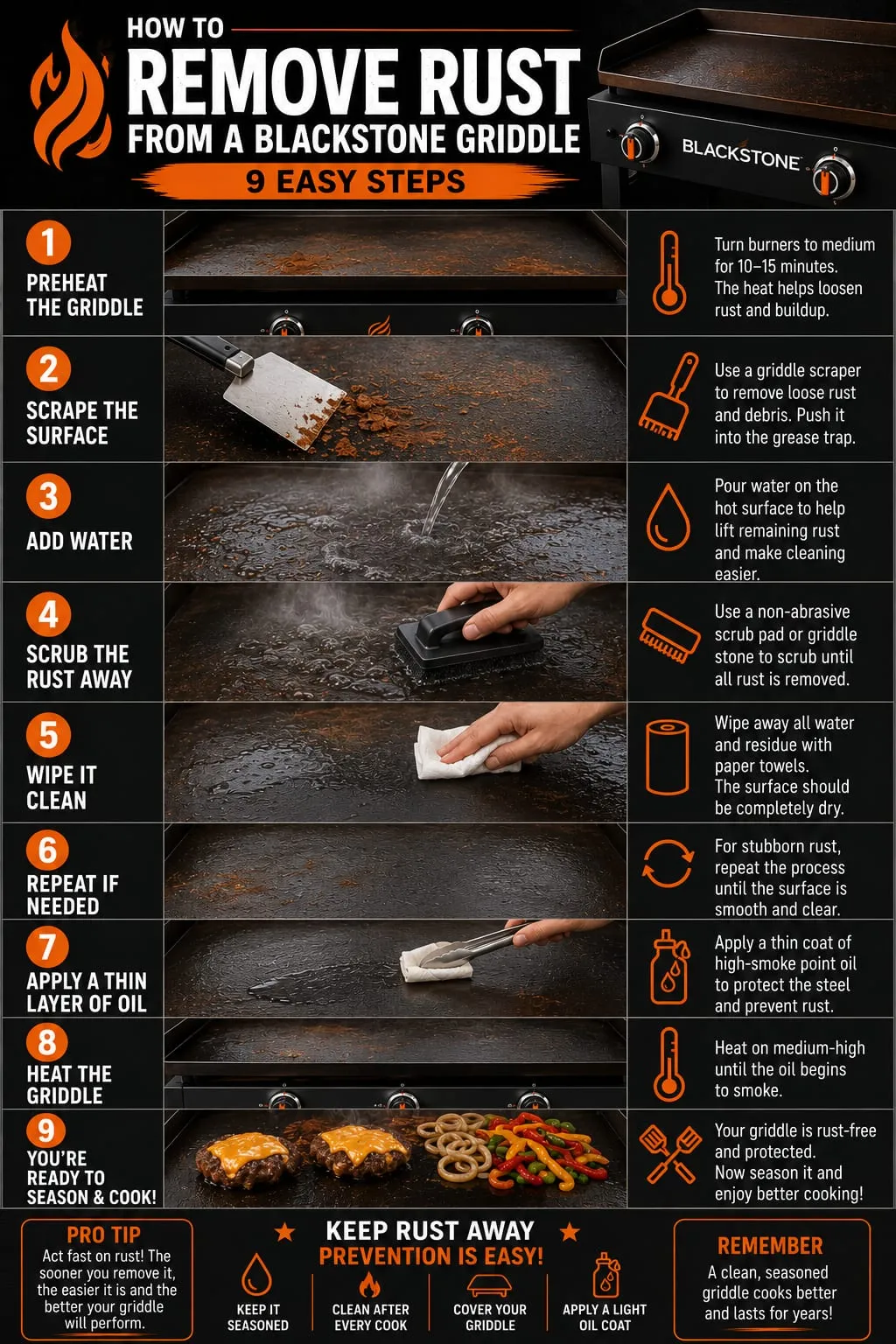
Rust on a Blackstone isn’t permanent damage. It’s a surface problem that can be fixed. Even heavily rusted griddles can be fully restored. See the dedicated Blackstone rust removal guide for the complete process. Quick breakdown by severity:
Light Rust (Small Spots, Surface Level)
- Heat the griddle for 15-20 minutes to expand the steel and loosen the rust.
- Scrape off loose rust with the metal scraper.
- Apply oil and work a griddle stone over the rust spots in tight circular motions.
- Wipe clean and re-season with 3-4 coats immediately.
Heavy Rust (Widespread or Deep)
- Spray white vinegar over the rusted areas.
- Let it sit no more than 5 minutes. Longer contact etches and damages the steel.
- Scrub aggressively with coarse steel wool.
- Rinse with warm water and dry immediately and completely.
- Re-season with 4-5 coats before cooking again.
What NOT to Do: Common Mistakes That Ruin Griddles
These are the cleaning mistakes that cause the most damage, more than anything else people do wrong with a Blackstone.
Using cold water on a hot griddle. This is the fastest way to warp the steel surface permanently. Always use warm or room-temperature water, and only after the griddle has cooled to warm (not scorching hot).
Using soap for routine cleaning. Soap is for deep cleaning only, and even then, it must be followed immediately by re-seasoning. Regular soap use strips the seasoning faster than you can build it back up.
Skipping the oil coat after cleaning. This is the single biggest rust accelerator. Bare steel left overnight, especially in humid climates, can show rust by morning. The oil coat takes 30 seconds and prevents hours of restoration work.
Using a wire brush. Wire bristles can shed and embed in the cooking surface, creating a food safety hazard. Use a metal scraper and griddle stone instead.
Spraying with a hose or pressure washer. Water forced into seams, under burner covers, and into the frame promotes rust in places you can’t easily treat. Keep cleaning to the cooking surface with a squirt bottle.
Cleaning with abrasive chemical cleaners. Oven cleaner, bleach, or any chemical-based scrub will strip the seasoning and potentially damage the steel. The griddle stone is the right abrasive: it’s calibrated for this surface.
Putting griddle components in the dishwasher. The drip tray can be hand-washed, but putting any griddle part through a dishwasher strips seasoning and causes rust. Always hand-wash and dry immediately.
Seasonal Storage and Long-Term Care
If you’re putting the griddle away for an extended period (end of season, extended travel, any time it’ll sit more than a few weeks) do more than the standard after-cook routine.
- Deep clean first. Start with a clean surface before storage so you’re not sealing in old grease that can go rancid.
- Apply a heavy oil coat, heavier than your normal maintenance coat. This layer has to protect the steel for weeks or months instead of days.
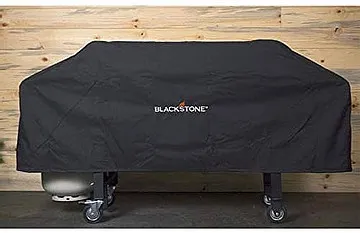
- Cover with a fitted hard cover. A hard cover provides substantially better rust protection than a soft cloth cover in outdoor storage conditions.
- Store in a garage or shed when possible. Even a covered outdoor griddle is exposed to humidity swings that promote rust over time.
- Check monthly. If the griddle sits unused for more than a few weeks, pull the cover and check the surface. Touch up the oil coat if it looks dry or dull.
- Apply a light coat before the first cook back. Heat the griddle, wipe it down, apply a fresh coat, let it smoke off, then cook.
The best maintenance is regular use. A griddle cooked on weekly stays better seasoned and better protected than one that sits for months at a time. See our Blackstone griddle tips for more habits that keep the griddle in top shape long-term.
Try these on a freshly cleaned Blackstone: Smash Burgers · Blackstone Steak · Breakfast Hash · Fried Rice
Shop Blackstone Cleaning Kit on Amazon Shop Griddle Scraper on Amazon Shop Drip Tray Liners on Amazon
Troubleshooting
Quick fixes for cleaning-related problems below, and for the full diagnostic index covering heat, ignition, warping, and everything else, see the Blackstone troubleshooting guide.
Surface is sticky after cleaning. Too much oil applied, or oil that didn’t fully polymerize. Heat the griddle to medium, scrape off the sticky layer aggressively, wipe completely clean, and re-apply a much thinner coat.
Food keeps sticking despite regular cleaning. The seasoning has likely been stripped, often from soap use without re-seasoning, or from heavy scrubbing. Re-season with 3-4 coats and check our temperature guide for the right heat level for each type of food. If a fresh season doesn’t solve it, work through why food sticks. Heat and timing cause more sticking than seasoning does.
Surface smells rancid when heated. The oil coating went rancid from sitting too long between cooks, or the wrong type of oil was used. Deep clean to remove the old oil entirely, then re-season fresh with avocado or canola oil.
Seasoning is peeling or flaking off. Oil was applied too thick during a past seasoning session, creating a layer that didn’t fully bond. Scrape off the flaking areas, clean thoroughly, and re-season using very thin coats, barely damp, not wet.
Rust keeps coming back. You’re either skipping the post-clean oil coat, or there’s a moisture source you haven’t addressed (no cover, stored in a wet area, high humidity). Fix the storage situation and never skip the oil coat after cleaning.
Frequently Asked Questions
Can I use soap to clean my Blackstone griddle?
Soap is for deep cleaning only, not your routine after-cook cleaning. It strips the seasoning layer. If you use soap, re-season immediately after with 3-4 coats of oil before cooking again. For routine cleaning, water and a scraper are all you need.
Can I use a wire brush on my Blackstone griddle?
No. Wire brush bristles can break off and embed in the cooking surface, creating a food safety hazard. Use a metal scraper to remove debris and a griddle stone (pumice brick) for deep cleaning and carbon removal.
Can I use a pressure washer on my Blackstone griddle?
No. High-pressure water blasts away the seasoning layer and forces water into seams and burner components, promoting rust in places you can’t easily reach. Stick to a squirt bottle and paper towels on the cooking surface.
What’s the best thing to clean a Blackstone griddle with?
A metal scraper and warm water handle 90% of cleaning. For deep cleaning and carbon removal, a pumice griddle stone is the right tool. No chemicals, no wire brushes, no abrasive cleaners.
How do I clean my Blackstone griddle after cooking bacon?
The same as any cook: scrape while warm, hit stubborn spots with warm water and scrape again, wipe dry, apply a thin oil coat. Bacon grease is actually good for your seasoning. If there’s heavy splatter on the sides, wipe those down while everything is still warm.
How do I clean my Blackstone after cooking eggs?
Scrape immediately while still warm. Cooked egg sticks harder the longer it sits. A squirt of water while the surface is hot will steam-lift most egg residue. If the seasoning isn’t well-established, eggs will stick more; more seasoning and higher preheat temps fix this over time.
How do I clean the Blackstone grease trap and drip tray?
Empty the drip tray after every cook or two. Pour grease into a disposable container, not down the drain. Wipe the tray clean with paper towels; wash with soapy water if there’s buildup. Lining the tray with foil makes cleanup a one-second swap. Wipe out the grease channel on the griddle surface after each scraping session.
Can I put Blackstone parts in the dishwasher?
No. Dishwashers strip seasoning and cause rust. Hand-wash any removable parts and dry them immediately and completely before putting them back.
How do I clean a Blackstone griddle that has been sitting unused?
If it’s been sitting for weeks or months, it likely needs a deep clean and re-seasoning. Heat the griddle, scrape off any rust or buildup, use a griddle stone with oil to clean the surface, wipe clean, and re-season with 3-4 coats. If there’s heavy rust, follow the rust removal steps first.
How often should I deep clean my Blackstone griddle?
Every 6-8 weeks with regular use, or whenever you notice significant buildup, persistent sticking, a rancid smell on heating, or rust forming despite regular oil application.
Why does my Blackstone griddle keep rusting?
The most common cause is skipping the oil coat after cleaning. Bare steel rusts quickly. In humid climates it can show rust overnight. Always finish every cleaning session with a thin oil coat on the warm surface. A fitted cover adds another layer of protection for storage.
Can I use WD-40 to clean or remove rust from my Blackstone griddle?
No. WD-40 is a petroleum-based lubricant/solvent, not food-safe and not appropriate for a cooking surface. For rust removal, use oil and a griddle stone for light rust, or white vinegar (5 minutes max) and steel wool for heavy rust. Always re-season after rust removal.
Is a dark black surface normal after cleaning?
Yes, a properly seasoned griddle is dark brown to black. That color is polymerized oil bonded to the steel, not dirt or damage. If the surface looks dark and slightly shiny after cleaning, it’s in excellent shape.
Can you use Dawn dish soap on a Blackstone griddle?
Only once, for the very first wash. Dawn (or any dish soap) is the right call when you first unbox a new griddle, to strip the factory shipping coating before you season it. After that, never use dish soap on a seasoned surface: it breaks down the layer of seasoning you’ve built up. For routine cleaning, a metal scraper and hot water do the job, followed by a thin coat of oil. If you do accidentally soap a seasoned griddle, just re-season it and you’re back to normal.
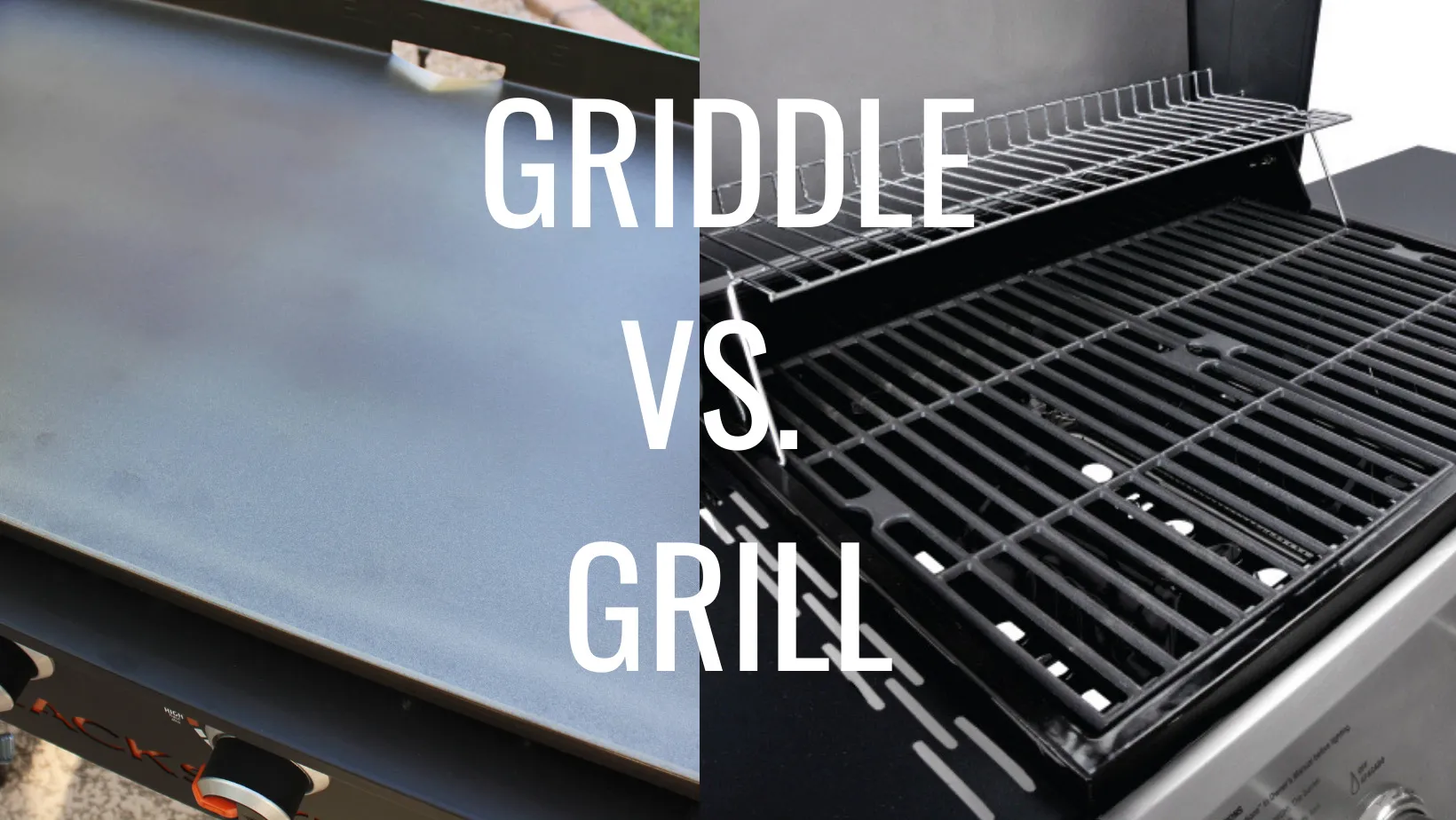
Griddle vs Grill: Which Should You Get?
Griddle vs grill: the real differences, which is healthier, whether a griddle is worth it if you already own a grill, and which wins for steaks and burgers.
Why Is Everyone Selling Their Blackstone? An Honest Answer
Why is everyone selling their Blackstone? Mostly, they aren't. Here's the honest story, plus the real cons, lifespan, the Walmart price, and if it's worth it.
Your First Blackstone Cook: Complete New Owner Guide
New Blackstone griddle? The full day-one sequence: assembly, the soapy wash Blackstone actually requires, first seasoning, what to cook first, and what's normal in week one.