

Can You Use a Blackstone Griddle Indoors? (The Real Answer)
Short answer: No, not if it’s a propane or natural gas model. Gas Blackstone griddles produce carbon monoxide and require combustion air that enclosed indoor spaces cannot safely provide. Using one inside a house, apartment, or enclosed garage is a genuine safety risk, not a minor inconvenience to work around.
The exception: Blackstone’s E-Series electric griddles are purpose-built for indoor use and are completely safe inside.
Here’s the full picture on why gas is off-limits indoors, what the garage situation actually is, and what your options are.
Why Gas Blackstone Griddles Are Not Safe Indoors
Carbon Monoxide
Burning propane produces carbon monoxide, a colorless, odorless, tasteless gas that you cannot detect without a CO detector. In an enclosed indoor space, CO accumulates rapidly. Symptoms of CO poisoning begin with headache, nausea, and dizziness and progress to loss of consciousness and death. It doesn’t take long in an enclosed space.
This isn’t a theoretical risk. The CDC estimates that hundreds of people die from non-fire CO poisoning every year, many from gas cooking appliances used in enclosed spaces. This is exactly why commercial kitchens are required to have industrial-grade ventilation hoods: the gas cooking equipment they use produces CO that has to be actively exhausted.
Propane Gas Leaks
Propane tanks and connections can leak. Outdoors, leaked propane disperses quickly and harmlessly. Indoors, it accumulates: propane is heavier than air and pools at floor level. A single spark from a light switch, appliance, or static discharge can ignite it. This is why propane equipment is strictly for outdoor use.
Heat and Grease
Beyond gas hazards: a Blackstone at cooking temperature radiates significant heat in all directions. On a kitchen countertop, that heat can damage or melt surfaces beneath and around the griddle. Cooking also produces significant grease splatter (on walls, cabinets, and ceilings) that’s difficult to clean and creates an ongoing fire hazard if it builds up near heat sources.
What About the Garage?
The garage is the most common “indoor” scenario for Blackstone cooking. It’s sheltered from wind and rain, and you can partially control the environment. The key variable is ventilation.
Garage door fully open: Acceptable for most gas griddle cooking, with caveats. An open garage door provides adequate air exchange for CO to dissipate when used in reasonable cooking sessions. This is how many Blackstone owners cook in cold or rainy weather year-round. Keep the door fully open (not cracked) the entire time the griddle is on.
Garage door closed: Not safe. A closed garage behaves like any other enclosed indoor space. CO accumulates, propane can pool, and you have no air exchange. Don’t do it.
Attached garage: Extra caution. CO that builds up in an attached garage can migrate into the living space through shared walls and door gaps. Keep the interior door to the house closed, run the garage door fully open, and don’t cook in an attached garage with poor natural airflow.
Practical rules for garage cooking:
- Full open door, always, not cracked, not partially open
- Install a CO detector in the garage if you cook there regularly
- Never leave the griddle unattended with the door closed
- Finish cooking and let the griddle cool before closing the garage
The Only Indoor-Safe Blackstone: The E-Series Electric Griddles
Blackstone’s E-Series griddles are electric, no propane, no combustion, no CO. They plug into a standard 120V outlet and are designed specifically for indoor use on a countertop.
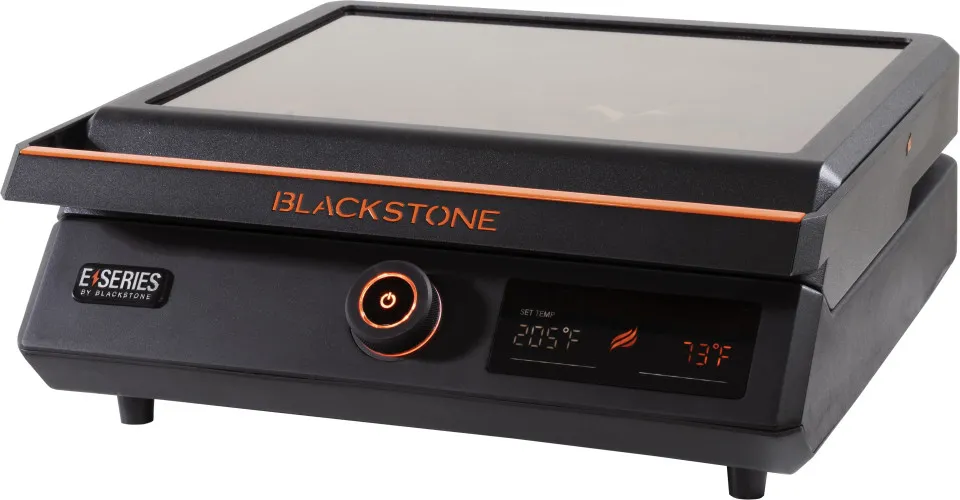
Key differences from gas models:
- Cooktop: Non-stick ceramic titanium coating instead of rolled steel. You don’t season it the same way: no polymerized oil layers required.
- Heat source: Electric heating elements, even heat, easy temperature control, no open flame.
- Safety: No CO risk, no propane, no combustion. Genuinely safe on a kitchen counter.
- Size: Available in 17” and 22” tabletop formats, smaller than most outdoor gas models.
- Tradeoff: Less raw heat than a gas model. You won’t hit 500°F+ for aggressive searing, but you get consistent 300-400°F cooking that handles most recipes well.
This isn’t theoretical for me: a 17” E-Series lives on my counter, and it’s what I cook indoor breakfasts on (eggs, pancakes, bacon) when firing up the outdoor griddle doesn’t make sense. It’s the tool I point people to every time this question comes up, because it’s the only honest “yes” to cooking Blackstone-style indoors. See the full E-Series review for the hands-on breakdown.
The models available:
- E-Series 17” Tabletop Electric Griddle with Hood
- E-Series 22” Tabletop Electric Griddle with Hood
What If You Want to Use Your Gas Griddle More in Cold Weather?
If the reason you’re considering indoor use is to avoid cold, wind, or rain, there are outdoor solutions that keep you cooking year-round without the safety risk.
Wind guards block the crosswind that cools burners and drops griddle temperature. They attach directly to the Blackstone frame and make a significant difference on breezy days.
A griddle with a built-in hood traps heat during cooking, which matters a lot when ambient temps are low. Several Blackstone models come with hoods for exactly this reason.
The garage-with-door-open setup (described above) provides shelter from rain and some wind protection while maintaining the ventilation that makes gas cooking safe.
See the full guide on cooking on a Blackstone in winter for cold-weather cooking tips.
Try these on the E-Series indoors: Blackstone Pancakes · Smash Burgers · Breakfast Hash · Quesadillas
Frequently Asked Questions
Can you use a Blackstone griddle indoors?
Not safely if it’s a gas model. Propane and natural gas Blackstone griddles produce carbon monoxide and require combustion air that enclosed indoor spaces can’t safely provide. The only Blackstone griddles safe for true indoor use are the E-Series electric models.
Can you use a Blackstone griddle in a garage?
With the garage door fully open, yes. Gas griddles can be used in a garage with adequate ventilation. The door must be completely open (not cracked) the entire time the griddle is on. A closed garage is not safe: it behaves the same as any other enclosed space for CO accumulation purposes.
What happens if you use a propane griddle indoors?
Carbon monoxide builds up in the enclosed space. CO is colorless and odorless: you won’t smell it or see it, but it progressively displaces oxygen and affects brain and organ function. Symptoms start with headache and nausea and can progress to loss of consciousness. This is not a scare tactic. It’s why every propane appliance is marked “outdoor use only.”
Is a Blackstone griddle safe in an attached garage?
More caution is warranted for an attached garage because CO can migrate through shared walls and door gaps into the living space. Keep the garage door fully open, keep the interior door to the house closed, and ensure good natural airflow. A CO detector in the garage is worth installing if you cook there regularly.
Can you use a Blackstone griddle under a covered patio or porch?
Yes, with adequate airflow on the sides. A covered outdoor patio with open sides provides enough air exchange that gas cooking is safe. What you’re avoiding is an enclosed structure. If all sides are closed, it becomes an indoor space for CO purposes.
What Blackstone griddle can be used indoors?
The Blackstone E-Series electric griddles are the only models designed for indoor use. They run on a standard 120V outlet, produce no combustion byproducts, and are safe on a kitchen countertop. The tradeoff is a non-stick ceramic coated surface (vs. seasoned rolled steel) and lower maximum temperatures than gas models.
Can you use a Blackstone griddle in a tent?
No. A tent is an enclosed space. CO poisoning in a tent while sleeping is one of the leading causes of camping-related fatalities. Never use any gas cooking appliance inside a tent, camper, or enclosed shelter.
Does a range hood make it safe to use a gas griddle indoors?
A residential range hood is not sufficient ventilation for a gas griddle. Commercial kitchens use industrial-grade exhaust systems designed and certified to handle the CO output of gas cooking equipment. A standard home range hood moves a fraction of that air volume. Don’t rely on it to make gas griddle use safe indoors.
Can you use a Blackstone on a balcony?
Generally yes. An open balcony has sufficient air exchange. Check your lease agreement if you’re renting, as many prohibit open-flame cooking on balconies. Also check local fire codes, which sometimes restrict propane use above ground level.
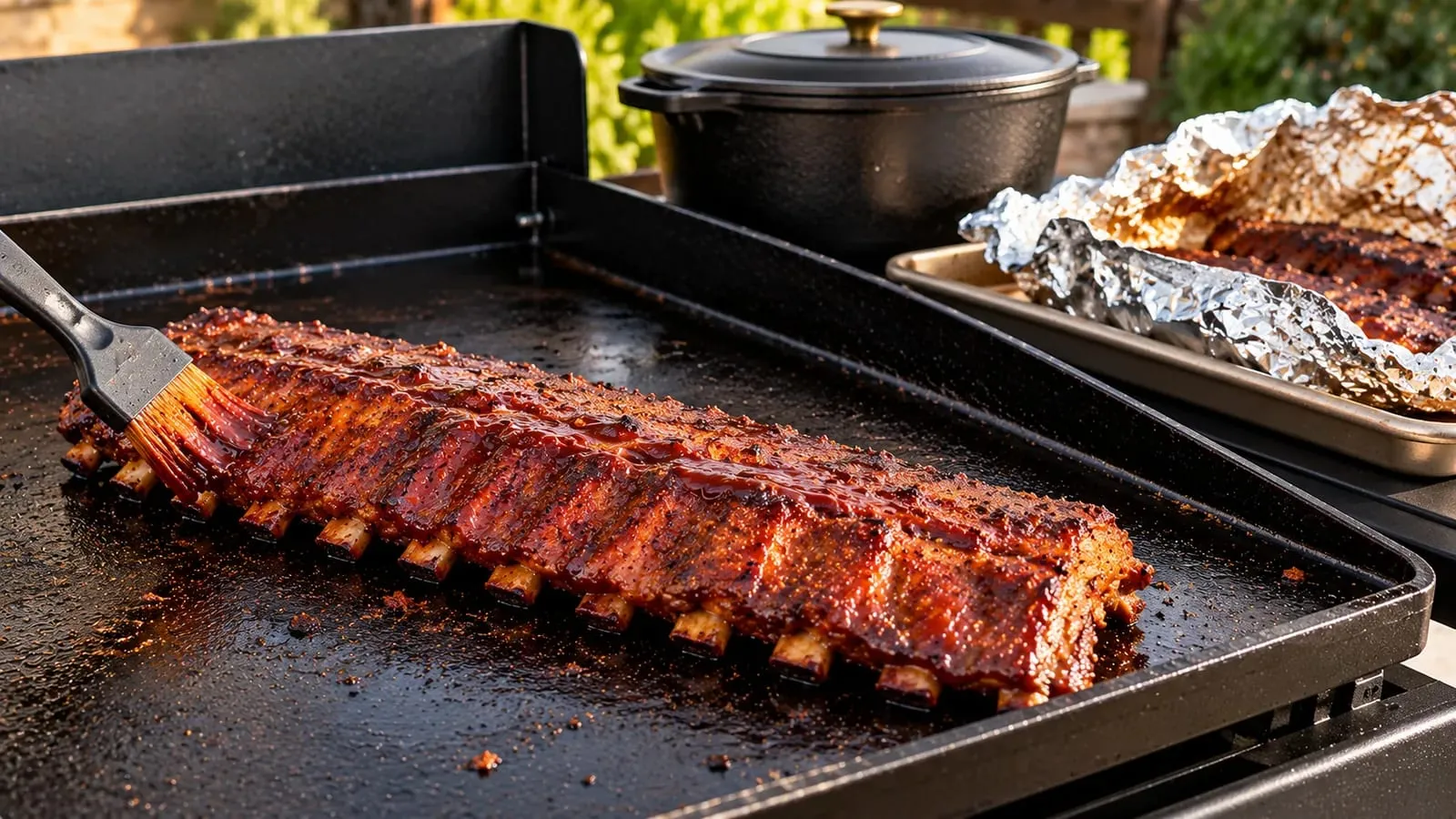
What Not to Cook on a Blackstone (and What to Do Instead)
What doesn't work on a Blackstone griddle: low-and-slow cuts, big roasts, anything that sits in liquid, and deep-fried food, plus how to split the cook so the griddle still does the part it's good at.
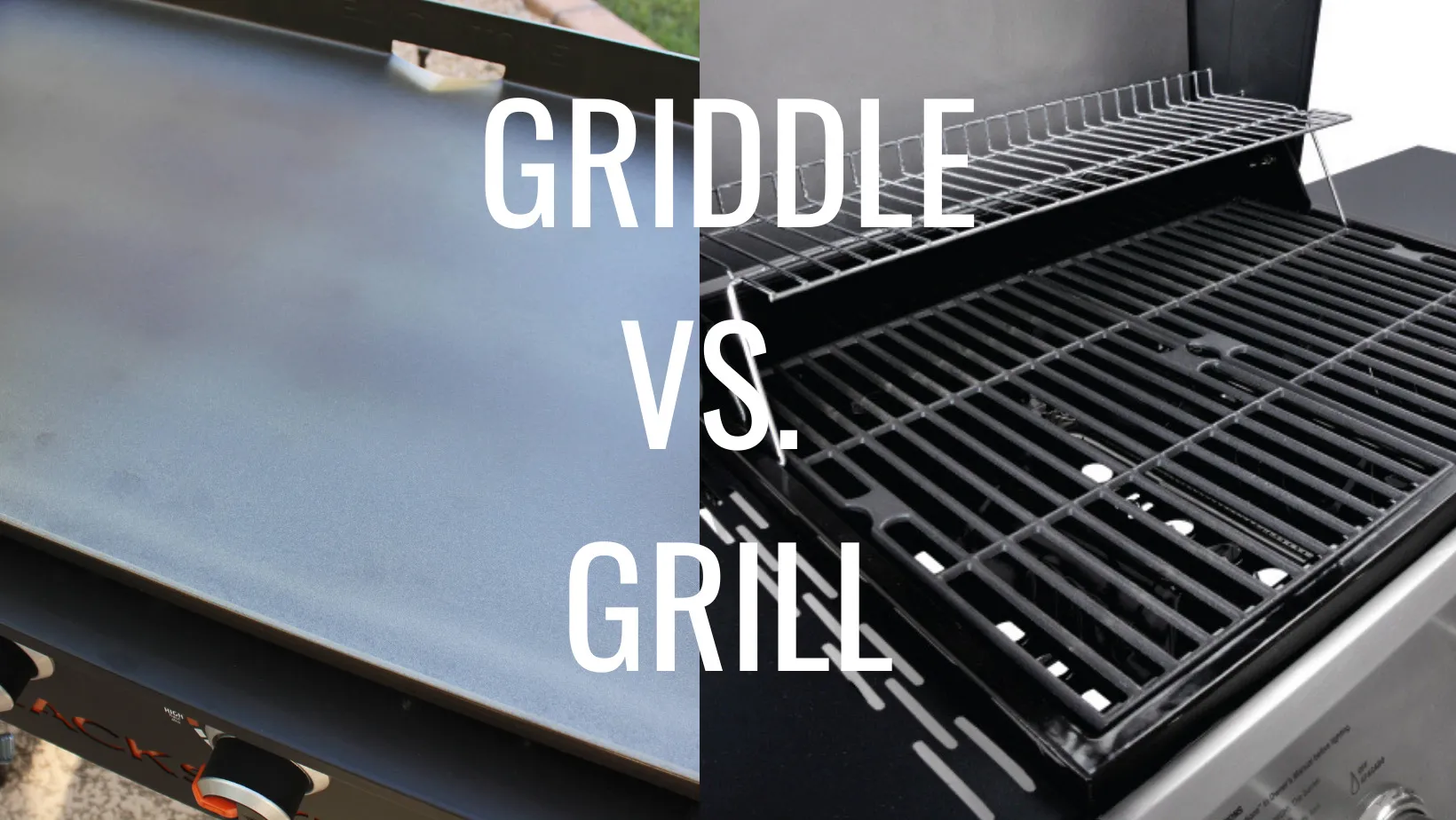
Griddle vs Grill: Which Should You Get?
Griddle vs grill: the real differences, which is healthier, whether a griddle is worth it if you already own a grill, and which wins for steaks and burgers.
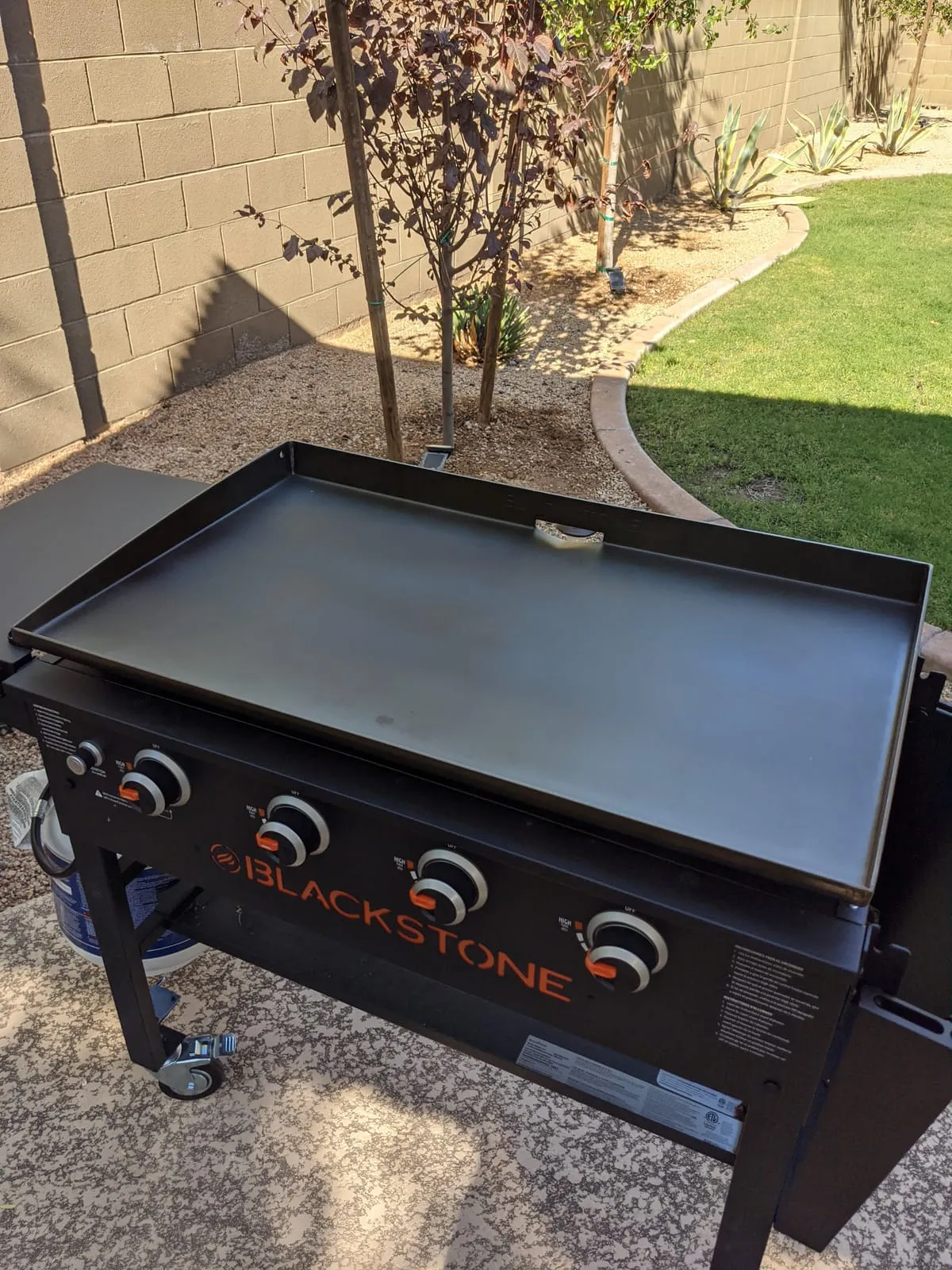
Why Is Everyone Selling Their Blackstone? An Honest Answer
Why is everyone selling their Blackstone? Mostly, they aren't. Here's the honest story, plus the real cons, lifespan, the Walmart price, and if it's worth it.